
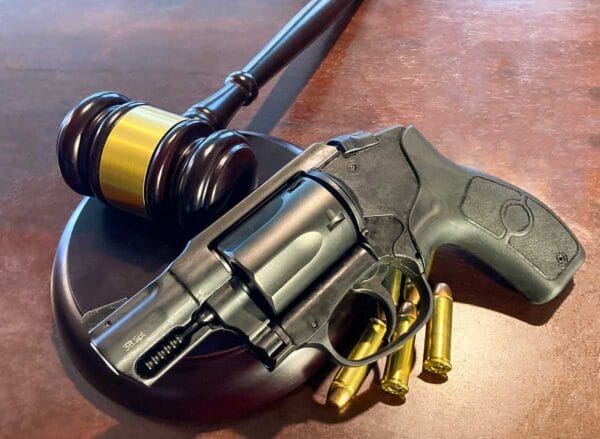
On December 17, 2025, the United States Court of Appeals for the Fifth Circuit delivered a landmark ruling in United States v. Cockerham, striking down a lifetime firearm ban imposed under 18 U.S.C. § 922(g)(1) as a violation of the Second Amendment. This decision marks a significant moment in the ongoing debate over the scope of Second Amendment rights, particularly for individuals convicted of non-violent offenses. The case centers on Edward Cockerham, whose sole predicate offense was failing to pay child support, a crime for which he served no prison time.
The Second Amendment, which guarantees the right to keep and bear arms, is recognized as a fundamental civil right, akin to the protections afforded by the First, Fourth, Fifth, and Sixth Amendments. The Supreme Court’s decision in New York State Rifle & Pistol Ass’n v. Bruen clarified that firearm regulations must align with the nation’s historical tradition of firearm regulation to pass constitutional muster. The Fifth Circuit’s analysis in Cockerham adheres to this framework, emphasizing that history, not fear of firearms, must guide judicial review.
The court’s scrutiny focused on § 922(g)(1), which prohibits any person convicted of a crime punishable by more than one year in prison from possessing a firearm. This statute is notably broad, encompassing both violent and non-violent offenses and applying a lifetime ban even to those who have never been incarcerated. The Fifth Circuit highlighted the law’s overreach, noting that it could ensnare individuals for conduct that was previously innocent due to the proliferation of criminal laws. For instance, the court cited a hypothetical where an ex-felon father, acting to protect his child, takes a loaded gun from a schoolboy and calls the police—yet still faces prosecution under § 922(g)(1).
Cockerham’s case hinged on his conviction for failing to pay child support under Mississippi law, which carried a potential five-year prison sentence but resulted in only probation. After repaying the debt and completing probation, he was later indicted for possessing a firearm based solely on this prior conviction. He argued that § 922(g)(1) violated the Second Amendment both as applied to him and on its face, alongside claims under the Commerce Clause, Equal Protection Clause, and a vagueness challenge. The district court denied his motions to dismiss, but the Fifth Circuit reversed, focusing on the as-applied Second Amendment challenge.
The court applied the two-step Bruen framework. First, it confirmed that the Second Amendment’s plain text encompasses Cockerham’s possession of a firearm. The government failed to show that this activity falls outside the Second Amendment’s original scope. Moving to the second step, the court examined whether § 922(g)(1)’s application to Cockerham is consistent with historical tradition. This step required identifying a “relevantly similar” historical analogue, assessed by the manner and basis on which the regulation burdens the right to armed self-defense.
The government analogized Cockerham’s offense to theft, citing United States v. Diaz, in which permanent disarmament was upheld as a consequence of a theft conviction, based on severe Founding-era punishments such as capital punishment and estate forfeiture. However, the court rejected this analogy. At the Founding, debtors’ prisons existed, but debtors were released upon repayment, unlike thieves, who remained incarcerated even if stolen goods were returned. The government conceded this distinction during oral arguments, undermining its position. Since Cockerham had fully paid his child support debt by the time he possessed the firearm, no historical justification supported his disarmament, let alone a lifetime ban.
This ruling aligns with recent Fifth Circuit precedents, including United States v. Mitchell and United States v. Doucet, which held that historical tradition does not support the categorical disarming of individuals convicted of nonviolent offenses. The court criticized § 922(g)(1) as “wildly overinclusive,” a view echoed by scholars, judges, and civil rights experts. The Supreme Court has described such laws as “presumptively lawful” (Rahimi), implying that as-applied challenges can succeed if historical support is lacking, a possibility the Fifth Circuit affirmed here.
The government’s alternative arguments also faltered. It suggested Cockerham might have incurred new child support debt, but the court noted § 922(g)(1) relies on convictions, not allegations. A claim regarding probationary supervision was similarly dismissed because Cockerham was no longer on probation. The court concluded that permanently disarming Cockerham exceeded historical practice and violated the Second Amendment.
This decision reverses Cockerham’s conviction and remands the case for further proceedings. While other constitutional challenges were foreclosed by precedent, the as-applied ruling reinforces that Second Amendment rights cannot be stripped without historical grounding.
About John Crump
Mr. Crump is an NRA instructor and a constitutional activist. John has written about firearms, interviewed people from all walks of life, and on the Constitution. John lives in Northern Virginia with his wife and sons, follow him on X at @crumpyss, or at www.crumpy.com.

from https://ift.tt/FhuRwEa
via IFTTT

No comments:
Post a Comment