Sunday, January 4, 2026

10th Circuit Denied Rehearing Blocking New Mexico’s Waiting Period

New Mexico Reverting to Old Mexico?
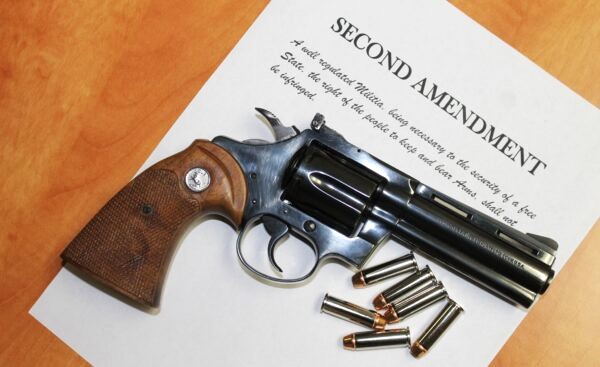
10th Circuit Denied Rehearing Blocking New Mexico’s Waiting Period, IMG iStock-884193540.jpg

The United States Court of Appeals for the 10th Circuit has refused to rehear a case that blocked the enforcement of a 7-day waiting period for firearms purchases in New Mexico.

In 2024, New Mexico enacted the New Mexico Waiting Period Act (WPA), a state law that mandated a 7-day “cooling off” period for nearly all firearm purchases. The state argued that these transfer delays were needed to reduce impulsive “gun violence” and suicides. Transfers between family members and concealed carry holders were exempt from the new law.

The new state law spurred legal challenges to the New Mexico WPA. One such case was Ortega v. Grisham. The plaintiffs claimed that the law levied an unconstitutional burden on potential gun owners. They cited no other constitutionally protected right that has a waiting period. There was also no historical justification for the law. Under the Bruen standard, if the conduct is protected by the Second Amendment’s plain text, the state must provide historical analogues from the founding era demonstrating that the law is consistent with the tradition and history of the nation’s firearms regulations. The state could not provide those examples, but the District Court denied the preliminary injunction anyway, leading the plaintiffs to appeal to the United States Court of Appeals for the 10th Circuit.

In August, a three-judge panel from the 10th Circuit ruled that New Mexico’s 7-day “cooling off” period for gun purchases was likely unconstitutional because it denied a fundamental right protected by the Second Amendment. They agreed that the plaintiffs were likely to succeed on the merits of the case. The panel issued the preliminary injunction sought by the plaintiffs. The ruling blocked the law from taking effect.

Lawyers for New Mexico were unhappy with the outcome and filed for an en banc hearing with the 10th Circuit. An en banc hearing, if granted, vacates the panel’s decision, and the full bench would rehear the case and issue a ruling. An en banc hearing is not a right. The Court can deny the rehearing and let the panel’s decision stand. The state was confident that the Court would take the case en banc, since state en banc requests are usually granted. The 10th Circuit had other plans, though.

The 10th Circuit Court of Appeals denied the state’s request, indicating that most judges likely agreed with the panel’s decision. This denial of an en banc hearing means the state’s 7-day waiting period for firearm purchases cannot be implemented or enforced. This legal victory for Second Amendment activists will maintain the status quo of no waiting periods in New Mexico.

New Mexico can file a petition for a writ of certiorari with the United States Supreme Court, but the Court has a history of denying certiorari in interlocutory appeals. An interlocutory appeal is a challenge to a non-final court order made while a case is still ongoing. The case is more likely to return to the District Court, where arguments on the merits will be held. The outcome and likely appeal could shape the legality of waiting periods nationwide and set up a future circuit split.

Court Finds New Mexico’s 7-Day Waiting Period Violates 2A


About John Crump

Mr. Crump is an NRA instructor and a constitutional activist. John has written about firearms, interviewed people from all walks of life, and on the Constitution. John lives in Northern Virginia with his wife and sons, follow him on X at @crumpyss, or at www.crumpy.com.

John Crump


from https://ift.tt/ZbGzf9d
via IFTTT

Friday, January 2, 2026

Ninth Circuit Rules California’s Open-Carry Ban Unconstitutional

A Warning to Florida Public Officials About the New Open-Carry Law, iStock-2205481813
California’s Open Carry Ban Struck Down, iStock-2205481813

A three-judge panel from the United States Court of Appeals for the Ninth Circuit has struck down California’s restrictive ban on open carry in urban areas, affirming the constitutional right to bear arms as guaranteed by the Second and Fourteenth Amendments. The decision, detailed in the case Baird v. Bonta, marks a significant blow to the state’s long-standing efforts to limit firearm carry, particularly in its most populous counties.

The ruling stems from a lawsuit filed by Mark Baird, a law-abiding California citizen who challenged the state’s prohibition on openly carrying firearms in counties with populations exceeding 200,000. This ban, affecting approximately 95% of California’s residents, was deemed unconstitutional by a panel of judges, including Circuit Judge Lawrence VanDyke, who authored the majority opinion. The court’s decision reverses a district court’s summary judgment in favor of California Attorney General Rob Bonta, affirming that the state’s urban open-carry ban violates historical traditions of firearm rights.

The Ninth Circuit’s ruling hinges on the landmark 2022 Supreme Court decision in New York State Rifle & Pistol Ass’n v. Bruen, which established that firearm regulations must align with the nation’s historical traditions. Judge VanDyke’s opinion emphasizes that open carry was a fundamental right at the time of the Founding and the adoption of the Fourteenth Amendment. “There is no record of any law restricting open carry at the Founding, let alone a distinctly similar historical regulation,” Judge VanDyke noted, highlighting California’s failure to justify its ban with historical precedent.

For much of American history, and indeed California’s own past, open carry was the standard method of carrying firearms. From 1850, when California became a state, until the Mulford Act of 1967, public open-carry was unregulated. Even after the Mulford Act, which was enacted with racial undertones to curb the Black Panther Party’s armed protests, Californians could still openly carry unloaded handguns for nearly half a century. The urban ban, imposed in 2012, represented a sharp departure from this tradition, joining California with a small minority of states that severely restrict open carry.

The panel’s decision affirms that California’s urban open-carry ban is inconsistent with the Second Amendment as applied to the states through the Fourteenth Amendment. This ruling invalidates the ban in counties with populations over 200,000, potentially restoring the right to openly carry firearms to millions of Californians. The court remanded the case with instructions to enter judgment in favor of the plaintiff on this issue, signaling a clear victory for Second Amendment supporters.

However, the ruling was not a total win for Baird. The court upheld California’s licensing requirements in rural counties with populations under 200,000, where open carry is theoretically allowed under a “shall-issue” regime. Baird waived his as-applied challenge to these requirements, and the panel found that, on its face, the rural licensing scheme aligns with Bruen by allowing permits based on a general desire for self-defense. Yet, a concurring opinion by Judge Kenneth K. Lee, joined by VanDyke, raises concerns about the state’s apparent subterfuge, noting that no open-carry licenses have been issued despite the legal framework.

Judge N.R. Smith dissented in part, arguing that open carry is not explicitly protected by the Second Amendment’s text and that California can restrict it if concealed carry remains an option. This dissent underscores an ongoing debate within the judiciary about the scope of gun rights, but the majority’s reliance on Bruen sets a precedent that prioritizes historical context over modern policy preferences.

California officials, led by Attorney General Rob Bonta, may seek to appeal the ruling to the Supreme Court, though the current composition of the Court suggests a challenging path for upholding the ban. More likely, the state will ask the Ninth Circuit for an en banc hearing. The Ninth Circuit en banc has a history of reversing Second Amendment wins.


About John Crump

Mr. Crump is an NRA instructor and a constitutional activist. John has written about firearms, interviewed people from all walks of life, and on the Constitution. John lives in Northern Virginia with his wife and sons, follow him on X at @crumpyss, or at www.crumpy.com.

John Crump


from https://ift.tt/mxAn9k7
via IFTTT

SAF Files Amicus in Case Challenging Ammunition Background Check Regime

223 556 ammo ammunition Cartridges pile bulk ammo iStock-johnaudrey 527840839

The Second Amendment Foundation (SAF) and its partners have filed an amicus brief with the Ninth Circuit in support of Rhode v. Bonta, a case challenging California’s ammunition background check system.

When buying ammunition in California residents are required to undergo a background check, and the system wrongfully rejects over one in 10 law-abiding people attempting to purchase ammo. SAF is joined in the amicus filing by the Citizens Committee for the Right to Keep and Bear Arms and Second Amendment Law Center.

“California’s ammunition background check regime defies Bruen by imposing a burdensome and error-prone system that rejects a large fraction of eligible purchasers, denying law-abiding citizens their Second Amendment rights without historical justification,” said SAF Director of Legal Research and Education Kostas Moros. “History shows no tradition of such invasive and inaccurate checks on ammunition purchases, and we urge the Court to affirm the district court’s ruling striking down this unconstitutional barrier.”

This case affects tens of thousands of law-abiding Californians who face wrongful denials and excessive costs when trying to exercise their right to acquire ammunition for self-defense and other lawful purposes. In addition, each time they use this faulty system to purchase ammunition purchasers must pay a minimum of $5. Moreover, it entirely blocks residents of other states from buying ammunition in California. SAF’s brief explains why the Ninth Circuit can strike down the faulty background check system in its entirety and also summarizes the totality of the regulatory and financial burdens facing those seeking to purchase a firearm in California.

“This case is essential because it exposes the unconstitutional burdens California lawmakers place on Second Amendment rights through a flawed system that punishes peaceable residents,” said SAF founder and Executive Vice President Alan M. Gottlieb. “Adding insult to injury, these same residents must also pay a fee to even purchase ammunition, which is unconscionable. SAF is dedicated to challenging these overreaches, and we believe this warrants the Court’s affirmation.”

For more information visit SAF.org.


About Second Amendment Foundation

The Second Amendment Foundation (saf.org) is the nation’s oldest and largest tax-exempt education, research, publishing and legal action group dedicated to safeguarding and promoting the fundamental rights of individuals enshrined in the Second Amendment of the United States Constitution. SAF engages in aggressive legal action to ensure the principles of armed self-defense, personal liberty, and the ownership of arms are defended, secured, and restored. Through public education initiatives, SAF teaches the importance of the Second Amendment to promote a society that values and exercises the right to keep and bear arms.


from https://ift.tt/U3LNxHo
via IFTTT

Wednesday, December 31, 2025

New Jersey Senators Push Nationwide Licensing System for Firearm Ownership

New Jersey Senators Push Nationwide Licensing System for Firearm Ownership iStock-1209898812

Sens. Cory Booker (D-NJ) and Senator Andy Kim (D-NJ) have introduced sweeping legislation that would fundamentally transform how Americans purchase firearms, requiring federal government approval before any citizen could legally acquire a gun.

The Federal Firearm Licensing Act, introduced on Dec. 17, 2025, would mandate that every American obtain a federal firearm license before purchasing or receiving any firearm. The proposal represents one of the most comprehensive federal gun control measures in recent years, establishing a nationwide licensing system that would place significant new requirements inbetween law-abiding citizens and their Second Amendment rights.

Under the proposed legislation, Americans would need to complete mandatory firearms safety training that includes both written testing and hands-on instruction before qualifying for a license. The Attorney General would conduct background checks on every applicant, and the FBI would perform regular compliance checks to monitor license holders. Each license would expire after five years, requiring gun owners to renew their permission to purchase firearms.

The bill would also fundamentally alter how Americans can buy and sell firearms privately. Unlicensed individuals could no longer transfer guns directly to other unlicensed individuals. Instead, all transactions would need to flow through licensed dealers who would conduct background checks. Selling or transferring a firearm to someone without a valid federal or state license issued within the previous 30 days would become illegal, with sellers required to report such transactions to law enforcement.

Booker defended the measure by invoking a recent tragedy at Brown University. “Every day, Americans face the relentless scourge of gun violence, most recently the shooting at Brown University, which claimed the lives of two students and left nine others critically wounded,” the New Jersey senator stated. “With each new tragedy, we are painfully reminded of Congress’s continued failure to pass commonsense legislation that could end this nightmare and finally make our communities safe.”

The senator drew comparisons to vehicle licensing requirements. “If a license is required to drive a car, it should be required to own a gun,” Booker argued. “The Federal Firearm Licensing Act brings this common sense idea to every community in the nation, mandating background checks and proper training before a license is issued.”

Senator Kim echoed these sentiments, stating that “families are demanding Congress step up and deliver commonsense steps that prevent guns from getting into the wrong hands and protect innocent lives from the scourge of gun violence in our country.”

The legislation has drawn support from gun control advocacy organizations. Giffords and the Community Justice Action Fund have endorsed the bill, while cos-ponsors include Sens. Brian Schatz (D-HI), Elizabeth Warren (D-MA), Richard Blumenthal (D-TC), Adam Schiff (R-CA), Alex Padilla (R-CA), and Mazie Hirono (R-HI).

Second Amendment advocates have substantial reasons for concern. The bill would create unprecedented federal control over a constitutional right, requiring Americans to seek government permission before exercising their ability to purchase firearms. The mandatory training, testing, and licensing requirements establish barriers that could prevent law-abiding citizens from acquiring guns for self-defense, hunting, or sport shooting.

The five year renewal requirement means gun owners would need to repeatedly prove their worthiness to the federal government to maintain their ability to purchase firearms. The Attorney General would gain authority to revoke licenses if officials deem someone “a danger to themselves or others,” a standard that could be subjectively enforced and susceptible to political manipulation.

The prohibition on private transfers represents a direct assault on how many Americans have traditionally bought and sold firearms within their communities. Gun shows, family transfers, and sales between acquaintances would all require government intermediaries and documentation. The mandatory reporting requirements to law enforcement create a de facto registry of gun transactions that privacy advocates and gun rights supporters have long opposed.

The legislation also establishes ongoing FBI monitoring of license holders through the Rap Back service, meaning gun owners would be subject to continuous government surveillance. This perpetual oversight raises civil liberties concerns that extend beyond the Second Amendment into broader questions about government tracking of citizens exercising constitutional rights.

While the bill includes a provision allowing states with similar licensing systems to potentially gain exemptions from the federal mandate, the legislation would still establish a nationwide framework that could serve as a foundation for future restrictions. Moreover, this could create a slippery slope where today’s licensing requirements become tomorrow’s justification for expanded gun control measures.

The comparison to driver’s licenses, while rhetorically appealing to supporters, fundamentally misconstrues constitutional protections. Driving is a privilege regulated by states, while the Second Amendment explicitly protects the right to keep and bear arms. The Constitution contains no provision requiring Americans to obtain government permission before exercising enumerated rights.

The Federal Firearm Licensing Act faces significant hurdles in a Republican trifecta in DC and would likely encounter immediate constitutional challenges if passed. Second Amendment advocacy groups would almost certainly file lawsuits arguing the licensing scheme violates the fundamental right to keep and bear arms by imposing undue burdens on gun ownership.

For Americans who value their Second Amendment rights, this legislation represents a fundamental shift in how the federal government would regulate firearms. Rather than targeting criminals, the bill creates a comprehensive system requiring every American to prove their worthiness to federal authorities before purchasing a gun.

As this legislation moves forward, the debate will ultimately center on whether Americans need government permission to exercise rights the Founders deemed inalienable.


About José Niño

José Niño is a freelance writer based in Charlotte, North Carolina. You can contact him via Facebook and X/Twitter. Subscribe to his Substack newsletter by visiting “Jose Nino Unfiltered” on Substack.com.

José Niño


from https://ift.tt/nic4pQA
via IFTTT

Tuesday, December 30, 2025

Firearms Instructors Talk Changes Coming in 2026

Longtime firearm instructor Mike Magowan teaching at Self Defense Emporium. (Photo courtesy Mike Magowan).

Our country was much more troubled and dangerous when Joe Biden was president, but thankfully times have changed, according to several current and former firearm instructors.

“There was a lot more concern about how things were going to go,” said Mike Magowan, chief operations officer for Florida’s Self Defense Emporium. “There’s not as much panic now as there was then.”

Magowan has taught more than 30,000 students how to shoot safely over his 30-year career. He started as a sniper in the U.S. Army’s 101st Airborne Division and has earned a host of national certifications and accreditations.

He and several other instructors discussed current trends and predicted what will happen in 2026.

Suppressors were a common topic, especially if they finally end up outside of federal purview and can be purchased easier. Everyone mentioned teaching a fully-suppressed class.

The largest national trend that’s occurring right now involves smaller 9mm high-capacity handguns specifically made for concealed carry. Everyone predicts their popularity will continue to grow throughout the new year.

There are dozens of models available from a large portion of the firearms industry, and prices range from several hundred dollars to several thousand. These smallish shooters, everyone said, will dominate the market.

“People are looking for smaller pistols with more capacity,” Magowan said. “We’re still riding the Sig P365 wave. There are a lot of people coming in for CCW training and permits. The trend is definitely small pistols that hold lots of bullets.”

The firearms market has become much more stable now that Biden is out of office, according to retired instructor and gun shop owner Mike Young.

“The market was always the same whenever there was a Democrat in office. Prices would go up and things would get scarce,” Young said. “I remember when Obama was elected. You couldn’t even get .22. It’s always weird when you have a Democrat leading the White House, and smooth sailing when you don’t.”

The biggest national trend, Young said, will be the ability to buy guns, ammunition and related products without having to worry that the government will try to take them away.

“That’s a big win for all of us,” he said.

Finding the right instructor, everyone said, can be difficult, but it is well worth the time and effort. The key is talking with them before you meet at the range.

“I would ask how long they’ve been teaching and why are they teaching,” Young said. “I loved selling guns but loved teaching classes much more. You’d see that person get it and the light would turn on. It made it the best. That should be the biggest question: Why are you doing this? Do you love it or are you trying to earn a paycheck? I loved it and miss it every day. I miss the interaction with students and customers.”

Magowan mentioned that one of his former students recently walked out of another instructor’s $600-per-day class because he did not feel safe.

“What I tell people is to make sure your instructor actually cares about what you’re getting out of it,” he said. “I would rather teach for free than not have students get their money’s worth. I want an instructor who is going to move me forward with the right techniques and tactics. I want someone who actually cares about me, not a big résumé guy. I’ve seen guys with massive résumés who actually suck at teaching.”

Everyone warned about online or “Instagram instructors” who can actually harm the industry.

“They’re people who just want to do flashy things with no purpose,” Magowan said. “These are guys who shoot fast but don’t ever show you their targets.”

This story is presented by the Second Amendment Foundation’s Investigative Journalism Project and wouldn’t be possible without you. Please click here to make a tax-deductible donation to support more pro-gun stories like this.


About Lee Williams

Lee Williams, who is also known as “The Gun Writer,” is the chief editor of the Second Amendment Foundation’s Investigative Journalism Project. Until recently, he was also an editor for a daily newspaper in Florida. Before becoming an editor, Lee was an investigative reporter at newspapers in three states and a U.S. Territory. Before becoming a journalist, he worked as a police officer. Before becoming a cop, Lee served in the Army. He’s earned more than a dozen national journalism awards as a reporter, and three medals of valor as a cop. Lee is an avid tactical shooter.

Lee Williams


from https://ift.tt/WhDgi0f
via IFTTT

What Happened to the Homicide Rate After the Supreme Court’s Bruen Decision?

An embarrassing report at RealClear Investigations has revealed the FBI has had to "quietly" revise its violent crime report for 2022 upward. iStock-1481901203
According to the latest numbers from the Real Time Crime Index as of October 2025, the 12-month running average of violent crime has decreased by 14% since June 2022. iStock-1481901203

On June 23, 2022, the Supreme Court of the United States (SCOTUS) issued a decision in N.Y. State Rifle & Pistol Ass’n v. Bruen. Prior to the Bruen decision, Courts of Appeal in Progressive-dominated Circuits, such as the Ninth and Second circuits, had refused to honor Second Amendment precedent established in the Heller and McDonald decisions. Bruen admonished the lower courts for creating a procedure to treat the Second Amendment as a second-class right. Bruen created a simple test to determine if a statute was allowed by the Second Amendment.

The Bruen case clarified that “bear” in the “right to keep and bear arms” protected the right to be armed in public places with arms that can be carried by or on a person. The limitations to this right were stated to be the same limitations as they were understood by the public in 1791 when the Bill of Rights was ratified.  Anti-Second Amendment pundits predicted more violent crime and homicides.

As of the latest numbers from October 2025, the 12-month running average of violent crime has dropped 14% since June 2022. The drop in murders is even more pronounced at 39%. The numbers are from the tools provided by the Real Time Crime Index.

Chart produced with tools provided at Real Time Crime Index. Time of Bruen decision added

The index does not track all crime. It tracks a sample using the numbers provided by 570 agencies. The relative proportions of the sample are said to track within 2% of the proportions of FBI numbers in the Uniform Crime Reports.  Agreement to within 2% of overall proportions, in this sort of measurement, is quite good. If the Real Time Crime Index shows a rise or fall in crime numbers, it essentially mimics what is happening in the FBI numbers. The 570 reporting agencies cover over half of the crimes reported in the United States.

After the initial wave of anti-Second Amendment propaganda subsided, approval of the Bruen decision returned to about 2/3 of the respondents. The Second Amendment is popular in the United States of America.

The drop in violent crime and in homicides is coincident with the implementation of the Bruen decision. It started before President Trump was elected to his second term. It is also coincident with the election of a Republican majority in the House of Representatives, which placed some restraint on the excesses of the Biden administration. 2022 is also coincident with a retreat from some of the anti-police and pro-criminal policies pushed by what became known as “Soros” prosecutors, such as Kimberly Gardner in Saint Louis, Missouri.

Cause and effect are not easy to determine. A return to the rule of law is clearly effective in reducing crime.  The far-left notion of police as the cause, rather than the cure for crime, has not held up in real-world situations. It cannot be proven that the Bruen decision was instrumental in reducing violent crime and homicides. The fact that violent crime and homicides fell after the Bruen decision makes it unlikely that the restoration of rights protected by the Second Amendment increases violent crime.

It is more likely that the restoration of rights protected by the Second Amendment is a contributor to lower violent crime and homicide rates.


About Dean Weingarten:

Dean Weingarten has been a peace officer, a military officer, was on the University of Wisconsin Pistol Team for four years, and was first certified to teach firearms safety in 1973. He taught the Arizona concealed carry course for fifteen years until the goal of Constitutional Carry was attained. He has degrees in meteorology and mining engineering, and retired from the Department of Defense after a 30 year career in Army Research, Development, Testing, and Evaluation.

Dean Weingarten


from https://ift.tt/mnahJYP
via IFTTT

Bill Bachenberg, NRA President, Addresses Magazine Distribution

Doug Hamlin and Bill Bachenberg at the 2025 Liberty Bell Friends of the NRA Dinner – Credit John Petrolino

In October, we reported on changes coming to the National Rifle Association. NRA President Bill Bachenberg recently revisited the topic as members have been seeking answers on magazine distribution changes.

Fiscal Responsibility

As previously reported, the October announcement had to do with balancing the NRA’s budget and being good stewards of members’ donations. Part of those changes included migrating NRA Publications into a new division, NRA Media. Waste was cut and funds go further under a leaner NRA. Unfortunately, some furloughs came with the changes at the Association.

Bachenberg is leveraging the positions that many Board of Director members have. The Association is well-positioned; many directors have experience in the business world.

“We’ve got really great business people,” Bachenberg said during October’s interview. “Our Finance Chairman, I think he’s turned around five different companies, right? So he’s acquired failing companies and turned them around.”

What About Inflation?

If the NRA had kept up with inflation, Bachenberg said, a $35.00 membership from the early 1990s would cost members $62.00 today. A life membership that has remained $1,500.00 for over three decades would cost $3,700.00.

In order to continue to provide value to members without increasing membership costs is what Bachenberg attributed to in part for the cuts.

Cutting Magazines

“There has been a lot of chatter on the Magazine changes,” Bachenberg said in an email to AmmoLand News. “Here is some background for your readers.”

Bachenberg said in a letter he shared that the cutting back from four to two magazines was a difficult decision. The two titles that NRA will maintain are “American Rifleman” and “American Hunter.” Magazines will be cut from a monthly to a quarterly distribution Bachenberg said.

A Focus on Digital

Older members are used to getting hard copies of the magazine, Bachenberg admits being one. However the focus is shifting with current trends and the new generation of gun owners are living in a digital world. The benefits of focusing on video and other embedded content options were highlighted by Bachenberg.

Bachenberg’s Letter

The letter that Bachenberg shared with AmmoLand News, he said, was sent to the members of the Board of Directors. “It went to the board without restriction for the members,” Bachenberg said and he encouraged directors to share his message.

The Letter in Full

Why there was a change to magazine distribution?

Dear NRA Member:

Many members are asking why the changes in magazine circulation, here is a little background of what got us here today.

In the early 1990s an annual NRA membership was $25, just to keep up with inflation an annual membership would be around $62, today an annual membership is available for as low as $35 a year.  Similarly, a Life membership was $1,500 back then. Today, with inflation, a Life membership would be $3,700 dollars. Today a Life membership is still $1,500.

For around 10 cents a day, your annual member dues help defend your God-given Second Amendment rights and provide great programs in Education & Training, Women & Youth programs, Edie Eagle®, Refuse to be a Victim® and Women-On-Target® to name a few, plus a great magazine.

NRA has been producing a magazine starting in 1885 called The Rifle that continues today as the American Rifleman. American Hunter was first published in October of 1973. During the 1980s and ’90s the NRA published additional targeted magazines. Back then, paper and postage was relatively cheap, and gas was 36 cents a gallon. Today paper is about six to seven times more expensive, and a first-class stamp went from 6 cents to 78 cents, a 13 times increase. NRA has been subsidizing the cost of production for the magazines for many years, it has now gotten to a point that we cannot in good conscious continue funding the magazines instead of fully funding our programs that members are demanding.

This was not an easy choice on how to cover publishing costs without significantly increase membership dues or charging 20 plus dollars for a magazine subscription. Leadership has a responsibility to our members to be efficient and effective with your dues and donations. Our older members (like me) want paper and the younger generations want a digital experience. We endeavored to meet each demographic need, four physical magazines and 12 digital magazines for all members. What is exciting about digital magazines is that we can include video and sound in the articles. Your digital experience can now contain more current news, not news that is two months old due to publishing deadlines. Our advertisers can now advertise like on TV instead of one-dimensional paper ads.

As we have publicized, the publication group at NRA will be moving content from the discontinued magazines to the American Rifleman or the American Hunter and to the digital delivery format, so not all is lost. We knew for some this would not be popular, but we had to make the hard decisions so we could still publish a paper magazine, maybe not on the frequency you were used to, but you are getting a paper magazine four times a year when most organizations have discontinued their magazine.

Again, while this was a gut wrenching decision, we believe it was made in the best interest of the members.  Please give the digital format a try on your computer or mobile device.

Thank you,

Bill Bachenberg
NRA President

The NRA President Wants to Hear From You!

In September we reported on the NRA President’s page that Bachenberg released. In attempts to increase transparency and connect with members in a more meaningful way, Bachenberg created — and paid for himself — a president’s webpage where the members can get information from him directly. Members who are interested can visit NRAPresident.com and check it out for themselves.


About John Petrolino

John Petrolino is a US Merchant Marine Officer, writer, author of Decoding Firearms: An Easy to Read Guide on General Gun Safety & Use and NRA certified pistol, rifle, and shotgun instructor living under and working to change New Jersey’s draconian and unconstitutional gun laws. You can find him on the web at www.johnpetrolino.com on twitter at @johnpetrolino, facebook at @thepenpatriot and on instagram @jpetrolinoiii .John Petrolino


from https://ift.tt/TaU5yMt
via IFTTT