Wednesday, July 22, 2026

Armed Wife Fires One Shot to Save Husband From Gunman at Massachusetts Home

Armed woman protects her husband during a home-defense encounter iStock.com/[Dmitri Toms]
A licensed Massachusetts gun owner fired one shot to protect her husband from an armed man who allegedly pursued him at gunpoint. Stock image; not the people or firearm involved. iStock.com/[Dmitri Toms]
An armed wife saved her husband from a gunman who allegedly brought a social-media dispute directly to the couple’s Springfield, Massachusetts, home, according to prosecutors who ruled the fatal shooting lawful.

The fatal encounter occurred July 5 on Fairfield Street in Springfield. After reviewing witness statements, surveillance footage, 911 recordings, physical evidence, and electronic communications, Hampden District Attorney Anthony Gulluni determined that the woman acted lawfully in self-defense and defense of another.

WWLP reported that the Hampden District Attorney’s Office announced on July 14 that no criminal charges would be filed. The case is now considered closed.

Social-Media Dispute Reaches Couple’s Doorstep

According to the district attorney, the confrontation began with a dispute on social media involving people who knew one another.

Investigators determined that 35-year-old Robert Murchison of Springfield traveled to the home of the married couple. Once on the homeowners’ property, Murchison allegedly initiated a physical altercation with the husband. The situation then escalated from a fistfight into a deadly-force encounter.

“Murchison then produced a handgun and pursued the male while pointing the firearm at him,” the district attorney’s office reported.

The husband’s wife witnessed the armed pursuit and recognized that her husband faced an immediate threat of death or serious bodily injury. Authorities described her as a licensed firearm owner. She drew her firearm and discharged one round, striking Murchison and stopping the threat. Murchison died from the gunshot wound.

There was no reported barrage of uncontrolled gunfire. The woman fired one shot when an armed attacker was allegedly chasing her husband with a handgun pointed at him.

Evidence Supported the Homeowners’ Account

Following the shooting, the husband and wife immediately called police and fully cooperated with investigators.

That cooperation was backed by considerably more than the couple’s version of events. Investigators reviewed statements from the people involved, an account provided by an independent eyewitness, Ring-camera footage, 911 recordings, physical evidence recovered at the scene, and text and social-media messages exchanged before the confrontation.

According to the district attorney, that evidence “clearly establishes” that the woman acted lawfully.

The DA’s office said she used her firearm only after Murchison came to the couple’s home, initiated a physical confrontation with her husband, drew a handgun, and created an immediate deadly threat.

Under Massachusetts law, deadly force can be justified when a person reasonably believes it is necessary to protect herself or another person from an imminent threat of death or serious bodily injury.

“After reviewing all available evidence, the District Attorney determined that his office could not prove beyond a reasonable doubt that the homeowner’s actions were unlawful,” prosecutors stated.

No charges will be filed against the woman.

A Firearm Made the Difference

This case presents another straightforward example of why the right to keep and bear arms includes the ability to protect not only yourself but also the people you love.

The woman did not go looking for a confrontation. According to investigators, the confrontation came to her home. She did not initiate the physical altercation, and she did not introduce a firearm into the dispute. She acted only after an armed man allegedly pointed a handgun at her husband and pursued him.

At that moment, she did not have the luxury of waiting for police to arrive, investigators to collect evidence, or prosecutors to determine who was legally at fault. Her husband faced an immediate threat, and she had seconds to act.

Because she was armed, she was able to intervene.

Her conduct after the shooting matters as well. The couple called 911 immediately, remained at the scene, cooperated with authorities, and provided investigators with the information necessary to determine what happened. Independent evidence then supported their account.

A social-media argument should never have reached the point of an armed confrontation at a private home. But when it did, a lawfully armed woman was prepared to protect her family. She fired one shot, stopped an imminent threat, and saved her husband from a man who prosecutors say was pursuing him at gunpoint.

That is precisely what the right of armed self-defense looks like when a deadly threat arrives at your doorstep.


About Duncan Johnson:

Duncan Johnson is a lifelong firearms enthusiast and unwavering defender of the Second Amendment—where “shall not be infringed” means exactly what it says. A graduate of George Mason University, he enjoys competing in local USPSA and multi-gun competitions whenever he’s not covering the latest in gun rights and firearm policy. Duncan is a regular contributor to AmmoLand News and serves as part of the editorial team responsible for AmmoLand’s daily gun-rights reporting and industry coverage.Duncan Johnson


from https://ift.tt/xdnYrf6
via IFTTT

PSA Resumes Virginia Rifle and Magazine Shipments After Statewide Injunction

PSA Sabre M4A1 IMG Travis Pike
Palmetto State Armory resumed shipping affected rifles and standard-capacity magazines to Virginia on July 21 after a statewide injunction blocked enforcement of the new ban. IMG Travis Pike

With the statewide injunctions against Virginia’s “assault firearms” and magazine ban now firmly in place, major retailers like Palmetto State Armory (PSA) and others have resumed shipping previously restricted items to customers in the Commonwealth.

The latest development came with the injunction in the National Rifle Association (NRA)-backed case Santolla v. Katz, which took effect yesterday, July 21st. This marks the second court order blocking enforcement of the controversial new law, originally scheduled to take effect on July 1.

The first injunction stemmed from the high-profile Crump v. Katz lawsuit, brought by the Virginia Citizens Defense League (VCDL), Gun Owners of America (GOA), and this reporter as lead plaintiff. That ruling was issued just six days before the law’s intended start date, providing immediate relief to Virginia gun owners.

Virginia Attorney General Seeks to Pause the Cases

In Santolla v. Katz, the presiding judge was compelled to issue an updated clarification after Virginia Attorney General Jay Jones appeared to suggest that the law could still be enforced in certain circumstances. This move underscored ongoing attempts by state officials to limit the scope of the protections granted by the courts.

Initially, AG Jones petitioned the Supreme Court of Virginia for a stay of both injunctions. However, that strategy shifted dramatically following the U.S. Supreme Court’s decision to grant certiorari in two pivotal cases: Viramontes v. Cook County, challenging Chicago-area “assault weapons” restrictions, and Grant v. Higgins, contesting Connecticut’s broad ban on semi-automatic rifles.

Recognizing the national momentum building against such bans, Jones withdrew his stay request. He now advocates allowing the injunctions to remain while seeking to pause the underlying Virginia cases until the Supreme Court rules in the consolidated federal matters. Plaintiffs across all related lawsuits have strongly opposed any further delays, arguing that Virginians should not have their constitutional rights held in limbo.

Gun Owners Can Buy Again in Virginia

With legal clarity established that the bans will not be enforced in the foreseeable future, firearms manufacturers and retailers have responded swiftly. Companies like PSA now confidently ship semi-automatic rifles and standard-capacity magazines—those holding more than 15 rounds—to Virginia addresses. Most brick-and-mortar gun stores have resumed open sales of these popular items.

Some retailers, relying on the initial Crump v. Katz injunction against the Virginia State Police, never halted sales in the first place. This return to normal commerce has been welcomed by law-abiding gun owners, who view these firearms as essential tools for self-defense, sporting purposes, and protection of civil liberties.

The developments in Virginia represent a significant domino in the broader national fight against “assault weapon” bans. On July 31, New Jersey State Police will cease enforcing that state’s prohibitions on semi-automatic rifles and standard-capacity magazines, following the U.S. Court of Appeals for the Third Circuit’s landmark 10-5 en banc decision in Cheeseman v. Platkin on July 17. Applying the Supreme Court’s Bruen framework, the court determined that these restrictions lack historical analogues and unconstitutionally burden the rights of law-abiding citizens.

For the first time in years, New Jersey residents will regain access to the AR-15 platform—the most popular rifle design in America. Online retailers are expected to announce shipping resumption to the Garden State shortly, now that a clear timeline exists.

Supreme Court Could Reshape the National Firearms Market

These victories in Virginia and New Jersey are poised to open the firearms market to millions of new customers. By this time next year, many Second Amendment advocates and industry analysts predict that “assault weapons” bans nationwide could effectively collapse. The Supreme Court’s anticipated decision in Viramontes (expected around June 2027) is widely viewed as likely to affirm that commonly owned semi-automatic rifles and their magazines are protected under the Second Amendment.

A favorable ruling could trigger a massive surge in sales in states like California, New York, Illinois, and others with similar restrictions—potentially rivaling or exceeding the record-breaking demand seen during the COVID-19 pandemic.

This shift carries profound implications. Economically, it revitalizes manufacturers, retailers, and related businesses while restoring consumer choice. Constitutionally, it reinforces the principle that the Second Amendment protects arms “in common use for lawful purposes,” as articulated in landmark precedents.

More Than a Victory for the Firearms Industry

For gun owners in affected states, it ends years of uncertainty and overreach, allowing them to exercise their rights without fear of arbitrary state prohibitions. Critics of the bans argue they disproportionately punish responsible citizens while failing to address criminal misuse, a point bolstered by decades of data showing that law-abiding owners are not the source of gun violence.

As these cases progress, the landscape for firearm ownership continues to evolve toward greater recognition of individual liberties. Virginia’s successful defense of its residents’ rights, led in part by local advocates and organizations like the NRA, VCDL, and GOA, serves as a model for other states. The coming months promise further legal clarity and a renewed emphasis on the foundational role of the Second Amendment in American society. Gun owners and industry stakeholders alike are watching closely as the momentum builds toward a potential nationwide resolution.


About John Crump

Mr. Crump is an NRA instructor and a constitutional activist. John has written about firearms, interviewed people from all walks of life, and on the Constitution. John lives in Northern Virginia with his wife and sons, follow him on X at @right2bear, or at www.crumpy.com.

John Crump


from https://ift.tt/CyQ6lUz
via IFTTT

How a Gun-Control Nonprofit Uses Public Shaming to Target the Firearm Industry

iStock-1312189737
The Highland Park Peace Project publicly labels businesses “enablers” when they provide services to firearm manufacturers targeted by the organization. iStock.com/[Daniel Tadevosyan]
Illinois keeps fighting to preserve its so-called “assault weapons” ban as challengers press it through the courts, but one Highland Park organization has decided judges will not settle the matter and has carried the fight into the marketplace through public shaming, a report from the Chicago Tribune explains.

The Highland Park Peace Project, or HP3, runs an expanding online database that files hundreds of businesses under “heroes” or “enablers,” a grade that turns on whether a firm deals with the five firearm manufacturers that build the rifles the group calls assault weapons. Those five are Smith & Wesson, Sturm, Ruger & Co., Bushmaster, Daniel Defense, and SIG Sauer. The “enablers” it singles out extend well past firearms dealers to online retailers such as Amazon, plus banks, accountants, and law firms that supply, resell for, or contract with the named brands.

Daniel Perlman, an HP3 co-founder, was present at the July 4, 2022, Highland Park parade when a gunman killed seven people and wounded dozens more. His private equity career shaped the strategy, which borrows from how some public pension funds pull money out of holdings they consider “socially or morally at odds with their organization.”

From Gun Makers to Banks, Lawyers and Retailers

Perlman told the Chicago Tribune, “It has created transparency; what we’ve created has now allowed corporations and consumers to ask for accountability.” Each listing, he says, gets checked against bankruptcy records, court documents, and annual reports, and every targeted company receives a letter first, giving it a chance to challenge the classification. Businesses that walk away from the manufacturers, Salesforce and REI among them, collect the “hero” designation.

By Perlman’s telling to the Chicago Tribune, the point is not to demonize but to choke off the “millions of dollars into the pockets” of companies arming civilians with assault weapons. He calls the database “apolitical” and stresses that HP3 stays out of legislative battles, aiming instead to “change behavior.” That posture of neutrality is precisely where gun rights supporters balk, since the enterprise operates inside a fiercely political dispute and uses economic pressure against lawful companies that manufacture and sell arms protected by the Second Amendment.

HP3 Calls Its Economic Pressure Campaign “Apolitical”

Nearby critics have not minced words. Michael Danforth, a Republican on the Lake County Board whose career spans weapons importing and firearms law, branded the campaign “misguided” and fueled by “hatred for gun manufacturers.” The database, Danforth told the Tribune, swings a “broad brush” and pins guilt on the wrong shoulders, since treating a company as “somehow a bad guy … that’s just foolishness.” In his words, “They may mean well at the end of the day, but they’re attacking the wrong people.” He also refused the ethical premise driving the whole effort. “These companies made firearms, made tools, that somebody went out with criminal intent and killed someone with … that’s not the manufacturer’s fault,” he said, urging that as Americans recall horrors like Highland Park, Uvalde, and Littleton, “we should honor their memory, but we shouldn’t blame the manufacturers.”

The pushback reaches well past Lake County. Colion Noir, one of the Second Amendment movement’s best-known commentators, fired back with a rebuttal, casting the method as weaponized shame against our constitutional rights. Noir ridiculed how far the list reaches, noting it can sweep in a company for an act as ordinary as “delivering pizza to a warehouse.”

Supreme Court Rifle-Ban Cases Raise the Stakes

The timing is what makes it bite, given Perlman’s own concession that the database serves as a backstop should the courts rule against his side. He has warned that today’s Supreme Court would likely toss an assault weapons ban that reached its docket, and the calendar supports him. On June 30, 2026 the justices agreed to hear challenges to Cook County’s ban and a comparable Connecticut statute, with argument likely in the fall, an outcome that could dismantle the statewide Illinois ban.

A Seventh Circuit panel upheld the Illinois assault weapons ban on July 9, 2026 in a 2-1 decision in Barnett v. Raoul. A Trump-appointed judge writing the majority opinion concluding the law is “consistent with the principles that underpin our Nation’s tradition of firearm regulation” — yet the Supreme Court, which granted certiorari on June 30, 2026 in two related cases. The Supreme Court’s eventual decision in Viramontes and Grant could overturn or substantially undermine the Seventh Circuit’s reasoning.

There sits the real worry. Should the courts confirm the right to own these rifles, HP3 intends to poison the commercial waters around them, using fear of exposure to accomplish what neither lawmakers nor lawsuits can guarantee. A privately run database that brands routine business dealings as a share in bloodshed is no neutral scorecard. It signals where the next battle over gun rights will be waged.


About José Niño

José Niño is a freelance writer based in Charlotte, North Carolina. You can contact him via Facebook and X/Twitter. Subscribe to his Substack newsletter by visiting “Jose Nino Unfiltered” on Substack.com.

José Niño


from https://ift.tt/tz20Yws
via IFTTT

Tuesday, July 21, 2026

SAF, NRA & FPC Move to Block Maryland Glock Ban Before It Takes Effect

SB 334 targets factory-stock Glock and Glock-style pistols even though machine-gun conversion devices are already illegal under state and federal law.

Glock 19 Gen 4. IMG Ryan Hodges
SAF, NRA and FPC are asking a federal judge to block Maryland’s SB 334 restrictions on Glock and Glock-style pistols before January 1, 2027. IMG Ryan Hodges

Maryland says it wants to stop illegal Glock switches. Instead of limiting itself to the criminals who possess and use those devices, the state passed a law that will prevent ordinary citizens from acquiring some of the most common self-defense handguns in America.

The Second Amendment Foundation (SAF), National Rifle Association (NRA), Firearms Policy Coalition (FPC), Maryland gun dealer Atlantic Guns, and two Maryland residents filed a motion for a preliminary injunction on July 20 in Bathras v. Moore.

The plaintiffs want a federal judge to block Maryland Senate Bill 334 before its handgun restrictions become enforceable on January 1, 2027. No judge has ruled that the law is unconstitutional yet; this is the coalition’s argument for stopping it while the lawsuit proceeds.

Maryland Bans the Pistol, Not Just the Switch

SB 334 prohibits a person from manufacturing, selling, offering for sale, purchasing, receiving, or transferring what Maryland calls a “machine gun convertible pistol.” A violation can bring up to three years in prison, a fine of up to $5,000, or both.

The law defines that category as a semiautomatic pistol with a cruciform trigger bar that can be converted into a machine gun by replacing the slide’s backplate with a pistol converter. It also covers a pistol with a blocking tab if the tab can be removed with a common household tool.

Factory-stock Glock pistols use a cruciform trigger bar. So do many Glock-pattern pistols produced by companies such as Palmetto State Armory, Ruger, and Shadow Systems. The plaintiffs contend there is a substantial likelihood that virtually all of these pistols will fall under the ban.

An unmodified Glock is not a machine gun. It fires one round for each pull of the trigger. A Glock switch, also called a pistol converter or auto sear, is a separate device that can illegally convert it to automatic fire.

Federal law already treats the device itself as a machine gun, with illegal possession carrying up to 10 years in prison and a $250,000 fine. Maryland also prohibited rapid-fire activators, including switch/auto-sear devices. This lawsuit does not challenge either prohibition.

“This case is about whether Maryland may ban Glock and Glock-style handguns,” the plaintiffs wrote, based on what criminals might convert them into.

Supporters point to a real increase in criminal use. ATF reported that conversion-device recoveries traced by the agency increased from 658 in 2019 to 5,816 in 2023. But an increase in crimes involving an already-illegal device does not automatically give Maryland the power to ban the lawful handgun onto which a criminal might install it.

Maryland can prosecute the switch, the illegal conversion, and the violent crime. SB 334 instead reaches the unmodified pistol when a law-abiding buyer tries to acquire it or its owner tries to transfer it.

“You Can Keep What You Already Own” Misses the Point

SB 334 does not generally order current owners to surrender their pistols. Existing owners can keep them and may transfer them to certain immediate family members. Other narrow exceptions principally benefit law enforcement, the military, and gunsmiths.

Gun-control advocates will undoubtedly point to that grandfathering provision and claim Maryland has not really banned Glocks. That misses the point.

After January 1, an ordinary Maryland resident generally will be unable to acquire a covered pistol. Existing owners will lose most of their ability to sell, trade, or transfer their property inside the state. Federal law also prevents a resident from simply buying a handgun elsewhere and bringing it home.

The right to keep and bear arms cannot mean that the government may freeze ownership at whatever level politicians choose and prohibit the next generation from acquiring the same protected arms.

Glocks Are Commonly Used Handguns

The plaintiffs’ constitutional argument begins with District of Columbia v. Heller, which called handguns the “quintessential self-defense weapon.” Under Heller and New York State Rifle & Pistol Association v. Bruen, arms in common lawful use are protected, and the government must justify a restriction through the nation’s historical tradition of firearm regulation.

Glocks are not exotic weapons. They are ordinary semiautomatic handguns widely owned by Americans and carried by law enforcement agencies across the country, including the Baltimore Police Department. The motion notes that Glock manufactured more than 500,000 pistols for the domestic market in 2021 alone, not counting imports.

If common use means anything, it includes Glock pistols.

Maryland’s theory is that the pistols are so easy to convert that they may be treated like machine guns. The plaintiffs respond that potential conversion is not actual conversion. An ordinary shotgun can be made into an illegal short-barreled shotgun with a hacksaw, while other semiautomatic firearms can also be illegally modified to fire automatically.

The criminal modification does not erase the lawful character of the original firearm.

Maryland’s Bianchi Problem

Maryland Attorney General Anthony Brown’s pre-signing review relied on Bianchi v. Brown, the Fourth Circuit decision that upheld Maryland’s ban on so-called “assault weapons.” Brown argued that a court could classify readily convertible pistols as unusually dangerous and poorly suited to self-defense.

Even Brown’s constitutional review letter was far from a ringing endorsement. He acknowledged that the outcome is uncertain and that a judge could find SB 334 to be a “back door ban” on a firearm in common use.

The plaintiffs are now turning Bianchi against Maryland. When the Fourth Circuit upheld the rifle ban, it distinguished the prohibited rifles from ordinary defensive handguns. The court specifically referred to the Glock 19 as a “commonly used handgun” and treated handguns as proportionate to the need for self-defense.

Maryland was happy to rely on that distinction when it helped preserve the state’s rifle ban. It now faces the difficult task of explaining why the same Glock 19 should be treated like a machine gun when the state wants to prohibit its future sale.

Gun-Rights Groups Seek an Injunction

The individual plaintiffs are David J. Bathras Sr., a Maryland Glock owner who wants additional models, and Roslyn Mickens, a licensed firearms instructor who also wants to acquire Glock and Glock-style pistols. Atlantic Guns says the law will prevent it from continuing to stock and sell a substantial category of popular handguns to Maryland customers.

The plaintiffs argue that they are likely to win because SB 334 restricts the acquisition of protected arms and Maryland cannot produce a historical tradition supporting the ban. They also contend that the loss of a constitutional right—even temporarily—is irreparable harm.

“Anti-gun politicians will constantly tell you that ‘no one is coming for your guns,’” said SAF Senior Director of Legal Operations Bill Sack. “And then they pass bills like this that bans the most commonly owned handgun in America. Both can’t be true. Maryland’s Glock ban, and those like it that have popped up around the country, are a thinly veiled attempt to ban all guns, one chunk of the market at a time. But the law is overwhelmingly on our side. The Supreme Court has already held that the Second Amendment protects handguns, as they are the ‘quintessential’ firearm of choice for self-defense, and Glock-style pistols are massively popular and commonly used in Maryland and around the country.”

SAF founder Alan Gottlieb described the law as an effort to hold lawful owners, manufacturers, and sellers responsible for criminal misuse.

“Laws like this strip peaceable Americans from access to constitutionally protected arms and seek to bully and hold liable lawful manufacturers and sellers for the criminal misuse of firearms,” said SAF founder and Executive Vice President Alan M. Gottlieb. “This law is the equivalent to banning free speech in the hopes of preventing fraud. It’s bad policy and unconstitutional. We look forward getting it tossed.”

Maryland does not have a constitutional blank check to ban an ordinary handgun because somebody might illegally alter it.

A factory semi-automatic Glock is not a machine gun. Potential criminal misuse is not a loophole in the Second Amendment. If Maryland can ban one of America’s most common handguns on that theory, nearly any firearm capable of unlawful modification could be next.


About Duncan Johnson:

Duncan Johnson is a lifelong firearms enthusiast and unwavering defender of the Second Amendment—where “shall not be infringed” means exactly what it says. A graduate of George Mason University, he enjoys competing in local USPSA and multi-gun competitions whenever he’s not covering the latest in gun rights and firearm policy. Duncan is a regular contributor to AmmoLand News and serves as part of the editorial team responsible for AmmoLand’s daily gun-rights reporting and industry coverage.Duncan Johnson


from https://ift.tt/WmKCkg9
via IFTTT

New Jersey Democrats Attack Third Circuit After AR-15, Magazine Ban Defeat

NJ-AR-15-AG-response-Cheeseman IMG Duncan Johnson
New Jersey Attorney General Jennifer Davenport and Senate President Nicholas Scutari condemned the Third Circuit’s landmark Second Amendment ruling in the Cheeseman case. IMG Duncan Johnson

New Jersey’s political leadership is responding to a historic Second Amendment defeat not by explaining the Founding-era tradition the state failed to produce, but by attacking the federal judges who enforced the Constitution.

On July 17, the full Third Circuit Court of Appeals ruled 10-5 that New Jersey’s prohibitions on commonly owned semiautomatic rifles and magazines holding more than ten rounds violate the Second Amendment. Days later, Attorney General Jennifer Davenport and state Senate President Nicholas Scutari condemned the decision and promised that Trenton’s fight against gun owners would continue.

Third Circuit Delivers a Major Second Amendment Victory

As AmmoLand previously reported, the en banc Third Circuit expanded a lower court’s narrow ruling involving Colt-manufactured AR-15s to cover the full class of semiautomatic rifles supported by the record.

The court also struck down New Jersey’s magazine restrictions, holding that magazines are protected “Arms” because they are necessary for many modern firearms to function as intended.

According to the Third Circuit’s opinion, approximately 24 million AR-15s and similar rifles are in circulation, along with more than 100 million 30-round AR-15 magazines. New Jersey offered no competing data capable of making those commonly owned arms “unusual.”

The court’s conclusion was direct: “Bans on weapons in common use for lawful purposes are unlawful.”

New Jersey Officials Attack the Ruling

Davenport responded through the New Jersey Attorney General’s official X account, calling the decision “as unfortunate as it is legally incorrect.”

She argued that other federal appeals courts have upheld similar restrictions, blamed AR-15s and standard-capacity magazines for mass shootings, and said New Jersey would continue treating so-called gun violence as a public-health crisis.

“We are considering our options,” Davenport added.

Scutari went further. In a July 20 statement, the Democratic Senate president called the ruling a “misguided, calculated attack on public safety.”

He credited New Jersey’s gun-control regime with helping the state achieve a low firearm-death rate, although his statement offered no evidence tying that rate specifically to the state’s rifle and magazine bans.

Scutari then reached for the anti-gun movement’s favorite label, declaring that “weapons of war have no place in a civil society.” He invoked school shootings, grocery-store attacks and murdered first responders before promising that New Jersey would continue fighting decisions like this one.

It was an emotional political statement. It was not an answer to the constitutional problems with New Jersey’s law.

Public-Safety Claims Do Not Override the Constitution

Neither Davenport nor Scutari addressed the central reason the state lost: New Jersey failed to identify a sufficiently comparable historical tradition permitting the government to prohibit an entire class of commonly owned arms.

Under New York State Rifle & Pistol Association v. Bruen, the government cannot defend a gun restriction by “simply posit[ing] that the regulation promotes an important interest.” Once the Second Amendment’s text covers the conduct, the government must establish that its restriction is consistent with America’s historical tradition of firearm regulation.

New Jersey tried to compare its bans with historical gunpowder-storage regulations and laws restricting the manner in which certain weapons could be carried. The Third Circuit rejected those comparisons. Limiting how gunpowder was stored to reduce accidental fires is not comparable to criminalizing possession of a semiautomatic rifle or a magazine containing more than ten rounds.

Nor could limited historical restrictions on carrying weapons justify a modern possession ban inside the home.

That is the part Trenton’s political leadership keeps avoiding. No matter how many times politicians call an AR-15 a “weapon of war,” the label does not transform a semiautomatic rifle owned by millions of law-abiding Americans into an unprotected arm.

The Circuit Split Is Headed Toward the Supreme Court

Davenport and Scutari are broadly correct that other federal appeals courts have upheld similar prohibitions. Those courts upheld laws within their own jurisdictions—not New Jersey’s statute—and the Third Circuit has now created a direct split over whether commonly owned semiautomatic rifles and standard-capacity magazines may be banned.

The Supreme Court has already agreed to hear Viramontes v. Cook County and Grant v. Higgins. Those consolidated cases ask whether the Second and Fourteenth Amendments protect commonly owned semiautomatic rifles, including the AR-15. The question accepted by the Court does not expressly cover magazine restrictions, leaving the magazine portion of the Cheeseman ruling especially important.

New Jersey could seek a stay or ask the Supreme Court to review the decision, but neither Davenport nor Scutari has announced a specific filing. Gun owners should therefore wait for confirmation concerning the appellate mandate, any stay and further district-court proceedings before changing their conduct.

Trenton may dislike the ruling, but constitutional rights do not depend on whether New Jersey politicians consider them reasonable. The state had its opportunity to justify these bans under the test required by the Supreme Court. It failed.


About Duncan Johnson:

Duncan Johnson is a lifelong firearms enthusiast and unwavering defender of the Second Amendment—where “shall not be infringed” means exactly what it says. A graduate of George Mason University, he enjoys competing in local USPSA and multi-gun competitions whenever he’s not covering the latest in gun rights and firearm policy. Duncan is a regular contributor to AmmoLand News and serves as part of the editorial team responsible for AmmoLand’s daily gun-rights reporting and industry coverage.Duncan Johnson


from https://ift.tt/S45aUv0
via IFTTT

California CCW Holder Stops Knife Attack, Exposes SB2’s Gun-Free-Zone Failure

Close up view of hand holding a pistol / handgun taking aim for target. iStock-1175500022
A California CCW holder reportedly stopped a knife-wielding man who charged him inside Lucille’s Smokehouse Bar-B-Que in Cerritos. California’s SB2 attempted to prohibit the armed citizen from carrying there. iStock-1175500022

A knife-wielding man charged through a crowded California restaurant on Sunday, terrifying customers and employees before reportedly turning the blade toward a lawful concealed carrier.

The armed citizen did what responsible gun owners are supposed to do. He ordered the man to drop the knife. When the man allegedly charged him instead, the permit holder fired, ending the threat. He then stayed at the scene and cooperated with investigators.

If the preliminary account from the Los Angeles County Sheriff’s Department holds up, this appears to be a textbook defensive gun use. It may also expose the dangerous absurdity of California’s latest effort to make lawful public carry practically impossible.

Knife-Wielding Man Charges Armed Customer

Deputies were called to Lucille’s Smokehouse Bar-B-Que in Cerritos at approximately 2:12 p.m. on July 19 following reports of a man armed with a knife.

According to ABC7’s account of the LASD investigation, the man entered the restaurant and ran through the kitchen and service areas, frightening workers and diners. LASD said a customer who was “lawfully armed and possessed a valid concealed carry permit” confronted him and ordered him to put down the knife.

The command reportedly did not stop him. Investigators say the knife-wielding man charged toward the customer, who then fired.

Deputies found the man suffering from an apparent gunshot wound and lacerations. Paramedics pronounced him dead at the scene. The concealed carrier remained at Lucille’s and cooperated with homicide investigators. No arrest, citation, or charging decision involving the armed citizen had been announced as of publication.

ABC7 reported, citing a sheriff’s department source, that the incident may have begun before the man entered the restaurant. He allegedly drove a stolen truck into the shopping center, abandoned it near a Starbucks, and apparently stabbed himself with the knife before running into Lucille’s. Authorities have not released his identity or explained what prompted the bizarre and dangerous episode.

California’s Unconstitutional SB2 Tried to Disarm the Citizen Who Stopped the Threat

There is an ugly catch. Lucille’s serves alcohol.

The restaurant advertises beer, wine, cocktails, and happy-hour drink specials. That potentially placed the armed customer on the wrong side of California Penal Code §26230(a)(9), even though he possessed a valid CCW permit and apparently was not the aggressor.

The provision, enacted through Senate Bill 2, prohibits licensed concealed carry in a building, on property, or even in a parking area controlled by an establishment where alcohol is sold for consumption on the premises. The statutory language is not confined to nightclubs or businesses primarily devoted to alcohol. A family restaurant offering beer or wine can fall within the ban, and nothing in that subsection requires the permit holder to be drinking.

In other words, California law apparently expected this vetted, licensed citizen to leave his defensive firearm locked in his vehicle. The man with the knife, unsurprisingly, paid no attention to Sacramento’s designation of the restaurant as a “sensitive place.”

Kostas Moros: Cerritos Shooting Exposes SB2’s Unconstitutionality

California gun-rights attorney Kostas Moros told AmmoLand News that the facts remain preliminary but that the incident could provide a stark real-world example of what is wrong with the restriction.

“We are still waiting to learn more about this case. The initial reporting makes it sound like a legitimate self-defense and defense of others shooting, but of course, initial impressions can change as the facts develop. Assuming the initial reporting is accurate and this individual indeed acted heroically to stop a dangerous situation, then it exemplifies the unconstitutionality of California Penal Code section 26230(a)(9), which bans carry at every place that sells alcohol for consumption on the premises, even for those who are not drinking. The law is not limited to bars or nightclubs; a restaurant that offers beer and wine comes within its scope too. SAF is fighting this law in its litigation against California, May v. Bonta.”

Whether the shooting was justified and whether the customer was legally permitted to carry inside Lucille’s are separate questions. California could conclude that the citizen lawfully defended himself and others while still treating his possession of the firearm at the restaurant as a violation.

So far, LASD’s description of the customer as “lawfully armed” suggests investigators may not be eager to pursue that contradiction. But the department has not explained whether that phrase means the customer’s presence with the gun complied with §26230(a)(9), whether he possessed some separate exemption, or simply that he legally owned the firearm and held a valid permit.

May v. Bonta Challenges California’s Expanding Gun-Free Zones

The Second Amendment Foundation and its partners filed May v. Bonta in 2023 to challenge SB2’s sprawling list of prohibited places. A federal district court initially blocked California from enforcing several of those restrictions, including the ban covering restaurants that serve alcohol.

A Ninth Circuit panel later reversed that portion of the preliminary injunction. California’s Department of Justice subsequently notified law enforcement agencies and local prosecutors that the restaurant and bar restriction became enforceable on January 23, 2025. The DOJ bulletin expressly included “bars and restaurants that serve alcohol.”

The litigation recently resumed following the Supreme Court’s June decision in Wolford v. Lopez, which struck down Hawaii’s requirement that licensed carriers obtain express permission before entering private property open to the public. The Supreme Court did not directly decide the constitutionality of banning carry wherever alcohol is served, leaving that fight for May and related litigation.

SB2 Targeted the Wrong Person

The Cerritos shooting cuts through California’s rhetoric about “sensitive places.” Declaring a restaurant gun-free did not prevent a bloody, knife-wielding man from running through its kitchen and dining area. It only purported to disarm the law-abiding customer who was present when the threat arrived.

No one should race ahead of the investigation or pretend every unanswered question has been settled. But if LASD’s account is accurate, this citizen exercised restraint, issued a clear command, fired only when charged, and then cooperated with police. Those are the actions of a responsible gun owner acting in self-defense.

California officials should treat him accordingly. If a law can turn the citizen who stopped a knife into an offender merely because the restaurant pours beer, then the citizen is not the problem. The law is.

This is a developing story. AmmoLand News will update this report if investigators announce additional findings or a charging decision.


About Duncan Johnson:

Duncan Johnson is a lifelong firearms enthusiast and unwavering defender of the Second Amendment—where “shall not be infringed” means exactly what it says. A graduate of George Mason University, he enjoys competing in local USPSA and multi-gun competitions whenever he’s not covering the latest in gun rights and firearm policy. Duncan is a regular contributor to AmmoLand News and serves as part of the editorial team responsible for AmmoLand’s daily gun-rights reporting and industry coverage.Duncan Johnson


from https://ift.tt/xOm5uTK
via IFTTT

Monday, July 20, 2026

Bat Fails, Gun Ends Attack: Tulsa Homeowner Stops Alleged Robber

iStock.com/[Oliver Peric]
A Tulsa County homeowner reportedly fought an alleged robber with a baseball bat before firing one shot when the man charged again. iStock.com/[Oliver Peric]
A Tulsa County homeowner reportedly faced the nightmare gun owners prepare for: a man on his property threatening to kill him, following him into his home, fighting him at close range, and then charging him again.

The homeowner tried going inside. He fought back with a baseball bat. When neither ended the danger, he used the most effective defensive tool available to an ordinary citizen—a firearm.

According to the Tulsa County Sheriff’s Office, deputies responded Wednesday night, July 15, to a shooting in the 5900 block of South 59th West Avenue.

The homeowner told investigators that 37-year-old Joshua Arenas came onto his property, “threatened to steal his truck, and told him he would kill him if he resisted.”

This was not a homeowner shooting somebody over a pickup truck. The reported death threat, pursuit into the residence, physical struggle, and renewed charge are what turned the encounter into a fight for survival.

Going Inside Did Not End the Threat

The homeowner turned toward his residence instead of pursuing Arenas. Arenas allegedly followed him inside.

Once inside, the homeowner grabbed a baseball bat and struck Arenas. The fight continued and eventually moved back outdoors. Even after being hit with the bat, Arenas allegedly remained aggressive.

“The struggle continued outside, where the homeowner said Arenas turned and charged at him again,” the sheriff’s office reported.

The homeowner fired one shot, striking Arenas in the thigh and ending the reported attack.

Arenas was transported to a hospital for treatment before being booked into the Tulsa County Jail on complaints of attempted robbery by force in the first degree, first-degree burglary, and assault and battery. “This is an arrest, not a conviction,” the sheriff’s office noted.

The Firearm Was Not the First Option—It Was the One That Worked

The sequence destroys the usual anti-gun narrative about armed homeowners looking for an excuse to shoot. The homeowner did not chase a fleeing thief or go looking for a fight. He did not open fire when Arenas first entered the property and started threatening to steal his property. He went inside his own home, and then attempted to defend himself with a less-lethal (less effective) improvised weapon, and fired only after Arenas allegedly charged again.

The gun was not his first response. It was his last effective option. One shot stopped a man whom retreat and a baseball bat had failed to stop.

Oklahoma Citizens Have No Duty to Run

Oklahoma law recognizes a citizen’s “right to expect absolute safety within their own homes.” Under 21 O.S. §1289.25, a person lawfully present has no duty to retreat and may use deadly force when reasonably necessary to prevent death, great bodily harm, or a forcible felony.

Because the shot occurred outside, authorities will consider more than the Castle Doctrine. The alleged death threat, entry into the residence, physical attack, and renewed charge will all matter. No public report says the homeowner was arrested, although prosecutors have not announced a final self-defense determination.

There is no guarantee that police will arrive before an attacker crosses the threshold. The Second Amendment guarantees something more practical: the citizen’s right to possess the means to fight back.

In Tulsa County, the homeowner reportedly used that right to survive.


About Duncan Johnson:

Duncan Johnson is a lifelong firearms enthusiast and unwavering defender of the Second Amendment—where “shall not be infringed” means exactly what it says. A graduate of George Mason University, he enjoys competing in local USPSA and multi-gun competitions whenever he’s not covering the latest in gun rights and firearm policy. Duncan is a regular contributor to AmmoLand News and serves as part of the editorial team responsible for AmmoLand’s daily gun-rights reporting and industry coverage.Duncan Johnson


from https://ift.tt/xna1kXe
via IFTTT

Anti-Gun Groups Dig In After Major 2A Losses in Hawaii and New Jersey

Anti-gun groups respond to the Wolford and Cheeseman Second Amendment rulings in Hawaii and New Jersey.
Despite pro-2A rulings by the federal courts and the Supreme Court, anti-gunners are stubbornly refusing to behave, and media bias is still creeping in. iStock.com/[Ahlapot]
A not-so-funny thing is happening in the aftermath of two significant Second Amendment rulings—one by the U.S. Supreme Court and the other by an en banc panel of the Third U.S. Circuit Court of Appeals—which essentially lays bare the stubborn resistance of the anti-gun-rights movement and its media allies.

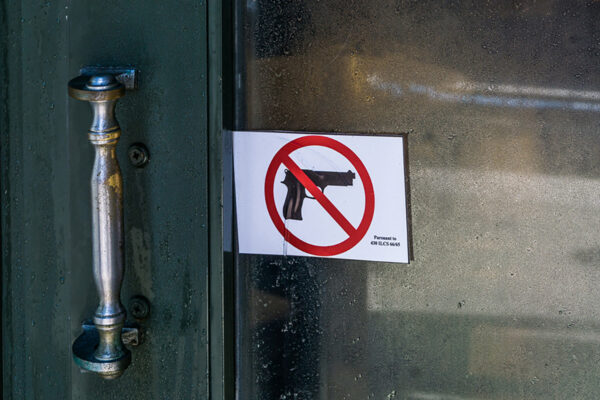
In Hawaii, following the Supreme Court’s 6-3 ruling striking down the state’s burdensome “vampire” restriction in Wolford v. Lopez, KITV News is reporting that a Honolulu law firm—Davis Levin Livingston—and the Hawaii chapter of Brady United Against Gun Violence are distributing free signs to local businesses which read “Guns Not Allowed.” The Wolford ruling said Hawaii’s requirement that licensed law-abiding armed citizens needed to get express permission to be armed on private property which is open to the public is unconstitutional.

The KITV report quoted one businessman stating this is “unfair to the business owners.” Brady and the law firm are essentially making businesses take sides in a fight that has already been settled. The story might have been fine except for the last line, which advises viewers: “If you are interested in obtaining one of the signs, email gunsafety@davislevin.com.”

Anti-gunners lost in Hawaii, but they’re definitely not giving up in their stubborn efforts to discourage legally-armed citizens from entering business establishments.

A Biden Appointee Delivers a Landmark 2A Victory

Back on the mainland, in the wake of the Third Circuit Court’s 10-5 ruling in Cheeseman striking down New Jersey’s longtime ban on so-called “assault weapons” and “large-capacity magazines,” a subtle but significant bit of press bias seems to be surfacing.

In only a very few reports has the author of the majority opinion, Circuit Judge Arianna Julia Freeman, been identified, especially as a Joe Biden appointee. In one report, she was identified only by her last name. Other reports, notably at NJ.com and Politico, the attention was paid to the concurring opinion authored by Judge Paul Matey, whom both news agencies made a point of identifying as a Donald Trump appointee.

To its credit, The Hill identified Judge Freeman as a Biden appointee, and so did TheGunMag.com in its breaking news report last Friday.

Why is this important?

Federal judicial appointments almost always reflect the political philosophies of the president making those nominations. For a Biden appointee to author such a pro-Second Amendment opinion is unusual and extremely significant, while it cannot be surprising for a Trump-appointed judge to weigh in on the correct side of the 2A argument.

The Third Circuit ruling reinforces the notion that the Supreme Court’s 2022 Bruen ruling is having a major impact on the way lower courts are having to decide Second Amendment cases.

As noted in his YouTube video detailing the New Jersey decision, attorney William Kirk, president of Washington Gun Law, put it bluntly: “This case is absolutely littered with good rules of law that systematically picks apart all of the arguments that the civilian disarmament regimes have been arguing for years now which have been working in some courts to uphold these otherwise unconstitutional bans.”

In his concurring opinion, Judge Matey was also blunt, observing that the majority opinion should derail the Garden State’s “repeated and relentless assault on the Second Amendment.”

New Jersey Refuses to Accept the Court’s Message

Resistance to pro-2A rulings isn’t confined to Hawaii, as amplified by New Jersey state Attorney General Jennifer Davenport, who declared the Third Circuit opinion “invalidating New Jersey’s careful laws restricting the AR-15 and large capacity magazines is as unfortunate as it is legally incorrect.” She doesn’t elaborate on why or how the court majority is wrong and she is right. However, as noted by NJ.com, she did say this:

“Every other federal circuit court to consider the issue has come out the other way. Assault weapons and large capacity magazines play a dangerous role in the modern epidemic of mass shootings, and New Jersey acted reasonably and lawfully in restricting them.”

Supreme Court Rifle-Ban Showdown Looms

Whether the Third Circuit ruling is right or wrong will likely be settled by this time next year, after the Supreme Court hands down a decision on the two semi-auto ban cases it will be hearing in the fall term, challenging bans in Connecticut and Cook County, Illinois.

However, the reports from Hawaii and New Jersey underscore what could be described as the bitter resentment and resistance from gun control proponents when they lose, which has happened consistently at the Supreme Court since 2008. It signals the battle to fully restore the Second Amendment’s protection of a right that “shall not be infringed” will not end even when the high court hammers down on gun and magazine bans.

There will be other issues to address, including—but not limited to—such impairments as:

  • Permits to Purchase
  • Waiting Periods
  • Training Mandates
  • Constitutional (Permitless) Carry
  • National Reciprocity

The legal roller coaster ride is definitely far from over.

RELATED:


About Dave Workman

Dave Workman is a senior editor at TheGunMag.com and Liberty Park Press, author of multiple books on the Right to Keep & Bear Arms, and formerly an NRA-certified firearms instructor.Dave Workman


from https://ift.tt/OLGaerW
via IFTTT

Lindsey Graham’s Second Amendment Legacy: The U.S. Senator Who Helped Build the Supreme Court

“Lindsey Graham never authored a Second Amendment opinion, but without his work on the Senate Judiciary Committee there is no Justice Gorsuch, no Justice Kavanaugh, and no Justice Barrett — and no Second Amendment majority on the Supreme Court today.”Professor Mark W. Smith, Four Boxes Diner Host

Senator Lindsey Graham of South Carolina recently died at 71, and the tributes arriving from Washington will rightly dwell on three decades of service in the House and Senate. I want to focus on a narrower legacy, but one I consider his most consequential: without Lindsey Graham, the modern Second Amendment majority on the United States Supreme Court does not exist. That is not sentiment. It is a matter of record, built hearing by hearing on the Senate Judiciary Committee, and it deserves to be understood clearly at the moment of his passing.

THE SEAT HELD OPEN FOR THE PEOPLE

Justice Antonin Scalia, author of District of Columbia v. Heller, 554 U.S. 570 (2008), died on February 13, 2016, in the middle of that year’s presidential campaign. President Obama nominated Merrick Garland a month later. The Senate was in Republican hands, and Senate Majority Leader Mitch McConnell, together with Judiciary Committee Chairman Chuck Grassley, made the decision that no hearing would be held until the American people chose the next president. Graham was not chairman in 2016 — that gavel belonged to Grassley until 2019 — but as a senior member of that committee and a close ally of both McConnell and Grassley, he was part of the leadership triangle that held the line. Garland’s nomination expired without a vote on January 3, 2017.

Donald Trump won the presidency, and Neil Gorsuch was confirmed to the Scalia seat on April 7, 2017, by a vote of 54–45. It bears noting that Garland, who went on to serve as Attorney General, ran a Justice Department that argued against the Second Amendment claimants in New York State Rifle & Pistol Association v. Bruen, 597 U.S. 1 (2022) — a case we won. The seat Graham helped hold open did not go to Merrick Garland who ran likely the most partisan anti-American Department of Justice in decades.

THE BRETT KAVANAUGH DEFENSE

Graham’s defining moment came in September 2018, when Brett Kavanaugh’s nomination was thrown into crisis by Christine Blasey Ford’s allegations before the Judiciary Committee. Graham’s response at that hearing is among the most quoted floor speeches in modern Senate history. He told his Democratic colleagues: “If you wanted an FBI investigation, you could have come to us. What you want to do is destroy this guy’s life, hold this seat open, and hope you win in 2020.”

And later, in the same hearing:

“Boy, y’all want power. God, I hope you never get it. I hope the American people can see through this sham.”

Kavanaugh was confirmed on October 6, 2018, by a vote of 50–48. As a judge on the D.C. Circuit, he had dissented in Heller v. District of Columbia, 670 F.3d 1244 (D.C. Cir. 2011), arguing that a text, history, and tradition analysis forecloses banning semi-automatic rifles like the AR-15. He has been a reliable vote for the Second Amendment ever since, and I would not be surprised if he writes a future majority opinion vindicating that very dissent in the upcoming Grant v. Higgins and Viramontes v. Cook County AR-15 ban cases at the Supreme Court. None of that happens without the defense Graham mounted when the nomination was on the brink.

FIVE WEEKS IN THE FALL OF 2020

Justice Ruth Bader Ginsburg died on September 18, 2020, weeks before a presidential election. President Trump nominated Amy Coney Barrett, and with a Republican Senate and Graham now chairing the Judiciary Committee, she was confirmed on October 26, 2020, by a vote of 52–48 — barely five weeks after the seat opened. Justice Barrett has since been a steady vote in Bruen, Rahimi, and in this term’s United States v. Hemani and Wolford v. Lopez. That speed, engineered under Graham’s committee leadership, foreclosed the kind of delay that cost Merrick Garland his seat four years earlier.

THE ONE VOTE I WOULD TAKE BACK

I will not pretend Graham’s record was spotless. In 2022, he voted for the Bipartisan Safer Communities Act, the gun-control package negotiated by Senator John Cornyn, which handed President Biden a legislative win I opposed then and oppose now. That vote is a legitimate blemish. But Graham was also on record as an AR-15 owner who kept one for his own self-defense, and no single vote erases three Supreme Court confirmations and the hundreds of lower-court judges he helped install.

CLOSING

No one’s record in Washington is perfect, and Graham’s was not. But when the history of the modern Second Amendment is written, his name belongs on the page alongside Gorsuch, Kavanaugh, and Barrett — because without him, none of the three would sit on that Court today. My condolences go to his family, his staff, and his colleagues, including President Trump, who lost a genuine ally in the fight to restore the Constitution’s original meaning.


About Mark W Smith

Constitutional attorney and bestselling author Mark W. Smith hosts the Four Boxes Diner Second Amendment channel on Youtube and Rumble; is a member of the U.S. Supreme Court Bar; and his Second Amendment scholarship has been cited by many attorneys and judges, including by attorneys in legal briefs submitted to the U.S. Supreme Court. Professor Smith’s most recent book is ISRAEL DISARMED: What the October 7 Attack Teaches Americans about the Right to Bear Arms and he has lectured at Harvard Law School, Yale Law School, Princeton University, the Wharton School at U. Penn, and Oxford University. He is a frequent speaker at the Federalist Society’s Annual National Lawyers Convention in Washington, D.C.

Mark W Smith


from https://ift.tt/gdkVJnI
via IFTTT

Not Just Marijuana: CRS Says Hemani Could Put More Federal Gun Bans in the Crosshairs

Handgun and cannabis representing the Hemani marijuana gun ruling.
The Supreme Court rejected automatic disarmament based solely on regular marijuana use, while CRS says Hemani may prompt Congress to reconsider other §922(g) gun bans. Composite image used for illustrative purposes. iStock.com/[Josiah S.] and iStock.com/[Anna Wroblewska].
Congressional researchers are already telling lawmakers how they could respond after the Supreme Court rejected the federal government’s attempt to strip a man of his Second Amendment rights solely because he regularly used marijuana.

The new Congressional Research Service report does more than summarize United States v. Hemani. It gives Congress options for rewriting the federal marijuana gun ban and, more importantly, flags the possibility that lawmakers may need to reconsider other categorical prohibitions contained in 18 U.S.C. §922(g).

That makes this much bigger than a marijuana case. At its core, Hemani is about whether the government can erase a constitutional right by attaching a disfavored label to someone without proving that person is dangerous or providing any process before disarmament.

Supreme Court Rejects Automatic Disarmament

Federal law prohibits anyone considered an “unlawful user of or addicted to” a controlled substance from possessing firearms or ammunition. Violating §922(g)(3) can bring up to 15 years in federal prison. A conviction can also turn the defendant into a prohibited person for life.

Ali Danial Hemani admitted using marijuana about every other day and possessed a firearm in his home. The government did not allege that he was intoxicated while handling the gun, had threatened anyone, had misused the firearm, or that his marijuana use made him dangerous. It nevertheless argued that his regular marijuana use automatically placed him outside the Second Amendment.

The Supreme Court rejected that theory. Although all nine justices agreed with the judgment, seven joined Justice Neil Gorsuch’s majority opinion. Justices Samuel Alito and Elena Kagan concurred only in the judgment.

The government’s historical case rested largely on laws involving so-called habitual drunkards. But those laws generally targeted people whose drinking had left them incapacitated and unable to manage their affairs. They also served different purposes and ordinarily involved some legal proceeding before a person’s liberty was taken away.

Section 922(g)(3), by contrast, automatically disarmed Hemani without any individualized finding of incapacity or dangerousness and without any pre-deprivation process. The government’s historical analogy failed on whom the laws targeted, why they existed, and how they operated.

The Congressional Research Service report notes that the Court “explicitly recognized room for legislative action.”

Congress Can Respect the Ruling or Try to Rebuild the Ban

The Supreme Court did not facially invalidate the entirety of §922(g)(3). It decided that the statute could not constitutionally be applied to Hemani based solely on his regular marijuana use and without evidence connecting that use to dangerousness.

CRS says Congress could amend the law to “more narrowly capture only those individuals” whose substance use or choice of drug presents a danger to themselves or others.

That would be a substantial retreat from the government’s position in Hemani. Under Washington’s theory, the drug, dosage, effects, reason for possessing the gun, and the person’s actual behavior did not matter. Regular use of any controlled substance was enough to expose someone to a 15-year felony.

Nobody needs to be told that handling firearms while impaired is irresponsible. Laws addressing actual intoxication, threats, or dangerous conduct are fundamentally different from stripping a sober person of the right to keep a firearm at home because he used a politically disfavored substance days earlier.

The government does not permanently disarm everyone who drinks alcohol. Marijuana use should not become an excuse for treating millions of otherwise peaceable Americans as violent criminals without evidence.

The Bigger Threat to Washington’s Prohibited-Person Regime

The sleeper issue in the CRS report has little to do with marijuana. Congressional researchers say lawmakers may want to consider “modifying other categorical prohibitions in § 922(g).”

Section 922(g) contains nine prohibited-person categories covering everyone from fugitives and felons to people subject to certain restraining orders, those committed to mental institutions, unlawful drug users, and people convicted of misdemeanor domestic-violence offenses.

The Supreme Court did not declare those provisions unconstitutional in Hemani. The opinion does, however, reinforce several principles that will matter in future challenges. Once the Second Amendment’s text covers the conduct, the burden belongs to the government. Modern restrictions must resemble the nation’s historical tradition in both purpose and operation. A broad assertion that an entire class of people is dangerous is not a substitute for historical evidence, individualized findings, or due process.

That contrasts sharply with United States v. Rahimi, where the Supreme Court upheld temporary disarmament after a court found that an individual posed a credible threat to another person. Hemani received no comparable hearing or finding. His marijuana use itself triggered the prohibition.

Justice Clarence Thomas also wrote separately to question whether §922(g)(3) exceeds Congress’s Commerce Clause authority. The federal government claimed jurisdiction because the firearm had previously traveled in interstate commerce. Thomas argued that mere possession is not economic activity and that an item’s past movement across state lines should not give Congress unlimited power over its later possession.

A Narrow Ruling With a Broad Warning

Gun owners should not misread Hemani as completely erasing §922(g)(3) or automatically making every marijuana user’s firearm possession lawful nationwide. The Court expressly left several questions unanswered, including laws addressing current intoxication, the statute’s separate “addicted to” language, individualized proof of dangerousness, and evidence that a particular drug creates an exceptional risk of firearm misuse.

But describing the decision as narrow should not obscure what Washington lost. The federal government claimed it could take away a fundamental right, threaten a man with 15 years in prison, and leave him disarmed for life without proving he was dangerous, impaired, or irresponsible with a firearm. The Supreme Court unanimously rejected that result.

Congress should not treat the ruling as an invitation to replace one unconstitutional status-based ban with another. The proper response is to punish actual dangerous conduct rather than criminalize the peaceful exercise of a constitutional right.

Hemani did not establish a right to misuse firearms while intoxicated. It established that the government must show more than marijuana use before it can turn gun ownership into a federal felony. CRS clearly understands the distinction. The question now is whether Congress will respect it—or go searching for another way around the Second Amendment.


About Duncan Johnson:

Duncan Johnson is a lifelong firearms enthusiast and unwavering defender of the Second Amendment—where “shall not be infringed” means exactly what it says. A graduate of George Mason University, he enjoys competing in local USPSA and multi-gun competitions whenever he’s not covering the latest in gun rights and firearm policy. Duncan is a regular contributor to AmmoLand News and serves as part of the editorial team responsible for AmmoLand’s daily gun-rights reporting and industry coverage.Duncan Johnson


from https://ift.tt/tHlufND
via IFTTT

Sunday, July 19, 2026

James Talarico’s Gun-Control Past Resurfaces in Texas Senate Race

The Texas Democrat calls himself a Second Amendment supporter, but his former aide’s activism—and the gun-control bills he filed—tell a different story.

An I Voted sticker on an IWI X95 bullpup carbine in 5.56mm with an Elcan SpectreDR 1.5-6x optic on top. IMG Jim Grant
Democratic U.S. Senate nominee James Talarico employed former “C*cks Not Glocks” leader Ana Lucia Lopez as a legislative aide during his first Texas House session. IMG Jim Grant

James Talarico is the Democrats’ candidate to replace Texas Senator John Cornyn. During his four terms as a representative in the Texas House, 2A issues have never been a particular issue for Talarico, so his choice of a new legislative aide is either a bold move, staking a new claim on the issue, or a real head-scratcher.

Ana Lucia Lopez is a dedicated, dyed-in-the-wool gun control zealot.

When she was a student at the University of Texas at Austin, she inherited the leadership of “C*cks Not Glocks,” a student group that protested Senate Bill 11, the campus carry bill signed into law in June 2015.

The new law allowed students with Texas concealed handgun licenses to carry their guns on community college and state university campuses. There were numerous restrictions but there was still an outcry from faculty and students.

C*cks Not Glocks grew out of a social media post by Jessica Jin, another UT student. According to the Houston Chronicle, Jin said she wanted to “put a dildo in the hands of every pissed off college student who hasn’t been heard in this safety conversation.” She also said, “Strap it on, feel the discomfort, feel the weird looks. Wear it loud, wear it proud, and don’t take them off until people take their guns home.”

Supported by donations, the group claimed it distributed about 4,500 of Jin’s preferred sex toy to protestors.

The law went into effect on August 1, 2016. A rally was staged about three weeks later on August 24, 2016. It was highlighted by students wearing T-shirts featuring slogans and male genitalia.

The year after the UT rally, a sister group at the University of Wisconsin-Madison held its own rally. Forbes called it one of the seven most ridiculous college protests of 2017.

Jin graduated and moved to California. Lopez took the reins and carried on, organizing Students Against Campus Carry.

From ‘C*cks Not Glocks’ to the Texas Capitol

When Talarico was a freshman representative in the 86th Texas Legislature, Lopez drafted or helped draft three bills. House Bill 3506 would have added restrictions to reciprocity; House Bill 3507 would have required dealers and shooting range operators to run a NICS background check on people renting a firearm for use at the range; and House Bill 3508 would have changed Texas from a shall-issue state to a may-issue state.

All three bills were filed on March 6, 2019. They were read for the first time and referred to the Homeland Security and Public Safety on March 18 and died when the 86th Legislature adjourned sine die in May.

They didn’t attract any sponsors or co-sponsors; there were no public hearings; and none appeared on the committee calendar.

Three Gun-Control Bills–All Dead on Arrival

About a month later, Lopez, who was in a four-year, liberal arts, undergraduate honors program, submitted her senior’s thesis. Entitled “Oh, Shoot: A Sociological Analysis of Gun Culture in the Age of Campus Carry,” it was exactly what one would expect from a dyed-in-the-wool gun control zealot. Talking points faithfully parroted with little discernible analysis.*

She proudly mentioned her authorship of the bills. Since the paper was submitted a month before the 86th legislative session ended, she was spared the need to share their fates.

Lopez also touched on House Bill 357, former Rep. Jonathan Stickland’s constitutional carry bill, which did have a number of sponsors. It was torpedoed by the Republican Speaker of the House and a Democrat committee chairman later arrested for cocaine possession. Texans had to wait two more years for permitless handgun carry.**

Texas Chose Constitutional Carry Instead

I didn’t do an exhaustive search of the legislative filings during Talarico’s three subsequent legislative sessions but I found only one other 2A-related bill authored by Talarico. That was House Bill 5025, a prohibition on carrying in a library he filed in the most recent session. Like his three previous bills, it attracted no co-sponsors and died in committee.

He was a co-sponsor on five other bills but, considering how many gun control bills were filed in the 87th, 88th, and 89th sessions, his involvement took a back seat to his other priorities.

In her new role, Lopez will again be drafting legislation. As an ardent gun-grabber, there’s no reason to believe she will be affected by the changes in the landscape, including multiple significant setbacks in the courts or the fact Texas and 12 other states adopted constitutional carry since she drafted those three bills in 2019.

And campus carry is still legal in Texas.

Talarico’s Anti-Gun Legislative Record

Legislative aides typically aren’t fodder for the media and opposition. The C*cks Not Glocks episode has largely been forgotten by the public. So it’s hard to understand Talarico’s choice of Ana Lopez.

The media reports of Talarico’s selection have made Lopez’s past sensational. The mixture of immaturity, obscenity, and sex toys is red meat for opponents and perhaps a bit embarrassing for supporters. Especially when reminded the movement failed to change anything.

James Talarico is already vulnerable on 2A issues; he doesn’t have a track record, and I am not sure he even understands why John Cornyn lost in the primaries.

However, he has provided a rallying point for Republicans in a mid-term election.

*Lopez’s paper did include a reference to a 2016 Ammoland article by Dr. Marshall St. John, “Fifteen Reasons You Should Own A Gun.

**[Full disclosure: I was involved in the effort to advance House Bill 357.]


About Bill Cawthon

Bill Cawthon first became a gun owner 55 years ago. He has been an active advocate for Americans’ civil liberties for more than a decade. He is the information director for the Second Amendment Society of Texas.Bill Cawthon


from https://ift.tt/kd1X6Am
via IFTTT