Thursday, January 22, 2026

4th Circuit Upholds Most of Maryland’s Sweeping “Sensitive Places” Gun Ban

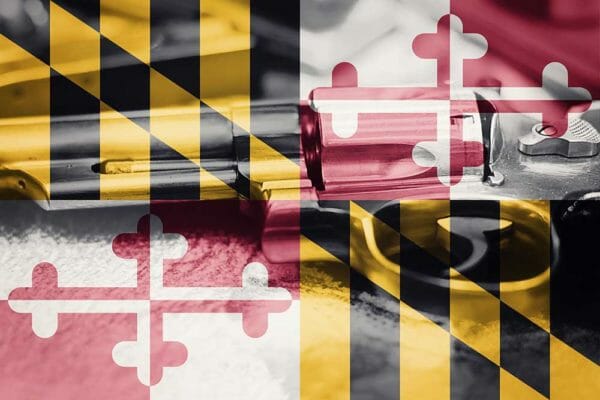
More Assaults on Maryland Gun Owners, iStock-884191290, Allexxandar
iStock-884191290

A federal appeals court has upheld most of Maryland’s Gun Rights Safety Act of 2023, allowing the state to ban firearms in a wide range of public locations, while striking down one key provision that would have effectively turned much of the state into default gun-free zones.

In a decision issued January 20, 2026, a three-judge panel of the U.S. Court of Appeals for the Fourth Circuit ruled that most of the locations listed in Maryland’s law qualify as “sensitive places” under Supreme Court precedent.

The court rejected, however, Maryland’s attempt to prohibit firearms on private property that is open to the public unless the owner gives explicit permission .

What the Court Decided

Writing for the majority, Circuit Judge Roger L. Gregory said that the Supreme Court’s decisions in District of Columbia v. Heller and New York State Rifle & Pistol Association v. Bruen allow governments to prohibit firearms in certain locations with historical analogies.

The Fourth Circuit upheld Maryland’s bans on carrying firearms in government buildings, schools and school grounds, public transportation, parks and forests, health care facilities, stadiums, museums, casinos, racetracks, amusement parks, and locations that sell alcohol for on-site consumption.

The court also reversed an earlier district court ruling. It allowed the state to enforce a ban on carrying firearms at public demonstrations and within 1,000 feet of them, provided law enforcement first orders the armed individual to leave.

At the same time, the panel unanimously agreed that Maryland went too far when it tried to ban firearms on all private property that is open to the public unless the owner affirmatively allows carry.

“Maryland’s rule would effectively declare most public places ‘gun-free zones,’” Gregory wrote. “But that likely stretches the sensitive places doctrine too far” .

A Sharp Dissent on Constitutional Limits

Judge Steven Agee concurred with parts of the ruling but issued a strong partial dissent, warning that the majority’s approach risks hollowing out the Second Amendment. [too late]

He agreed that schools, government buildings, and health care facilities can be treated as sensitive places. But he argued that approving Maryland’s long list of additional locations “stretches the sensitive places exception into a broad license to prohibit firearms in locations where people gather for almost any purpose” .

Agee emphasized that Bruen requires modern gun laws to be grounded in Founding-era history, not later traditions selectively assembled to justify broad bans. In his view, the absence of close historical analogues should be decisive, not brushed aside.

How This Case Got Here

The case combined two separate challenges to Maryland’s Gun Rights Safety Act of 2023, filed the same day Governor Wes Moore signed the law. Plaintiffs included Maryland gun owners, Maryland Shall Issue, the Maryland State Rifle and Pistol Association, and the Second Amendment Foundation.

In August 2024, U.S. District Judge George L. Russell III upheld most of the law but blocked enforcement of the private-property provision, the alcohol-location ban, and the demonstration buffer zone. His ruling declared those three provisions unconstitutional and barred the state from enforcing them against permit holders.

The Fourth Circuit’s new decision largely restores the law, reversing the district court on alcohol-serving locations and public demonstrations, while leaving the private-property ruling intact.

Reaction From Both Sides

Mark Pennak, president of Maryland Shall Issue, said gun-rights advocates are not done fighting.

While he welcomed the court’s rejection of the private-property ban, Pennak said gun owners are “considering our options,” including asking the full Fourth Circuit to rehear the case or appealing directly to the U.S. Supreme Court.

Democrat Governor Wes Moore called the ruling “a major win for public safety in Maryland,” rolling out the tired trope that the state would continue working to “keep illegal guns off our streets” while respecting lawful ownership.

Gun-control groups also celebrated the outcome. Everytown Law, which supported Maryland as an amicus, said the decision reinforces the idea that states may restrict firearms in places like parks, schools, transit systems, and entertainment venues.

Why This Matters Nationally

This ruling is one of the most detailed appellate decisions to date applying the Supreme Court’s Bruen framework to “sensitive places.” For gun owners, the takeaway is clear: at least in the Fourth Circuit, courts are willing to approve broad location-based carry bans so long as judges can point to some historical tradition or analogy.

At the same time, the court drew a line against laws that flip the presumption of carry on private property open to the public, signaling that there are still constitutional limits—even if they are narrowing.

With similar “sensitive places” laws on the books in other states, and judges openly disagreeing on how far Bruen allows legislatures to go, the issue is increasingly likely to return to the U.S. Supreme Court.


Maryland’s Gun-Free Zones Getting Roasted in Federal Court ~ 2A Victory May Be Coming ~ VIDEO

SCOTUS is Right About This – It Will Need to Address State Gun Bans


from https://ift.tt/OQrgqj9
via IFTTT

Wisconsin Looks to Solidify Right to Bear Arms in State Constitution

Wisconsin Supreme Court: Disorderly Conduct is not Domestic Violence
Wisconsin Supreme Court neutered state right to keep and bear arms amendment.

U.S.A. – In 1998, Wisconsin concluded the lengthy process to amend the state constitution to add an amendment protecting the right to keep and bear arms. The amendment passed by a super majority, 74% to 26%.

 The amendment is straightforward.

The people have the right to keep and bear arms for security, defense, hunting, recreation or any other lawful purpose.

The amendment was codified in the Wisconsin state constitution as section 25 of Article I. Court cases challenging Wisconsin laws that infringed on rights protected by section 25 began fairly quickly.

In July of 2003, the Wisconsin Supreme Court found the state ban on the carry of concealed weapons to be presumptively legal, in State v. Cole. They stated that a Constitutional amendment is still subject to “reasonable regulation“. The court essentially neutered the right to keep and bear arms as a significant protection of people’s rights. The court had a nominally conservative majority. The case was heard five years before the Heller decision in 2008. Cole was an ugly case with the defendant a convicted drug dealer.

In June of 2016, another case was being heard in Kenosha, Wisconsin. This case also challenged state law. In this case, the defendant was squeaky clean. The case was, in essence, a prequel to the famous Kyle Rittenhouse case in 2021. The prosecutor was the infamous Thomas Binger, the same as for Rittenhouse. The judge was none other than the now-famous Honorable Bruce Schroeder. The case was clear-cut. Guy Smith had a revolver in his truck for his protection. Thomas Binger prosecuted the case through the point where it was going to trial. Judge Schroeder presided over the case. Judge Schroeder correctly ruled against the prosecution’s motion before the trial. Binger dropped all charges, then refused to give Guy Smith his revolver back.

Wisconsin Republicans have filed an amendment to change the wording of Section 25. The wording is meant to strengthen the amendment and place it beyond the court’s power to render it impotent.  The changed language would read thus:

  [Article I] Section 25. The people have the inalienable right to keep and bear arms which right shall never be infringed. The right of the people to keep and bear arms is a fundamental individual right, and any restriction on that right shall be subject to strict scrutiny.

The action, AJR112, has not been voted on at this time. There is an identical resolution in the Senate, SJR105. If the resolution passes the Assembly and the Senate, it must pass again after an election. If it passes the second time, it will go to the people in the form of a referendum during the next election. If the referendum passes, the amendment becomes part of the state constitution.  The governor is not required to sign off on any of this process.

If two legislatures pass the amendment, it will be put to a referendum. The Second Amendment is popular in Wisconsin and across the country. No referendum establishing or strengthening the right to arms has failed a state-wide referendum, to the knowledge of this correspondent.  Such actions have failed in state legislatures, but not as referendums. Such referendums typically pass with supermajorities.  The Wisconsin Senate has 18 Republicans and 15 Democrats. The state Assembly has 54 Republicans and 45 Democrats.

AJR112 has 12 sponsors. SJR105, the Senate version, has four sponsors. The legislation was introduced on October 30, 2025.


About Dean Weingarten:

Dean Weingarten has been a peace officer, a military officer, was on the University of Wisconsin Pistol Team for four years, and was first certified to teach firearms safety in 1973. He taught the Arizona concealed carry course for fifteen years until the goal of Constitutional Carry was attained. He has degrees in meteorology and mining engineering, and retired from the Department of Defense after a 30 year career in Army Research, Development, Testing, and Evaluation.

Dean Weingarten

x

x


from https://ift.tt/gPsCLUK
via IFTTT

Wednesday, January 21, 2026

The Insurrection Act, Which Trump Keeps Threatening to Invoke, Is Alarmingly Vague and Broad:

Opinion

Another Democrat Gun Grabber Calls for Political Violence, This Time with ‘Actual Weapons’ iStock-482523735
iStock-482523735

President Donald Trump, who has periodically threatened to invoke the Insurrection Act before reconsidering, performed that familiar two-step again last week.

“I don’t think I need it right now,” Trump told reporters the day after he said he might deploy active-duty military personnel against “professional agitators and insurrectionists” in Minnesota.

The Pentagon nevertheless told 1,500 soldiers stationed in Alaska to be ready for that assignment, just in case the president changed his mind again. It therefore seems like a good time to recall why critics of the Insurrection Act, which on its face gives the president alarmingly broad authority to send in the troops, say it desperately needs reform.

That law, which descends from legislation that Congress approved between 1792 and 1871, includes two provisions that could be especially useful to any president who is itching to use the military for law enforcement. Both include outmoded language that is puzzling to modern readers, and both seem to give the president wide discretion in deciding when soldiers should become cops.

The second section of the Insurrection Act applies “whenever the President considers that unlawful obstructions, combinations, or assemblages, or rebellion against the authority of the United States, make it impracticable to enforce the laws of the United States in any State by the ordinary course of judicial proceedings.” In that case, the president “may call into Federal service such of the militia of any State, and use such of the armed forces, as he considers necessary to enforce those laws or to suppress the rebellion.”

The third section of the Insurrection Act says the president, “by using the militia or the armed forces, or both, or by any other means, shall take such measures as he considers necessary to suppress, in a State, any insurrection, domestic violence, unlawful combination, or conspiracy” in either of two situations. One trigger, which involves violations of constitutional rights that a state has proven unwilling or unable to protect, has been invoked by past presidents but does not seem relevant to the unrest that troubles Trump.

The other trigger is more open to interpretation. It authorizes domestic military deployments when any of the listed illegal activities “opposes or obstructs the execution” of federal laws or “impedes the course of justice under those laws.”

The Insurrection Act’s terms are so hazy and sweeping that the statute arguably allows the president to deploy “the militia or the armed forces” at will in response to nearly any form of domestic disorder. If so, it is hard to see what remains of the Posse Comitatus Act, which makes it a crime to deploy the armed forces “to execute the laws” except in “cases and under circumstances expressly authorized by the Constitution” or an act of Congress.

The Insurrection Act “provides broad authority without sufficient checks and balances,” the American Law Institute, whose membership “spans a range of legal and political views,” warned in 2024. “It is an old statute with vague triggers for the indefinite domestic use of military force.”

Some of those triggers, the ALI noted, “are expressed in antiquated language,” such as “combination,” “obstruction” and “assemblage,” with no clear contemporary meaning. Worse, “the Insurrection Act contemplates no role for Congress in the use of the authorities under the Act even though the president receives those authorities from Congress.”

Those flaws “have been clear for a long time and have prompted numerous proposals for reform,” the ALI noted. In addition to updating the law’s language, the ALI recommended that Congress “strengthen the conditions” for using the Insurrection Act, impose time limits on deployments, and require “reporting and consultation.”

The Insurrection Act may be newly appealing to Trump now that the Supreme Court has cast doubt on his use of a different, less permissive statute to deploy National Guard members. But even Americans who have complete faith in Trump’s wisdom and self-restraint should worry about how future presidents might abuse this dangerously vague law.


About Jacob Sullum

Jacob Sullum is a senior editor at Reason magazine. Follow him on Twitter: @JacobSullum. During two decades in journalism, he has relentlessly skewered authoritarians of the left and the right, making the case for shrinking the realm of politics and expanding the realm of individual choice. Jacobs’ work appears here at AmmoLand News through a license with Creators Syndicate.

Jacob Sullum
Jacob Sullum

Canada’s Latest Gun Ban is Doomed To Fail – Spectacularly

Idaho GOP Weaver Resolution a Welcome Move but Falls Short of Needed Action


from https://ift.tt/Ey6pH53
via IFTTT

SCOTUS Weighs Hawaii “Vampire Rule” As Gun Owners Challenge Default Ban On Carry In Most Private Businesses ~ VIDEO

WASHINGTON — The Supreme Court heard nearly two hours of argument Tuesday, January 20, 2026, in Wolford v. Lopez, a Second Amendment case that could decide whether states can make “no guns” the default rule for private property that’s open to the public—unless the owner gives express permission.

At the center is a Hawaii law passed after New York State Rifle & Pistol Association v. Bruen (2022). Hawaii’s rule generally bars licensed concealed carriers from bringing a handgun onto private property open to the public unless the property owner affirmatively says “yes.”

From the questioning, the Court’s conservative majority sounded skeptical of Hawaii’s approach, while several liberal justices pressed a competing frame: this isn’t a “carry” case so much as a property-consent case.

What Hawaii’s Law Does, in Plain English

Hawaii’s statute flips the default most Americans are used to. In many states, if a business is open to the public, licensed carry is generally allowed unless the owner posts a sign or tells you otherwise. Hawaii’s rule goes the other direction: you can’t assume consent—you must have it.

During argument, Hawaii’s lawyer Neal Katyal put it bluntly: “[T]here is no constitutional right to assume that every invitation to enter private property includes an invitation to bring a gun.”

He added the line that kept coming up in coverage: “[A]n invitation to shop is not an invitation to bring your Glock.”

Gun-rights challengers say that the default rule turns carry into a practical “ban” across everyday life—restaurants, stores, and other places people routinely enter.

The challengers’ pitch: this “default ban” clashes with Bruen and national tradition

Arguing for the gun owners, attorney Alan Beck told the Court Hawaii’s rule is effectively a presumptive ban on carry in public-facing private property, and that the burden is on Hawaii—under Bruen—to prove a comparable historical tradition.

One flashpoint was the challengers’ claim that Hawaii’s broader post-Bruen location rules functionally block carry across most of the state. Justice Clarence Thomas pressed Beck about a headline number often cited in the case, and Beck explained they used an outside firm and public records to estimate coverage:

“[T]he overall laws … presumptively bans carry on 96.4%.”

In rebuttal, Beck also argued the “express consent” model didn’t arise naturally, but as a deliberate response to Bruen, pointing to a national trend and political statements around it.

The justices’ biggest divide: Second Amendment case, or property-rights case?

A major theme—especially from Liberal Justice Ketanji Brown Jackson—was that what’s really being regulated here is how consent works on private property, not the right to bear arms.

In that framing, the Second Amendment already yields to an owner’s right to exclude you; the state is simply choosing whether consent is presumed (unless posted otherwise) or must be explicitly granted.

Other justices were plainly worried about what happens if states can re-label a carry restriction as merely “tweaking trespass.” Justice Neil Gorsuch suggested the Court generally doesn’t let governments redefine property rules to dodge constitutional protections, drawing an analogy to other constitutional contexts.

The Chief Justice and Justice Alito pushed the “second-class right” concern more directly. Reporting on the argument captured Roberts’ warning that the Second Amendment has become a “disfavored right,” while Alito accused Hawaii of pushing gun rights into “second-class” status.

The “Black Codes” dispute: can racist-era gun restrictions count as “tradition”?

The historical-analogy fight got especially tense when Hawaii leaned in part on an 1865 Louisiana law associated with post–Civil War Black Codes. Some justices questioned whether laws designed to disarm newly freed Black Americans can legitimately support modern restrictions.

Justice Gorsuch was openly skeptical of using Black Codes as tradition. Hawaii responded that those laws are a shameful part of history, but still part of what courts must evaluate if the test is history-and-tradition.

Justice Jackson raised a different worry: if courts start taking whole chunks of historical regulation “off the table,” that may expose deeper problems with the Bruen methodology itself.

The federal government sides with the challengers, but the Court wasn’t eager to expand the test

The Trump administration backed the gun owners. Principal Deputy Solicitor General Sarah Harris argued that treating this as just a consent/default-rule question could open the door to broader carry restrictions by redefining property concepts.

But several justices seemed uninterested in building a new “pretext” doctrine to decide gun cases—preferring to keep it simple: does the Second Amendment cover the conduct, and is there a sufficiently similar historical tradition or not?


Why this case matters beyond Hawaii

A ruling that blesses Hawaii’s “express consent” default could strengthen similar laws in other states that adopted post-Bruen location and private-property restrictions.

On the other hand, if the Court strikes Hawaii’s law, states may still allow owners to exclude guns—but they may have to do it the “traditional” way: owners post or tell you “no,” rather than making every lawful carrier assume “no” unless told “yes.”

Either way, the Court’s decision will likely clarify how far states can go in turning ordinary, public-facing private spaces into de facto “sensitive places” through default rules that can then ban your constitutional GOD given rights.

SCOTUS Oral Arguments Wolford v. Lopez January 20th, 2026


DOJ Files Amicus Brief In Hawaii Concealed Carry Case

Wolford v. Lopez: Why the Supreme Court’s Latest 2nd Amendment Case Risks Missing the Real Threat


from https://ift.tt/beqPHvz
via IFTTT

Tuesday, January 20, 2026

New York’s Proposed 3D Printing Law Is Doomed To Fail

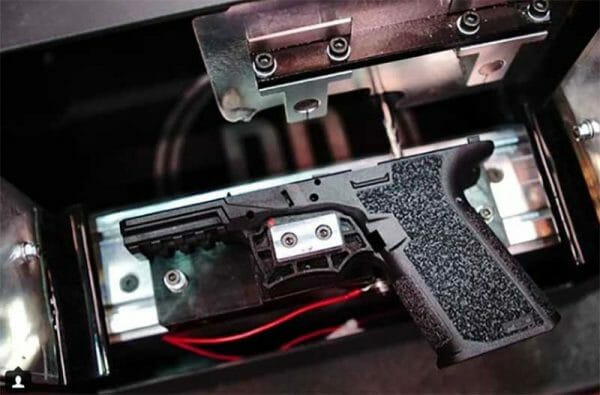
3D Printed Ghost Guns
New York’s Proposed 3D Printing Law Is Doomed To Fail

New York Governor Kathy Hochul unveiled a package of proposals as part of her State of the State agenda to combat the rise of untraceable “ghost guns,” with a particular focus on those produced via 3D printing.

Dubbed a “first-in-the-nation” initiative, the legislation would require 3D printer manufacturers to equip devices sold in New York with software that can detect and block the production of firearms or their components. Additional measures include criminalizing the unlicensed possession, sale, or distribution of digital blueprints (CAD files) for guns, requiring gun makers to design pistols that are resistant to easy conversion into machine guns (e.g., via “Glock switches”), and mandating that law enforcement report recovered 3D-printed firearms to a statewide database.

Hochul framed the proposals as essential to closing the “plastic pipeline” of illegal weapons, building on New York’s already stringent gun laws. She highlighted a reported 1,000% increase in 3D-printed gun recoveries over recent years and cited cases like the alleged use of a 3D-printed gun in high-profile crimes. Supporters, including Manhattan District Attorney Alvin Bragg and State Police Superintendent Steven G. James, praised the measures for addressing an “emerging threat” that undermines progress in reducing gun violence—shootings statewide hit record lows in 2025.

The core of Hochul’s plan is to force 3D printer companies to integrate safeguard technology into their firmware or software. This process could involve algorithms that scan sliced print files for matches against a database of known firearm designs and halt jobs deemed suspicious. Proponents argue that this multilayered detection, potentially at the slicer software, cloud management, or printer level, would deter casual production and make it harder to manufacture unserialized firearms at home.

Yet, despite the ambitious rhetoric, this approach is fundamentally flawed and unlikely to achieve its goals. Technical, practical, legal, and enforcement challenges render it ineffective against determined individuals, while imposing burdens on legitimate users and manufacturers.

First, the proposal applies only to new 3D printers sold in New York after its enactment. Millions of existing printers nationwide, and thousands already in New York homes, workshops, and schools, remain unaffected. Hobbyists, makers, and potential bad actors can continue using older models without restrictions. Even for new printers, compliance depends on manufacturers based outside New York (many of them overseas) agreeing to region-specific firmware, which creates logistical and economic hurdles.

More critically, any built-in blocking software is easily circumvented. Most consumer 3D printers run open-source firmware like Marlin or Klipper, which users routinely modify, flash, or replace. Tech-savvy individuals, precisely those most likely to pursue homemade firearms, can disable or remove detection features in minutes. Offline printing via USB or SD card bypasses cloud-based checks, and altered files (e.g., slightly modified geometries or disguised as innocuous objects) evade signature-based detection. As experts note, this is a classic “whack-a-mole” problem: databases of banned designs quickly become outdated as new variants proliferate.

Historical precedents underscore this futility. Efforts to restrict digital firearm files, such as the 2013 controversy over Defense Distributed’s Liberator pistol, failed spectacularly. Files spread via torrent sites, decentralized platforms, and dark web repositories beyond any single jurisdiction’s reach. Court battles have affirmed that code is speech under the First Amendment, thereby protecting blueprints as expression. Hochul’s criminalization of unlicensed possession of CAD files invites similar constitutional challenges, likely leading to the striking down of broad restrictions on information sharing.

Enforcement poses another insurmountable barrier. Detecting private 3D printing requires invasive monitoring, home raids based on suspicious filament purchases, or monitoring online activity? New York’s law would struggle to police decentralized file sharing globally. Criminals motivated enough to build untraceable weapons won’t be deterred by software hurdles they can hack around, while law-abiding makers face unnecessary restrictions on printing benign objects.

Critics from Second Amendment advocates, including the 3D printing community, argue the plan infringes on rights without addressing the root causes of crime. Most illegal firearms stem from theft, trafficking, or straw purchases, not home printing. Data shows privately manufactured firearms (PMF), while rising, remain a fraction of recovered crime guns. Punishing printer manufacturers and users burdens innovation in a technology used for prototyping, education, medicine, and art.

Moreover, the proposal risks unintended consequences. Forcing detection tech could drive users to unregulated imported printers or DIY builds, undermining safety standards elsewhere. Manufacturers like Prusa, Bambu Labs, or Creality might limit sales in New York or challenge the mandate legally, citing interstate commerce issues.

Hochul’s initiative reflects a broader trend: politicians targeting emerging technology to signal tough-on-crime stances amid a decline in overall violence. New York’s shootings dropped dramatically under existing laws, yet the focus on 3D printing amplifies a niche threat. Similar past attempts, bans on 80% gun kits or file distribution, slowed but never stopped proliferation, as innovation outpaces regulation.

Ultimately, information and technology cannot be fully controlled in a free society. Firearm designs have circulated in books and diagrams for centuries; digital files are no different. Determined actors will always find ways to modify printers, source files anonymously, or use alternative methods like CNC milling. Hochul’s plan may score political points and inconvenience some, but it won’t meaningfully curb the production of 3D-printed guns. True public safety lies in targeted enforcement against criminals, not futile battles against bits and bytes.

Not to be outdone by New York, Washington state has introduced a nearly identical and equally flawed law.

Can’t Stop the Files: Media’s War on 3D-Printed Firearms Exposed


About John Crump

Mr. Crump is an NRA instructor and a constitutional activist. John has written about firearms, interviewed people from all walks of life, and on the Constitution. John lives in Northern Virginia with his wife and sons, follow him on X at @crumpyss, or at www.crumpy.com.

John Crump


from https://ift.tt/95phI6R
via IFTTT

DeStefano Flown to New York City, Prepping for Court Hearings

Scales of Justice Gun Laws Court Gavel Judges iStock-Denise Hasse1136158583

Indie Guns owner Lawrence Michael DeStefano was picked up from Florida’s Orange County Jail by New York detectives this week after serving nearly 90 days in custody and flown to New York City aboard a private jet.

When they landed, the officers took a group photo and then rushed DeStefano to an NYPD precinct to be booked, and then to a quick court hearing in Queens. Afterward, he was taken to Rikers Island, a notorious 413-acre state prison located in the East River near the Bronx, where he remains incarcerated.

At the court hearing, a New York State prosecutor tried to portray him as an “evil gun runner,” DeStefano said, but the judge cut her off.

“The judge looked at her and said, ‘I have a 65-year-old man with no criminal record and you’re saying all these bad things about him.’ Then he turned to me and said, ‘You’ve got some real serious charges against you. If you’ve got somewhere to stay, I will let you out on bail,’” DeStefano said over a jail phone Friday morning. “This is going to be a fight and the gloves are off. I am going balls-to-the-wall on this. It’s going to get ugly.”

DeStefano’s court-appointed defense attorney was of little help. She showed up just seconds before the hearing began.

“She had no idea what was going on,” he said.

He will appear in court for a bail hearing in two weeks, DeStefano said.

“I need to figure out how to get a message to the gun community,” he said. “If I am out on bail, I could win this. I know what I need to do to win this. I need to do research, but they’re seizing it for evidence. They already deleted my Telegram account after they got my password,” he said.

Throughout the trip, the detectives were talking furiously with the New York State Attorney General’s Office about whether to issue a press release, DeStefano said.

“It was chaos. Everyone was on their phones. They decided to issue a press release,” he said. “You guys really think you’re doing a press release? You’re helping me. The gun culture is a tight-knit family.”

New York State Attorney General Letitia James issued a massive press release late Wednesday, titled, “Attorney General James and NYPD Commissioner Tisch Announce Indictment of Florida Man for Illegally Shipping Firearms and Ghost Guns to New York.”

It contains a link to a 42-page indictment that charges DeStefano with 71 felonies, which could see him jailed for a total of 521 years.

“Lawrence Destefano and his company Indie Guns are accused of flooding New York with illegal firearms, and we are determined to bring him to justice,” James said in the press release. “I will not tolerate illegal and dangerous weapons in our communities, and I thank our partners in law enforcement for their work to shut down this ghost gun supplier.”

Despite the allegation and the centuries behind bars DeStefano faces, the press release indicates that only a dozen actual firearms were recovered, along with “two ghost gun kits, 28 high-capacity magazines, and over 1,400 rounds of ammunition, which were mailed to locations in Brooklyn, Queens, and Nassau County.”

The press release also mentions the default judgement James won in a civil suit against DeStefano, which he ignored.

“In March 2024, Attorney General James secured a $7.8 million judgment and court order against Indie Guns prohibiting it from selling firearms in New York,” the press release states.

The lengthy press release even includes quotes from NYPD Commissioner Jessica S. Tisch, HSI New York Special Agent in Charge Ricky J. Patel and USPIS Inspector in Charge Ketty Larco-Ward of the New York Division. All strongly supported James for “disrupting the dangerous illicit weapons pipeline,” and for “dismantling gun trafficking networks.”

DeStefano knows he will be severely outgunned in court.

“I am ready for the fight,” he said.

This story is presented by the Second Amendment Foundation’s Investigative Journalism Project and wouldn’t be possible without you. Please click here to make a tax-deductible donation to support more pro-gun stories like this.


About Lee Williams

Lee Williams, who is also known as “The Gun Writer,” is the chief editor of the Second Amendment Foundation’s Investigative Journalism Project. Until recently, he was also an editor for a daily newspaper in Florida. Before becoming an editor, Lee was an investigative reporter at newspapers in three states and a U.S. Territory. Before becoming a journalist, he worked as a police officer. Before becoming a cop, Lee served in the Army. He’s earned more than a dozen national journalism awards as a reporter, and three medals of valor as a cop. Lee is an avid tactical shooter.

Lee Williams


from https://ift.tt/vwK4V2b
via IFTTT

Monday, January 19, 2026

2026 NRA Board Member Update: Elections, Board Meeting, & More

Opinion

Leadership Board of Directors Compass iStock-donskarpo 490990815.jpg
iStock-donskarpo 490990815

Tombstone, Arizona – Finally back home in Arizona from the Winter NRA Board Meeting in Northern Virginia.

I stayed for a few days after the meeting to pay my respects to my friend Phil Schrier, who passed away just before the meeting.

Phil was the NRA’s Director of Museums. He had a wealth of knowledge about the history of firearms, especially certain critical periods in which firearms were used extensively, and technology advanced. He and my father loved to debate the details of the first and second battles of Manassas (what the Yankees called Bull Run), while Phil and I shared a love of old west lore about cowboys and gunfighters. Many of you are probably familiar with Phil from his many appearances discussing the firearms of history or the history of firearms on the History Channel, the Discovery Channel, NRA TV, various YouTube programs, and, of course, in the pages of NRA publications. Phil really found his calling when he snagged an internship at the NRA’s National Firearms Museum some 35 years ago, and the Museum and NRA were blessed to have him. I’ll miss our all-too-infrequent chats over cigars.

Still, I like to imagine him and my father finally settling the debate over which specific hill near Dad’s house that Jackson had been standing on like a stone wall, and smiling down as we repair and rebuild their beloved NRA.

At the NRA meeting, the committees and the Board of Directors accomplished a lot.

I consider the meetings a success, in spite of the very troubling situation between the NRA and the NRA Foundation. I wrote about that last week, and I am constrained by lawyers and prudence from discussing it further. I can say that the Foundation did announce the funding of a number of grants to the NRA, but significantly less than had been requested or is typical. The whole mess is very frustrating, and I hope the issues can be resolved soon.

I also want to reiterate that, while there is disagreement between the NRA’s leadership and the NRA Foundation’s leadership, there is no concern about the misappropriation of Foundation funds or anything like that.

I’ve also been asked about the idea of canceling or boycotting Friends of NRA events as a way to show disagreement with the Foundation Board of Trustees. While I would advise folks to redirect any major donations away from the Foundation, for the time being, and toward some other aspect of the NRA, whether the Civil Rights Defense Fund, the Whittington Center fund, or direct contributions to NRA-ILA, or one of our PAC’s. I strongly oppose any idea of boycotting Friends events and instead encourage everyone to attend and have fun. This too shall pass. Express your frustration with the Trustees in some other way. Friends Committee members and members of the state fund committees, as well as major Foundation donors, should contact Foundation Trustees and urge them to work with NRA leadership on a quick solution to this situation.

For more information about what’s going on, I urge you to read my previous article on the subject here and the official NRA announcement here. Also, embedded in the NRA article is the actual text of the lawsuit. It’s long, but worth reading, and if you’re in a hurry, at least read paragraphs 60 through about 82. Lots of good information there.


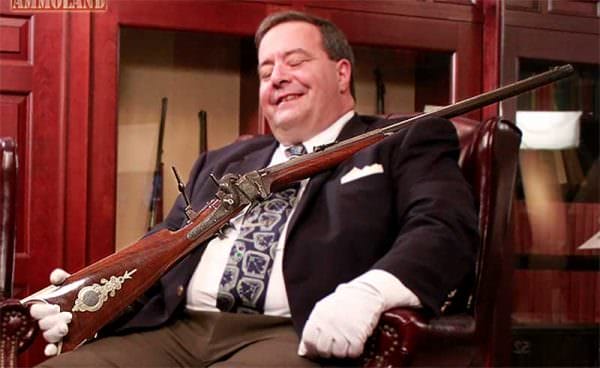
Philip Schreier discusses the 1873 pattern Sharps Rifle

Finally, it’s NRA election time again, and this is one for the record books.

The record number of resignations from the NRA Board recently means there are a record number of seats up for grabs this year, which will be filled by a record number of new candidates. At last count, there were 35 seats to be filled, and 37 candidates to fill them. That could easily change over the next month or two, while the election will be ongoing. Ballots should be coming out in the February edition of NRA magazines, and YES, you should be receiving a February magazine. The new printing schedule doesn’t take effect until after this next issue. There’s still one NRA Director who serves on the NRA Foundation Board of Trustees, so I’d expect him to resign from one or the other soon. There are also current NRA Directors who have not attended a meeting in years, and others who are experiencing serious health issues. I would hope that these Directors would act in the NRA’s best interests and tender their resignations if they’re unable to fulfill their obligations to the members.

Since almost all of the candidates are going to be automatically elected this year, and possibly all of them if there are at least two additional resignations before the close of the Members’ Meeting in Houston, I believe there will be at least a couple of people running write-in campaigns, mainly on the off chance of those additional resignations. Unfortunately, write-in candidates have little chance of winning a seat directly, and they are ineligible to be considered for the 76th Director election or to fill seats that might become vacant throughout the year.

With all of that in mind, here’s my list of “Must Elect” candidates for this year’s election, starting with my top pick for a write-in candidate, Charles Rowe.

Chuck is the Captain of the US Rifle Team, a world-class shooter, and an experienced businessman with extensive experience serving on and working with corporate boards. Chuck has long served on the High Power Rifle Committee and the F-Class Rifle Committee, and was one of the unsuccessful candidates from last year who were invited to fill recent vacancies. He attended the meetings in Virginia last week and proved to be a valuable addition to the Board. I urge you to start your ballot by turning to the back and writing in Charles Rowe, Wadsworth, Ohio.

Beyond that, here are the candidates I consider it essential that we reelect: Charles Hiltunen, David Raney, Amanda Suffecool, and Mark Vaughan. Additionally, I think it’s important that we re-elect Ted Carter, Richard Fairburn, Richard Todd Figard, Robert Mansell, Mark Robinson, Todd Vandermyde, and James Wallace. Additionally, I am endorsing the following new candidates for your consideration: Robert Beckman, James D’Cruz, Jacqueline Janes, Huey Laugesen, and Randy Luth.

I also want to point out that Eb Wilkinson has resigned from the Board, but remains on the ballot. I have no idea why he didn’t also recuse himself from the election, but he didn’t.

Some might wonder about some of the names missing from my list. My friend Bob Brown is running, but I frankly worry that Bob won’t be able to attend meetings. I believe he recently turned 94 and is beginning to slow down a little. Others on the ballot, I either don’t know well (or at all), or I haven’t noted any special tools they bring to the table. That’s not to say they don’t all bring something special, just that I’ve not worked with them enough to see something that would cause me to support them over other qualified candidates.

I believe there will once again be a big NRA 2.0 ad enveloping the ballot package, and I’m sure those candidates have been thoroughly vetted. Since almost everyone on the ballot will be elected, I’d encourage voters to only vote for those they really want to see on the Board. Bullet voting will help to ensure your favorites win. Also, with so many seats available, it will be particularly easy to overvote, making your entire ballot invalid. Voting for fewer than allowed is no problem, but if you vote for one too many, all of your votes will be tossed out, so err on the side of caution. Also, remember that any write-in vote counts toward your total. Don’t go over the limit!

In spite of the struggles and complications, the NRA is on a good and productive path. There are additional hurdles in front of us, but I’m confident we can overcome them with your help. The recovery is slow and painful, but it is a recovery. Things are getting better. I’m hopeful we can get this conflict with the NRA Foundation Board of Trustees behind us in fairly short order. Once that’s fixed, I think we’ll see the recovery accelerating pretty quickly.


About Jeff Knox:

Jeff Knox is a dedicated political activist and the director of The Firearms Coalition, following in the footsteps of his father, Neal Knox. In 2024, Jeff was elected to the NRA Board of Directors, underscoring his lifelong commitment to protecting the Second Amendment. The Knox family has played a pivotal role in the ongoing struggle for gun rights, a legacy documented in the book Neal Knox – The Gun Rights War, authored by Jeff’s brother, Chris Knox.

Founded by Neal Knox in 1984, The Firearms Coalition is a network of individual Second Amendment activists, clubs, and civil rights organizations. The Coalition supports grassroots efforts by providing education, analysis of current issues, and a historical perspective on the gun rights movement. For more information, visit www.FirearmsCoalition.org.


NRA Blows Whistle on NRA Foundation, Files Lawsuit in Court

NRA Sues the NRA Foundation as Internal Power Struggle Freezes Program Funding


from https://ift.tt/UZJ0uCr
via IFTTT

Sunday, January 18, 2026

WA Activists Prepare For Renewed 2A Battles as Everytown Inflames Issue

WA Appeals Court Unanimously Upholds Preemption in SAF Lawsuit, iStock-884168778
Washington state gun rights activists are girding for more battles as the Legislature returns Jan. 12. iStock-884168778

Evergreen State Second Amendment activists are preparing for renewed battles over several pieces of holdover legislation including proposed limits on ammunition purchases, storage requirements and insurance, while Everytown for Gun Safety is flooding social media with inflammatory anti-gun-rights rhetoric.

The Washington Legislature convened Monday, Jan. 12, and the schedule for committee hearings on various bills can be found and followed here.

Held over from the 2025 session are these bills:

  • HB 1132  Limit purchase of firearms and ammo within a 30 day period.*
  • HB 1152  Storage Requirements of firearms in vehicles and other locations.
  • HB 1386  11% tax increase on the purchase guns, parts and ammunition.
  • HB 1504 Enhancing public safety by requiring financial responsibility to purchase or possess a firearm or operate a firearm range. Insurance per gun. (The bill requires at least $25,000 insurance per firearm, and that policies and bonds must be obtained on a per-firearm basis, with a separate policy or bond required for each distinct firearm. This would bankrupt people with moderate incomes or retired persons with large gun collections, which seems to be the purpose.)

For information about the individual House bills:  https://apps.leg.wa.gov/billinfo/

(*The future of House Bill 1132 may be bleak now that the Ninth Circuit Court of Appeals panel ruled last year that a similar law in California is unconstitutional. Washington is part of the Ninth Circuit, so the ruling applies. The case is known as Nguyen v. Bonta.)

  • SB 5098  Restricting lawful carry of firearms, creating more NO GUN ZONES.
  • SB 5099  Restrictions to business operations of licensed firearms dealers.

For information about the individual Senate bills:  https://apps.leg.wa.gov/billinfo/ 

Against this backdrop, Everytown has been posting a series of advertisements on Facebook promoting restrictive gun control, primarily aimed at H.R. 38, a congressional bill on national reciprocity.

But Everytown rhetoric asserts, “H.R. 38 would create a federal mandate that would force each state to allow people from other states to concealed carry in them—even in states that wouldn’t otherwise let them. Our lawmakers should focus on keeping communities safe, not making it easier to carry hidden, loaded guns in more places.”

For those who want something a bit more offensive, Everytown declared in one posting: “The gun lobby and MAGA extremists want to override your state’s gun safety laws — making it easier for more people to carry hidden, loaded guns in public. Over 200 lawmakers in Congress are pushing a bill that would make every community less safe — letting people from other states with dangerous histories carry hidden, loaded guns in states that wouldn’t otherwise let them.”

Look closely and the same sort of incendiary rhetoric can be found popping up in daily news bulletins from established newspapers. For example, on the day after an ICE agent fatally shot a woman who allegedly drove a car at him in Minneapolis, the Chicago Sun Times promoted its coverage thusly: “A U.S. Immigration and Customs Enforcement Agent gunned down a woman who the feds say tried to run them down with her vehicle during a Minneapolis deportation operation, but — as in Chicago incidents — that narrative is being challenged.”

The term “gunned down” has a negative connotation. The actual story reported the ICE agent “shot and killed a Minneapolis driver on Wednesday during the Trump administration’s latest immigration crackdown on a major American city — a shooting that federal officials said was an act of self-defense but that the mayor described as reckless and unnecessary.”

Protests have broken out all over the country, including in Seattle, where Washington’s gun prohibition lobby is headquartered. Lawmakers—all Democrats—from in and around the Seattle area are typically sponsors of restrictive gun control legislation, and a quick check of bills identified above confirms it.

Last year, Democrats in Olympia pushed through legislation mandating a permit-to-purchase requirement, starting in May 2027, for anyone wanting to buy a gun in Washington state. No Republicans voted for this. The requirement includes completion of a training course involving live fire, the same course anyone applying for a CPL will need to complete. Gun rights advocates insist the purchase permit requirement is blatantly unconstitutional. They will also oppose every other anti-rights bill on the agenda, and any new ones which might pop up.

Quite a few gun owners have already fled Washington for friendlier environs, including Arizona, Texas, Idaho, Montana and Florida, and they habitually make note of it when posting on Facebook or other social media platforms. Others, who can’t just pick up their families and leave due to jobs and/or other reasons, are hoping and praying the Department of Justice’s Second Amendment Section comes calling soon with Assistant Attorney General Harmeet Dhillon leading the way.

Last year in Washington state, the number of active concealed pistol licenses climbed from 699,140 in January to 704,906 on Dec. 31, according to data from the state Department of Licensing. In October, the number had surged to 711,564, but retreated from that high during the holiday season.

It remains to be seen whether 2026 will see more people rushing to obtain a CPL, which is good for five years, just to beat the May 1, 2027 deadline. Perhaps by then, Washington gun laws will be entangled in litigation.


About Dave Workman

Dave Workman is a senior editor at TheGunMag.com and Liberty Park Press, author of multiple books on the Right to Keep & Bear Arms, and formerly an NRA-certified firearms instructor.

Dave Workman


from https://ift.tt/JvmkytB
via IFTTT

Saturday, January 17, 2026

DeStefano’s Freedom Ends—he has been taken to New York

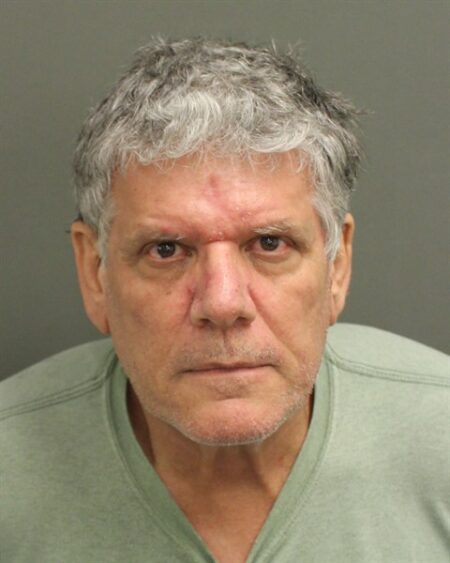
Lawrence Michael DeStefano’s booking photo. (Photo courtesy Florida’s Orange County Sheriff’s Department).

Sixty-five-year-old Lawrence Michael DeStefano’s freedom ended abruptly Wednesday, as prison officials took him from a jail cell in the Free State of Florida to the hellhole of Rikers Island in New York.

DeStefano, who had never committed any crime in his home state of Florida, could now spend the rest of his life behind bars in a New York State prison.

If you’re one of the 50,000 New Yorkers who bought Polymer 80 pistol kits from DeStefano and his firm Indie Guns over the years, rest easy. He promised he will never reveal your name. You are 100% safe. He is willing to give up all of his rights and personal freedoms and spend the rest of his life as an inmate in order to safeguard your freedom. The Second Amendment truly means that much to him.

If you want someone to blame, look no further than New York State Attorney General Leticia James. She is the sole reason why DeStefano is facing 521 years behind bars. The more than five centuries of potential prison time he faces are on par with James’ crazy and overzealous course.

You’ll recall that James first tried to get DeStefano to turn over his New York customer list through a civil suit, which he ignored. Nine other firms that sold pistol kits complied with James’ demands, and their owners remain free. DeStefano ignored the lawsuit that James won, of course, but her lengthy press release never mentions that her opponent never showed up. It does, of course, mention the $7.8 million default judgement against DeStefano and his firm, Indie Guns.

DeStefano got little help from Florida officials. After New York Gov. Kathy Hochul sent a letter to Florida Gov. Ron DeSantis, charging DeStefano with 71 New York state crimes, DeSantis sent a letter last month to all Florida sheriffs and peace officers, commanding them to arrest DeStefano, who was already in custody.

DeStefano never broke any Florida laws, it should be pointed out. Unserialized pistol kits are perfectly legal in the Sunshine State. I have assembled several myself.

What’s crystal clear is that DeStefano will never receive a fair trial in New York, especially with James overseeing their final legal bout. Nearly everything he offered his customers is illegal in that horrible state, but DeStefano truly didn’t care about New York laws. He was governed solely by the Second Amendment, which unfortunately does not exist under James and her cronies.

True heroism has, for me, always been somewhat difficult to define. However, anyone who forgoes their right to remain free so 50,000 New Yorkers have the ability to protect themselves and their families inside their homes truly qualifies.

That’s what Letitia James and her ilk will never understand. DeStefano never got rich selling gun parts. He estimated he earned around $200,000 per year, which isn’t a lot given all that he had to watch out for. He sold his parts kits to anyone who wanted one so they could feel safe.

That, friends, is truly heroic. He will certainly be missed.

This story is presented by the Second Amendment Foundation’s Investigative Journalism Project and wouldn’t be possible without you. Please click here to make a tax-deductible donation to support more pro-gun stories like this.


About Lee Williams

Lee Williams, who is also known as “The Gun Writer,” is the chief editor of the Second Amendment Foundation’s Investigative Journalism Project. Until recently, he was also an editor for a daily newspaper in Florida. Before becoming an editor, Lee was an investigative reporter at newspapers in three states and a U.S. Territory. Before becoming a journalist, he worked as a police officer. Before becoming a cop, Lee served in the Army. He’s earned more than a dozen national journalism awards as a reporter, and three medals of valor as a cop. Lee is an avid tactical shooter.

Lee Williams


from https://ift.tt/78qacZY
via IFTTT

Friday, January 16, 2026

Beyond SHOT: How the NSSF Prepares the Next Generation of Leaders

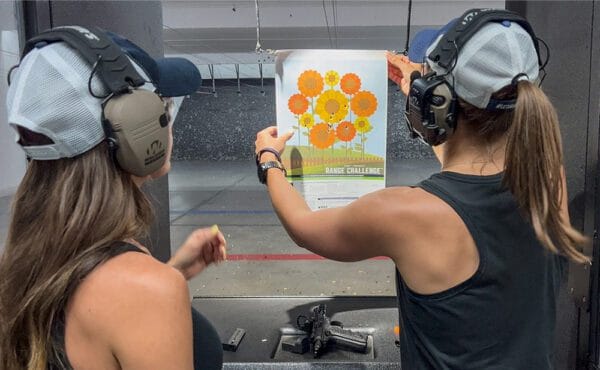
Range Challenge 2023 NSSF
Beyond SHOT: How the NSSF Prepares the Next Generation of Leaders IMG NSSF

As the 2026 SHOT Show approaches, set to kick off January 20 in Las Vegas, I find myself reflecting not on the endless displays of new firearms and gear, but on the quieter, steadier work that happens year-round. While the industry gathers for one high-profile three days, the National Shooting Sports Foundation (NSSF) spends the other 362 days safeguarding America’s youth and cultivating the next generation of responsible shooters and leaders.

Far from the convention floor, this organization invests in our future through education, safety, and empowerment. Proving that responsible firearm ownership begins with proactive steps to protect our kids and build character through the shooting sports.

The NSSF’s flagship Project ChildSafe stands as proof of that commitment. Since its launch in 1999, it has distributed more than 41 million free firearm safety kits, including cable locks and educational materials through partnerships with over 15,000 law enforcement agencies across all 50 states and U.S. territories. These are not token gestures; they are practical tools that help prevent misuse, theft, and accidents while reinforcing a culture of secure storage in gun-owning households nationwide.

Less visible but equally impactful are the NSSF’s efforts addressing mental health and youth vulnerability. Through partnerships such as the one with the American Foundation for Suicide Prevention, the organization provides teen-focused toolkits and “Brave Conversations” resources that help young people recognize warning signs, talk openly about mental health, and prioritize secure firearm storage during moments of crisis. These initiatives may not make headlines, but they represent quiet, life-saving work in homes and communities across the country.

Parents and educators also benefit from NSSF-developed guides, checklists, and videos that turn curiosity into respect and responsibility. Complementing these efforts is the Eddie Eagle GunSafe Program, a separate NRA initiative launched in 1988, which teaches pre-K through fourth-grade children a simple, memorable safety message: “STOP! Don’t Touch! Run Away! Tell an Adult!” While distinct from NSSF programs, it contributes to the shared mission of early firearm accident prevention and safety education.

Twice a year, during Gun Storage Check Week (June 1–7 and September 1–7), the NSSF reminds all gun owners, including me, to stop and assess the safety of our homes and our practices. Are our firearms unloaded, locked, and stored separately from ammunition? Are they secured from unauthorized individuals? Do our homes model the secure-storage habits we want future generations to adopt? This brief, deliberate pause helps keep families safe, prevents unauthorized access, and strengthens the foundation of responsibility on which our rights depend.

Turning Ranges into Leadership Labs

Safety is the foundation, but leadership is the goal. NSSF First Shots is an introductory live-fire experience hosted at local ranges, designed to safely introduce new youth and adults to target shooting under supervision. Since 2007, the NSSF’s Scholastic Shooting Sports Foundation (SSSF) has guided young athletes through two cornerstone programs: the Scholastic Clay Target Program (SCTP) for grades 12 and under, using the shooting disciplines of trap, skeet, and sporting clays and the Scholastic Action Shooting Program (SASP) for ages 12 through college, focusing on dynamic pistol and rifle competition. These programs are structured as youth development initiatives in which adult coaches use the shooting sports to teach sportsmanship, responsibility, integrity, teamwork, and other positive leadership skills.

Participants in these programs gain far more than marksmanship skills. They develop focus, perseverance, discipline, and true respect for firearms, all within a team environment that holds them to high standards on and off the range. The NSSF extends that pipeline through collegiate clay target competitions and support for National 4-H Shooting Sports, ensuring that positive firearm experiences and instruction begin early and continue as young people mature.

On the hunting front, my fondest memories are of hunting with my family, especially my grandfather. The NSSF created the +ONE Movement and Families Afield to encourage experienced hunters to mentor newcomers, passing along patience, conservation ethics, and self-reliance in the field. Anti-gun critics may dismiss these efforts as recruitment, but the reality and true goal is empowerment: raising young Americans who understand that freedom comes with responsibility, discipline, and a duty to protect both rights and lives.

The Real Legacy

When SHOT Show concludes, and the booths come down, the NSSF’s work continues through suicide-prevention outreach, early-childhood safety education, secure-storage campaigns, and youth shooting programs running year-round. As founder of the American Freedom Liberty Foundation and director of the Butler County Friends of Youth Shooting Sports Banquet, I have intentionally aligned my own work with the NSSF and its mission, raising funds, building awareness, and educating my community to support youth shooting sports and safety programs in Ohio and beyond. Each year, our banquets, live auctions, and raffles bring the community together and direct critical resources to local youth teams, ranges, training opportunities, and high school trap and skeet teams, amplifying the impact of what organizations like NSSF have built.

I see firsthand how these combined efforts change lives: young shooters find purpose and confidence, families embracing firearm safety and practicing secure storage as a non-negotiable responsibility, and communities rallying around programs that teach discipline, safety, and respect. For me, that is the NSSF’s real legacy, one that stretches far beyond a single week in Las Vegas and into the homes, ranges, and hunting camps where the next generation is watching and learning.

In an era of relentless opposition to the Second Amendment, the path forward is clear: educate the next generation, engage them responsibly, secure our firearms, invest in their future, teach them to respect the tools, and lead with confidence.

Our responsibilities don’t end with a firearms sale at the gun counter. I encourage everyone to get involved with youth firearms safety education and youth shooting sports in your communities. From volunteering with your local 4-H clubs to starting your own fundraising events to support our youth and youth shooting sports.

If you’re heading to SHOT and want to learn more about getting involved or just want to talk about how you can help support youth shooting sports and firearm safety, please reach out. You can email me directly at sean@secondcalldefense.org or stop me if you see me at the show and have questions about starting or supporting youth programs in your community. Those one-on-one conversations often spark the most meaningful ideas and partnerships, and there has never been a better time to step up and help grow the next generation of safe, responsible shooters and leaders.

The future of our rights—and our kids—depends on it.

See you at SHOT!


About Sean Maloney.

Sean Maloney is a criminal defense attorney, co-founder of Second Call Defense, and an NRA-certified firearms instructor. He is a nationally recognized speaker on critical topics including the Second Amendment, self-defense, the use of lethal force, and concealed carry. Sean has worked on numerous use-of-force and self-defense cases and has personally trained hundreds of civilians to respond safely and legally to life-threatening situations. He is a passionate advocate for restoring the cultural legitimacy of the Second Amendment and promoting personal responsibility in self-defense.

Sean Maloney


from https://ift.tt/zdeKq8k
via IFTTT

Idaho GOP Weaver Resolution a Welcome Move but Falls Short of Needed Action

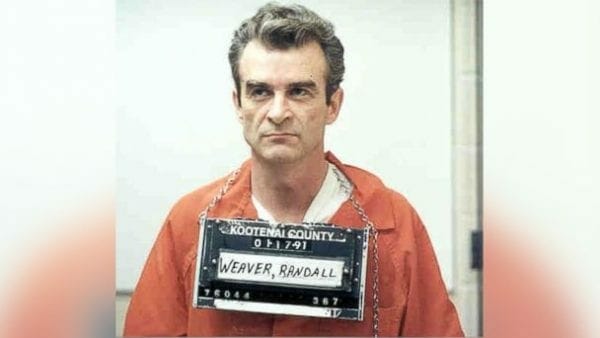
Randy Weaver img: Courtesy Kootenai County Sheriff's Office
They had the wrong guy under arrest. (Randy Weaver img: Courtesy Kootenai County Sheriff’s Office)

“THE RESOLUTION PASSED!!!” the Idaho Tribune exclaimed Saturday on X, referring to a post from two days before that reporting, “The @IdahoGOP is set to vote on a resolution calling for a full posthumous pardon of Randy Weaver AND the prosecution of FBI sniper Lon Horiuchi for murder!”

“Resolution 2026-23 calls for a posthumous pardon of Randy Weaver and for murder charges to be brought against Lon Horiuchi, the FBI sniper who shot and killed Vicki Weaver during the Ruby Ridge standoff in 1992,” Gem State Chronicle notes in its Jan. 10 report on the  Idaho GOP State Central Committee’s “Winter Meeting 2026.”

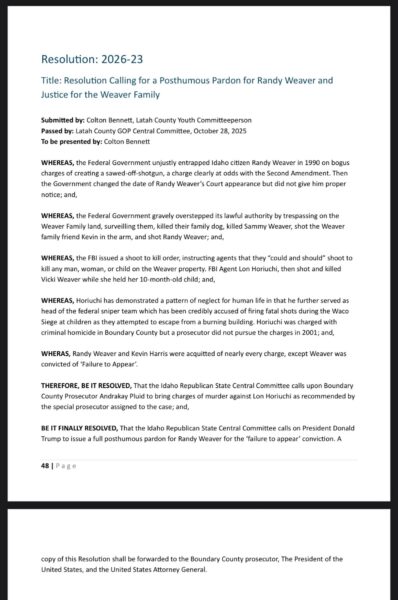
Recounting how Weaver was set upon by federal agents on a firearms charge, and the family dog, his son, and wife holding a baby were shot to death in a resulting attack and siege where special rules of engagement authorized deadly force, the resolution, which is being forwarded to the prosecutor, the president, and the U.S. attorney general:

[C]alls upon Boundary County Prosecutor Andrakay Pluid to bring charges of murder against Lon Horiuchi [and] calls on President Donald Trump to issue a full posthumous pardon to Randy Weaver for the “failure to appear” conviction.

It’s good that some in the party don’t want to let this be forgotten, but there’s more that can be done.

First off, the pardon should also be accompanied with official recognition that the warrant issued against Weaver to appear was invalid. Per a 1993 Seattle Times report, “A court clerk testified he advised U.S. District Judge Harold Ryan that Weaver was given the wrong court date, before Ryan issued a warrant for Weaver’s failure to appear.”

In a Republic that actually protected the Second Amendment, the charges of sawing off shotgun barrels  below an arbitrary length would also be adjudicated as unconstitutional infringements, and government employing provocateurs to set citizens up for exercising their rights would not be tolerated.

But the real challenge here will be motivating the Boundary County Prosecutor to take meaningful action on renewed charges against Horouchi (and it’s also fair to wonder on which side the Justice Department would land, with recent actions suggesting it would defend federal law enforcement).

A significant aspect of the story that received virtually no press coverage outside of the Second Amendment advocacy community is why initial manslaughter charges against Horiuchi were dropped. The prosecutor “gave no reasons” at the time of his announcement, and with that, the “mainstream” press called it a day.

It took angry protests by Second Amendment activists to prompt an excuse.

“The Prosecutor’s Office has made the determination based upon all the circumstances surrounding this case that success at a criminal trial with the highest burden of proof, would not occur,” the Boundary County Prosecuting Attorney’s Office informed KeepAndBearArms.com via email . “It is our hope that this decision will not breed further conflict, but will begin the healing process so long deserved.” Three responses included at that link said they weren’t buying it.

It was subsequently revealed that “Boundary County Commissioners launched an investigation into the alleged criminal misconduct of Boundary County Prosecutor … allegedly committed two counts of felony activity, including forgery and falsifying documents, according to an anonymous source.”

“It shows the prosecutor definitely vulnerable to being compromised, and the people from the beltway have the resources, the know-how, and the historical predisposition to do just that,” this correspondent noted at the time. As the upshot of the investigation was evidently (no news reports were found, so this information comes from Google AI) his resignation along with a plea bargain to reduce felony charges to misdemeanors, that’s an investigation that needs to happen.

As a resolution, the request to prosecute to an office that already said “No,” and has its own interests to protect, has no teeth. Whether legislative pressure will be exerted is unknown at this writing, as is the appetite of anyone in state government for new hearings.

One thing that might reopen that door would be for the Idaho GOP to prepare a Public Records Act request for records from the Boundary County Prosecutor and a simultaneous Freedom of Information Act request for records from the Department of Justice to determine what relevant communications/correspondence were being shared between the two, and to determine if either balks at being forthcoming with information.

The Idaho GOP Resolution is below:


About David Codrea:

David Codrea is the winner of multiple journalist awards for investigating/defending the RKBA and a long-time gun owner rights advocate who defiantly challenges the folly of citizen disarmament. He blogs at “The War on Guns: Notes from the Resistance,” is a regularly featured contributor to Firearms News, and posts on Twitter: @dcodrea and Facebook.

David Codrea


from https://ift.tt/UrlnPF9
via IFTTT