Friday, November 28, 2025

The “Seditious Six” — A Long History of Gun Control Efforts, Now Trying to Foment Treason

Opinion

The group of six Democratic lawmakers (all with military or national-security backgrounds) — now widely dubbed the “Seditious Six” — are attempting to cloak themselves in constitutional righteousness.

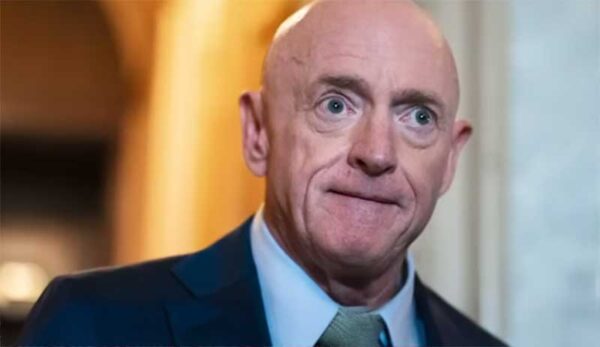
In a highly politicized video, they urged U.S. service members to “refuse illegal orders,” a message so ambiguous and inflammatory that the Pentagon launched a formal misconduct investigation into Sen. Mark Kelly.

But none of this should surprise anyone who has followed their careers. For years, the Seditious Six have marched in lockstep with the most aggressive gun-control lobbies in America — pushing legislation aimed at regulating, restricting, or eliminating the firearms owned by millions of peaceful, law-abiding citizens.

Their “constitutional” posturing now is not an isolated event. It is the latest escalation in a long, coordinated effort to weaken the Second Amendment while hiding behind military credentials and patriotic language.

Here’s the breakdown.

The Shared Agenda: Every Major Gun-Control Proposal, Straight Down the Line

Each member of the Seditious Six has consistently advanced the core priorities of Washington’s gun-control lobby:

  • Universal Background Checks on All Sales: A federal “universal” background-check mandate — including private transfers — which gun owners correctly view as an undeclared firearm registry.
  • Red-Flag / ERPO Confiscation Orders: Seizure of firearms without a criminal conviction, relying on the weakest standard of due process available in civil court. A model ripe for abuse.
  • Bans on Semi-Automatic Rifles & Standard Magazines: Every member supports bans or restrictions targeting the most common modern rifles and magazines in America — the same rifles used by millions for lawful home defense, hunting, and competition.
  • Federal Safe-Storage Mandates: Government-dictated rules on how Americans store firearms inside their own homes. Noncompliance means punishment; compliance means surrendering personal autonomy to unelected regulators.

Individually, each proposal is bad enough. Taken together, they amount to a federal re-engineering of gun ownership itself.

And now, with their “refuse illegal orders” stunt, they appear willing to add sedition to their portfolio.

Meet the Seditious Six — and Their Records
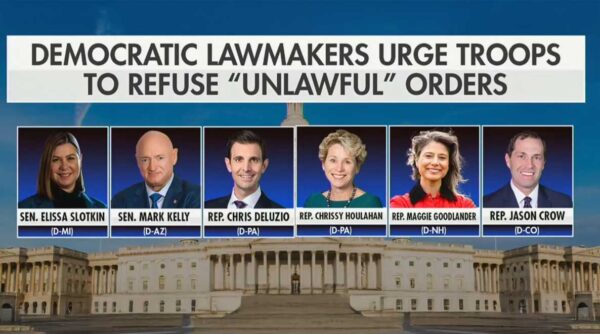
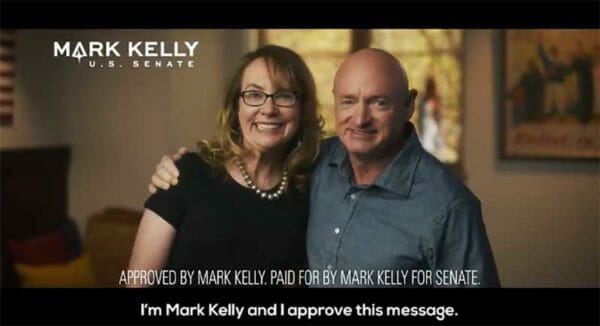
The Seditious Six Lead by mark Kelly
The Seditious Six Lead by Mark Kelly

Mark Kelly (D-AZ, Senator)

A naval veteran and retired astronaut who has become one of the most consistent anti-gun voices in Washington. Kelly co-authored and advanced the Bipartisan Safer Communities Act, expanding background checks, adding new firearm prohibitors, and injecting federal dollars into ERPO systems nationwide.

He previously praised expanding background checks and now pushes the GOSAFE Act, redefining common semi-automatic firearms as prohibited “assault-type” weapons.

  • Elissa Slotkin (D-MI, Senator) Slotkin voted for the 2022 Assault Weapons Ban (H.R. 1808) and introduced the Safe Guns, Safe Kids Act, a national safe-storage mandate that would criminalize many ordinary gun-owning households.
  • Jason Crow (D-CO, Rep.) A former Army Ranger who routinely uses the phrase “common-sense gun reform” to promote bans, ERPO orders, and restrictions on lawful gun owners.
  • Chrissy Houlahan (D-PA, Rep.) Former Air Force officer; consistent co-sponsor of universal background checks and magazine restrictions; publicly aligned with national gun-control advocacy groups.
  • Chris Deluzio (D-PA, Rep.) Former naval officer; a vocal proponent of assault-weapon bans and safe-storage mandates; frequently attacks political opponents as puppets of the firearm industry.
  • Maggie Goodlander (D-NH, Rep.) Former intelligence officer; supports expanded background checks, red-flag laws, and increased federal oversight of firearms.

These are not moderates. These are not compromisers.

These are six of the most reliable anti-gun votes in Congress — wrapped in military uniforms and patriotic branding.

The Seditious Six, In Their Own Words

In their joint 2025 statement defending the “refuse illegal orders” video, the group declared:

“We are veterans and national security professionals… we swore an oath to protect and defend the Constitution. That oath lasts a lifetime.”
Joint Statement, Slotkin, Kelly, Crow, Deluzio, Goodlander, Houlahan

They followed that with:

“Our servicemembers should know we have their backs… to follow only lawful orders.”

But they offered no examples of any “illegal orders” they believed were being issued — a detail even CNN called out.

When backlash intensified, Kelly attempted to portray himself as the victim:

“I’ve given too much to this country to be silenced by bullies who care more about their own power than protecting the Constitution.”
Mark Kelly, GoldRushCam interview

The rhetoric sounds noble — until you compare it to his legislative record.

Kelly’s Legislative Record: Emotional Appeals, Sweeping Bans

When reintroducing the GOSAFE Act on April 10, 2025, Kelly framed himself as a gun-owning combat veteran — an emotional appeal meant to soften opposition:

“As a gun owner and a combat veteran… I know firsthand the damage these weapons can cause.”

At a 2023 mass-shooting press conference, he pressed for even deeper restrictions:

“If that was not a high-capacity magazine… you would have had fewer people shot, and fewer people killed.”

Kelly’s demands are not about cosmetic features. They are about capacity, mechanics, and eliminating entire categories of firearms commonly owned by millions of Americans.

What This Reveals: A Coordinated, Long-Term Strategy

The Seditious Six combine:

• military authority
• emotional narrative
• aggressive legislation
• patriotic framing

This is no accident. It is a deliberate communications strategy designed to deflect charges of extremism while advancing the most sweeping gun-control agenda in modern congressional history.

They are not trying to “balance rights with safety.” They are trying to regulate the Second Amendment out of existencefrom the inside out.

Why Gun Owners Must Pay Attention

  • Slippery slopes are real. “Universal background checks” become registries.
    “Red-flag laws” become pre-crime gun confiscation.
    “Safe storage” becomes selective enforcement.
  • Their military backgrounds give them cover.
    They use their service to make anti-gun positions sound patriotic — even heroic.
  • This is not incremental or isolated.
    This is a bloc of lawmakers acting in unison, pushing the same agenda, using the same language, backed by the same national groups.

Change the rhetoric, and you change the country. Change the definitions, and you change the rights.

They know this. And they’re good at it.

From “Refuse Illegal Orders” to “Seditious Six”

The video wasn’t a “mistake.” It wasn’t “clumsy messaging.”

It was the next step in a long campaign to redefine constitutional duty in a way that justifies federal control over the weapons owned by the American people.

Their message to service members raised red flags. But their legislative record raises sirens.

If the Seditious Six succeed, gun ownership in America will not be a right.

It will be a conditional privilege — one they reserve the authority to grant or remove.

This is not a debate. This is not a compromise.

Their voting records and this despicable video are a power play to gut your Second Amendment and undermine a sitting U.S. President.


About Tred Law

Tred Law is your everyday patriot with a deep love for this country and a no-compromise approach to the Second Amendment. He does not write articles for Ammoland every week, but when he does write, it is usually about liberals Fing with his right to keep and bear arms.


We are in dangerous times! We are SO CLOSE to our final funding goals! With your help we can make it!

Pentagon Launches Misconduct Probe Into Anti-Gun Sen. Mark Kelly After “Refuse Illegal Orders” Video


from https://ift.tt/wmsC2RQ
via IFTTT

Wednesday, November 26, 2025

Thanksgiving Socialism in America!?

Opinion
By John Stossel

Communism Democrat Socialist

People are turning to socialism. Two-thirds of Americans ages 18-29 hold a “favorable view” of it.

New York just elected a “proud socialist” mayor. My video explains why his ideas would make things worse.

Of course they would! Socialism has never worked. Anywhere!

Yet Seattle too just elected a socialist mayor.

“Let’s give socialism a chance,” said a student writing in The Student Life, a college newspaper.

Americans should know we already gave socialism a chance. The only reason we get to celebrate Thanksgiving with lots of food is because the Pilgrims learned (the hard way) that socialism doesn’t work.

When they came to America, they first tried sharing land. Gov. William Bradford decreed that each family would get an equal share of food, no matter how much they worked. The results were disastrous.

Few Pilgrims worked hard, claiming “weakness and inability,” wrote Bradford. “Much was stolen.” The same plan in Jamestown led to starvation, the death of half the population, and even cannibalism.

Learning from their mistakes, the Pilgrims tried a different approach: “Every family was assigned a parcel of land,” wrote Bradford. Then, he noted, Pilgrims “went willingly into the field.”

That’s capitalism.

Soon, there was an abundance of food. So much that the Pilgrims and Natives could celebrate Thanksgiving together.

This abundance has only grown.

We’ll feast on vast amounts of food this Thanksgiving that, despite media clickbait, is much more affordable than it used to be. Today, Americans spend only 10% of our disposable income on food. When I started working, it was twice that.

This abundance didn’t come with people in government manipulating supply chains, or comrades dictating prices and quality.

It comes from millions of people practicing capitalism, making billions of voluntary exchanges.

It comes from free people willing to innovate and take risks, in an attempt to make more money by serving customers better than the next guy.

This process almost always works better than government central planning.

Without central direction, farmers, truckers, and grocers move food across the country with remarkable coordination and efficiency.

Stores compete so fiercely that they sell turkeys at a loss, just to get you through their doors.

Global competition drives airlines to lower their fares, so it’s cheaper for you to fly home for Thanksgiving.

And despite the media’s alarms about climate change creating food shortages, global agricultural output sets record highs year after year.

Government didn’t orchestrate any of that. Government can barely manage a DMV line.

Markets create abundance because they quickly reward people who figure out how to make things cheaper, faster and better.

That’s what I’m thankful for this Thanksgiving.

The alternative looks a lot like Venezuela, Cuba, North Korea …

While we enjoy the gifts that free enterprise brings, AP reports that in Venezuela, “every meal is a struggle.”

NBC, before going on to write silly stories that practically promote socialism, admits that in Cuba, residents face “daily blackouts lasting up to 20 hours, mounting piles of uncollected garbage, and severe shortages of food and basic goods.”

When politicians try to control the economy, the abundance you get … is scarcity.

We live in a country where choices overwhelm us, and shortages are something we read about in the news.

It should make us grateful. Not just for the food, but for the free enterprise system that creates it.

This Thanksgiving, as you go around the table to say what you’re thankful for, take a moment to thank the farmers, truckers, pilots, grocery workers, engineers, entrepreneurs, and most importantly, the economic freedom that makes it all possible.

Let’s not let socialist idiots kill it!

Abundance doesn’t happen by accident. It won’t continue if we forget where it came from.


About John Stossel

Every Tuesday at JohnStossel.com, Stossel posts a new video about the battle between government and freedom. He is the author of “Government Gone Wild: Exposing the Truth Behind the Headlines.”


We are in dangerous times! We are SO CLOSE to our final funding goals! With your help we can make it!


from https://ift.tt/06NfI9C
via IFTTT

Pentagon Launches Misconduct Probe Into Anti-Gun Sen. Mark Kelly After “Refuse Illegal Orders” Video

Opinion

The Pentagon confirmed it is investigating Anti-Gun Democratic Sen. Mark Kelly of Arizona — a former Navy captain and astronaut — after he appeared in a political video urging U.S. service members to “refuse illegal orders.” Because Kelly is a retired officer, he is still subject to the Uniform Code of Military Justice (UCMJ), and defense officials say his actions may have crossed a legal line.

In a public statement, the Pentagon said it had received “serious allegations of misconduct” and has launched “a thorough review of these allegations… which may include recall to active duty for court-martial proceedings or administrative measures.”

The investigation involves federal law 18 U.S.C. § 2387 — a statute that makes it a crime, punishable by up to ten years in prison, to “advise, counsel, urge, or in any manner cause… insubordination, disloyalty, mutiny, or refusal of duty” among U.S. military forces.

Kelly and five other Democratic lawmakers released the video last week, telling troops, “Our laws are clear. You can refuse illegal orders.” The message did not clarify which “illegal orders” they believed were being issued, or by whom — something even CNN noted the group did not specify.

While all six lawmakers in the video are Democrats with national-security backgrounds, Kelly is the only one who can be recalled to active duty and court-martialed, because he is the only retired military officer in the group.

Trump Calls It “Seditious Behavior” as Pressure Mounts

President Donald Trump criticized the lawmakers sharply. In comments on social media, he called their actions “seditious behavior punishable by death” — later clarifying he was quoting the law, adding, “I’m not threatening death, but I think they’re in serious trouble.”

Defense Secretary Pete Hegseth, echoing the Pentagon’s position, labeled the group the “Seditious Six” and said Kelly’s behavior “brings discredit upon the armed forces.”

Hegseth said the video was “despicable, reckless, and false,” warning that “encouraging our warriors to ignore the orders of their Commanders undermines every aspect of ‘good order and discipline.’”

He stressed that Kelly used his military rank and service affiliation while directly addressing troops, which “lended the appearance of authority to his words.”

Kelly Pushes Back, Claims He Is The Victim

Kelly responded to CBS News, saying he learned about the investigation via social media. In a statement on X, he said:

“If this is meant to intimidate me and other members of Congress… it won’t work. I’ve given too much to this country to be silenced by bullies who care more about their own power than protecting the Constitution.”

Appearing on Face the Nation, Kelly doubled down:

“All we said is we reiterated what basically is the rule of law that members of the military should not, cannot follow illegal orders.”

Kelly also claimed that Trump’s comments “have serious, serious consequences,” and said the president’s words have resulted in “increased threats against us.”

A Deeper Pattern: Kelly & Giffords’ Anti-Gun Advocacy Under Scrutiny

Video thumbnail for youtube video xntI6VRHMng Sen. Mark Kelly

The controversy arises as Kelly and his wife, former Rep. Gabby Giffords, expand their national gun-control activism through the Giffords organization — a group well-known for lobbying against civilian firearm ownership and pushing bans on items like suppressors.

Gun-rights analysts note that Kelly has a long record of promoting gun-control narratives that contradict established data.

For instance:

  • Kelly previously claimed suppressors defeat ShotSpotter detection systems, but ShotSpotter’s own fact sheet states its sensors “are designed to pick up the sound of gunfire from suppressors.”
  • Giffords recently claimed stand-your-ground laws are a “license to kill,” despite decades of data showing lawful defensive shootings are rising because millions more Americans are carrying guns for protection.

AmmoLand New’s earlier reporting also highlighted Kelly’s ties to Chinese business interests, raising long-standing questions about foreign influence and conflicts of interest — particularly in matters involving U.S.–Taiwan weapons sales.

While the Pentagon’s current investigation is not about China or gun control, these past controversies have resurfaced among Kelly’s critics, who point to a pattern of political messaging that undermines civilian gun rights while creating confusion inside the military ranks.

A Politically Charged Moment With Serious Consequences

The Pentagon emphasized that federal law prohibits any action that interferes with the “loyalty, morale, or good order and discipline” of the armed forces — even for retirees. The law exists to prevent anyone, especially former officers, from using their past rank to sway troops toward disobedience.

If Kelly is found to have violated 18 U.S.C. § 2387 or UCMJ rules, potential consequences include:

  • Recall to active duty
  • Court-martial
  • Loss of pay and benefits
  • Felony charges
  • Up to ten years in federal prison

Such a case would be historically rare — a sitting U.S. senator facing possible military prosecution for statements made while in office.

For many in the pro-gun community, the issue isn’t partisan. It’s about the fundamental rule that politicians should not tell troops to pick and choose which orders to obey, especially while using their military rank to give those words extra authority.

Defense Secretary Hegseth summarized the Pentagon’s view clearly:

“Kelly’s conduct will be addressed appropriately.”

The investigation is ongoing.


We are in dangerous times! We are SO CLOSE to our final funding goals! With your help we can make it!


Oath-Breaking Democrats Pirate Oath Keepers’ Doctrine in Defiance of Trump

Mark Kelly Owes Complete Disclosure on Chicom Money Influence


from https://ift.tt/Jj5h8xU
via IFTTT

Tuesday, November 25, 2025

Oath-Breaking Democrats Pirate Oath Keepers’ Doctrine in Defiance of Trump

Gabby Giffords And Mark Kelly
What do you think Mark Kelly and his fellow Democrats would say about police and National Guard members refusing to obey orders to disarm citizens?

“Raise your hand if you STAND with Sen. Mark Kelly against Trump,” Democrat promoter @bluehue123 posted on X.com Sunday, along with a photo of Kelly with the caption:

“Trump essentially said loyalty to the Constitution is punishable by death. Those are dangerous words coming from the President of the United States, but I’m not going to be intimidated.”

The president, who did not say loyalty to the Constitution was punishable,  was responding to a video by Kelly and Democrat politicos Sen. Elissa Slotkin, Rep. Jason Crow, Rep. Maggie Goodlander, Rep. Chris Deluzio, and Rep. Chrissy Houlahan urging the military/National Guard to disobey orders related to: Stopping drug boats operated by designated Foreign Terrorist Organizations; and to refuse orders to protect U.S. Immigration and Customs Enforcement (ICE) and other United States Government personnel enforcing Federal immigration laws from violent protesters. Except they weasel-worded around it.

Per CNN:

In the video, the lawmakers don’t specify which orders service members have received, or might receive, that could be illegal.

In other words, high-profile Democrat “lawmakers” were stirring the pot where no unlawful orders had been issued and creating a likely situation for military personnel to disobey lawful ones, endangering the mission and their fellow service members. It wasn’t loyalty to the Constitution that was the issue—quite the opposite, actually.

But what this does is highlight an interesting exercise in Democrat hypocrisy, cognitive dissonance and ginned-up hysteria, as what they were  egging on was literally ripped off from a group the Party has been smearing as insurrectionary extremists since they first came on the scene in 2009, following news accounts of police and National Guard personnel disarming American citizens during Hurricane Katrina: Oath Keepers. (Full disclosure: I wrote Second Amendment columns for Oath Keepers for several years, now only available via the slow-loading Internet Archive/Wayback Machine.)

The reason Oath Keepers, comprised of active and retired military, law enforcement, and first responder were so hated and feared by the left was because, in addition to “pled[ging] to fulfill the oath all military and police take to ‘defend the Constitution against all enemies, foreign and domestic,’” and citing the Uniform Code of Military Justice as the lawful authority for rejecting unlawful orders, the non-partisan association promoted a specific Declaration of Orders We Will Not Obey:

  1. We will NOT obey any order to disarm the American people.
  2. We will NOT obey any order to conduct warrantless searches of the American people, their homes, vehicles, papers, or effects – such as warrantless house-to house searches for weapons or persons.
  3. We will NOT obey any order to detain American citizens as “unlawful enemy combatants” or to subject them to trial by military tribunal.
  4. We will NOT obey orders to impose martial law or a “state of emergency” on a state, or to enter with force into a state, without the express consent and invitation of that state’s legislature and governor.
  5. We will NOT obey orders to invade and subjugate any state that asserts its sovereignty and declares the national government to be in violation of the compact by which that state entered the Union.
  6. We will NOT obey any order to blockade American cities, thus turning them into giant concentration camps.
  7. We will NOT obey any order to force American citizens into any form of detention camps under any pretext.
  8. We will NOT obey orders to assist or support the use of any foreign troops on U.S. soil against the American people to “keep the peace” or to “maintain control” during any emergency, or under any other pretext. We will consider such use of foreign troops against our people to be an invasion and an act of war.
  9. We will NOT obey any orders to confiscate the property of the American people, including food and other essential supplies, under any emergency pretext whatsoever.
  10. We will NOT obey any orders which infringe on the right of the people to free speech, to peaceably assemble, and to petition their government for a redress of grievances.

Who would be against this? But for it, they were smeared as seditionists and “hatriots”, despite the fact that Association Bylaws placed restrictions on membership on:

[Any] person who advocates, or has been or is a member, or associated with, any organization, formal or informal, that advocates the overthrow of the government of the United States or the violation of the Constitution thereof, shall be entitled to be a member or associate member [and any] person who advocates, or has been or is a member, or associated with, any organization, formal or informal, that advocates discrimination, violence, or hatred toward any person based upon their race, nationality, creed, or color, shall be entitled to be a member or associate member.”

We could say it’s surprising the Democrats are presenting the idea of disobeying orders as their own, but it’s not really when you consider what they’re really engaging in is trademark gaslighting on behalf of foreign criminals and invaders. Especially considering every one of the politicians in the video took an oath to the Constitution and actively promotes eviscerating the right of the people to keep and bear arms.


About David Codrea:

David Codrea is the winner of multiple journalist awards for investigating/defending the RKBA and a long-time gun owner rights advocate who defiantly challenges the folly of citizen disarmament. He blogs at “The War on Guns: Notes from the Resistance,” is a regularly featured contributor to Firearms News, and posts on Twitter: @dcodrea and Facebook.

David Codrea


from https://ift.tt/1CMwJNU
via IFTTT

Monday, November 24, 2025

Why Other Countries Envy Your 2nd Amendment

Opinion

Will Noty Comply American Flag Militia Confiscation AdobeStock_Tomasz Zajda 110451903
AdobeStock_Tomasz Zajda

In an era when people around the world are debating freedom, safety, and government power, one truth stands firm: rights are only preserved if they are exercised, and rights abandoned are rarely restored.

As Americans, we are heirs to a constitutional tradition unlike any other country. We place individual liberty at the center of our national identity. At the heart of that tradition stands the Second Amendment, a cornerstone of the Bill of Rights, securing not just the ability to own firearms but the broader principle of self-governance.

But as we look beyond our borders, a different pattern is evident. Nations that once embraced firearm ownership as a normal aspect of life, countries like the United Kingdom and Canada, for instance, have gradually imposed sweeping gun bans. For many citizens, these restrictions have led to limits on their speech, independence, and personal freedom. Their experiences compel us to acknowledge that when governments limit the means by which citizens safeguard themselves, they often redefine the very concept of freedom itself.

The irony of this stolen freedom is that over time, many people can be conditioned to accept it.

The U.K. is an example of incremental control with lasting impact.

The United Kingdom’s move toward near-total handgun prohibition began in the late 20th century, culminating in extensive bans following the 1996 Dunblane tragedy. While the justification was public safety, the effects extended far beyond firearm ownership. Today, the U.K. public has one of the most limited sets of firearm rights among Western democracies, and many citizens feel that decisions about personal protection are no longer theirs to make. The pattern is clear. Once the government has the leverage to violate one fundamental right, it becomes easier for it to expand its authority into others. This isn’t about whether British citizens are safe or unsafe. It’s about whether they retain the sovereign right to choose.

And many no longer do.

Canada is a case study in the acceleration of restrictions.

Canada’s firearm landscape has changed dramatically over the past several decades. From the Firearms Act of 1995 to the 2020 order-in-council banning numerous so-called “assault-style” firearms, the trajectory of increasing restrictions, while decreasing individual authority, has been consistent.

Many Canadians who once lawfully owned certain rifles or handguns found themselves becoming criminals almost overnight. Whether you agree with these policies or not, the impact is unmistakable. The government has the power to swiftly and unilaterally reshape fundamental rights, and citizens are limited to simply complying.
Rights constrained by government decree are rights dependent on government permission. In other words, rights have been turned into privileges.

The difference between other countries and America is the Second Amendment. It has created a guardrail for liberty.

This is where the United States stands apart. The Founders, having lived under a government that claimed near-total authority, designed the Bill of Rights not as a suggestion but as a permanent shield against government overreach. The Second Amendment is not merely about owning firearms. It’s a constitutional guarantee that recognizes the authority lies with the people, not the state.

“A well regulated Militia, being necessary to the security of a free State, the right of the people to keep and bear Arms, shall not be infringed.”

This unmistakable language reflects a philosophy:

People who are able to defend themselves, individually and collectively, are destined to remain free. Unfortunately, there are many American citizens who have squandered their right to freedom for free handouts, political popularity, power, or out of anger toward those who have achieved more than they have. There is an almost irrational, angry thought process that lurks among the political left, which guides them to the point of denouncing, not only their freedom, but the freedom of their fellow citizens. This mindset is one that has been conditioned over generations. On the bright side, there are far more Americans who embrace the Constitution and Bill of Rights. Real Americans understand the importance of the Second Amendment and how it relates to all other rights recognized by our Founding Fathers.

Unlike the U.K. and Canada, where rights can be altered by parliamentary vote or executive order, the United States enshrines the right to bear arms in its highest law.

That means:

  • The government does not grant the right; it recognizes it.
  • The right does not depend on political trends or party leadership.
  • Citizens retain the power to defend themselves, ensure their security, and maintain their autonomy.

This matters now more than ever because when you lose the ability to protect yourself, you will lose the ability to protect your other rights. Freedom of speech, privacy, and property rights all rely on a broader ecosystem of personal sovereignty. The Second Amendment acts as a safeguard for them all.

History shows that once a right is taken slowly, “temporarily,” or “for safety” it rarely comes back. Americans have the benefit of observing other nations’ paths and choosing a different one.

Stand For Your Rights. Stay Informed. Stay Empowered.

The debate over firearms is about far more than sporting, collecting, or even self-defense. It is about who ultimately holds power in a free society. The examples of the U.K. and Canada remind us that rights can fade quietly, gradually, and permanently if we allow them to. However, the American Constitution offers an alternative model. It is one in which the people retain the tools, responsibility, and authority to preserve their own liberty. The Second Amendment is the promise that freedom in America belongs to the people.

Protect that promise. Know your rights. Stand for the Constitution.

The 2nd Amendment is not a privilege. It’s your right.
Dan Wos,
Author – Good Gun Bad Guy
Host – The Loaded Mic


About Dan Wos, Author – Good Gun Bad Guy

Dan Wos is available for Press Commentary. For more information, contact PR HERE

Dan Wos is a nationally recognized 2nd Amendment advocate, Host of The Loaded Mic, and Author of the “GOOD GUN BAD GUY” book series. He speaks at events, is a contributing writer for many publications, and can be found on radio stations across the country. Dan has been a guest on Newsmax, the Sean Hannity Show, Real America’s Voice, and several others. Speaking on behalf of gun-rights, Dan exposes the strategies of the anti-gun crowd and explains their mission to disarm law-abiding American gun-owners.

Dan Wos
Dan Wos

We are in dangerous times! We are SO CLOSE to our final funding goals! With your help we can make it!


from https://ift.tt/BbZdeLP
via IFTTT

Sunday, November 23, 2025

FlyingRich and GOA Take Down Florida’s Open Carry Ban

A Warning to Florida Public Officials About the New Open-Carry Law, iStock-2205481813
FlyingRich and GOA Take Down Florida’s Open Carry Ban, iStock-2205481813

On Wednesday, Florida gun owners received an early Christmas present courtesy of Gun Owners of America (GOA) and YouTuber Richard Hughes, who runs the FlyingRich YouTube channel. After a lengthy legal battle, GOA entered a legal settlement with the State of Florida and Port Saint Lucie. The settlement affirms that the state law against the open carrying of a firearm is unconstitutional in Florida.

Mr. Hughes and GOA sued Former Port Saint Lucie Sheriff Kieth Pearson and the state over a Sunshine State law that prevented its citizens from openly carrying guns outside very specific circumstances, such as open carrying a firearm while hunting or fishing. Other Americans in Florida risked arrest if they did not conceal their guns in public. Hughes is neither a hunter nor a fisherman, but he believes he should have the same fundamental human rights as someone participating in those activities.

Hughes chose to sue Port Saint Lucie because former Sheriff Pearson threatened to arrest anyone who decided to open carry a gun. The Florida man owns a dog and frequents a dog park located in Port Saint Lucie, so his concern of being arrested for open carrying was well justified. Mr. Hughes is also a gun rights activist and a GOA member who believes all restrictions on the carrying of firearms violate the protections of the Second Amendment.

Earlier this fall, another case in Florida took on the open carry law. That was a criminal case involving activist Stanley McDaniels, who was arrested for open carrying a gun while waving a copy of the United States Constitution at a Pensacola Intersection on July 4, 2022. He was arrested and charged with violating state law regarding the open carrying of a firearm. He was convicted in a Florida court of law. The man was sentenced to probation and community service, but he appealed the decision to the First District Court of Appeals in Florida. A three-judge panel ruled that the law was unconstitutional and struck down the conviction.

After the case was decided, GOA and Hughes continued their lawsuit to help put the final nail in the coffin on the anti-gun Florida State law. There was a chance that the ruling against the open carry law could be overturned in the future. By forcing Florida and Port Saint Lucie into an agreement, the legal victory assures that the Florida law will not return and could help other legal challenges to open carry bans.

Mr. Hughes was ecstatic about the legal win. He told AmmoLand News that after meeting with the GOA attorneys, he did not doubt that he would win his case. The YouTuber plans to open carry whenever possible.

“They say you can’t win without a team, so I want to thank Former Port Saint Lucie Sheriff Kieth Pearson for teeing it up for us,” Hughes said. “The Florida State and St Lucie County attorneys for perfectly illustrating the legendary ‘efficiency’ of government. The real MVPs, however, are Gun Owners of America. The GOA lawyers who are absolute chads—smart, aggressive, and effective. And to the members who fund the fight: this win is yours.”

The State, Port Saint Lucie, and GOA have agreed to the terms and are expected to file for dismissal within the next 30 days.


About John Crump

Mr. Crump is an NRA instructor and a constitutional activist. John has written about firearms, interviewed people from all walks of life, and on the Constitution. John lives in Northern Virginia with his wife and sons, follow him on X at @crumpyss, or at www.crumpy.com.

John Crump


from https://ift.tt/ol3ticT
via IFTTT

Saturday, November 22, 2025

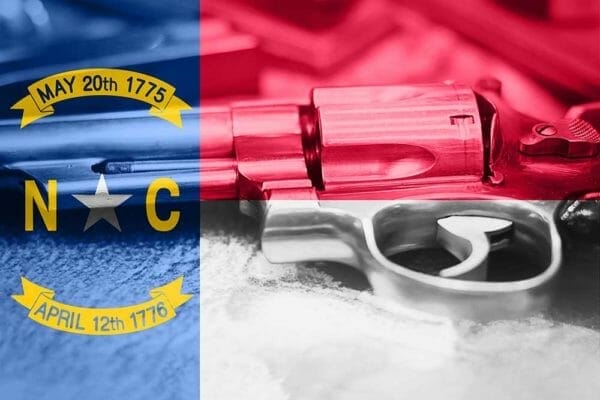
Six Months of Setbacks Leave North Carolina Constitutional Carry Bill in Limbo

North Carolina Governor Vetos Volunteer Security in Churches Co-Located with Schools, iStock-884214706
Six Months of Setbacks Leave North Carolina Constitutional Carry Bill in Limbo, iStock-884214706

North Carolina House Republicans have postponed a critical vote on Constitutional Carry legislation for the sixth time, pushing the veto override attempt to December 15 and testing the patience of gun rights advocates who have watched months of delays erode momentum for a bill that would eliminate permit requirements for law-abiding citizens.

House Republicans in North Carolina have delayed the veto override vote on Senate Bill 50 for the sixth time, rescheduling the critical decision to December 15 and frustrating gun rights advocates who have watched the Constitutional Carry legislation languish for months.

The National Association for Gun Rights (NAGR) captured the mounting frustration among Second Amendment supporters in a statement released after the latest postponement. “Another disappointing move,” the organization declared. “Constitutional Carry (SB 50) is pulled from the calendar again. The veto override is delayed until December 15. This is the sixth time they’ve kicked the can down the road because of a handful of Republican holdouts in the House. Gun owners have long since run out of patience.”

The legislation, officially titled “Freedom to Carry NC,” would eliminate the requirement for law-abiding citizens to obtain a concealed carry permit while maintaining an optional permit system for reciprocity purposes. The bill would make North Carolina the 30th Constitutional Carry state if House Republicans can secure the votes needed to override Governor Josh Stein’s veto.

Senate Bill 50 began its journey through the legislature in February when lawmakers filed the bill on February 4. The Senate passed the measure on March 20 with a vote of 26 to 18, sending it to the House for consideration.

After extensive committee review through May and June, the House passed the bill on June 11 by a narrow margin of 59 to 48, with 13 members absent. Two Republican representatives, William Brisson and Ted Davis Jr., broke ranks and voted against the legislation alongside all House Democrats.

Governor Stein vetoed the bill on June 20, arguing the measure “makes North Carolinians less safe and undermines responsible gun ownership.” The Senate successfully overrode the veto on July 29 with a 30 to 19 vote, but the House vote has been postponed repeatedly since July 30.

The core challenge facing House Republicans stems from their inability to achieve a veto-proof supermajority following the 2024 elections. They hold 71 seats in the chamber, one short of the three-fifths majority of 72 votes needed to override a veto independently. This arithmetic reality means Republicans need either perfect unity among their caucus members or at least one Democratic crossover vote.

The two Republican defectors have staked out distinct positions opposing the legislation. Representative Brisson expressed concerns about making it easier for 18 year olds to carry concealed weapons. Representative Davis cited concerns about how the changes would impact existing gun owners who already possess permits. “This is not about the right to carry,” Davis declared. “This is about the rights of those who have followed our laws.”

The voting arithmetic becomes even more complicated when considering that approximately 10 other House Republicans were absent when the bill originally passed in June, creating uncertainty about whether leadership can guarantee the necessary attendance for an override attempt.

The pattern of repeated delays reveals House leadership’s lack of confidence in securing the votes. The override vote was originally scheduled for July 30 but withdrawn and rescheduled to August 26. Leadership then rescheduled the vote to September 22 before withdrawing it again. The vote was withdrawn once more in September, then rescheduled to October 20, then to October 21, then to November 17, before the latest postponement to December 15.

Second Amendment advocacy groups have expressed mounting frustration with each delay. Grass Roots North Carolina has focused particular attention on Davis and Brisson, dubbing them the “Treachery Twins” and organizing phone banking and email campaigns targeting their districts. The group argues that these legislators betrayed their oaths of office by voting against constitutional rights.

With the legislative session rapidly approaching its end and the December 15 date now set, this vote represents likely the final opportunity for the veto override this session. House leadership faces three possible scenarios when the vote comes to the floor.

A successful override requires either flipping both Davis and Brisson to yes votes while achieving perfect Republican attendance, or maintaining current Republican support while attracting one Democratic vote to reach the 72-vote threshold. A failed override would kill the bill for this session, though lawmakers could reintroduce the legislation in 2026. Leadership could also withdraw the vote again if they lack confidence in the outcome, though mounting political pressure may force them to proceed with a floor vote regardless of their internal vote counts.

The pattern of delays suggests House leadership remains uncertain about securing the necessary votes even after months of negotiations and pressure campaigns. Gun rights advocates are running out of patience after five previous postponements, while opponents of the legislation hope the veto will be sustained to preserve current concealed carry permit requirements.

The December 15 vote will determine whether North Carolina becomes the 30th Constitutional Carry state or whether gun rights advocates must wait until 2026 to renew their push for permit Constitutional Carry.

Gun Lobby Files Amicus Brief Supporting Challenge to Vermont’s 72-Hour ‘Cooling Off’ Waiting Period

Your Moral Right To Keep & Bear Firearms In The United States


About José Niño

José Niño is a freelance writer based in Charlotte, North Carolina. You can contact him via Facebook and X/Twitter. Subscribe to his Substack newsletter by visiting “Jose Nino Unfiltered” on Substack.com.

José Niño


from https://ift.tt/DT8oe7G
via IFTTT

Friday, November 21, 2025

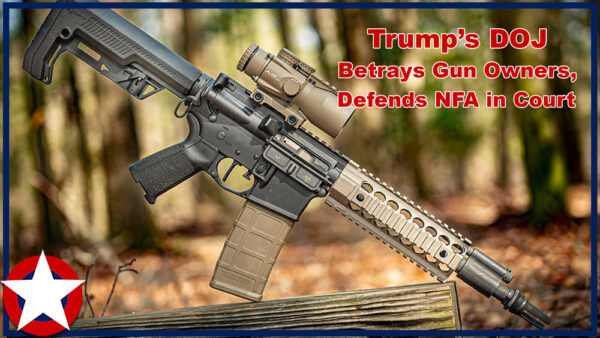
Trump’s DOJ Defends NFA Registration, Betraying Gun Owners

Gun Owners Betrayed as Trump's DOJ Defends NFA Registration

The United States Department of Justice filed a response to a lawsuit brought by Gun Owners of America (GOA), Gun Owners Foundation (GOF), Palmetto State Armory (PSA), the Firearms Regulatory Accountability Coalition (FRAC), Silencer Shop (SS), and B&T USA (B&T), challenging the constitutionality of regulating suppressors, short-barreled rifles (SBRs), short-barreled shotguns (SBSs), and any other weapons (AOWs).

Earlier this year, Congress passed President Donald Trump’s One Big Beautiful Bill (OBBB). This reconciliation bill sought to remove suppressors, SBRs, SBSs, and AOWs from the National Firearms Act of 1934 (NFA) list. Unfortunately for gun owners, the Senate Parliamentarian, Democrat Elizabeth MacDonough, rejected the bill, believing it was not a tax. Republicans would modify the bill to reduce the tax cost to $0, while maintaining all other requirements, such as fingerprinting, passport photos, registration, and background checks.

The $0 tax spurred numerous lawsuits from gun rights advocates. A tax must have a revenue-generating purpose. A $0 tax stamp does not generate any revenue. Democrats argue that the NFA is not a tax and that the tax is just there to help enforce the NFA restrictions. The United States Supreme Court (SCOTUS) disagrees with these politicians’ view of the NFA. In Sonzinsky v. United States, the Supreme Court ruled that the NFA is primarily a tax, which is why it is constitutional.

Trump’s DOJ is hailed as the “most pro-gun DOJ ever,” but its response to the GOA lawsuit paints a different picture. The Justice Department took a more adversarial stance in the lawsuit, ignoring pleas from members of Congress such as Andrew Clyde. The DOJ is vigorously defending the NFA.

The DOJ claims that the NFA is still a tax, despite no revenue being collected. They say that, because it is still a tax in their view, the law is constitutional because the power is given to them through the Interstate Commerce Act. The DOJ also claims that the NFA is necessary because of the “concealability” of SBRs and SBSs. GOA argues that if all it took to regulate a firearm, then all handguns could be banned.

The DOJ also takes a page out of the playbook of anti-gun groups by calling short-barreled rifles and shotguns “weapons of war.” They argued that the NFA is needed to regulate these firearms because of their use by criminals. Even if that were the case, the Second Amendment does not have an exception for weapons of war.” Even the Supreme Court has acknowledged this fact. In United States v.  Miller, SCOTUS said SBSs could not be banned because they were not a “weapon of war.”

Our sources in the DOJ have confirmed that Attorney General (AG) Pam Bondi is well aware of this case and has signed off on the response. GOA also confirmed our source’s information. This defense of the NFA appears to be directly at odds with the President’s executive order on Second Amendment rights.

Gun Owners helped elect President Trump with the expectation that he would defend their right to keep and bear arms as protected by the Second Amendment. Now, many of those same voters are wondering if they were just given lip service.

Your Moral Right To Keep & Bear Firearms In The United States

Gun Lobby Files Amicus Brief Supporting Challenge to Vermont’s 72-Hour ‘Cooling Off’ Waiting Period


About John Crump

Mr. Crump is an NRA instructor and a constitutional activist. John has written about firearms, interviewed people from all walks of life, and on the Constitution. John lives in Northern Virginia with his wife and sons, follow him on X at @crumpyss, or at www.crumpy.com.

John Crump


from https://ift.tt/aViNx50
via IFTTT

Your Moral Right To Keep & Bear Firearms In The United States

Opinion: Self-defense is a fundamental moral right, so access to effective tools of self-defense—especially firearms—is also a fundamental moral right.

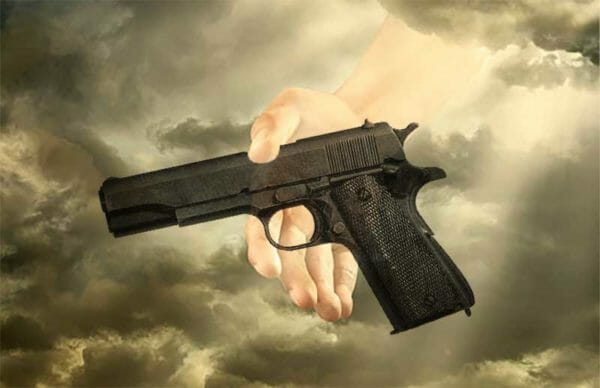
Hand of a god given rights iStock-CreativaImages 475552813
iStock-CreativaImages

The contemporary debate over firearms rights in the United States often presumes that the Second Amendment confers a negative right, prohibiting the state from disarming citizens.

Yet negative-liberty framing tells only part of the story. Underlying the jurisprudential debates in District of Columbia v. Heller and New York State Rifle & Pistol Association v. Bruen lies a deeper moral question: whether there is a positive moral right to keep and bear arms, one that entails not merely the absence of interference but the presence of enabling conditions necessary for meaningful self-defense.

I will argue here that there is such a positive moral right. Rooted in the fundamental right to life and bodily integrity, the permissibility of defensive force, and republican notions of non-domination, the moral claim to keep and bear firearms is not exhausted by a minimalist libertarian account. It imposes correlative obligations on the state, on communities, and on individual right-holders.

Political theorists commonly distinguish negative rights, i.e., claims against interference, from positive rights, i.e., claims to assistance or provision. Isaiah Berlin’s classic framework conceptualizes negative liberty as freedom from constraints and positive liberty as the capacity to act in pursuit of one’s goals. Subsequent scholarship refines the distinction: positive rights need not require maximal state assistance but impose some duties to enable effective exercise of a protected interest, in this case, a Right.

Legal rights are institutionalized entitlements that are enforceable through courts or public institutions; moral rights, on the other hand, arise from ethical principles that are independent of legal recognition. A positive moral right, therefore, exists when individuals are morally entitled to social or institutional support in securing something necessary for the full exercise of an underlying moral interest, such as life, autonomy, or self-defense.

Positive rights exist on a spectrum. A modest positive right may require the state to avoid erecting unreasonable barriers to access; a robust positive right may obligate the state to subsidize or provide goods. The positive moral right to firearms argued here is modest: it requires meaningful access to defensive arms and reasonable pathways for responsible ownership, not universal state provision.

The moral theories recognize a right to defend oneself against unjust aggression. If individuals have a right to preserve their own lives, and if firearms are in many situations an effective and uniquely effective means of doing so, then individuals hold a prima facie positive moral claim to access such means. Restricting access without adequate justification could therefore violate a core aspect of the right to life.

Philosophical analyses of self-defense underscore that the moral permissibility of defensive force presupposes access to effective means. Where the state cannot provide perfect or immediate protection, denying access to defensive tools may undermine the individual’s ability to exercise the moral right to self-defense. From this vantage point, firearms function as enabling conditions for an underlying moral right.

A republican conception of liberty identifies freedom with the absence of domination, the condition of not being subject to another’s arbitrary will. Private arms can serve as a check on domination by criminals and, in extreme contexts, by the state itself. While this function is often overstated in political rhetoric, its moral logic is coherent: if meaningful autonomy requires some capacity for resistance to coercion, and if firearms are part of that capacity, the claim to them carries positive moral weight.

American tradition has long connected arms-bearing with civic responsibility and popular sovereignty. Early republican thinkers viewed an armed citizenry as a bulwark against tyranny and an alternative to dependence on standing armies. While historical tradition alone does not supply a moral argument, it situates the U.S. debate within a civic ideal in which firearms ownership carries not merely private but public significance.

This historical layer strengthens the claim that access to arms has moral salience in American political culture. It also influences constitutional interpretation, providing a backdrop for the jurisprudence discussed below.

A. Heller and the Individual Right

In District of Columbia v. Heller, the Supreme Court recognized that the Second Amendment protects an individual right to possess a handgun in the home for self-defense, invalidating the District’s near-total ban. The Court rooted the right in both the Constitution’s text and the centrality of self-defense to Anglo-American law.

Importantly, Heller identified self-defense as the core of the right. If self-defense is the foundational purpose, then the right’s force depends on meaningful access to tools suited to that purpose, a point resonant with positive-rights reasoning.

B. Bruen and the Historical-Tradition Test

In New York State Rifle & Pistol Association v. Bruen, the Court rejected interest-balancing tests and required that firearm regulations be consistent with the nation’s historical tradition. Bruen expanded protection for individuals seeking to carry firearms outside the home and invalidated regimes requiring special need beyond self-defense.

Bruen’s methodology does not explicitly speak in positive-rights terms, but its emphasis on meaningful exercise of the right reinforces the idea that access cannot be burdened to the point of nullification.

C. The Interaction of Morality and Doctrine

Moral arguments do not dictate constitutional outcomes, but where doctrine aligns with moral considerations here, self-defense, the moral theory can illuminate the normative grounding of legal protections. Heller and Bruen thus provide a legal structure congruent with the moral argument advanced here, though not identical to it.

What does a positive moral right require? It requires Non-Arbitrary Access,  Reasonable Availability, Equity Considerations, and Safety-Oriented Complementary Duties.

Non-Arbitrary Access is a positive moral right requirement that the state avoid regulations that effectively destroy access to defensive firearms for ordinary, law-abiding citizens. Background checks, training, and licensing may be consistent with the right, but arbitrary or excessively burdensome barriers are not. (NOTE: This author does NOT agree with background checks or licensing, but self-training should constantly occur. Background checks virtually no criminals, while it does open a door for governmental list creation. And licensing also permits governmental list creation and is only a very small part of the historical groundwork.)

Reasonable Availability is mandatory for the state, which MUST preserve viable pathways for acquiring defensive arms. This does not imply free provision but may imply that the state cannot impose prohibitive fees or delays that disproportionately burden the poor or marginalized.

Equity Considerations is the positive-rights framework that highlights equity: if only the affluent can afford the means of self-defense, the moral right becomes class-stratified. Policies thus ought to consider how cost and regulatory burdens affect disadvantaged communities.

Safety-Oriented Complementary Duties are needed because positive rights involve correlative responsibilities; the state may permissibly require training, safe storage, responsible handling, and measures aimed at reducing illegal diversion. A moral right to defensive arms includes a moral duty to use and store them responsibly. (NOTE: This author personally believes that training, safe storage, responsible handling, etc., are NOT the responsibilities of the state. They belong to the individual, and the failure of these does have consequences.)

A positive moral right to keep and bear firearms in the United States is defensible when grounded in the moral rights to life, self-defense, autonomy, and non-domination. Unlike a purely negative liberty interest, this right entails duties, not only to refrain from undue interference, but to maintain conditions that make meaningful defensive access always possible.

Recognizing a positive moral right does not require laissez-faire absolutism. It instead reframes the debate around responsible access, equitable regulation where needed, and evidence-based policy.

REFERENCES:

  1. Isaiah Berlin, Two Concepts of Liberty, in Four Essays on Liberty (1969).
  2. Hillel Steiner, An Essay on Rights (1994)
  3. Joseph Raz, On the Nature of Rights, 93 Mind 194 (1984).
  4. Leif Wenar, Rights, Stanford Encyclopedia of Philosophy (rev. 2021).
  5. Suzanne Uniacke, Permissible Killing: The Self-Defense Justification of Homicide (1994).
  6. Kimberly Kessler Ferzan & Larry Alexander, Self-Defense and the Limits of Defense, 20 Law & Phil. 1 (2001).
  7. Philip Pettit, Republicanism: A Theory of Freedom and Government (1997).
  8. Joyce Lee Malcolm, To Keep and Bear Arms: The Origins of an Anglo-American Right (1994).
  9. District of Columbia v. Heller, 554 U.S. 570 (2008).
  10. N.Y. State Rifle & Pistol Ass’n v. Bruen, 597 U.S. ___ (2022).
  11. “Congress Shall Make No Law” vs. “Shall Not Be Infringed”
  12. U.S. Second Amendment: Means ALL Weapons & ZERO Infringements

ABOUT THE AUTHOR:

Alan J. Chwick, A.S., B.S., FL/NY/SC Paralegal is known for his involvement in legal articles usually related to firearm regulations and for his contributions to discussions on gun rights. Retired Managing Coach of the Freeport NY Junior Marksmanship Club (FreeportJuniorClub.org). Escaped New York State to South Carolina and is an SC FFL & Gunsmith (Everything22andMore.com).

AJChwick@iNCNF.org | TWITTER & TRUTHSOCIAL: @iNCNF


We are in dangerous times! We are SO CLOSE to our final funding goals! With your help we can make it!


from https://ift.tt/adS7JrR
via IFTTT

Motions Filed for Summary Judgment In Massachusetts Young Adult Gun Ban

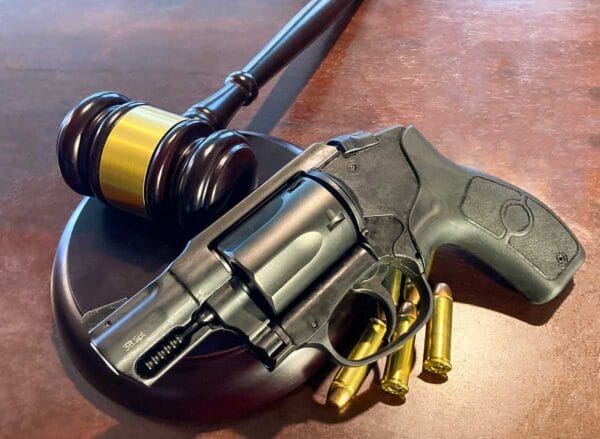
Lawsuit Gavel Judge Court iStock-Mark Youso 1455889577
iStock-Mark Youso

BELLEVUE, Wash. — The Second Amendment Foundation (SAF) and its partners have filed a motion for summary judgment in a case challenging Massachusetts’ ban on the purchase, carry and possession of nearly all modern firearms by 18-20-year-olds.

To purchase or possess a firearm in Massachusetts, an individual must first obtain one of two licenses: a Firearm Identification Card or a License to Carry. Only the identification card is available for adults aged 18-20; however, even with that license, it only allows residents in this age group to purchase and possess “…rifles and shotguns that are not large capacity or semi-automatic…”

“In no other context would the American people tolerate limiting the civil rights of adults based solely on their age,” said SAF Executive Director Adam Kraut.

“Denying adults under 21 years old the ability to possess a handgun – the quintessential firearm of choice for self-defense – is a clear violation of their Second Amendment rights. The ratification of the Bill of Rights takes precisely this sort of policy decision off the table, and Massachusetts lawmakers have no authority to strip away the rights of a discreet subset of the population.”

SAF is joined in Escher v. Noble by the National Rifle Association, Gun Owners’ Action League, Commonwealth Second Amendment, Firearms Policy Coalition, Gun Owners of America and a private citizen, Mack Escher.

“Adults who are 18 years old can serve in the military, marry, start businesses, serve on juries and are tried as adults should they be accused of breaking the law,” said SAF founder and Executive Vice President Alan M. Gottlieb. “They also possess the full panoply of civil rights enjoyed by ‘the People’ – including the right to keep and bear arms. Massachusetts lawmakers should be ashamed to have even attempted this discriminatory legal regime, and we’re thrilled for the opportunity to rectify the situation in court.”

For more information visit SAF.org.


Second Amendment Foundation

The Second Amendment Foundation (saf.org) is the nation’s oldest and largest tax-exempt education, research, publishing and legal action group dedicated to safeguarding and promoting the fundamental rights of individuals enshrined in the Second Amendment of the United States Constitution. SAF engages in aggressive legal action to ensure the principles of armed self-defense, personal liberty, and the ownership of arms are defended, secured, and restored. Through public education initiatives, SAF teaches the importance of the Second Amendment to promote a society that values and exercises the right to keep and bear arms.

Second Amendment Foundation SAF Logo


We are in dangerous times! We are SO CLOSE to our final funding goals! With your help, we can make it!


from https://ift.tt/uEOPRlK
via IFTTT

Thursday, November 20, 2025

California Suppressor Ban Faces Constitutional Challenge in Pivotal Sanchez v. Bonta Hearing

Rugged Suppressor Mustang 22 Keltec CP33
California Suppressor Ban Faces Constitutional Challenge in Pivotal Sanchez v. Bonta Hearing. IMG Jim Grant

Gun rights advocates are reacting to a pivotal hearing that took place yesterday, as the Ninth Circuit weighed whether suppressors qualify as protected “arms” under the Second Amendment. The outcome could either bring California in line with 42 other states or set a troubling precedent for banning common firearm accessories.

The Ninth Circuit Court of Appeals heard oral arguments on November 18, 2025, in the case of Sanchez v. Bonta, which challenges California’s sweeping ban on firearm suppressors. These devices reduce, but do not eliminate, the sound produced when a firearm is discharged.

The case in question pits a pro se plaintiff backed by major gun rights organizations against California’s attorney general in a battle over whether suppressors qualify as constitutionally protected “arms.”

Gary R. Sanchez, a California resident, initiated the lawsuit in April 2024 after the Bureau of Alcohol, Tobacco, Firearms, and Explosives denied his application to fabricate and register a suppressor, citing California Penal Code § 33410, which imposes a blanket prohibition on suppressor possession. Sanchez filed a complaint in the Southern District of California seeking declaratory and injunctive relief, arguing that California’s ban violates the Second Amendment.

The district court dismissed his complaint, ruling that suppressors are not protected by the Second Amendment because they are “only” accessories, not “arms.” Sanchez appealed the decision on September 6, 2024. Recognizing the case’s significance, the California Rifle and Pistol Association enlisted Michel & Associates and Cooper & Kirk to assist Sanchez, and the Ninth Circuit agreed to accept both firms as counsel.

Dean Weingarten previously highlighted the Ninth Circuit’s hostility toward gun rights: “The Ninth Circuit has historically been one of the circuits most openly defying Supreme Court rulings on the Second Amendment.”

At stake is whether California’s suppressor ban can survive scrutiny under Supreme Court precedents including District of Columbia v. Heller, New York State Rifle & Pistol Association v. Bruen, and United States v. Rahimi. Sanchez argues suppressors meet the “common use” standard established in these cases, as they are legal in 42 states and millions are possessed by law-abiding Americans.

In their replacement opening brief, Sanchez’s attorneys argue “Firearm suppressors—which reduce but do not eliminate the noise emitted from a firearm—support the safe and effective use of a firearm and are commonly used for lawful purposes in the United States. They are legal to possess in the vast majority of states, and millions are possessed by law-abiding Americans for lawful purposes, including to prevent irreversible hearing damage from firearm use in training, self-defense, and hunting.”

The brief emphasizes suppressors’ self-defense utility, explaining “The hearing protection of a firearm outfitted with a suppressor serves critical self-defense functions, ensuring that an individual defending self, family, and home can prevent the temporary deafness or disorientation caused by a firearm blast. This allows an individual exercising the constitutional right to self-defense to hear an intruder and communicate effectively with family members and the authorities.”

California Attorney General Rob Bonta counters that “Silencers are neither bearable ‘Arms’ nor integral components that are necessary for the operation of a firearm. They have no intrinsic self-defense purpose or utility in the case of confrontation.” His brief attempts to redefine the Second Amendment framework, replacing the “in common use for lawful purposes” standard with a narrower “commonly used for ordinary self-defense” test.

The Trump administration’s Department of Justice recently signaled support for Second Amendment protection of suppressors, filing a brief in the Fifth Circuit case United States v. Peterson declaring silencers are arms protected by the Second Amendment. This creates potential for a circuit split if the Ninth Circuit rules against Sanchez.

Supporting data reinforces Sanchez’s position. A 2017 ATF White Paper concluded “Suppressors are very rarely used in criminal shootings. Given the lack of criminality associated with silencers, it is reasonable to conclude that they should not be viewed as a threat to public safety.”

Sanchez’s brief notes the Supreme Court’s guidance that “The Second Amendment extends, prima facie, to all instruments that constitute bearable arms, even those that were not in existence at the time of the founding,” directly contradicting the district court’s categorical exclusion of accessories.

Weingarten framed the philosophical stakes clearly, writing “The two briefs represent two different visions of reality. The State of California’s vision is that the government is the source of all that is good, and the government should be all-powerful. There should not be any limitation on government power. Most people cannot make good decisions, so weapons in the hands of the people are a significant danger.” He contrasted this with Sanchez’s position representing “the vision of a limited government bound by the limits of the Constitution and dependent on the consent of the people for its existence. Guns in the hands of the people are a positive good to act as a limit on governmental abuse of power.”

Gun rights advocates should be deeply concerned about California’s attempt to create a new “commonly used for ordinary self-defense” standard requiring proof through police reports. If accepted, this framework could be weaponized against virtually any firearm accessory or even entire categories of firearms, effectively nullifying Heller and Bruen by making Second Amendment protection nearly impossible to prove.

During oral arguments before a three-judge panel consisting of Judges Jay Bybee, Kenneth Lee, and John De Alba, Judge Kenneth Lee emerged as particularly critical of California’s position.

Judge Lee suggested that under California’s reasoning, “a state could justify taking and banning virtually anything related to guns based on the theoretical notion that a criminal can also use this and may help the criminal, even if there’s not instances of it.” This comment indicated skepticism toward the state’s approach and concern that California’s logic could be extended to ban a wide range of firearm accessories.

The panel composition is notable: Judge Bybee previously authored the 7-4 en banc opinion in Young v. Hawaii holding there is no right to carry concealable weapons openly or concealed in public. Judge Lee, a 2019 Trump appointee, has shown more receptiveness to Second Amendment claims in past decisions. Judge De Alba is generally not considered favorable to Second Amendment arguments.

Because the case was dismissed at the district court level, the Ninth Circuit panel must determine whether there is any possibility that suppressors are arms protected by the Second Amendment. If so, the court must remand the case to the district court to allow Sanchez to amend his complaint.

The case has garnered significant attention because its outcome could affect not only suppressor regulations but also how courts analyze firearm accessories more broadly under the Bruen framework. A ruling that suppressors are protected arms would likely trigger challenges to suppressor bans in the seven other states that prohibit them–Delaware, Hawaii, Illinois, Massachusetts, New Jersey, New York, and Rhode Island.

Following the November 18, 2025 oral arguments in Pasadena, the court will issue a decision determining whether the district court erred in dismissing Sanchez’s complaint. The panel could: (1) affirm the dismissal if it concludes suppressors are not capable of Second Amendment protection; (2) reverse and remand for further proceedings if it finds suppressors are protected arms; or (3) reverse and remand with instructions depending on its analysis of both Bruen steps.

Given Judge Lee’s pointed questioning during oral argument and the recent shift in the federal government’s position recognizing suppressor protection, observers suggest the case may result in a favorable outcome for Sanchez, though predictions remain uncertain owing to the panel composition and the Ninth Circuit’s historically restrictive approach to Second Amendment claims.

Gun Control Organizations in Panic Over National Constitutional Concealed Carry

Tips For Democrats: To Attract Male Voters, Stop Eroding Their Human Rights


About José Niño

José Niño is a freelance writer based in Charlotte, North Carolina. You can contact him via Facebook and X/Twitter. Subscribe to his Substack newsletter by visiting “Jose Nino Unfiltered” on Substack.com.

José Niño


from https://ift.tt/6H1tOZi
via IFTTT