
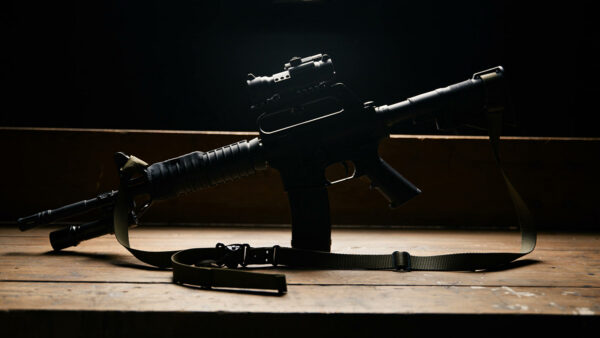
Virginia’s sweeping ban on the future acquisition of commonly owned semiautomatic firearms and standard-capacity magazines is facing five separate lawsuits as its July 1 effective date rapidly approaches.
Two of those cases, Crump v. Katz and Santolla v. Katz, have preliminary-injunction hearings scheduled for June 25. A third court has already denied emergency relief, while a three-judge panel considers whether Virginia’s four state-court challenges should be transferred or consolidated.
Gov. Abigail Spanberger’s SB 749 / HB 217 prohibits the future importation, sale, manufacture, purchase and transfer of firearms Virginia labels “assault firearms.” It separately prohibits importing, selling, bartering, transferring or purchasing ammunition-feeding devices capable of accepting more than 15 rounds. SB 727 expands restrictions on carrying covered firearms in public.
The five cases are McDonald v. Katz, Santolla v. Katz, Crump v. Katz, Black v. Hook and Curtis v. Katz. Together, they challenge the laws under the Second Amendment, Virginia’s constitutional right to arms, its militia clause, the right to hunt and constitutional protections against vague criminal laws.
McDonald v. Katz: Federal Second Amendment Challenge
McDonald v. Katz is the federal case. It was filed in the U.S. District Court for the Eastern District of Virginia by Justin McDonald, Anthony Groeneveld, the National Rifle Association, Firearms Policy Coalition, and Second Amendment Foundation. The defendants include Virginia State Police Superintendent Jeffrey Katz and several local prosecutors and sheriffs.
The plaintiffs’ argument is the straightforward Heller/Bruen argument: semiautomatic rifles, pistols, shotguns, and standard-capacity magazines are bearable arms commonly possessed by peaceable Americans for lawful purposes, including self-defense.
The complaint argues that arms in common use cannot be “dangerous and unusual,” and therefore cannot be banned.
The plaintiffs also acknowledge the reality of the Fourth Circuit: current circuit precedent in Bianchi and Kolbe is a problem, but they argue those cases were wrongly decided and should be overruled by a court with the power to do so.
Santolla v. Katz: NRA/VSSA State Case
Santolla v. Katz is the NRA-backed state case in Washington County Circuit Court. Plaintiffs include Joseph Santolla, Reagan Brooke Adams, Middletown Firearms, Middletown Training, Virginia Pride Ltd., individual VSSA members, and the Virginia Shooting Sports Association.
The plaintiffs argue that Virginia’s Article I, Section 13 right to keep and bear arms is coextensive with the Second Amendment. In plain English, they are saying Virginia cannot ban commonly owned semiautomatic firearms and standard-capacity magazines any more than the federal government could. Their complaint leans on DiGiacinto, Heller, and Bruen, arguing that the Commonwealth is prohibiting arms and magazines commonly possessed for self-defense and other lawful purposes.
The business plaintiffs matter. This is not just about private owners. Middletown Firearms, Middletown Training, and Virginia Pride allege direct harm from a law that cuts off sales, training, and customer access to the arms and magazines at issue.
Crump v. Katz: GOA/VCDL Challenge
Crump v. Katz was filed in Lancaster County Circuit Court by AmmoLand contributor John Crump, Gun Owners of America, Gun Owners Foundation, Virginia Citizens Defense League, and Virginia Citizens Defense Foundation. It challenges SB 749 / HB 217 and SB 727 under the Virginia Constitution.
The plaintiffs argue that Virginia’s new laws ban the acquisition, transfer, manufacture, purchase, and public carry of firearms and magazines that are owned by millions of ordinary Americans. They rely on Article I, Section 13 and the Virginia Supreme Court’s prior treatment of that right as coextensive with the Second Amendment. Their position is simple: if the arms are common, the state cannot turn them into contraband through scary labels and feature tests.
Crump also directly challenges the public-carry restrictions in SB 727. That makes it different from some of the other cases, because it attacks not only the right to acquire arms but also the right to bear them in public. The plaintiffs opposing consolidation noted that only Crump and Santolla challenge Virginia Code § 18.2-287.4, the public-carry provision.
Status: The Lancaster case was initially stayed after the Supreme Court of Virginia appointed a three-judge panel to consider consolidation or transfer. However, the preliminary-injunction hearing has since been rescheduled for June 25, giving the Crump plaintiffs another opportunity to seek relief before the ban takes effect July 1.
State rebuttal: Virginia’s opposition in Crump lays out the Commonwealth’s broader playbook. On the merits, Virginia argues magazines are accessories, not arms; that “assault firearms” and magazines over 15 rounds are not commonly used for lawful self-defense; and that historical laws regulating dangerous weapons support modern restrictions. The state also says the burden is modest because Virginians may still own other firearms and smaller magazines.
That is the government’s theory. Your rights are not violated so long as politicians leave you with something they consider acceptable.
Black v. Hook: NSSF-Backed Industry Case
Black v. Hook is the NSSF-backed case in Fauquier County Circuit Court. Plaintiffs include Eric Black, Britton Condon, Clark’s Gun Shop, Optimus Arms, and Hexmag USA. This case brings in individual gun owners, a retailer, a firearm manufacturer, and a magazine manufacturer.
The plaintiffs argue the ban violates both the U.S. Constitution and the Virginia Constitution. NSSF says the law does not merely hit modern sporting rifles and standard-capacity magazines; it also sweeps up commonly owned handguns and shotguns used for self-defense and hunting. The plaintiffs point to more than 32 million modern sporting rifles in circulation and hundreds of millions of magazines over 15 rounds, arguing those numbers make the common-use question obvious.
Black also raises claims that are not duplicated in the other cases. According to the Crump plaintiffs’ opposition to transfer, Black uniquely includes an independent federal Second Amendment claim, an Article XI, Section 4 Virginia right-to-hunt claim, and federal and state vagueness claims aimed at the law’s catchall definition of “assault firearm.”
Currently, the case is included in the state consolidation/transfer fight. NSSF reported that the plaintiffs filed an emergency motion for a preliminary injunction and requested a hearing before the July 1 effective date.
Curtis v. Katz: Militia-Clause Case
Former Virginia Attorney General Ken Cuccinelli serves as lead counsel in Curtis v. Katz. Cuccinelli has described the case as a novel challenge centered on the Virginia Constitution’s militia clause, arguing that the Commonwealth cannot require citizens to constitute its unorganized militia while denying them access to militia-suitable arms.
The plaintiffs argue that Virginia’s Constitution does not merely protect an abstract right to own whatever arms Richmond allows. It guarantees “a well regulated militia, composed of the body of the people, trained to arms.” Their theory is that this guarantee must mean the people can acquire and possess militia-suitable arms. They argue the banned AR-15-pattern rifles and similar semiautomatic firearms are civilian analogs of the M4 carbine and other standard service weapons, and that magazines over 15 rounds are standard equipment, not luxury accessories.
The plaintiffs also turn the state’s own exemptions against it. If law enforcement and government users need these firearms and magazines, the argument goes, then the Commonwealth has already admitted they have militia and defensive utility.
Status: This is the one case where a court has already ruled on emergency relief. On June 18, Spotsylvania Circuit Judge William E. Glover denied the preliminary injunction. That does not end the case, but it means Curtis did not stop the July 1 effective date.
State rebuttal: Virginia argued the injunction was too broad and that Article I, Section 13 does not create a self-executing private right for members of the unorganized militia to buy and possess military-style arms. The state says militia power is implemented through public law and government structure, not individual choice.
The court found likely irreparable harm if the law is later ruled unconstitutional, but held that the plaintiffs had not shown a likelihood of success on the merits at this stage.
What Comes Next
If no court acts before July 1, Virginia’s ban takes effect while gun owners, dealers, trainers and manufacturers keep litigating.
The state wants the public to believe this is not a serious infringement because it is not confiscation. That is wrong. A ban on buying, selling, transferring, manufacturing, importing and carrying common arms still guts the right.
The five lawsuits attack Virginia’s ban from different angles: federal Second Amendment rights, Virginia constitutional rights, public carry, militia arms, vagueness, hunting, commerce and industry harm.
Richmond can call them “assault firearms.” Gun owners know what they are: common rifles, pistols, shotguns and magazines used by law-abiding Americans for defense, training, competition, hunting and lawful use.
This fight is not over.
About Duncan Johnson:
Duncan Johnson is a lifelong firearms enthusiast and unwavering defender of the Second Amendment—where “shall not be infringed” means exactly what it says. A graduate of George Mason University, he enjoys competing in local USPSA and multi-gun competitions whenever he’s not covering the latest in gun rights and firearm policy. Duncan is a regular contributor to AmmoLand News and serves as part of the editorial team responsible for AmmoLand’s daily gun-rights reporting and industry coverage.
from https://ift.tt/b6v4k9P
via IFTTT

No comments:
Post a Comment