
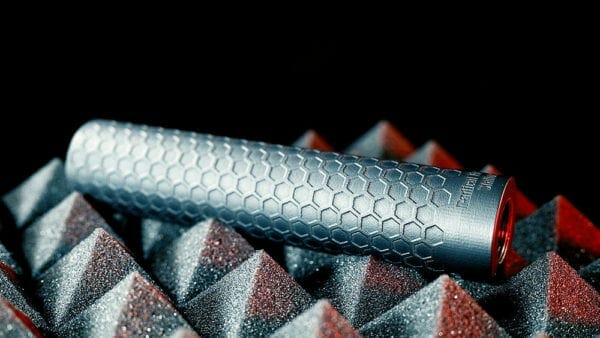
The Fifth Circuit just gave gun owners a major Second Amendment win on suppressors, even though the man who brought the case still lost.
In United States v. Brennan James Comeaux, the court affirmed Comeaux’s conviction for possessing an unregistered silencer under the National Firearms Act. That part is not the victory. The victory is what the court said on the way there: suppressors are “Arms” protected by the Second Amendment.
Comeaux was charged after deputies searched his home and found firearms and suspected silencers. ATF determined the devices were suppressors, and Comeaux admitted he had manufactured and possessed them. He challenged the NFA’s registration requirement, arguing that the law violated the Second Amendment both on its face and as applied to him.
The district court rejected his argument, treating suppressors as “dangerous and unusual weapons” outside the Second Amendment. The Fifth Circuit rejected that theory. “Silencers are ‘Arms,’” the panel held.
Live Inventory Price Checker
|
Huxwrx Flow 45 M Multi-Caliber Suppressor W/ Booster Assembly | Bereli | $ 708.00 |
|
| Huxwrx Flow 762 Ti Rifle Suppressor - FDE | Palmetto State Armory | $ 1185.00 |
|
|

|
HUXWRX Flow 7.62 TI Suppressor with Muzzle Device - Black. | Primary Arms | $ 1299.00 |
|
|
Huxwrx Flow 556k Suppressor W/ Flash Hider, 5.56/17hmr/5.7, Black (BLEM) | Bereli | $ 979.00 |
|
The court explained that suppressors reduce loudness, lower the risk of hearing damage, reduce recoil, eliminate muzzle blast, increase accuracy, and allow faster follow-up shots. Suppressors make firearms safer, more controllable, and more effective for lawful self-defense. That is exactly why millions of gun owners want them.
The government argued that suppressors are not protected because a firearm can technically function without one and because suppressors were not historically tied to founding-era militia service. The Fifth Circuit said that is not the test. Under Bruen, an arm does not have to be “necessary” to make a gun fire. It must facilitate armed self-defense.
That is a massive rejection of the anti-suppressor narrative. Suppressors are not Hollywood assassin tools, used by criminals. They are safety devices. They protect hearing, reduce blast, improve control, and make shooting less abusive to the shooter and everyone nearby. In much of the world, suppressors are treated as normal safety equipment. In America, the government shoved them into the NFA and spent decades pretending they were too dangerous for ordinary citizens.
BREAKING: 5th Circuit rules that suppressors ARE protected arms!
That means no state in the fifth circuit can ban suppressors, and we’re one step closer to the Supreme Court holding the same! https://t.co/wCm6GBhDr5 pic.twitter.com/mAcvoo8c9D
— American Suppressor Association (@AmSuppressor) June 18, 2026
Comeaux changes the legal battlefield. The ruling also creates a direct split with the Ninth Circuit.
Just weeks ago, in United States v. DeBorba, the Ninth Circuit held that suppressors are not protected “arms” because they are optional accessories and not necessary to the ordinary operation of a firearm. The Fifth Circuit has now said the opposite. Suppressors are protected because they help a firearm serve its core lawful purpose.
In the Ninth Circuit, gun control lawyers will point to DeBorba and say suppressors are outside the Second Amendment altogether. In the Fifth Circuit, gun owners can now point to Comeaux and say the Constitution covers them. That kind of direct disagreement is exactly the sort of issue that eventually draws Supreme Court attention.
Gun owners should not overread the decision. Comeaux does not legalize unregistered suppressors. It does not strike down the NFA. It does not mean the ATF registry disappeared overnight.
Comeaux still lost because the panel said it was bound by United States v. Peterson, another Fifth Circuit suppressor case.
Peterson treated the NFA’s suppressor registration system as a presumptively lawful “shall-issue” regime unless the challenger shows abuse, such as exorbitant fees, long delays, arbitrary denials, or some other evidence that the system is being used to burden the right. Comeaux did not build that record, so his conviction was affirmed.
That also explains how Comeaux changes Peterson. If Peterson were decided today, the Fifth Circuit could no longer dodge the threshold question by assuming suppressors might be protected. Comeaux answers that question. Suppressors are arms. But Peterson’s result likely would not change unless the challenger made a stronger record showing that the NFA process itself burdens the right.
Judge Edith Brown Clement, joined by Judge Stuart Kyle Duncan, made the next fight crystal clear. She agreed that suppressors are protected arms but warned that Peterson wrongly turned Bruen’s footnote about shall-issue carry permits into a new hurdle for gun owners. Clement did not mince words: “Peterson ought to be revisited.” In her view, courts should be applying text, history, and tradition, not inventing a half-step that lets the government escape real constitutional scrutiny. That is where this fight is headed.
The NFA survived today, but the government’s favorite anti-suppressor argument did not. The Fifth Circuit said suppressors are not outside the Second Amendment just because politicians and bureaucrats say so.
About Duncan Johnson:
Duncan Johnson is a lifelong firearms enthusiast and unwavering defender of the Second Amendment—where “shall not be infringed” means exactly what it says. A graduate of George Mason University, he enjoys competing in local USPSA and multi-gun competitions whenever he’s not covering the latest in gun rights and firearm policy. Duncan is a regular contributor to AmmoLand News and serves as part of the editorial team responsible for AmmoLand’s daily gun-rights reporting and industry coverage.
from https://ift.tt/npkO9Ef
via IFTTT

No comments:
Post a Comment