

Illinois lawmakers are once again pushing one of the most extreme anti-gun ideas in circulation: forcing handgun ammunition to be serialized, tracked, and entered into a government registry. The current bill is HB 4414, a bill in the Illinois General Assembly that would require serialized handgun ammunition beginning January 1, 2027, create a centralized Illinois State Police registry of ammunition transactions, and authorize end-user fees of up to 5 cents per round or bullet to fund the system.
As of March 12, 2026, the bill had been assigned to the House Judiciary-Criminal Committee, with hearings listed for March 24 and March 26.
That legislation gives fresh relevance to an older but still highly relevant National Shooting Sports Foundation fact sheet from 2021 on “bullet serialization,” which lays out why the idea has drawn opposition for years from manufacturers, law enforcement voices, and gun-rights advocates.
NSSF defines bullet serialization as marking each individual round of ammunition with a laser-engraved serial number, then argues that the concept would function as a de facto ammunition ban by crippling production, driving up costs, and making ordinary ammunition purchases subject to government tracking.
Live Inventory Price Checker
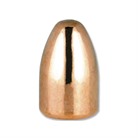 |
Superior Plated(R) 9mm (.356) Round Nose Handgun Bullets - 9mm (.356) 115gr Round Nose 1000/Box | Brownells.com | $ 93.99 | |
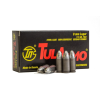 |
TULA 9mm Ammo 115gr FMJ Steel-Cased 1000-Round Case | The Mag Shack | $ 449.99 | |
 |
Fmj 9mm Caliber (0.355'''') Pistol Bullets - Full Metal Jacket 9mm (0.355'''') 115gr Round Nose 100/Box | Brownells.com | $ 14.99 | |
 |
Speer 9mm Gold Dot 115gr Hollow Point Ammo - 20-Round Box | The Mag Shack | $ 26.99 |
The Illinois bill shows exactly why those concerns have never gone away. Under HB 4414’s synopsis, all handgun ammunition manufactured, imported, sold, given, lent, or possessed in Illinois would have to be serialized starting in 2027. The bill would also criminalize a wide range of conduct involving unserialized ammunition, including possession in a public place, and direct the Illinois State Police to maintain a centralized registry of reported handgun-ammunition transactions. It further authorizes a fee of up to five cents per round or bullet to pay for the infrastructure, implementation, operations, enforcement, and future development of the program.
In other words, this is not a narrow recordkeeping bill. It is a full-blown attempt to serialize ammunition, monitor transactions, punish noncompliance, and ultimately make gun ownership prohibitively expensive or legally risky.
NSSF’s fact sheet argues that the manufacturing side alone makes the idea unworkable. According to the organization, ammunition makers cannot simply flip a switch and begin serializing every round. The group says doing so would dramatically slow production, require hundreds of millions of dollars in capital investment, and render existing plants and equipment obsolete. NSSF further warns that such a regime would slash available supply and turn ammunition that now costs pennies per cartridge into something that could cost several dollars per round.
That matters far beyond recreational shooting. The fact sheet argues that reduced availability and higher prices would hit law enforcement training and preparedness as well. NSSF says manufacturers use the same machinery and processes for civilian, law-enforcement, and military ammunition, meaning law enforcement cannot simply be carved out without major production consequences. The organization also notes that law-enforcement groups in California previously opposed similar legislation there.
The technology itself is another major weak point. NSSF says there have been no independent peer-reviewed studies by qualified forensic scientists validating bullet serialization, and notes that the technology has not been the subject of articles in the journal of the Association of Firearm and Toolmark Examiners. The fact sheet also raises a practical problem that critics have hammered for years: many bullets are deformed or mangled on impact, potentially destroying any identifying marks investigators are supposed to rely on.
The recent AmmoLand report on HB 4414 shows those objections are not theoretical. The article notes that critics of the Illinois proposal argue the technology is unreliable in real-world use, and that spent casings or markings could be manipulated, collected, or planted to mislead investigators. It also reports that the bill would force retailers to report buyer and ammunition identifier information to state police while layering on the per-round fee to support the tracking system.
NSSF’s fact sheet also points directly to Illinois as one of the places where anti-gun legislators have already tried to move this concept. The document says bullet serialization bills have been defeated in numerous states, including Illinois, California, Maryland, New York, Pennsylvania, and others. It also warns that lobbying campaigns have repeatedly tried to revive the concept at the state level even after earlier failures.
Ammo serialization is not a new idea discovered only by lawmakers in Illinois. It is an old gun-control scheme that has been circulating for years, repeatedly running into the same problems: questionable technology, enormous compliance costs, supply-chain disruption, enforcement headaches, and obvious civil-liberties concerns when the state starts building registries tied to lawful purchases.
HB 4414 puts all of those concerns back on the table at once. If enacted, the bill would not just burden manufacturers and retailers. It would hit ordinary Illinois gun owners who already lawfully possess ammunition, create new criminal exposure tied to possession of nonserialized rounds, and force the public to help fund the very system being used to track them.
Gun owners have seen this pattern before. Anti-gun lawmakers have proven they won’t stop. If an outright ban will not survive constitutional scrutiny, then they believe the solution is to instead tax, regulate, track, and criminalize a right until exercising it becomes prohibitively expensive and legally risky. NSSF’s warning from its fact sheet remains highly relevant today: bullet serialization is not a serious answer to violent crime. It is a costly, intrusive, and deeply burdensome attempt to control ammunition itself.
And now Illinois Democrats are trying to make it law.
ATF Says Brace Rule Case Is Moot, Warns Some Braced Pistols Still Face NFA Enforcement
from https://ift.tt/zBKCt8b
via IFTTT

No comments:
Post a Comment