
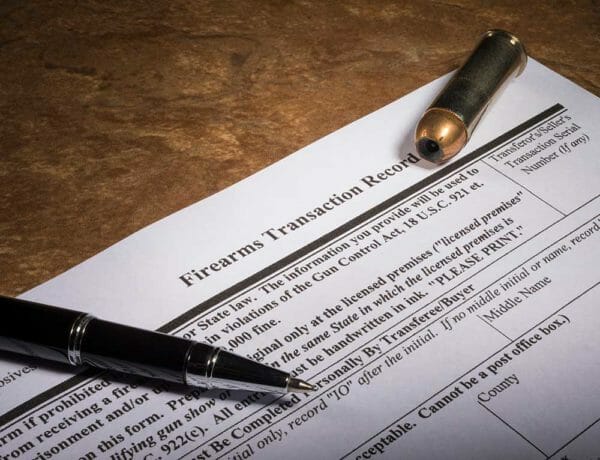
The Los Angeles County Superior Court has revealed that 147,000 cases of felony convictions were not successfully reported to the California Department of Justice.
The public notice of the backlog of errors was posted on February 24, 2026. Because they were not reported to the DOJ, they were not included in the National Instant Criminal Background Check System (NICS) database. It is possible some convicted felons were able to obtain firearms through licensed dealers because of this oversight. From lacourt.org:
Of the approximately 464,000 impacted cases, the Court has identified approximately 380,000 instances with convictions where the case’s ADR was not successfully reported to the DOJ. Of those, roughly 147,000 involved cases with felony convictions, and roughly 233,000 were cases with misdemeanor convictions. Approximately 84,000 cases were dismissals in which ADRs were not successfully reported to the DOJ. Of those, roughly 61,000 involved felony dismissals, and roughly 23,000 involved misdemeanor dismissals.
The convictions are being transmitted to the DOJ at the present time. Most of the records occurred from the 1980’s to 2006. Some of the records are as late as 2023.
About 18% of the records are for cases that were dismissed. These could affect criminal history checks. Such checks often include arrests. Without the record of a dismissal of charges, it would become more difficult for an individual to show he was not convicted of a crime.
There is no indication or reporting that the California Department of Justice will be doing checks to see if any firearms were transferred to people with felony convictions.
The Los Angeles County Superior Court handles cases for about 9.8 million people. These cases are mostly from over 20 years ago. The average number of felony convictions in the United States over that period was about 500 per 100,000 adults per year. The average is probably higher in California, but assuming the national average, we would expect about 50,000 felony convictions per year, or about 1.15 million convictions over the 23 year period.
Given these back-of-the-envelope estimates, roughly 1 in 8 felony convictions in the period in Los Angeles County were not input properly. This does not engender faith in the criminal justice system. Bad record-keeping is what one expects in third-world countries.
This shows, in spite of platitudes about how important it is to keep guns away from those who should not have them, the actual performance of doing so was not a very high priority.
California wants gun owners to trust a sprawling disarmament bureaucracy that cannot even keep felony and dismissal records straight.
This correspondent does not believe it should be the highest priority, because such laws are of marginal use against violent criminals. They are primarily used to convince those who desire to follow the law that they should not acquire firearms. Such an attempt does not work well.
In Australia, when extreme gun control measures were put into effect, the population followed the arcane and difficult rules, but increased the number of firearms owned, per capita, anyway.
People will go to considerable trouble to obtain legal firearms when they have the desire to have them. Australian bureaucracy followed the rules. The number of firearms owned has increased. Those who hate an armed population were outraged. Now they are proposing even more restrictions. Rule-following is not what those who want the people disarmed desire.
They want the people disarmed.
It is good to see proper record-keeping. Bad record-keeping undermines faith in government. Given the allegations of corruption in California, especially in Los Angeles, this correspondent wonders whether any of the “mistakes” were “helped” by a “helpful” clerical staff. This correspondent has not seen any evidence of such “help”.
The more people see the state as corrupt or even bumbling, the more they see the value of an armed population.
About Dean Weingarten:
Dean Weingarten has been a peace officer, a military officer, was on the University of Wisconsin Pistol Team for four years, and was first certified to teach firearms safety in 1973. He taught the Arizona concealed carry course for fifteen years until the goal of Constitutional Carry was attained. He has degrees in meteorology and mining engineering, and retired from the Department of Defense after a 30 year career in Army Research, Development, Testing, and Evaluation.
from https://ift.tt/ZbUMH5l
via IFTTT

No comments:
Post a Comment