Wednesday, February 25, 2026

Florida Bill Exempts Church Security from Private Security Regulations

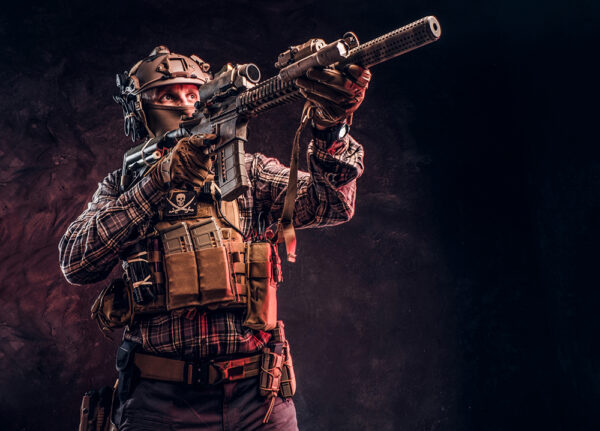
Florida Bill Exempts Church Security from Private Security Regulations, iStock-483083604

The Florida Legislature is close to reforming the requirements for voluntary armed security in churches. The bill exempts voluntary church security members who have concealed carry permits from the requirements of Florida statutes that regulate the members of private security services. Private investigative, security, and repossession services are regulated under Chapter 493 of the Florida Statutes. Section 6102 spells out who the provisions of the chapter shall not apply to.

HB 95 has cleared its House committees and was added to the House Second Reading Calendar on Feb. 10, 2026. SB 52 passed the Senate 39–0 on Feb. 11, 2026, and has been sent to the House.

The Florida Legislature is poised to pass HB 95/ SB 52. The bills are similar, while the Senate version is slightly broader, covering multiple houses of worship. Senate bill, SB 52, has passed the Senate committees and the Senate unanimously. The near-identical House bill, HB 95, has been unanimously passed by the House committees and is ready to be presented to the full House for a vote. A few members of the committees were absent during committee votes.

The bill makes a relatively minor change to the regulation of church security. Unarmed church security was exempt from regulation. This bill exempts volunteer church security who have concealed carry permits from the regulations of Florida statutes.

The previous paragraph 13 of Section 493.6102 will not be changed:

 (13) Any individual employed as a security officer by a church or ecclesiastical or denominational organization having an established physical place of worship in this state at which nonprofit religious services and activities are regularly conducted or by a church cemetery to provide security on the property of the organization or cemetery, and who does not carry a firearm in the course of her or his duties.

The new paragraph will be paragraph 16 of Florida statutes 493.6102. From flhouse.gov:

493.6102 Inapplicability of this chapter.—This chapter shall not apply to:

(16) Any person who on a voluntary basis provides armed security services on the premises of a church or ecclesiastical or denominational organization having an established physical place of worship in this state at which nonprofit religious services and activities are regularly conducted, if:

(a) The person providing the armed security services holds a valid license to carry a concealed weapon or firearm issued pursuant s. 790.06.

(b) The security services are provided exclusively on the premises of a church or ecclesiastical or denominational organization, including any property owned or leased by the church or ecclesiastical or denominational organization for worship, education, or religious activities.

(c) The person providing the armed security services did not receive any compensation for such services. For purposes of this paragraph, the term “compensation” does not include reimbursement for reasonable expenses actually incurred and related to the cost of training or the cost of equipment necessary for providing the security services.

The reform bill appears popular, without opposition. It is expected to pass and be signed by Governor Ron DeSantis. It will become law as of  July 1, 2026.

In 2021, Governor DeSantis signed HB 259, which allowed people with concealed carry permits to carry on church property unless the religious institution has a policy explicitly forbidding the carry of concealed firearms. The previous law restored the choice to religious institutions instead of preemptively forbidding the carry of concealed weapons on the grounds of churches, unless the administration of the religious institution specifically allowed it.

Armed volunteers have served as church security since colonial days. During the colonial period, several colonies required church members to bring their weapons to church services.

Nondangerous Felons Retain Gun Rights in Florida

The Deadly Fraud of Forced Helplessness: Why “Gun-Free” Zones are a Gift to Killers


About Dean Weingarten:

Dean Weingarten has been a peace officer, a military officer, was on the University of Wisconsin Pistol Team for four years, and was first certified to teach firearms safety in 1973. He taught the Arizona concealed carry course for fifteen years until the goal of Constitutional Carry was attained. He has degrees in meteorology and mining engineering, and retired from the Department of Defense after a 30 year career in Army Research, Development, Testing, and Evaluation.
Dean Weingarten


from https://ift.tt/TrAHtEW
via IFTTT

Tuesday, February 24, 2026

Colorado Bill Criminalizing Computer Code Sparks Constitutional Battle Over Gun Rights and Free Speech

data binary code information 3d guns digital iStock-Suebsiri 1010690668.jpg
Colorado Bill Criminalizing Computer Code Sparks Constitutional Battle Over Gun Rights and Free Speech, iStock-Suebsiri 1010690668.jpg

Colorado lawmakers are pushing legislation that would criminalize possession of computer code used to manufacture firearms, triggering fierce backlash from Second Amendment advocates who warn the measure represents an unprecedented attack on both gun rights and free speech protections.

House Bill 26-1144, introduced by Democratic Reps. Lindsay Gilchrist and Speaker Pro Tempore Andy Boesenecker alongside Democratic Sens. Tom Sullivan and Katie Wallace, passed the House Judiciary Committee on February 18, 2026, by a 7 to 4 party-line vote after hours of testimony. The measure now heads to the full House for consideration.

The legislation builds on Colorado’s existing 2023 ghost gun law by banning manufacturing firearms or firearm components using 3D printers, CNC milling machines, or “similar devices.” More controversially, it criminalizes possession of digital instructions like CAD files or code for programming these machines if authorities determine the person possesses them with “intent to manufacture” or “intent to distribute.”

Distributing such digital files to anyone in Colorado who is not a federally licensed firearms manufacturer would also become illegal. A first offense carries Class 1 misdemeanor charges with potential jail time, while a second or subsequent offense escalates to a Class 5 felony punishable by one to three years in prison, mandatory two-year parole, fines up to $100,000, and loss of firearm ownership rights. The bill takes effect July 1, 2026, if signed into law.

Gun rights organizations have mounted fierce opposition centered primarily on constitutional concerns. The National Rifle Association’s Institute for Legislative Action warned that HB26-1144 “prohibits the possession of digital instruction files and/or code related to firearm components by private individuals, raising First, Second and Fifth Amendment violation implications” and “sets forth a dangerous precedent for enforcement and policing of the internet by state officials.”

Beyond First Amendment concerns, critics attack the bill’s definitions as dangerously broad and its enforcement standards as unconstitutionally vague. The legislation defines “3D printing” to encompass CNC milling machines and “similar devices,” which opponents argue sweeps in a massive range of standard manufacturing tools used by machinists, hobbyists, and small businesses, not just 3D printers.

The Colorado State Shooting Association, the state’s official NRA affiliate, formally opposes HB26-1144 alongside the broader suite of Democratic gun regulation measures. State Rep. Ava Flanell, a Republican from Colorado Springs and former firearms instructor, called the bills “heavy handed” and warned they “will make it harder for responsible citizens to exercise their rights,” arguing the legislature should focus on “holding criminals accountable” rather than restricting tools.

Scott James, the Weld County Commissioner for District 2, criticized this legislation, stating that it “pushes Colorado into trying to police information transfer across the internet through a state criminal statute.” He added that the passage of this bill would be “a recipe for courtroom fights and selective targeting, not a clear recipe for better safety.”

The National Shooting Sports Foundation has long argued that 3D printing is a “high cost, limited production technology that does not present a public safety risk” and that criminals are not meaningfully using 3D printing to produce firearms. 

As of late February 2026, HB26-1144 has cleared the House Judiciary Committee and awaits a vote from the full Colorado House of Representatives. Given the party-line nature of all votes so far and Democratic control of the legislature, passage is considered likely, but legal challenges, particularly on First Amendment grounds, are widely anticipated.  If Colorado criminalizes the possession of ones and zeros on hard drives while exempting licensed manufacturers, the state will have crossed a constitutional line that transforms peaceable citizens into felons for possessing information, setting the stage for what could become a landmark free speech case that extends far beyond firearms.

Third Circuit Rules 3D-Printed Gun Files Are Not Protected Speech

GOA Backs West Virginia Bill to Allow State-Facilitated Machine Gun Transfers for Civilians


About José Niño

José Niño is a freelance writer based in Charlotte, North Carolina. You can contact him via Facebook and X/Twitter. Subscribe to his Substack newsletter by visiting “Jose Nino Unfiltered” on Substack.com.

José Niño


from https://ift.tt/mS9QWcb
via IFTTT

CCRKBA Demands Bloomberg ‘Come Clean’ About Epstein Relationship

97Percent’s Executive Director Rips Mask Off ‘Non-Partisan’ and ‘Objective’ Facade iStock-1178499375
CCRKBA Demands Bloomberg ‘Come Clean’ About Epstein Relationship, iStock-1178499375

BELLEVUE, WA – Following revelations that billionaire gun control advocate Michael Bloomberg was “part of the circle of powerful men” that Jeffrey Epstein and Ghislaine Maxwell “traveled in,” the Citizens Committee for the Right to Keep and Bear Arms is demanding that Everytown for Gun Safety take no more money from him pending full disclosure of the relationship.

A revealing report at The Reload, based on an analysis of newly released Epstein files, shows Bloomberg’s name is “mentioned repeatedly.” As reported by editor Stephen Gutowski, “While most mentions of his name are references to his news company’s reporting or other non-personal contexts, many of the emails that discuss him reveal a more personal connection to both Epstein and…Maxwell.”

CCRKBA Chairman Alan Gottlieb said Bloomberg, the former New York mayor who co-founded Everytown and has contributed millions of dollars to gun prohibition efforts, must tell all. He noted The Reload’s acknowledgement that “emails (in the released files) don’t reveal evidence of criminal wrongdoing by Bloomberg or confirm how often he actually attended events with Epstein or Maxwell.”

“Here’s a man who has spent millions of dollars supporting efforts to erode Second Amendment rights,” Gottlieb observed. “He needs to be completely transparent regarding his relationship with Epstein and Maxwell, and in the meantime, Everytown should not take a penny from him, even though he is one of the group’s founders.

“It is alarming to learn Bloomberg’s name shows up at all in the released files,” he continued, “and that’s enough to warrant an explanation from Bloomberg. If there’s nothing to hide, Bloomberg shouldn’t be worried about clearing the air. The time to do that is right now. After all, he has advocated for so-called ‘expanded background checks’ on gun buyers for years. Maybe he’s the one who should face a thorough background check.

“Stephen Gutowski has done a remarkable bit of investigative journalism,” Gottlieb added, “justifiably raising questions which deserve answers. You can be certain that if the names of prominent gun rights advocates showed up in Epstein’s files, the legacy media would be all over that story. Come clean, Mr. Bloomberg.”


About CCRKBA

With more than 650,000 members and supporters nationwide, the Citizens Committee for the Right to Keep and Bear Arms (www.ccrkba.org) is one of the nation’s premier gun rights organizations. As a non-profit organization, the Citizens Committee is dedicated to preserving firearms freedoms through active lobbying of elected officials and facilitating grass-roots organization of gun rights activists in local communities throughout the United States.Citizens Committee for the Right to Keep and Bear Arms


from https://ift.tt/GVPIq4f
via IFTTT

What to do About Mexican Drug Cartels: Letters of Marque

What to do about Mexican drug cartels: Letters of Marque iStock-1182675277

The United States Congress still retains full authority to issue Letters of Marque, although none have been issued for more than a hundred years.

A Letter of Marque was actually a simple concept. They allowed private citizens in private warships to attack enemy vessels during wartime. These privateers could then take ownership of whatever plunder they seized—gold, weapons or the captured ships—after an admiralty court ruled in their favor and took a percentage of the profits.

Letters of Marque were used for hundreds of years across the globe, because they allowed a country to enlarge the size of their navy very quickly and cheaply.

The authority to issue Letters of Marque can still be found in Article 1, Section 8, Clause 11 of the United States Constitution: “The Congress shall have Power … to declare War, grant Letters of Marque and Reprisal, and make Rules concerning Captures on Land and Water.”

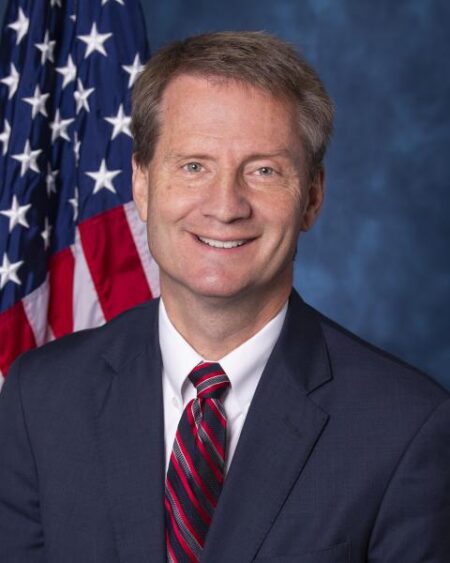
Tennessee Republican Congressman Tim Burchett. (Photo provided by Congressman Burchett’s office).

Congressman Tim Burchett, a Republican from Tennessee, and Senator Mike Lee, a Republican of Utah, who both have extremely solid Second-Amendment credentials, have drafted bills that would revitalize the Letters of Marque, in order to target Mexican drug cartels.

Congressman Burchett described the bill in a phone call Monday morning:

“It allows the president to contract out to privateers and go after the cartels,” he said. “These would be top-tier operators, SEALs, Special Forces, Marine Raiders and commando types. Some are still working as private operators. It allows private citizens to act against the cartels. In President Trump’s first term, when he got [Former Iranian Quds Force Commander Qasem] Soleimani, the Democrats just berated our military leaders because they didn’t ask for their permission. If the Democrats still want us to ask for their permission, we got some real problems. This is constitutionally provided and has been done before. We went after the Barbary pirates. It’s constitutionally provided and within the law. In this day and age, we need it. The constitution grants congress the power to grant these letters.”

Senator Lee’s bill is titled “S. 3567: Cartel Marque and Reprisal Authorization Act of 2025.”

Described as: “A bill to authorize the President of the United States to issue letters of marque and reprisal with respect to acts of aggression against the United States by a member of a cartel, or a member of a cartel-linked organization, or any conspirator associated with a cartel, and for other purposes.”

It was introduced before the latest outbreak of cartel violence, which has targeted American tourists in Mexico.

It specifies that cartels “present an unusual and extraordinary threat to national security and foreign policy of the United States.”

Senator Lee’s bill would allow “privately armed and equipped persons” to use “all means reasonably necessary” to operate outside our borders and seize any individual and their property who the President has determined to be a member of a drug cartel, or a member of a cartel-linked organization, “who is responsible for an act of aggression against the United States.”

Congressman Burchett was asked if he has discussed his bill with President Trump.

“I have not yet, but I put it out there,” he said. “It is constitutionally sound. We live in dangerous times, and we’ve got American people who need it.”

This story is presented by the Second Amendment Foundation’s Investigative Journalism Project and wouldn’t be possible without you. Please click here to make a tax-deductible donation to support more pro-gun stories like this.


About Lee Williams

Lee Williams, who is also known as “The Gun Writer,” is the chief editor of the Second Amendment Foundation’s Investigative Journalism Project. Until recently, he was also an editor for a daily newspaper in Florida. Before becoming an editor, Lee was an investigative reporter at newspapers in three states and a U.S. Territory. Before becoming a journalist, he worked as a police officer. Before becoming a cop, Lee served in the Army. He’s earned more than a dozen national journalism awards as a reporter, and three medals of valor as a cop. Lee is an avid tactical shooter.

Lee Williams


from https://ift.tt/72om6vU
via IFTTT

Monday, February 23, 2026

SCOTUS Once Again Punts On Duncan v. Bonta

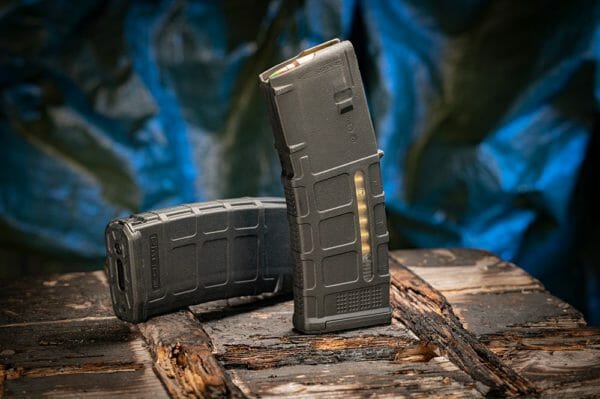
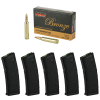
Magpul PMAG Gen3 (Window) 30 Round AR-15 Magazines
SCOTUS Once Again Punts On Duncan v. Bonta img Jim Grant

In the realm of Second Amendment litigation, few cases have captured as much attention and endured as long a journey as Duncan v. Bonta. This challenge to California’s prohibition on standard-capacity magazines, defined as those holding more than 10 rounds, has ping-ponged through the federal courts for nearly a decade. As of February 2026, the case sits in limbo at the U.S. Supreme Court, repeatedly relisted for conference without a decision on whether to grant review. This pattern of delays underscores the justices’ cautious approach to post-Bruen gun rights cases, potentially signaling deeper divisions or strategic timing within the Court.

The origins of Duncan v. Bonta trace back to 2016, when California voters approved Proposition 63, which banned the possession of what the state called large-capacity magazines (LCMs).

The law was built on earlier restrictions that prohibited the manufacture and sale of such magazines, but allowed existing owners to keep them. Prop 63 went further, requiring owners to surrender, sell out of state, or destroy their LCMs, with criminal penalties for non-compliance. Proponents argued that LCMs facilitate mass shootings by enabling sustained fire without reloading. Opponents, including the California Rifle & Pistol Association (CRPA) and individual plaintiffs like Virginia Duncan, contended that the ban infringes on the Second Amendment right to bear arms for self-defense, as LCMs are commonly used in handguns and rifles for lawful purposes.

The litigation began in 2017 in the U.S. District Court for the Southern District of California. Judge Roger Benitez, a George W. Bush appointee known for his pro-Second Amendment rulings, struck down the ban in 2019, calling it an unconstitutional burden on law-abiding citizens. He emphasized that millions of LCMs are in circulation nationwide, estimates suggest over 100 million, and that they are “arms” protected under the Second Amendment. A three-judge panel of the Ninth Circuit Court of Appeals affirmed this decision in 2020, but the full en banc court reversed in 2021, upholding the ban under the then-prevailing “intermediate scrutiny” test. The en banc majority reasoned that the law advanced public safety without unduly restricting core Second Amendment rights.

This back-and-forth might have ended there, but the Supreme Court’s 2022 landmark decision in New York State Rifle & Pistol Association v. Bruen reshaped the landscape. In Bruen, the Court rejected tiered scrutiny in favor of a history-and-tradition test: gun regulations must be consistent with the nation’s historical tradition of firearm regulation to pass constitutional muster. Shortly after, the justices vacated the Ninth Circuit’s ruling in Duncan and remanded the case for reconsideration under the new framework.

On remand, Judge Benitez again invalidated the ban in September 2023, finding no historical analogue for prohibiting commonly owned magazines. He issued a permanent injunction, allowing Californians to possess LCMs freely during the appeal. The Ninth Circuit panel again affirmed, but the en banc court intervened again in March 2025, reversing the district court in a sharply divided 15-12 opinion. The majority held that LCMs are not “arms” but mere accessories, and even if they were, California’s ban aligns with historical regulations on dangerous weapons like Bowie knives or multi-shot firearms from the founding era. Dissenters, including Judges Patrick Bumatay and Lawrence VanDyke, lambasted the decision as defying Bruen. Judge VanDyke, in a particularly scathing opinion delivered partly via video, accused the majority of recycling pre-Bruen reasoning under a historical guise.

With the en banc ruling in place, the plaintiffs petitioned the Supreme Court for certiorari in August 2025. The petition poses two questions: whether banning possession of common ammunition-feeding devices violates the Second Amendment, and whether laws requiring divestment of lawfully acquired property constitute a constitutional taking. California Attorney General Rob Bonta responded, defending the ban as consistent with history. Amicus briefs poured in, including from 27 state attorneys general supporting the petitioners.

The case’s path at the Supreme Court has been marked by unusual delay. Initially distributed for the November 21, 2025, conference, it was rescheduled and then redistributed for December 5, December 12, January 9, January 16, January 23, and most recently, February 20, 2026. As of February 23, 2026, no decision has been announced following the February 20 conference, suggesting another relist may be forthcoming. The constant relisting indicates sustained interest without resolution.

Relisting, a practice in which a case is redistributed for a subsequent conference without action, is not uncommon but often signals that the justices are closely considering it. According to legal experts, relists can occur for various reasons: drafting a summary reversal, preparing a dissent from denial of cert, or awaiting developments in related cases. In Duncan’s case, the repeated relists may reflect internal debate over how to apply Bruen after the Court’s 2024 decision in United States v. Rahimi, which upheld a federal gun ban for domestic abusers and clarified that regulations need not be identical to historical ones but analogous.

The Court may also be eyeing Duncan alongside similar challenges. Petitions in cases like Viramontes v. Cook County (Illinois assault weapons ban) and National Association for Gun Rights v. Lamont (Connecticut LCM restrictions) are pending, some relisted as well. Analysts speculate the justices are selecting the best “vehicle” to address magazine bans broadly, given their prevalence in states like New York, New Jersey, and Washington. The delay could stem from strategic timing; with the 2025-26 term’s argument calendar nearly full, granting cert now might push arguments to the next term.

These relists have real-world implications. The district court’s injunction remains in effect, staying enforcement of California’s ban. Gun owners in the state can still possess LCMs, but uncertainty looms. If the Court denies cert, the ban could snap into place, forcing millions to comply or face penalties. A grant could lead to another major Second Amendment ruling, potentially invalidating similar laws nationwide and affirming that LCMs are protected “arms.” Critics of the ban argue it disproportionately affects law-abiding citizens, as criminals ignore such laws.

The prolonged relisting echoes other high-profile cases, like abortion or election disputes, where the Court treads carefully amid political sensitivity. The conservative majority, having expanded gun rights in Heller, McDonald, and Bruen, may be weighing how far to extend protections. Dissenters like Justices Sotomayor and Kagan have criticized Bruen for unleashing chaos in lower courts.

As Duncan v. Bonta lingers, it exemplifies the Supreme Court’s deliberate pace on contentious issues. Whether the relists portend a grant, denial, or something else remains unclear.

Supreme Court Shake-Up? Alito Exit Could Hand Trump Critical 2A Appointment

Duncan v. Bonta: Supreme Court Poised to Decide the Future of Gun Rights


About John Crump

Mr. Crump is an NRA instructor and a constitutional activist. John has written about firearms, interviewed people from all walks of life, and on the Constitution. John lives in Northern Virginia with his wife and sons, follow him on X at @crumpyss, or at www.crumpy.com.

John Crump


from https://ift.tt/IOSiebc
via IFTTT

GOA Backs West Virginia Bill to Allow State-Facilitated Machine Gun Transfers for Civilians

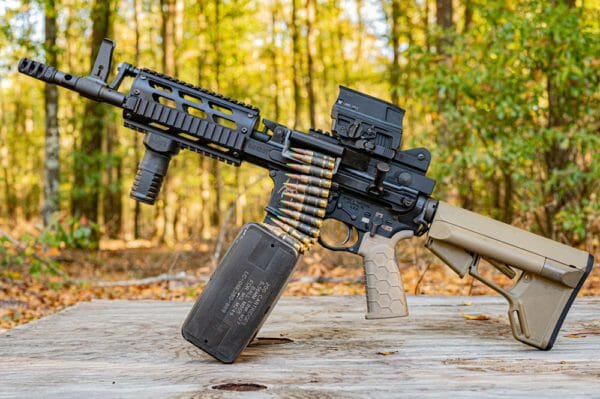
FightLite MCR Belt-Fed AR-15
GOA Backs West Virginia Bill to Allow State-Facilitated Machine Gun Transfers for Civilians IMG Jim Grant

Gun Owners of America (GOA) announced its strong support for newly introduced legislation in West Virginia on February 20, 2026. The bill would establish state-run entities (like ABC stores in other states that sell liquor) to purchase and transfer fully automatic machine guns to qualified, law-abiding private citizens. This approach aims to utilize a specific exemption in federal law under 18 U.S.C. § 922(o), known as the Hughes Amendment, which has prohibited the registration of new machine guns for civilian ownership since 1986.

The press release from GOA, issued from its Springfield, Virginia headquarters, describes the proposal as a way to restore access to what supporters call constitutionally protected arms. It leverages language in the federal statute stating that the machine gun prohibition “does not apply with respect to … a transfer to or by, or possession by or under the authority of” a state or its political subdivisions.

Under the bill’s framework, West Virginia would create authorized distribution centers. These state-operated facilities would acquire machine guns, potentially including newly manufactured ones, and conduct transfers “by” the state directly to eligible members of the public. Supporters contend this structure falls squarely within the statutory exception, allowing compliant transfers while complying with federal requirements such as background checks, the $200 National Firearms Act (NFA) tax stamp, and approval processes administered by the Bureau of Alcohol, Tobacco, Firearms and Explosives (ATF).

GOA Senior Vice President Erich Pratt emphasized the significance in a prepared statement: “For decades, Americans have been told that the 1986 machine gun ban permanently stripped them of access to modern arms. But Congress included an explicit exemption for transfers’ to or by’ a State, and that language matters. West Virginia is demonstrating that states have both the authority and the responsibility to defend the Second Amendment, restore parity between citizens and the government, and lead the way in dismantling unconstitutional federal overreach.”

Chris Stone, GOA’s Director of State Affairs, added: “The plain text of Section 922(o) makes clear that its prohibition does not apply to transfers conducted by a State. By carefully structuring this legislation within the existing statutory framework, West Virginia lawmakers are advancing a serious, legally grounded effort to vindicate the rights protected by the Second Amendment while exercising the State’s sovereign authority.”

The proposal draws on historical precedents for government-supplied arms to civilians. GOA points to the Militia Act of 1792, which required able-bodied men to equip themselves with military-grade weapons, and to periods of surplus military firearm sales to private citizens throughout U.S. history. Advocates argue that the Founding Fathers envisioned an armed citizenry capable of militia service, with access to arms comparable to those used by government forces.

The 1986 Hughes Amendment, attached to the Firearm Owners’ Protection Act (FOPA), closed the registry for new civilian machine guns after May 19, 1986. Only pre-1986 registered machine guns, roughly 200,000 to 300,000 transferable examples, remain legally available to civilians under the NFA process. These often command prices of $20,000 or more due to scarcity.

West Virginia has maintained a pro-Second Amendment legislative track record in recent years, including constitutional carry since 2016 and efforts to limit local gun restrictions. Related 2026 bills include House Bill 4185, which seeks to repeal the state’s own ban on machine gun possession (though federal law would still apply), and other measures like the Second Amendment Preservation Act (Senate Bill 850) and Second Amendment Reaffirmation and Protection Act variants that challenge federal overreach on intrastate firearm transactions.

If enacted, the GOA-backed measure could represent one of the most direct state-level challenges to the post-1986 civilian machine gun restrictions. Legal experts note that, while the statutory exemption exists, the ATF and the Department of Justice have historically interpreted § 922(o) narrowly, viewing state-facilitated transfers to private citizens as a potential circumvention of congressional intent. Such a program would likely trigger federal scrutiny, possible litigation, or enforcement actions.

Supporters say that qualified transfers would follow strict NFA protocols, including extensive vetting, and that law-abiding citizens should not face permanent disarmament relative to government entities that retain access to such firearms for law enforcement and military use.

GOA, a nonprofit lobbying group with millions of members and a reputation for an uncompromising stance on gun rights issues (often contrasting with more moderate organizations like the NRA), positions the West Virginia effort as part of a broader pushback against perceived federal infringements.

As of February 20, 2026, specific bill numbers, sponsors, or full legislative text for the state-transfer mechanism were not immediately detailed in public records beyond GOA’s announcement. The proposal arrives amid a busy 2026 West Virginia legislative session addressing various firearm-related measures, from concealed carry expansions for younger adults to broader preemption of federal gun laws.

The development underscores ongoing tensions between state sovereignty claims and federal firearms regulation. Whether West Virginia advances this novel approach and whether it withstands legal challenges could influence similar efforts in other gun-rights-friendly states.

West Virginia Introduces Bill to Repeal the State’s Machine Gun Ban

The Deadly Fraud of Forced Helplessness: Why “Gun-Free” Zones are a Gift to Killers


About John Crump

Mr. Crump is an NRA instructor and a constitutional activist. John has written about firearms, interviewed people from all walks of life, and on the Constitution. John lives in Northern Virginia with his wife and sons, follow him on X at @crumpyss, or at www.crumpy.com.

John Crump


from https://ift.tt/gS8zhN6
via IFTTT

‘Non-Dangerous Felon’ Opinion Leaves More Immediate Danger Unresolved

Jail-Court-iStock-1135489412
Anyone who can’t be trusted with a gun can’t be trusted without a custodian. iStock-1135489412

“Christopher Morgan was convicted in Pennsylvania in 2007 after he was caught carrying a firearm without a state license. Fifteen years later, he was stopped by a Florida officer, whom he told of a pistol in the center console of his car,” Lee Williams notes in his opening summary to a report on “non-dangerous felons retain[ing] gun rights in Florida.”

“Morgan was charged in Florida with possession of a firearm by a convicted felon,” Williams elaborates.  “He has no other criminal history.”

That a citizen exercising a clearly enumerated right can be adjudicated a felon and designated as a prohibited person, forever barred from keeping and bearing arms, shows how far the Founders’ Republic has strayed from the clear mandate “shall not be infringed.” Knowing that and still talking to police while admitting being in violation of such tyrannical edicts is another puzzler. It sounds like Morgan volunteered that information, along with the information that he was a “prohibited person.”

Florida does not have a statutory “duty” for a citizen to proactively inform police if he is armed, but state law does require a truthful answer if asked. In Morgan’s case, requiring such an answer would have required him to forfeit his Fifth Amendment-guaranteed rights. The Supreme Court has already weighed in on that in the case of Haynes v United States, where it decided that felons are essentially immune to National Firearms Act registration requirements applicable to everybody else, because to require them to admit they were in violation for possession would require them to self-incriminate. Similarly, requiring a citizen to answer if armed in a “no-guns zone” would have the same effect. That will make for an interesting challenge when it happens.

But the bottom line is Morgan’s case moved forward under “pro-gun” Republican Attorney General (now U.S. Senator) Ashley Moody. And he’s rightfully fighting it. Now, enter the current AG, who made an interesting observation in the State of Florida’s Notice Regarding Its Position and Motion for Leave to File Supplemental Brief that some could consider a comment on his predecessor.

Acknowledging “It is the Attorney General’s duty to represent the State in criminal appeals before this Court,” Uthmeier adds an interesting qualifier:

“It is … the Attorney General’s duty to admit when he believes the State has obtained a conviction in violation of the Constitution. Indeed, although the Attorney General ‘ordinarily’ defends state law, he must also ‘exercise conscientious judgment’ in the discharge of his duties.”

He also made an interesting point about non-violent and violent felons being lumped together:

“The State previously filed an answer brief taking the position that Appellant Christopher Morgan was properly convicted of being a felon in possession of a firearm. On further reflection, the Attorney General is of the view that the conviction violated Morgan’s Second Amendment right to keep and bear arms. Properly understood, the Second Amendment permits the government to dispossess felons whose convictions indicate that the felon is dangerous, but not merely all felons as a categorical matter.”

What Uthmeier’s opinion does not address is the disconnect between ineffective sentencing practices and reality. Put simply, anyone who can’t be trusted with a gun can’t be trusted without a custodian. He has proven himself dangerous to others through his crimes.

The late Robert J. Kukla made a brilliant observation in his 1973 classic, Gun Control, equating the release of violent misfits from prison with opening the cage of a man-eating tiger and expecting a different result.

If it has been proven that a known predator is a danger, how is it responsible for government, charged with protecting life, freedom, and property, to allow such a menace to have access to the rest of us before it can be established that he is no longer a threat? (And which scientific experts have the demonstrable, repeatable ability to give that assurance?) Does anyone think he couldn’t victimize others with something else, or with no weapon at all (the FBI says more people are killed with fists and feet than with all types of rifles)? Or, noting routine headlines from places like Chicago and Baltimore, that he couldn’t get a gun regardless of any laws?

As the Bureau of Justice Statistics notes in a 2019 prisoner survey:

“[M]ore than half (56%) had either stolen it (6%), found it at the scene of the crime (7%), or obtained it off the street or from the underground market (43%). Most of the remainder (25%) had obtained it from a family member or friend, or as a gift. Seven percent had purchased it under their own name from a licensed firearm dealer.”

Making the issue about who is not “allowed” to own guns because they’re dangerous misses the real issue. They’re dangerous without guns, too. Why wouldn’t such proven menaces be separated from society (after being afforded real “due process,” with all appropriate protections of course) until and unless they can be trusted not to attack people?

As for the non-violent convicts, Uthmeier is spot on, noting “the lack of historical evidence supporting the dispossession of all felons.” But as for “the strong historical evidence supporting the disposition of dangerous felons,” it will be interesting to see him present what he’s got, and to note how many were either never let out or hanged after their Sixth Amendment-guaranteed “right to a speedy and public trial.”  Text, history, and tradition tell us people at the time of ratification weren’t big on waiting 30 years for justice to play out and then paying for a gourmet “last meal.”

As for federal prohibitions resulting from state convictions, 18 U.S.C. § 921acknowledges:

“What constitutes a conviction of such a crime shall be determined in accordance with the law of the jurisdiction in which the proceedings were held. Any conviction which has been expunged or set aside or for which a person has been pardoned or has had civil rights restored shall not be considered a conviction for purposes of this chapter, unless such pardon, expungement, or restoration of civil rights expressly provides that the person may not ship, transport, possess, or receive firearms.”

The Department of Justice has cleverly gotten around appropriations limitations imposed by the “Schumer Amendment” that defunded ATF from working on rights restoration, by rescinding ATF’s delegation for that responsibility. Still to be determined is the criteria that the department will use, which it has to date declined and resisted to define, and is fighting in court to keep from disclosing to gun owners.


About David Codrea:

David Codrea is the winner of multiple journalist awards for investigating/defending the RKBA and a long-time gun owner rights advocate who defiantly challenges the folly of citizen disarmament. He blogs at “The War on Guns: Notes from the Resistance,” is a regularly featured contributor to Firearms News, and posts on Twitter: @dcodrea and Facebook.

David Codrea


from https://ift.tt/FlPGtpq
via IFTTT