
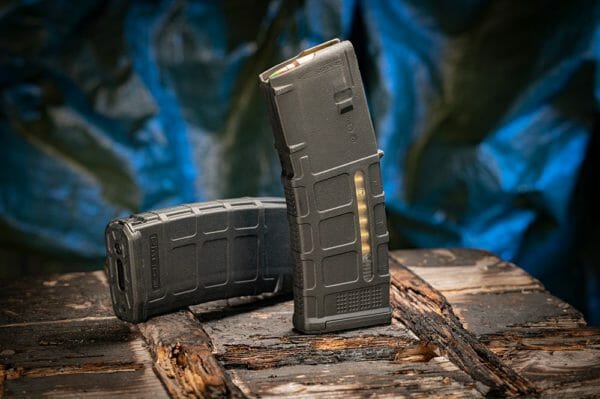
In the realm of Second Amendment litigation, few cases have captured as much attention and endured as long a journey as Duncan v. Bonta. This challenge to California’s prohibition on standard-capacity magazines, defined as those holding more than 10 rounds, has ping-ponged through the federal courts for nearly a decade. As of February 2026, the case sits in limbo at the U.S. Supreme Court, repeatedly relisted for conference without a decision on whether to grant review. This pattern of delays underscores the justices’ cautious approach to post-Bruen gun rights cases, potentially signaling deeper divisions or strategic timing within the Court.
The origins of Duncan v. Bonta trace back to 2016, when California voters approved Proposition 63, which banned the possession of what the state called large-capacity magazines (LCMs).
The law was built on earlier restrictions that prohibited the manufacture and sale of such magazines, but allowed existing owners to keep them. Prop 63 went further, requiring owners to surrender, sell out of state, or destroy their LCMs, with criminal penalties for non-compliance. Proponents argued that LCMs facilitate mass shootings by enabling sustained fire without reloading. Opponents, including the California Rifle & Pistol Association (CRPA) and individual plaintiffs like Virginia Duncan, contended that the ban infringes on the Second Amendment right to bear arms for self-defense, as LCMs are commonly used in handguns and rifles for lawful purposes.
The litigation began in 2017 in the U.S. District Court for the Southern District of California. Judge Roger Benitez, a George W. Bush appointee known for his pro-Second Amendment rulings, struck down the ban in 2019, calling it an unconstitutional burden on law-abiding citizens. He emphasized that millions of LCMs are in circulation nationwide, estimates suggest over 100 million, and that they are “arms” protected under the Second Amendment. A three-judge panel of the Ninth Circuit Court of Appeals affirmed this decision in 2020, but the full en banc court reversed in 2021, upholding the ban under the then-prevailing “intermediate scrutiny” test. The en banc majority reasoned that the law advanced public safety without unduly restricting core Second Amendment rights.
This back-and-forth might have ended there, but the Supreme Court’s 2022 landmark decision in New York State Rifle & Pistol Association v. Bruen reshaped the landscape. In Bruen, the Court rejected tiered scrutiny in favor of a history-and-tradition test: gun regulations must be consistent with the nation’s historical tradition of firearm regulation to pass constitutional muster. Shortly after, the justices vacated the Ninth Circuit’s ruling in Duncan and remanded the case for reconsideration under the new framework.
Live Inventory Price Checker
 |
Magpul PMAG GEN 2 MOE AR-15 30 Round Magazine (5 Pack) & 100 Rounds of PMC Bronze .223 Remington FMJ 55gr Ammo | The Mag Shack | $ 126.25 $ 89.99 | |
 |
Magpul PMAG D-60 AR-15 .223 / 5.56 60-Round Polymer Drum Magazine | GunMag Warehouse | $ 119.99 | |
| Magpul PMAG Minus 10 Round Limiter for 223/5.56 Magazines - Reduces Mag Capacity | Ammunition Depot | $ 13.99 | ||
| Magpul PMAG D-50 MP5 9mm 50 Round Drum Magazine, Black - MAG1181-BLK | Palmetto State Armory | $ 132.99 $ 118.99 |
On remand, Judge Benitez again invalidated the ban in September 2023, finding no historical analogue for prohibiting commonly owned magazines. He issued a permanent injunction, allowing Californians to possess LCMs freely during the appeal. The Ninth Circuit panel again affirmed, but the en banc court intervened again in March 2025, reversing the district court in a sharply divided 15-12 opinion. The majority held that LCMs are not “arms” but mere accessories, and even if they were, California’s ban aligns with historical regulations on dangerous weapons like Bowie knives or multi-shot firearms from the founding era. Dissenters, including Judges Patrick Bumatay and Lawrence VanDyke, lambasted the decision as defying Bruen. Judge VanDyke, in a particularly scathing opinion delivered partly via video, accused the majority of recycling pre-Bruen reasoning under a historical guise.
With the en banc ruling in place, the plaintiffs petitioned the Supreme Court for certiorari in August 2025. The petition poses two questions: whether banning possession of common ammunition-feeding devices violates the Second Amendment, and whether laws requiring divestment of lawfully acquired property constitute a constitutional taking. California Attorney General Rob Bonta responded, defending the ban as consistent with history. Amicus briefs poured in, including from 27 state attorneys general supporting the petitioners.
The case’s path at the Supreme Court has been marked by unusual delay. Initially distributed for the November 21, 2025, conference, it was rescheduled and then redistributed for December 5, December 12, January 9, January 16, January 23, and most recently, February 20, 2026. As of February 23, 2026, no decision has been announced following the February 20 conference, suggesting another relist may be forthcoming. The constant relisting indicates sustained interest without resolution.
Relisting, a practice in which a case is redistributed for a subsequent conference without action, is not uncommon but often signals that the justices are closely considering it. According to legal experts, relists can occur for various reasons: drafting a summary reversal, preparing a dissent from denial of cert, or awaiting developments in related cases. In Duncan’s case, the repeated relists may reflect internal debate over how to apply Bruen after the Court’s 2024 decision in United States v. Rahimi, which upheld a federal gun ban for domestic abusers and clarified that regulations need not be identical to historical ones but analogous.
The Court may also be eyeing Duncan alongside similar challenges. Petitions in cases like Viramontes v. Cook County (Illinois assault weapons ban) and National Association for Gun Rights v. Lamont (Connecticut LCM restrictions) are pending, some relisted as well. Analysts speculate the justices are selecting the best “vehicle” to address magazine bans broadly, given their prevalence in states like New York, New Jersey, and Washington. The delay could stem from strategic timing; with the 2025-26 term’s argument calendar nearly full, granting cert now might push arguments to the next term.
These relists have real-world implications. The district court’s injunction remains in effect, staying enforcement of California’s ban. Gun owners in the state can still possess LCMs, but uncertainty looms. If the Court denies cert, the ban could snap into place, forcing millions to comply or face penalties. A grant could lead to another major Second Amendment ruling, potentially invalidating similar laws nationwide and affirming that LCMs are protected “arms.” Critics of the ban argue it disproportionately affects law-abiding citizens, as criminals ignore such laws.
The prolonged relisting echoes other high-profile cases, like abortion or election disputes, where the Court treads carefully amid political sensitivity. The conservative majority, having expanded gun rights in Heller, McDonald, and Bruen, may be weighing how far to extend protections. Dissenters like Justices Sotomayor and Kagan have criticized Bruen for unleashing chaos in lower courts.
As Duncan v. Bonta lingers, it exemplifies the Supreme Court’s deliberate pace on contentious issues. Whether the relists portend a grant, denial, or something else remains unclear.
Supreme Court Shake-Up? Alito Exit Could Hand Trump Critical 2A Appointment
Duncan v. Bonta: Supreme Court Poised to Decide the Future of Gun Rights
About John Crump
Mr. Crump is an NRA instructor and a constitutional activist. John has written about firearms, interviewed people from all walks of life, and on the Constitution. John lives in Northern Virginia with his wife and sons, follow him on X at @crumpyss, or at www.crumpy.com.

from https://ift.tt/IOSiebc
via IFTTT

No comments:
Post a Comment