Tuesday, January 6, 2026

NRA Sues the NRA Foundation as Internal Power Struggle Freezes Program Funding

Opinion

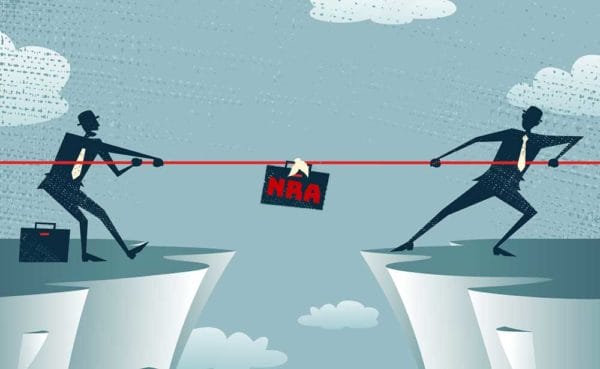
NRA Board Membership Tug of War
iStock

Tombstone, Arizona – The National Rifle Association announced yesterday that it has filed suit against the NRA Foundation, claiming that the Foundation has been exploiting the NRA’s trademarks and intellectual property and misleading donors by raising funds under the NRA’s name, while refusing to fund NRA programs.

As a member of the NRA’s Board of Directors, I have long been aware of the problems and discussions of various strategies to try to get the Foundation’s leadership to fulfill their obligations to the NRA, including the possibility of a civil suit, so I was not taken completely by surprise by today’s announcement. I am saddened and frustrated that things have reached this point.

While many people consider the NRA Foundation a subsidiary or subdivision of the NRA, in reality, the Foundation is an independent entity with its own charter, bylaws, and Board of Trustees. While the Foundation was created by the NRA, and has a clause in its Articles of Incorporation naming the funding of NRA education and charitable programs as a core function of the NRA Foundation, it is not under the control or management of the NRA or the NRA Board of Directors.

The NRA Foundation was designed and intended to serve the needs of the NRA and its donors primarily.

It was given leeway to provide grants in support of programs and organizations that advance similar goals and objectives to those of the NRA, but its primary purpose was to fund the educational, charitable, and scientific programs of the National Rifle Association. To ensure that the Foundation always retained that focus, a number of safeguards and checks were put in place, including a requirement that all members of the Foundation’s Board of Trustees be Life Members of the NRA with at least 5 years in that status. The NRA Board of Directors also elected the Foundation Board of Trustees, and a majority of the Trustees were required to be members of the NRA Board of Directors.

All of this worked fine until the leadership of the NRA found itself in financial trouble and began reaching out to the NRA Foundation for assistance in the form of multi-million-dollar loans (that might not have been repaid) and escalating charges for office space and business services provided to the Foundation by the NRA. This, along with other factors, led to the Attorney General of the District of Columbia (where the Foundation is incorporated) filing suit against the Foundation and the NRA.

The suit was eventually settled with an agreement that the Foundation would exercise some greater independence from the NRA, that all grants and payments to the NRA would require a formal vetting process and follow-up, and that the Trustees would be required to attend annual training to remind them of their fiduciary obligations and duty of loyalty to the Foundation.

At the NRA Board meeting in Dallas, immediately after the NRA Annual Meetings and Exhibits, the Board elected a handful of additions to the Foundation’s 15-member Board of Trustees.

Like the NRA Board, the Foundation Board runs on 3-year terms, with one-third of the board up for election each year. This was my first board meeting as a newly elected Director, and the balance of power in that meeting was fairly evenly split between the “Old Guard” and those leaning toward reform. With that split, there was a tendency for Directors to gravitate toward familiar names and faces when it came to things like the Executive Committee, the Whittington Center Board, and the NRA Foundation Board of Trustees. The election was further complicated by erroneous beliefs that the consent order included specific requirements regarding how many Trustees had to be non-NRA Board members.

Regardless of all that, this turned out to be the last time the NRA Board would have the opportunity to elect the Foundation Board members.

After Tom King, the current President of the Foundation Board of Trustees (and a die-hard Wayne LaPierre supporter) failed to win reelection to the NRA Board in the 2025 election, he used his influence on the Foundation Board of Trustees to amend the Foundation’s bylaws, taking the election of Trustees away from the NRA Board and giving it to the Foundation Board instead. They also amended the Articles of Incorporation, allowing them to expand the number of Trustees, and quickly loaded the Foundation Board with additional LaPierre loyalists.

Currently – unless they’ve slipped another change in while I was writing – the Foundation Board of Trustees consists of Tom King, Charles Cotton, Bob Barr, Joel Friedman, Scott Bach, Blaine Wade, Barbara Rumpel, Bill Carter, Ronnie Barrett, Eb Wilkinson, Regis Synan, Greer Johnson, Stephen Plaster, Anne Draper, and Jay Wallace. Ten of those were long-time NRA Directors, all of whom voted with the “Old Guard” faction, and almost all of whom have resigned from the NRA Board over the past two or three months. Only Ronnie Barrett and Scott Bach have retained their seats on the NRA Board, and Regis Synan, who ran for the Board last year, but didn’t win election, was appointed to fill one of the vacancies created by the spate of resignations. Greer Johnson was offered one of those vacated seats, but she declined. Jay Wallace is on the ballot for this year’s election. I honestly have no idea where he stands on any of this or other NRA issues.

If you followed the drama of the past 6+ years, many of these names should be familiar to you. Charles Cotton was elevated to the First Vice President chair shortly after the whole scandal blew up in 2019, when Carolyn Meadows was elected President, and the wagons began circling around Wayne LaPierre. Meadows had health problems and was also looking after her husband, whose health was even worse, so she wasn’t a very active President, not even showing up for most meetings, instead leaving most of the presidential duties up to Mr. Cotton and his pal David Coy.

It turned out that these two had feature roles in the LaPierre tragedy, as Cotton and Coy were Chair and Vice Chair, respectively, of the NRA’s Audit Committee for some 20 years, and Coy was Chair of the Finance Committee at the same time, with Cotton as a committee member.

In those capacities, Cotton and Coy were probably the two most culpable Directors in the whole LaPierre scandal, as their duties on the Audit Committee included making sure policies were being followed, auditors were fully informed and given full access, and that whistleblowers were heard and treated fairly.

They failed in all of those missions, allowing LaPierre and his cronies to abuse their positions with impunity. In fact, their culpability was so egregious that the judge in the New York lawsuit chastised then-President Barr for reappointing Cotton and Coy to the Audit Committee in 2024, and went on to include a specific prohibition against anyone who had served on the Audit Committee between 2014 and 2022 ever serving on the Audit Committee again.

While I have been unable to obtain a list of the members of the Foundation’s Audit Committee, I am very confident that Mr. Cotton is among its members, along with Mr. Barr.

As for Mr. Coy, he was also appointed to the Foundation Board, but he subsequently resigned from that position after being hired to serve as the Foundation’s Treasurer. (It’s worth noting that the NRA Treasurer has historically filled the Treasurer position for the Foundation, and the Director of Advancement has historically served as the Executive Director of the Foundation. The Board of Trustees has now hired its own people to fill both of those positions.)

So, here’s the situation:

A group of die-hard LaPierre supporters on the NRA Board of Directors has migrated to the NRA Foundation Board of Trustees and taken control of that body, disconnecting any override protections that the NRA Board used to have. Almost all of those LaPierre enablers and loyalists have now resigned from the NRA Board of Directors, in essence resigning their duty of loyalty to the NRA.

I do not believe there’s any shady financial chicanery going on. I don’t think anyone has their hand in the cookie jar, but neither is there any significant support forthcoming for the NRA and its programs. Many NRA programs, from Eddie Eagle to Refuse to be a Victim to competitive programs and police training, rely heavily on support from the NRA Foundation. When people donate to the Foundation, whether directly or through a Friends of NRA Banquet, they expect their money to be supporting those programs. Without Foundation support, those programs – many of which were essentially shut down during COVID and are only now getting back up and running – the funding must be drawn from the NRA’s general funds, which are not budgeted to cover those costs. This means that Doug Hamlin will either have to cut money from other programs to fund these or drastically reduce these programs, likely resulting in additional furloughs of staff members and limited program services.

This should not be happening!

The NRA Foundation should not be used as a private bank for NRA executives, but it MUST be used for the purposes for which it was created – Support for NRA Programs!

The Foundation has the right, and even the responsibility, to decline a grant request from the NRA if the request doesn’t meet legal standards or there are insufficient funds to support it. The duty of the Foundation Trustees is to act in the best interest of the Foundation. The core interest of the Foundation is to fund NRA programs and, when funds are available, complementary programs from other organizations. And funds are most certainly available.

I have no doubt that Mr. King and the Foundation will claim that this is all an overreaction on the part of the NRA leadership. They will point to the DC settlement agreement and claim that they are simply following the rules of that agreement. They’ll show examples of grants they’ve made to various organizations that meet their basic criteria, and they’ll claim that they were on the verge of approving some grants for the NRA, but not all, and not at the dollar levels requested, even though they are flush with cash after years of not receiving significant funding requests for many NRA programs. Much of that money is in the form of self-perpetuating endowments. These endowments are so large that the programs can operate off of the interest, without reducing the principal, even if additional monies are not coming in.

It appears to me to be a case of sore losers trying to take the ball and go home with it. Just when we are getting the NRA on track and moving smoothly, this is really frustrating, especially with the same players playing the same silly games.

If Mr. King, Mr. Cotton, and their friends want to start their own charitable foundation, find donors to fund it, and make grants to worthy causes as they see fit, they’re welcome to do that. This foundation, The NRA Foundation, was created by the NRA to fund NRA programs. The money was raised from NRA members, under the NRA name, for the express purpose of supporting NRA programs.

I hate that this spat couldn’t be resolved behind closed doors without more drama and rancor. I wish there were some other way to get this straightened out. I hope that Mr. King and company will see the error of their ways and do the right thing soon.

Until they do, whether voluntarily or under court order, please don’t let this hinder your generous spirit. A number of Friends of NRA events are upcoming, and I encourage you to attend and have a good time, as I’m confident the money will eventually reach its intended destination. If you have a substantial contribution you’d like to make to the NRA, and you’d like to have the favorable tax relief of making the contribution through the NRA Foundation, don’t hesitate to get in touch with them and discuss it, making clear that you want your donation to go only to NRA programs. If you have other funds that you’re unsure how to allocate, direct contributions to the NRA or NRA-ILA are always helpful and appreciated.

Meanwhile, those of you who are involved in the Friends of NRA should know that, according to the Foundation’s Bylaws, members of the various State Fund Committees are the recognized members of the NRA Foundation, and as such, have certain legal rights. I encourage you to actively engage in discussions with each other and coordinate with committee members in other states to utilize your influence in pushing the Foundation Trustees in the right direction.

The NRA is on the right track, we are making substantial improvements, and we are doing a much better job of serving our members. We’re still stretched too thin, and money’s still too scarce, but we’re moving in a good direction and making progress in spite of setbacks like this.

A good sampling of what the NRA is doing for you right now can be found by looking at our NRA-ILA list of active legal cases and amicus briefs.


About Jeff Knox:

Jeff Knox is a dedicated political activist and the director of The Firearms Coalition, following in the footsteps of his father, Neal Knox. In 2024, Jeff was elected to the NRA Board of Directors, underscoring his lifelong commitment to protecting the Second Amendment. The Knox family has played a pivotal role in the ongoing struggle for gun rights, a legacy documented in the book Neal Knox – The Gun Rights War, authored by Jeff’s brother, Chris Knox.

Founded by Neal Knox in 1984, The Firearms Coalition is a network of individual Second Amendment activists, clubs, and civil rights organizations. The Coalition supports grassroots efforts by providing education, analysis of current issues, and a historical perspective on the gun rights movement. For more information, visit www.FirearmsCoalition.org.


NRA Blows Whistle on NRA Foundation, Files Lawsuit in Court

NRA Foundation Dodges a Legal Bullet in Washington, DC Legal Battle


from https://ift.tt/ipY6Itk
via IFTTT

NRA Blows Whistle on NRA Foundation, Files Lawsuit in Court

Lawsuit
iStock

Fairfax, VA — Today, the National Rifle Association (NRA) filed a lawsuit (embedded below) against the NRA Foundation, asserting the NRA’s ownership of the intellectual property used by the foundation.

The case, known as NRA v. the NRA Foundation, seeks to hold The NRA Foundation’s leadership accountable for operating in bad faith and withholding funds meant to support the NRA’s charitable activities.

The complaint alleges that current NRA Foundation leadership is misleading donors who believe they are donating to support the National Rifle Association’s mission, when in fact, these funds are NOT being provided to the organization.

“This is a disappointing day, and it should not have come to this,” said Doug Hamlin, NRA CEO and Executive Vice President.

“A foundation established to support the National Rifle Association of America has taken actions that are adversarial at a time when the NRA is rebuilding and focused on its long-term mission. I am deeply disappointed that these steps were taken, leaving no reasonable alternative. This action represents a last resort. The NRA’s brand and intellectual property exist solely to benefit the National Rifle Association of America, its members, all law-abiding gun owners, and its programs and services. For generations, donors across the United States contributed funds with the clear expectation that those resources would support NRA educational and public-interest programs.”

“It is unacceptable that those programs are now being placed at risk by actions that conflict with donor intent and the responsibilities of the foundation’s board of trustees.”

Since the NRA established the NRA Foundation in 1990, the foundation has funded the NRA’s educational and charitable programs, such as the NRA National Firearms Museum and the Eddie Eagle GunSafe program. Funding for those programs and others has been thrown into jeopardy by the foundation’s current leaders, mostly former NRA directors who were allied with prior leadership [Wayne LaPierre and Co.] and who presided over scandals and financial improprieties.

When NRA members voted to elect new leadership committed to reform, transparency, and member accountability, the foundation’s holdover leaders sought to end the foundation’s affiliate relationship with the NRA and now seek to substantially curtail its support of the NRA — notwithstanding that its assets were raised by the NRA, using the NRA name and trademarks, for the benefit of the NRA’s charitable programs.

The NRA’s lawsuit seeks rulings preventing the Foundation from infringing the NRA’s trademarks, misappropriating funds contributed to support the NRA’s charitable programs, and blocking the foundation’s attempt to break away from the NRA.

BACKGROUND:

  • In 1990, the NRA established the NRA Foundation to ensure that financial support for firearms-related activities would be available now and for future generations.
  • Establishing the NRA Foundation, a 501(c)(3) tax-exempt organization, provided a means to raise millions of dollars to fund the NRA’s gun safety and educational projects for the benefit of the general public. Contributions to the foundation are tax-deductible and support NRA programs for a variety of American constituencies, including youth, women, hunters, competitive shooters, gun collectors, law enforcement officers, and persons with physical disabilities.
  • Funds are raised primarily through the NRA’s “Friends of NRA” events held by the NRA, where NRA members and supporters donate money with the understanding that it will be used to support the NRA’s charitable programs.
  • The foundation has historically approved requests to fund NRA charitable programs at the end of each year, but has so far declined to approve any 2026 grant funding for the NRA. This harms the NRA, its members, and the public.

Incorporated in 1871, the National Rifle Association is America’s longest-standing civil rights organization. Together with our millions of members, we’re proud defenders of history’s patriots and diligent protectors of the Second Amendment.

Follow the NRA on Facebook, Instagram, and X (formerly Twitter)

National Rifle Association


NATIONAL RIFLE ASSOCIATION OF AMERICA, INC. v. NRA FOUNDATION, INC.


from https://ift.tt/eofR6zq
via IFTTT

Monday, January 5, 2026

2026 Colorado’s Gun Control Spiral: Cameras, Bans, & the March Toward Registration

Opinion

Colorado Map NRA-ILA
Colorado IMG NRA-ILA

Welcome to 2026. Colorado’s Gun Control Spiral continues with cameras, gun bans, and the relentless march toward firearms registration.

The extremely onerous “security” requirements for gun shows in Colorado that were passed in HB25-1238 take full effect this year. Among other draconian provisions, the bill requires gun show promotors to put up security cameras, and eliminates private sellers without FFLs as gun show vendors.

Burdensome concealed carry training regulations are already in effect. Reports from at least one county sheriff indicate that CCW applications have dropped more than 50% [by design] following implementation of the new restrictions on an enumerated Constitutional right.

On 08-01-2026, SB25-003 will make it much more difficult for honest citizens to purchase a semi-automatic firearm in Colorado. Despite repeated denials from Left-Wing sponsors and supporters of the measure, it is likely that this bill will affect both long guns and pistols.

Given the Liberal/Progressive control of the levers of power in our state, and their evident disregard for judicial limits on the abuse of that power, we can expect almost anything to be introduced in the continued quest to make gun ownership more and more difficult and expensive. The possibilities are more than disturbing.

We will probably see additional restrictions on the purchase of ammunition. We may see expansion of infringements on the right to buy a semi-auto firearm spread to other types of guns. We could see so-called “arsenal” laws requiring limits on the number of firearms possessed by a citizen, and a type of gun registration to enforce those laws. There may be other assaults on the Second Amendment, such as increased concealed carry restrictions.

A rich man was once asked the question “How much money is enough?” He made a grasping motion with his hands and replied “More!” There is never enough gun control for Colorado Liberal/Progressives. We have to fight them in the Legislature at every turn! Unchallenged, the Left will destroy the Second Amendment in Colorado.

Good news: the US Supreme Court may be taking up more Second Amendment cases this year.

That will not help remove the boot from the neck of gun owners in our state over the short term, but it may eventually provide some relief. The Trump Department of Justice has been more helpful than the previous one, but there are still Deep State operatives at work who are impeding progress against federal infringements of individual liberty.

The Mid-Term Elections this year are beyond critical to the survival of the individual right to armed self-defense in the United States. If the Liberal/Progressive anti-liberty forces take either House of Congress, they will impeach President Trump. A hostile Senate would block Conservative judicial appointments. We could lose the hope of undoing some of the damage done to the Second Amendment by previous anti-gun rights administrations.

Get politically active now! Volunteer! Contribute! Talk to your friends!

Support pro-Second Amendment candidates from the most pro-individual rights major political party!


Firearms Coalition of Colorado

The Firearms Coalition of Colorado is an NRA Grassroots Affiliate. We are not a tax-exempt organization, because of our lobbying efforts. Please join or contribute. Individual memberships are still $25 per year. Send check or money order to: The Firearms Coalition of Colorado, PO Box 1454, Englewood, CO 80150-1454.

Follow us at: GunIssues groups.io Group. (You must sign on to join this group.)


from https://ift.tt/7HOIR4p
via IFTTT

Chief Justice Roberts Is Not Defending The Second Amendment—He Is Containing It

Opinion

Judges Court Gavel Law Legal

Judges Court Gavel Law Legal

New York – Let us dispense with the pleasantries.

The United States Supreme Court’s handling of Second Amendment cases is not “confusing,” not “complicated,” and not the product of innocent happenstance. It is, rather, the predictable output of discretionary power being used to avoid decisive confrontation with state defiance of the Court’s own landmark rulings.

And in that avoidance, the Second Amendment is being bled—slowly, methodically, and with a degree of institutional self-protection that should alarm every citizen who understands what the Right of the People to Keep and Bear Arms is, and what it is for.

This companion article is necessarily short. The full argument is set forth in our original Arbalest Quarrel article, (Chief Justice Roberts Is Strangling The Life Out Of The Second Amendment) which we urge you to read in full. But the essentials are plain enough, and they must be stated plainly.

The Battle Is Not Only In The Merits—It Is In The Docket

Most Americans do not understand that the Supreme Court is not a forum of automatic justice.

The Court selects what it will hear. It grants or denies petitions for writs of certiorari at its discretion. And although Supreme Court Rule 10 pretends to supply a neutral architecture for that discretion, the reality is that Rule 10 functions as a judicial escape hatch—a convenient justification for declining the very cases that demand intervention.

In no domain is this more destructive than in Second Amendment litigation.

If the Court refuses to take the cases that matter, then Heller, McDonald, and Bruen become museum pieces—praised as “historic” while states openly devise end-runs around them in real time.

A Right that cannot be enforced is not a Right in any serious sense. It is a slogan.

The “Rule Of Four” Is Real—But The Strategy Is Realer

We discuss at length in the original article the Supreme Court’s so-called “Rule of Four”—the traditional practice that four Justices may grant certiorari.

This is not a trivial procedural detail. It is supposed to preserve the integrity of the Court’s appellate function by ensuring that a substantial minority may bring a matter before the Court for decision on the merits.

But in Second Amendment cases, the deeper reality is this:

Those Justices who cherish the Natural Law Right codified in the Second Amendment do not, as a general matter, vote to grant review unless they believe they have the votes to win.

And those who detest the Right will happily grant review when they believe they have five votes to shred it.

This is why docket selection is not “administration.” It is warfare by another name.

Wolford Was Granted—Antonyuk  & Snope Were Denied—And That Is The Story

Many in the pro-Second Amendment community have greeted the Supreme Court’s decision to grant review in Wolford v. Lopez with optimism.

That optimism is misplaced.

Wolford, while not insignificant, is not the decisive confrontation the moment requires. It involves a narrow question within the larger “sensitive places” framework—yet the framework itself is the threat.

The fundamental question is whether the states may “approve” public carry in theory while rendering it impossible in practice by declaring ordinary life a latticework of forbidden zones.

That is the post-Bruen strategy. And it is precisely why Antonyuk v. James mattered.

Antonyuk Was The Direct Challenge To State Defiance Of Bruen

New York lost Bruen on “proper cause.”

And then New York, enraged and defiant, acted exactly as a hostile government acts when it is told “No” by the Constitution: it searched for a loophole—then built an entire statutory architecture to exploit it.

The “sensitive places” scheme was not incidental. It was deliberate. It was crafted to erase Bruen without admitting it was erasing Bruen.

If the Supreme Court were serious about being the guardian and interpreter of the Constitution, Antonyuk should have been granted review.

The Court denied review.

That denial was not meaningless. It was a signal.

Snope Was A Vehicle For The “Common Use” Question The Court Keeps Dodging

Maryland’s Snope case sits in the same universe as the recurring semiautomatic ban cases—the question of whether arms in common use may be forbidden because the political class has adopted the dishonest phrase “assault weapon.”

We have seen this pattern before.

Friedman v. Highland Park should have been granted. It was denied. And ever since, the states have interpreted silence as permission to continue probing and pushing.

If the Court refuses to settle the “common use” question with clarity and force, then the states will continue filing into the void.

Roberts Is Not “One Of Nine” In Practice

Many people speak as if the Chief Justice is merely a vote.

That is naïve.

The Chief Justice sets tone. The Chief Justice influences what is encouraged, what is discouraged, what is slowed, what is contained, and what is treated as “too hot” for the Court to touch.

  • Landmark rulings exist.
  • States defy them.
  • The Court refuses to take the best cases to stop the defiance.
  • The Right is left to be strangled by delay, litigation costs, and sabotage by lower courts.

One does not need mind-reading to infer intention when behavior repeats itself with consistency.

Public Safety Is Not Personal Safety—And Government Knows It

One of the most important realities—rarely spoken aloud by officials, and almost never pressed by reporters—is that “public safety” and “personal safety” are not the same thing.

The government insists it provides “public safety.”

But the individual is responsible for personal safety, because the government is not generally legally obligated to protect you as an individual.

This is why armed self-defense is not a hobby, not a lifestyle marker, and not a political pose.

Because an armed citizen is not a subject. He is a sovereign.

Do Not Confuse A Narrow Grant With A Broad Awakening

Do not misread Wolford as proof the Court has “turned a corner.”

The cases that would have forced the Court to confront the true post-Bruen crisis were denied.

That is the controlling fact.

A Court that will not take the cases that matter most is not protecting the Second Amendment. It is managing it.

Read More as We Make The Case for SCOTUS Avoidance in Depth

This short companion cannot carry the full structure of the argument. The original Arbalest Quarrel article develops it at length.

Read it. Share it. And do not allow yourself to be lulled by procedure.

The destruction of rights in America is accomplished by attrition—by delay—and by the refusal to enforce what has already been declared.

And that is why this matters now.


About The Arbalest Quarrel:

Arbalest Group created The Arbalest Quarrel website to educate the American public about Federal and State firearms control legislation.

For more information, visit: www.arbalestquarrel.com

Arbalest Quarrel


Supreme Court Takes Up Hawaii’s “Vampire Rule” Gun Case


from https://ift.tt/JmBk0K3
via IFTTT

Sunday, January 4, 2026

10th Circuit Denied Rehearing Blocking New Mexico’s Waiting Period

New Mexico Reverting to Old Mexico?
10th Circuit Denied Rehearing Blocking New Mexico’s Waiting Period, IMG iStock-884193540.jpg

The United States Court of Appeals for the 10th Circuit has refused to rehear a case that blocked the enforcement of a 7-day waiting period for firearms purchases in New Mexico.

In 2024, New Mexico enacted the New Mexico Waiting Period Act (WPA), a state law that mandated a 7-day “cooling off” period for nearly all firearm purchases. The state argued that these transfer delays were needed to reduce impulsive “gun violence” and suicides. Transfers between family members and concealed carry holders were exempt from the new law.

The new state law spurred legal challenges to the New Mexico WPA. One such case was Ortega v. Grisham. The plaintiffs claimed that the law levied an unconstitutional burden on potential gun owners. They cited no other constitutionally protected right that has a waiting period. There was also no historical justification for the law. Under the Bruen standard, if the conduct is protected by the Second Amendment’s plain text, the state must provide historical analogues from the founding era demonstrating that the law is consistent with the tradition and history of the nation’s firearms regulations. The state could not provide those examples, but the District Court denied the preliminary injunction anyway, leading the plaintiffs to appeal to the United States Court of Appeals for the 10th Circuit.

In August, a three-judge panel from the 10th Circuit ruled that New Mexico’s 7-day “cooling off” period for gun purchases was likely unconstitutional because it denied a fundamental right protected by the Second Amendment. They agreed that the plaintiffs were likely to succeed on the merits of the case. The panel issued the preliminary injunction sought by the plaintiffs. The ruling blocked the law from taking effect.

Lawyers for New Mexico were unhappy with the outcome and filed for an en banc hearing with the 10th Circuit. An en banc hearing, if granted, vacates the panel’s decision, and the full bench would rehear the case and issue a ruling. An en banc hearing is not a right. The Court can deny the rehearing and let the panel’s decision stand. The state was confident that the Court would take the case en banc, since state en banc requests are usually granted. The 10th Circuit had other plans, though.

The 10th Circuit Court of Appeals denied the state’s request, indicating that most judges likely agreed with the panel’s decision. This denial of an en banc hearing means the state’s 7-day waiting period for firearm purchases cannot be implemented or enforced. This legal victory for Second Amendment activists will maintain the status quo of no waiting periods in New Mexico.

New Mexico can file a petition for a writ of certiorari with the United States Supreme Court, but the Court has a history of denying certiorari in interlocutory appeals. An interlocutory appeal is a challenge to a non-final court order made while a case is still ongoing. The case is more likely to return to the District Court, where arguments on the merits will be held. The outcome and likely appeal could shape the legality of waiting periods nationwide and set up a future circuit split.

Court Finds New Mexico’s 7-Day Waiting Period Violates 2A


About John Crump

Mr. Crump is an NRA instructor and a constitutional activist. John has written about firearms, interviewed people from all walks of life, and on the Constitution. John lives in Northern Virginia with his wife and sons, follow him on X at @crumpyss, or at www.crumpy.com.

John Crump


from https://ift.tt/ZbGzf9d
via IFTTT

Friday, January 2, 2026

Ninth Circuit Rules California’s Open-Carry Ban Unconstitutional

A Warning to Florida Public Officials About the New Open-Carry Law, iStock-2205481813
California’s Open Carry Ban Struck Down, iStock-2205481813

A three-judge panel from the United States Court of Appeals for the Ninth Circuit has struck down California’s restrictive ban on open carry in urban areas, affirming the constitutional right to bear arms as guaranteed by the Second and Fourteenth Amendments. The decision, detailed in the case Baird v. Bonta, marks a significant blow to the state’s long-standing efforts to limit firearm carry, particularly in its most populous counties.

The ruling stems from a lawsuit filed by Mark Baird, a law-abiding California citizen who challenged the state’s prohibition on openly carrying firearms in counties with populations exceeding 200,000. This ban, affecting approximately 95% of California’s residents, was deemed unconstitutional by a panel of judges, including Circuit Judge Lawrence VanDyke, who authored the majority opinion. The court’s decision reverses a district court’s summary judgment in favor of California Attorney General Rob Bonta, affirming that the state’s urban open-carry ban violates historical traditions of firearm rights.

The Ninth Circuit’s ruling hinges on the landmark 2022 Supreme Court decision in New York State Rifle & Pistol Ass’n v. Bruen, which established that firearm regulations must align with the nation’s historical traditions. Judge VanDyke’s opinion emphasizes that open carry was a fundamental right at the time of the Founding and the adoption of the Fourteenth Amendment. “There is no record of any law restricting open carry at the Founding, let alone a distinctly similar historical regulation,” Judge VanDyke noted, highlighting California’s failure to justify its ban with historical precedent.

For much of American history, and indeed California’s own past, open carry was the standard method of carrying firearms. From 1850, when California became a state, until the Mulford Act of 1967, public open-carry was unregulated. Even after the Mulford Act, which was enacted with racial undertones to curb the Black Panther Party’s armed protests, Californians could still openly carry unloaded handguns for nearly half a century. The urban ban, imposed in 2012, represented a sharp departure from this tradition, joining California with a small minority of states that severely restrict open carry.

The panel’s decision affirms that California’s urban open-carry ban is inconsistent with the Second Amendment as applied to the states through the Fourteenth Amendment. This ruling invalidates the ban in counties with populations over 200,000, potentially restoring the right to openly carry firearms to millions of Californians. The court remanded the case with instructions to enter judgment in favor of the plaintiff on this issue, signaling a clear victory for Second Amendment supporters.

However, the ruling was not a total win for Baird. The court upheld California’s licensing requirements in rural counties with populations under 200,000, where open carry is theoretically allowed under a “shall-issue” regime. Baird waived his as-applied challenge to these requirements, and the panel found that, on its face, the rural licensing scheme aligns with Bruen by allowing permits based on a general desire for self-defense. Yet, a concurring opinion by Judge Kenneth K. Lee, joined by VanDyke, raises concerns about the state’s apparent subterfuge, noting that no open-carry licenses have been issued despite the legal framework.

Judge N.R. Smith dissented in part, arguing that open carry is not explicitly protected by the Second Amendment’s text and that California can restrict it if concealed carry remains an option. This dissent underscores an ongoing debate within the judiciary about the scope of gun rights, but the majority’s reliance on Bruen sets a precedent that prioritizes historical context over modern policy preferences.

California officials, led by Attorney General Rob Bonta, may seek to appeal the ruling to the Supreme Court, though the current composition of the Court suggests a challenging path for upholding the ban. More likely, the state will ask the Ninth Circuit for an en banc hearing. The Ninth Circuit en banc has a history of reversing Second Amendment wins.


About John Crump

Mr. Crump is an NRA instructor and a constitutional activist. John has written about firearms, interviewed people from all walks of life, and on the Constitution. John lives in Northern Virginia with his wife and sons, follow him on X at @crumpyss, or at www.crumpy.com.

John Crump


from https://ift.tt/mxAn9k7
via IFTTT

SAF Files Amicus in Case Challenging Ammunition Background Check Regime

223 556 ammo ammunition Cartridges pile bulk ammo iStock-johnaudrey 527840839

The Second Amendment Foundation (SAF) and its partners have filed an amicus brief with the Ninth Circuit in support of Rhode v. Bonta, a case challenging California’s ammunition background check system.

When buying ammunition in California residents are required to undergo a background check, and the system wrongfully rejects over one in 10 law-abiding people attempting to purchase ammo. SAF is joined in the amicus filing by the Citizens Committee for the Right to Keep and Bear Arms and Second Amendment Law Center.

“California’s ammunition background check regime defies Bruen by imposing a burdensome and error-prone system that rejects a large fraction of eligible purchasers, denying law-abiding citizens their Second Amendment rights without historical justification,” said SAF Director of Legal Research and Education Kostas Moros. “History shows no tradition of such invasive and inaccurate checks on ammunition purchases, and we urge the Court to affirm the district court’s ruling striking down this unconstitutional barrier.”

This case affects tens of thousands of law-abiding Californians who face wrongful denials and excessive costs when trying to exercise their right to acquire ammunition for self-defense and other lawful purposes. In addition, each time they use this faulty system to purchase ammunition purchasers must pay a minimum of $5. Moreover, it entirely blocks residents of other states from buying ammunition in California. SAF’s brief explains why the Ninth Circuit can strike down the faulty background check system in its entirety and also summarizes the totality of the regulatory and financial burdens facing those seeking to purchase a firearm in California.

“This case is essential because it exposes the unconstitutional burdens California lawmakers place on Second Amendment rights through a flawed system that punishes peaceable residents,” said SAF founder and Executive Vice President Alan M. Gottlieb. “Adding insult to injury, these same residents must also pay a fee to even purchase ammunition, which is unconscionable. SAF is dedicated to challenging these overreaches, and we believe this warrants the Court’s affirmation.”

For more information visit SAF.org.


About Second Amendment Foundation

The Second Amendment Foundation (saf.org) is the nation’s oldest and largest tax-exempt education, research, publishing and legal action group dedicated to safeguarding and promoting the fundamental rights of individuals enshrined in the Second Amendment of the United States Constitution. SAF engages in aggressive legal action to ensure the principles of armed self-defense, personal liberty, and the ownership of arms are defended, secured, and restored. Through public education initiatives, SAF teaches the importance of the Second Amendment to promote a society that values and exercises the right to keep and bear arms.


from https://ift.tt/U3LNxHo
via IFTTT