Washington state gun owners are being prodded to turn in their ballots, especially to elect a new independent state Supreme Court majority in anticipation of legal challenges to the state’s permit-to-purchase gun control law. iStock-2265632503
The nail-biting in Washington state has begun, with the eyes of gun owners focused on the effort to flip the State Supreme Court from an entirely liberal makeup to one with at least five by-the-book independent justices who are being supported by conservatives, many independents, and gun rights activists.
Next Tuesday’s election will determine whether legal challenges to an insidious permit-to-purchase law, passed entirely by Democrats and opposed by Republicans—House Bill 1163—will succeed or fail.
Ammoland News broke the story back on Sept. 11 that this purchase permit will cost at least $126, and that does not include fees for the mandatory training requirement in order to qualify for the permit, which could cost several hundred dollars more.
The law will undoubtedly be challenged in state and federal court under provisions of Article I, Section 24 of the state constitution, and under the Second Amendment, which was incorporated to the states by the 2010 Supreme Court ruling in McDonald v. City of Chicago. There is no small irony in the fact that the McDonald case was brought by the Second Amendment Foundation, which is based in Bellevue, Wash.
Article I, Section 24 of the state constitution says, “The right of the individual citizen to bear arms in defense of himself, or the state, shall not be impaired, but nothing in this section shall be construed as authorizing individuals or corporations to organize, maintain or employ an armed body of men.”
Nowhere does it state, or even suggest, that this right is dependent upon completion of a safety course or the acquisition of a permit-to-purchase. Instead, this right, as spelled out by a state constitution adopted on Nov. 1, 1889, “shall not be impaired.” Critics of the new law, which takes effect May 1, 2027, say prior restraint mandates such as purchase permits and expensive training requirements are impairments.
It will be up to the State Supreme Court to make that determination, at least at the state level.
This and similar ads promoting five candidates for the Washington Supreme Court have been showing up on social media for the past month.
The campaign to elect candidates Scott Edwards, Dave Larson, David Stevens, Sean O’Donnell, and Todd A. Bloom has seen a considerable amount of money spent by the opposition.
And then there’s the Second Amendment to the U.S. Constitution, and the cornerstone of the Bill of Rights. It reads a bit differently:
“A well regulated Militia, being necessary to the security of a free State, the right of the people to keep and bear Arms, shall not be infringed.”
Nowhere does it say people must first obtain a purchase permit to exercise this constitutionally-protected and enumerated fundamental right. It says this right “shall not be infringed.” What that means, according to the 2008 Supreme Court’s Heller ruling, is simply that government must keep its hands off.
Evidently, Washington state Democrats didn’t take courses in American government or Civics, and there is an embarrassing video floating around of Republican State Rep. Jim Walsh asking a panel of high school students testifying in support of a gun control measure whether they have read the state RKBA provision, and none had. Then, seated to Walsh’s left, House Judiciary Chair Rep. Jamila Taylor (D-District 30) admits she has not read that section of the state constitution, either.
Ammoland first looked at the Washington Supreme Court campaign back in August, and it has intensified since then.
Gun owners and conservatives in general have traditionally been lethargic during midterm elections, so there has been a vigorous effort to get them to return their mail-in ballots. The future of gun rights in the state could literally be riding on the outcome of the State Supreme Court elections.
All of the opposition candidates have been hand-picked by Democrat governors and/or they are supported by the far left.
Washington has seemingly been abandoned by the national Republican Party because voters along the I-5 corridor (Vancouver, Olympia, Tacoma, Seattle, Everett and Bellingham) traditionally vote Blue and they get a better turnout, while voters in conservative districts have become increasingly discouraged.
In addition, there has been an exodus of gun owners and traditionally conservative voters to friendlier states, putting those who remain at a numeric disadvantage.
But this year is different. Not only is the state high court up for grabs, there is a trio of politically incendiary initiatives on the ballot, which could bring conservatives out of the woodwork: I-645 to stop the so-called “Millionaire income tax,” I-638 to protect girls’ sports and I-001, protecting parents’ rights. Democrats and liberals are opposed to all three measures, but there is strong support among conservatives and even Independents. “YES” votes on all three are important to the state’s future, say supporters.
These Washington races will be the ones to watch, which is why Evergreen State gun owners, many of whom are in the field right now hunting deer or elk, are being begged, cajoled, motivated or outright browbeaten to get off their duffs for five minutes, fill out their ballots, drop them off at local ballot drop boxes (NOT at the post office, which cannot be depended upon to process ballots in time for Tuesday’s voting deadline) and perhaps flip the political landscape for the first time in decades.
Dave Workman is a senior editor at TheGunMag.com and Liberty Park Press, author of multiple books on the Right to Keep & Bear Arms, and formerly an NRA-certified firearms instructor.
New York law gives the NYPD License Division six months to act on a firearm license application. AmmoLand’s investigation found New Yorkers waiting two to three times longer for a pistol permit.
Valdosta police say an armed shopper stopped New York law generally requires licensing decisions within six months, but the NYPD faces allegations of pistol permit delays lasting up to 18 months. iStock-901659046
AmmoLand investigation has found that the NYPD is holding up some pistol permits in New York City for 12 to 18 months. If you read Roger J. Katz’s October 26 piece at AmmoLand, “NYPD Exposed for Illegal Delays in Firearms Licensing,” you already know the outline of this problem. Since then, what we have uncovered is how long some people are actually waiting for a pistol permit, and it’s a lot longer than the law allows.
Penal Law § 400.00(4-b) says the licensing officer “shall act upon any application for a license pursuant to this section within six months of the date of presentment.” There’s a narrow exception. The officer can go past six months only “upon written notice to the applicant specifically stating the reasons for any delay,” and the statute says that delay “may only be for good cause and with respect to the applicant.” When the officer finally acts, he must either deny the application “for reasons specifically and concisely stated in writing” or grant it and issue the license.
Six months. The state wrote that number itself. Pistol permit wait times are double or triple that.
So how does the NYPD get away with it? The statute sets a deadline and then never says what happens if the city misses it. As Katz wrote in the first story, “No penalty attaches for the failure of the NYPD License Division” to process an application within six months, or to explain the holdup in writing. The applicant has to follow every rule to the letter. The department, apparently, doesn’t.
Katz also wrote that a timely answer “isn’t just a matter of common courtesy. It is a compulsory legal obligation, and one the License Division routinely shirks.” Our earlier report found the License Division “sitting on thousands of unprocessed applications, many going back a couple of years,” and with a backlog like that, a year-or-more wait for a pistol permit shouldn’t surprise anybody.
Then there’s the money. Research shows that New York City applicants pay a $340 nonrefundable licensing processing fee, including an $88.75 fingerprint fee, and the required gun safety course run between $400 and $500, sometimes more. That money is gone, whether the License Division gets back to you in six months or lets your file sit for a year and a half.
Why So Many New Yorkers are Applying
Some of this is a demand story, and the demand didn’t come out of nowhere. In 2022, the Supreme Court decided New York State Rifle & Pistol Association v. Bruen and told New York its carry restrictions went too far. According to NYPD data Gothamist obtained in March 2024 and highlighted by Colion Noir, applications to the License Division for a residence rifle or handgun license rose 80% from 2022 to 13,369 in 2023, almost triple what the department received in 2019.
Carry applications jumped even more. The NYPD took in just 258 of them in 2019. By 2023, it was 6,751. In the first two months of 2024, Gothamist reported, carry applications had already passed the combined total for 2019, 2020, and 2021. You’d think a jump like that would push the License Division to staff up and move faster. From what we’ve seen, it hasn’t.
AmmoLand is not the only one saying so. Gothamist noted back then that the NYPD was already facing a class-action lawsuit claiming it takes too long to review applications. A separate federal suit, Milani v. New York City, No. 1:25-cv-01732, was filed in the Southern District of New York on March 3, 2025, by nine applicants represented by the Law Office of Mirel Fisch. The complaint accuses the City of “excessive, unreasonable, and unjustifiable delays in processing firearms license applications,” and it puts a familiar number on the record. According to the complaint, a License Division investigator told one applicant in a recorded call in October 2024 that it “generally takes . . . twelve to eighteen months to process.” When he asked whether that wasn’t too long, the suit says she answered, “No, no, we, that’s the general umm, the general length.”
Those are allegations, and the City hasn’t had its day in court on them. But they line up with what we found. The complaint also claims the License Division has a practice of “deciding applications 12-18 months after the applications were first presented,” which it argues makes it “inherently impossible to comply with State law.” According to the filing, lead plaintiff Robert Milani didn’t get his license until February 6, 2025, “one year, six months, and four days after he first submitted his application.” The plaintiffs are asking for compensatory damages, attorneys’ fees, and a jury trial.
Why are people lining up? Because they don’t feel safe, and it’s hard to tell them they’re wrong. The AmmoLand piece quotes data saying New York’s 2025 crime rate was “1.2 times greater than the U.S. average” and “higher than in 88.4% of U.S. cities,” and that the last five years have brought a rise in violent crime and increasing property crime. Katz also points out that New York City is the most populous city in the country, almost 8.6 million people packed in together. The police can’t be on every block.
Think about who’s actually in that line. Maybe it’s a woman being followed home. Telling her to check back in a year and a half doesn’t help her tonight.
The Part Nobody at One Police Plaza Wants to Talk About
There’s another angle here I won’t skip. Katz wrote that, “Anecdotally, we have heard some License officers are accepting bribes merely to do what State law mandates from them, timely processing of handgun licenses.”
Katz was careful to call that anecdotal, and so am I. But the License Division has been down this road before. The earlier report points back to CNN coverage from more than ten years ago quoting retired NYPD officer Stephen D’Andrilli, who said New York’s restrictive laws “have created an environment that allows a black market to exist.”
Katz and the Arbalest Quarrel say they’ve sent a letter to Police Commissioner Jessica S. Tisch about all this. As Katz put it, “This situation is untenable and begs for corrective legal action.” We agree with him. If the NYPD can’t act on a pistol permit in six months, the law already tells it to put the reason in writing and send it to the applicant. The statute doesn’t allow a file to sit for 12 or 18 months.
Bruen settled whether New Yorkers have the right to carry. Whether the city will let them use it on any reasonable timeline is still an open question, and we’re going to keep digging into it. If you’re stuck in the License Division backlog right now, the United States Department of Justice (DOJ) needs to hear from you. Readers can file a complaint for delayed pistol permits or other licensing delays here.
Mr. Crump is an NRA instructor and constitutional activist with more than 26 years of experience in networking and cybersecurity for major Fortune 100 companies. John has written about firearms, the Constitution, and cybersecurity, and has interviewed people from all walks of life. John lives in Northern Virginia with his wife and sons. Follow him on X at @right2bear, or at www.crumpy.com.
An armed woman shot an alleged intruder after he kicked down the door of an occupied Airbnb in West Jefferson, North Carolina, according to the Ashe County Sheriff’s Office. iStock-2283690626
WEST JEFFERSON, N.C. — A North Carolina woman refused to become a helpless victim when a man allegedly kicked down the door of her Airbnb rental in the middle of the night. Instead, she exercised her right to armed self-defense, shooting the intruder as he entered the occupied home.
The October 13 defensive shooting in West Jefferson left the suspected intruder hospitalized and later facing felony burglary and assault charges. Now, Ashe County Sheriff B. Phil Howell is publicly standing behind the right of Americans to defend themselves and their families.
According to an October 26 press release from the Ashe County Sheriff’s Office, deputies responded to a 911 call at approximately 3 a.m. from a woman staying at an Airbnb on Sunset Ridge Road. The caller reported that a man had kicked down the door and that she shot him when he entered the residence.
Deputies and emergency medical personnel arrived alongside officers from the West Jefferson and Jefferson police departments. Authorities identified the wounded man as 33-year-old Icon Christen of Long Branch, New Jersey.
Christen was initially transported to Ashe Memorial Hospital before being flown to Baptist Hospital in Winston-Salem for further treatment. He survived his injuries and was subsequently released from the hospital.
Suspect Arrested on Burglary and Assault Charges
Investigators determined that Christen had been involved in a domestic dispute the previous evening.
According to the sheriff’s office, the incident began around 7:45 p.m. on October 12, when an out-of-town woman contacted dispatchers to report a dispute involving her husband. Deputies located the woman in a wooded area behind a residence and helped arrange transportation out of the county with family members.
Several hours later, authorities responded to the shooting at the Airbnb, where they identified Christen as the same man involved in the earlier domestic dispute. The sheriff’s office did not clarify the relationship between the woman who fired the defensive shot and the woman involved in the earlier dispute.
Following an investigation, deputies obtained arrest warrants for Christen. He was arrested on October 21 and transported to the Ashe County Detention Center.
Christen faces charges of felony first-degree burglary and assault on a female. Authorities reported that he was being held without bond.
Sheriff Defends Second Amendment and Right to Self-Defense
Ashe County Sheriff Howell did not hesitate to defend the right of an armed citizen to protect herself when someone forces entry into an occupied residence.
In the department’s public statement, Howell declared:
“I am a strong supporter of the Second Amendment and the right to protect yourself and your family. No one should have to fear for their safety inside their own home.”
The sheriff added that forcibly entering an occupied residence creates a dangerous situation and reaffirmed his commitment to lawful self-defense.
His statement reflects a fundamental principle of the right to keep and bear arms: Americans have the right to protect themselves against violent criminal threats.
The right to armed self-defense does not disappear simply because someone is staying in a temporary rental rather than their permanent residence. Criminals do not get to decide when or where their intended victims may defend themselves.
An Armed Citizen Stops a Dangerous Home Invasion
There is a reason home invasions are especially dangerous. Someone willing to kick down the door of an occupied residence at 3 a.m. has already crossed a serious line, leaving those inside with little time to determine what the intruder intends to do next.
In this case, the woman had a firearm available when the suspect allegedly forced his way inside. Rather than being left defenseless against an intruder who had already breached the home’s physical security, she was able to respond immediately.
This incident also follows another defensive shooting involving an Airbnb guest that AmmoLand reported in September. In that case, an armed guest in Fort Lauderdale, Florida, shot an alleged intruder during an attempted robbery at a short-term rental property.
These incidents illustrate why armed self-defense remains an essential part of personal security. Locks, doors, and other precautions may help deter criminals, but they cannot guarantee that someone determined to force entry will be stopped.
The West Jefferson case is another example of an armed citizen refusing to surrender her safety to a criminal who allegedly decided to break through an occupied home’s front door.
The suspect survived and now faces criminal charges. The woman who fired the shot was not identified in the sheriff’s October 26 announcement, and no charges against her were reported.
Americans should not have to live in fear inside their own homes. The ability to defend yourself when a violent intruder comes through the door is precisely why the Second Amendment matters.
Duncan Johnson is a lifelong firearms enthusiast and unwavering defender of the Second Amendment—where “shall not be infringed” means exactly what it says. A graduate of George Mason University, he enjoys competing in local USPSA and multi-gun competitions whenever he’s not covering the latest in gun rights and firearm policy. Duncan is a regular contributor and editor-in-chief for AmmoLand News and is responsible for AmmoLand’s daily gun-rights reporting and industry coverage.
The Goldwater Institute is urging the Ninth Circuit to overturn California’s mandatory firearms dealer surveillance law, arguing that operating a lawful gun business does not mean surrendering constitutional privacy protections.
California requires licensed firearms dealers, including home-based FFLs, to maintain continuous surveillance of designated business areas. AI-generated illustration / AmmoLand News.
California is forcing federally licensed firearms dealers, including those operating businesses from their homes, to continuously record video and audio inside designated business areas, even when no firearms transactions are taking place. The recordings must be preserved for at least a year and made available to government authorities under the state’s inspection and access provisions.
In an amicus brief filed October 23, 2026, Goldwater argues that the state’s recording requirement violates the First and Fourth Amendment rights of firearms dealers and threatens the privacy of customers, employees, and family members whose conversations can be captured by government-mandated microphones.
The case, Richards v. Newsom (No. 25-693), raises a constitutional question that extends beyond firearms sales: Can the government force Americans to record private conversations inside their homes simply because they operate a licensed business?
California’s 24-Hour Surveillance Mandate
Under California Penal Code § 26806, which took effect January 1, 2024, federally licensed firearms dealers must maintain a digital surveillance system that operates 24 hours a day.
The law requires cameras to monitor entrances and exits, firearm display areas, and points of sale. Cameras located inside the premises must also record audio. Dealers must preserve the recordings for at least one year and post signs warning customers that their images and conversations may be recorded.
The mandate applies to traditional gun stores and home-based FFLs alike.
Many firearms dealers already use security cameras to protect their inventory, employees, and customers. There is a substantial difference, however, between a business voluntarily installing security equipment and the government ordering that business to record conversations continuously for potential future inspection.
California’s law makes that recording mandatory, regardless of whether the dealer is conducting a firearm transaction, discussing legislation with a customer, or simply having a private conversation in a covered area after business hours.
The surveillance system must remain operational even when the store is closed.
Home-Based Gun Dealer’s Office Also Serves as a Law Practice
One of the plaintiffs, Adam Richards, is a California attorney who operates a federally licensed firearms business from a detached office on his residential property. Richards also uses the office for approximately half of his legal practice, including confidential telephone conversations with clients. His family members, including his children, visit him there.
Because California requires firearms dealers to maintain continuous recording equipment in designated business areas, conversations unrelated to selling firearms can be captured by the surveillance system. That includes discussions involving Richards’ legal practice and private conversations with family members when they occur within the monitored space.
Goldwater Institute Senior Attorney Tony Napolitano argues that the constitutional violation begins before government officials ever review the recordings.
“The constitutional injury begins when the state orders the cameras and microphones turned on—not merely when a bureaucrat presses play,” Napolitano wrote.
Goldwater’s argument challenges the idea that a business owner forfeits constitutional protections by entering a regulated industry. The organization contends that the government cannot use licensing requirements to compel Americans to create permanent recordings of private conversations for potential inspection.
Ninth Circuit Previously Upheld California’s Surveillance Law
As AmmoLand News reported in August, a divided three-judge panel of the Ninth Circuit upheld the dismissal of the constitutional challenge to California’s surveillance mandate. The August 27, 2026, decision rejected claims that the law violated the First, Fourth, and Fifth Amendments.
Writing for the majority, Judge Lucy Koh concluded that requiring gun dealers to operate recording equipment does not, by itself, constitute a government search under the Fourth Amendment.
The majority reasoned that the plaintiffs had not alleged an actual physical government intrusion or government access to the recordings. It also rejected the argument that requiring dealers to operate the cameras transformed them into government agents. The court dismissed the First Amendment challenges, finding that the plaintiffs had not sufficiently established that the recording requirement violated their rights to free speech, anonymity, or association.
Judge Kenneth Lee disagreed, issuing a partial dissent that warned about the consequences of compulsory audio surveillance. Lee questioned why California needed to record conversations continuously when the state’s stated reasons for the law involved preventing firearm thefts and investigating illegal straw purchases. Video footage could help identify someone stealing a firearm, but the dissent questioned what legitimate purpose was served by recording every conversation between a firearms dealer and customers.
Lee also emphasized the unusual nature of California’s requirement.
“Neither the federal government nor the other 49 states have ever enacted such an intrusive audio-recording requirement for any business activity,” Lee wrote.
The dissent recognized that gun stores are places where Americans regularly discuss firearms laws, constitutional rights, and political issues. Mandatory audio recording creates an additional concern when those discussions are preserved for possible government review.
Goldwater Seeks Full Ninth Circuit Review
Goldwater’s latest filing supports the plaintiffs’ petition for rehearing en banc, which would allow a larger group of Ninth Circuit judges to reconsider the panel’s ruling.
The organization’s October 23 amicus brief argues that the panel failed to properly account for the constitutional intrusion created by government-compelled recording.
According to Goldwater, the Fourth Amendment question should not depend entirely on whether a government agent has already accessed the footage.
California is requiring private citizens to create and preserve recordings of their activities and conversations for possible government inspection. Goldwater argues that the compelled creation of those records is itself constitutionally significant.
The brief also challenges the panel’s First Amendment reasoning, particularly its conclusion that the plaintiffs had not demonstrated a sufficient chilling effect on protected speech.
Knowing that conversations about politics, legislation, and constitutional rights are being recorded and preserved can discourage people from engaging in those discussions, even if the government never reviews the recordings.
Goldwater further argues that California’s position threatens privacy protections in homes and offices used for multiple purposes. Simply operating a licensed business from a residence should not give the government authority to require surveillance of activities unrelated to that business.
Second Amendment Organizations Have Fought the Mandate for Years
Goldwater’s involvement adds another constitutional advocacy organization to a legal challenge already being pursued by several major Second Amendment groups. The Second Amendment Foundation (SAF), Gun Owners of America (GOA), Gun Owners Foundation, Gun Owners of California (GOC), and California Rifle & Pistol Association (CRPA) are among the plaintiffs challenging the recording requirement.
In September 2025, SAF and its partners filed an appellate reply brief arguing that California’s mandate violated multiple constitutional protections while imposing substantial financial burdens on lawful firearms businesses.
“This law violates not only the Fourth Amendment, but the First and Fifth as well,” SAF Executive Director Adam Kraut said at the time. “The state has certainly hit the trifecta of infringement with this one.”
Kraut also criticized the expensive logistical requirements imposed on firearms businesses, arguing that the regulation discourages participation in a constitutionally protected industry.
SAF founder Alan Gottlieb warned that installing a compliant surveillance system could cost more than five figures, adding another financial burden to businesses already operating under California’s extensive firearms regulations.
The California case is not the only legal fight involving government inspection powers over home-based gun dealers.
In Pennsylvania, SAF is challenging regulations and inspection policies affecting firearms businesses, including dealers operating from private residences. That case, Schmidt v. Paris, similarly raises questions about whether the government can condition a firearms dealer’s license on surrendering constitutional protections against unreasonable searches.
Both cases concern the limits of government authority over lawful firearms businesses and the constitutional rights of the people operating them.
A Firearms License Should Not Mean Surrendering Constitutional Rights
California’s recording mandate is particularly troubling because firearms dealers facilitate the exercise of a right expressly protected by the Second Amendment. Purchasing a firearm from a federally licensed dealer is a lawful activity. So is discussing gun legislation, criticizing government officials, or organizing opposition to firearms restrictions.
The government should not be able to use the licensing process to impose unnecessary surveillance on those activities.
California has defended its law as a measure intended to prevent gun thefts and assist criminal investigations, but those objectives do not explain why the state needs year-round recordings of private conversations that have nothing to do with criminal activity.
The constitutional questions raised by Richards v. Newsom also extend beyond the firearms industry. If the government can require home-based FFLs to continuously record private conversations because they operate licensed businesses, other licensed occupations could face similar demands.
The Goldwater Institute is asking the Ninth Circuit to prevent that precedent from taking hold. For now, California’s mandatory surveillance requirement remains in effect while the plaintiffs seek rehearing. The full Ninth Circuit has not granted that request or overturned the August panel decision.
The outcome could determine how far California and other states may go in demanding that lawful business owners surrender privacy as a condition of remaining in business.
Operating a firearms business does not erase the Constitution, and the government should not be allowed to turn a citizen’s home office into a round-the-clock surveillance operation simply because that citizen holds an FFL.
Duncan Johnson is a lifelong firearms enthusiast and unwavering defender of the Second Amendment—where “shall not be infringed” means exactly what it says. A graduate of George Mason University, he enjoys competing in local USPSA and multi-gun competitions whenever he’s not covering the latest in gun rights and firearm policy. Duncan is a regular contributor and editor-in-chief for AmmoLand News and is responsible for AmmoLand’s daily gun-rights reporting and industry coverage.
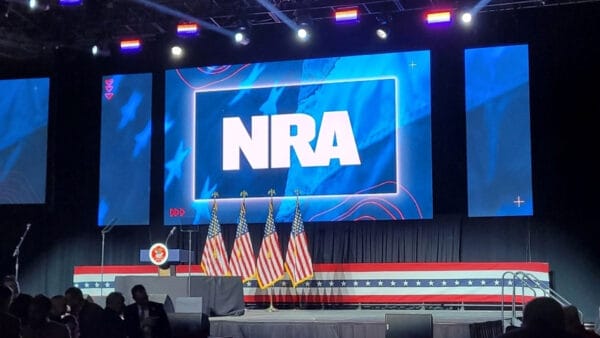
A Talk with NRA Director and Chairman of the Finance Committee, Jonathan Goldstein. The transcript has been lightly edited for length and clarity.
NRA Finance Committee Chairman Jonathan Goldstein discusses financial accountability, the NRA 2.0 reform movement, and rebuilding trust with gun owners. IMG Credit: John Petrolino
Jonathan Goldstein has an interesting history of how he came to be on the NRA Board. Goldstein became involved with the NRA shortly after law school. The Heller decision had recently been published by the Supreme Court. Jonathan started volunteering with the NRA, with considerable success. Chris Conte, who managed much of the NRA litigation work at the Institute for Legislative Action, noticed him.
In 2011, Goldstein won an award from the NRA for his volunteer work. Jonathan did enough volunteer work and raised enough money that he attracted the attention of NRA directors and was appointed as a non-director member of some committees. He was appointed to the legal affairs committee and to the nominating committee.
“This was at the time…Wayne was at peak thievery,” Goldstein told AmmoLand. “They realized I was competent. I was on the legal affairs committee. They were spending tens and tens and tens of millions of dollars on legal fees without oversight. I got sort of marginalized. I was asking questions and wasn’t getting answers.”
“This was during the Brewer’s years. We were spending tons of money with Brewer, and I was on the Legal Affairs Committee. At the time, I was saying, ‘Guys, we should hold a legal affairs committee meeting and review some of this spending.’ The chair at the time flatly refused. It was Sandy From.”
Jonathan Goldstein made a moral decision. He said, referring to his previous time on the Legal Affairs Committee:
“I said can’t be part of the effort where we are spending tens and tens and tens of millions of dollars in legal fees, and no one has oversight. So I was done, and I backed away from the organization.”
Jonathan continued to work in the Second Amendment space, but not from inside the NRA.
Bill Bachenburg started putting together NRA 2.0. effort about 2-3 years ago. Bachenberg was on the Board of Directors for many years and was elected to be President of the NRA in 2025. Jonathan is a friend of Bachenburg. After Jonathan heard about NRA 2.0, he called Bill Bachenburg up and said, “I’d love to help.’ “What can I do to help?”
Very shortly, Jonathan’s name was being circulated on petitions for nomination to the NRA Board of Directors as a reform candidate. He was elected to the NRA Board in 2025. He was asked to become chairman of the NRA Finance Committee. Now, Jonathan is the Chairman of the Finance Committee of the NRA.
“The goal was to do a couple of things. Number one was to stop losing money. The NRA has spent a lot of years where the budgeting and finance function was really somewhat of a charade.”
“The goal when I took over as finance chair was to build an actual, real, true budget which guided the organization economically. We did that. We delivered a budget last year that was sound, that put the organization in the black. We made money. So that was the first thing we did. We made sure the budget actually reflected the way the organization was funding itself and spending its money. That was number one.”
“Number two was to start looking around and to figure out: What business are we in? The budget is in no small way an expression of your priorities. So, where did we spend our money and what does it say about the priority of are our projects?”
“That was more of an archeological exercise than anyone thought it would be,” Goldstein explained. “We had to go figure out where the money was being spent and what did it say about our priorities.”
Then the finance committee linked back to the programmatic committees on the board. They went to the committees which handled training, competition or other things. Here are the questions they were asked:
“Here is the way we are spending money in your functional area. Does that marry up with the things the priorities ought to be? There was a fair amount of time we spent doing that, and in fact, we are still engaged in that exercise,” Goldstein said.
“The third thing was to look ahead and say: What business do we really want to be in? What do we need to be in the business our members really want us to be in? What assets do we need, what programs do we need, what people do we need, what infrastructure do we need to be in the business our members really want us to be in. That is the exercise we are involved in now.”
“We are trying to really make sure the business we are in and the infrastructure we have built to support it are aligned. That is what the 2027 budget exercise is going to be about.”
That led to questions about the state of the finances at the NRA when Goldstein took over as the NRA Finances Committee Chairman.
“I would say that at the time I took over, we were in a state of uncertainty,” Goldstein told AmmoLand. “We had a lot of leftover legal expenses that we were trying to resolve. We had cuts that needed to be made to our staff, to our infrastructure, to some of our programs that were long, long, long overdue. Everyone knew they had to be made, they just hadn’t been made yet.”
“We were in a place where we had to come to the table with a significant dose of sobriety about what our finances represented.”
Jonathan went on to explain that finances at the NRA go up and down with the political situation. If people perceive a greater threat, membership and finances increase. If people perceive less of a threat, membership and finances go down.
When Jonathan took over as NRA Finances Committee Chairman, President Trump had been elected, and the Republicans controlled both houses of Congress. Finances at the NRA were down a bit. In 2026, the NRA expects to have about $135 million in revenue. The NRA will be in the black with that amount. There will be a modest surplus.
“The question becomes, what do we do with that (surplus)? We now know where to spend a dollar to get a dollar fifty to two dollars back. We also know where to spend a dollar to get eighty cents.”
Gun owners and NRA members have heard that the organization spent up to $200 million in legal expenses on the Brewer firm. The question is obvious: how is that justifiable?
Goldstein gave a blunt answer, “The answer is easy. It is unjustifiable.”
When asked if that number is close to reality, Goldstein gave another honest answer.
“Unfortunately, it is. One of the things we have taken a close look at over the last eighteen months is: Is any of that money spent with Brewer recoverable? I should simply say you should stay tuned, because to the extent any of that money is recoverable, it is not lost on us in the Association. The NRA was damaged and may have an opportunity to seek redress for those damages.”
AmmoLand then asked if Goldstein could comment on the NRA Foundation being renamed the 1791 Foundation.
“A lot of the Directors who were responsible for the disaster in terms of the legal fees retreated over to the Foundation and thought, ‘Why don’t we do it again?’ That money was raised in NRA’s name, for NRA purposes, using NRA’s trademarks, and we seek to have that money brought back under our umbrella to see that it is used again for that purpose. We are not going to let the folks that crashed all the assets over at the main NRA do it again.”
“A question which would be interesting to put to the 1791 folks is: Now that they are a foundation in their own name, that is 1791 Foundation, how much money are they raising? Not from bequests, not from money which was left to the NRA Foundation, but fresh money. I think you would find they have a very limited ability to raise money in their own name. Which speaks volumes about why people gave money originally. They gave because it was the NRA.”
All of this takes time. The process takes considerable time, leaving members wondering what is happening to the assets during this period.
Goldstein agreed with this concern, “we have asked that very question. We are exceedingly interested in the answer. If you look at the court case, you will see that those are questions we have posed directly.”
As a lifetime NRA member, this AmmoLand reporter gave him his perspective over the decades: the NRA lost a lot of legitimacy and trust.
“We had a failure of leadership in this organization. We had a board that was, in many ways, hand-picked by a guy who turned out to be a pretty bad actor. As a result, we broke faith with our membership. We lost track of what they needed and what they wanted,” Goldstein said.
“As an organization, we did the right thing. We put President Trump in office. We had victory after victory in the legal world. But we lost track of our fundamental purpose. Our spending was out of control. Our internal controls were lacking. It was time to put in place a new governance model. The NRA 2.0 Board that is firmly in control of the organization has done that. We have restored internal controls. We restored budgetary sanity. We have restored programmatic sanity. We have renewed our focus on our members, on our political activities where appropriate, on training and competitions, and we are getting back to basics.”
“We like to think we have re-earned the trust of our longtime members. For people who haven’t taken a look in a while, we are asking them to take a fresh look at what we have been able to accomplish as a leadership team, and to understand we are now worthy again of their trust. That is a trust argument.”
“Let me also make a pragmatic argument. We are a $135 million revenue organization at this point, maybe a little bigger than that. When you look at all the other gun groups on the playing field, go look at their Form 990s. They are nowhere near our size. Nowhere near. Our membership rises and falls in a given month more than those groups have as members, paid members, in the aggregate. So when you look at who can sustain the effort to keep our gun rights secure over time, over geography, across the state, federal and regulatory levels, there is one and only one organization with the heft, with the gravity, with the reputation, with the brand, to do that. That organization is NRA.”
“For people out there who are looking at the landscape and saying, ‘Some other group had a legal victory here, some other group is doing a little more lobbying over here,’ those groups are fairly new to the game. Each of them, in their own way, is contributing, and we are happy to have them on the playing field. Only the NRA is positioned on a sustained multi-decade, multi-state basis to keep gun rights secure. There is a reason why the NRA is freedom’s safest place.”
One of the strengths of the NRA is its strong NRA instructor program, its support of law enforcement, and the military. Those programs are not political, at least not directly. So how much of the NRA budget is spent on those functions?
“We spend more of our money on training, Eddie Eagle, competitions, law enforcement, than we do on our political ads,” Goldstein answered.
Jonathan: “NRA is a group of different entities. Some of what we do is charitable in nature, that is to say it can be funded by 501(c)(3) charitable dollars. Our training, our law enforcement efforts, our programs that focus on youth, all of that is funded by charitable dollars. The political work is funded by non-charitable dollars.”
“One of the things that can be funded by charitable dollars, that could be considered political but which is fully legitimate under the IRS code, is litigation. Some of our litigation efforts are funded by charitable dollars. The vast majority of what we do can be funded by charitable dollars because it can be education by nature.”
Is there any part of the NRA Civil Rights dollars that are being allocated to bring civil rights violation cases, where an individual was harmed, to bear against officials or organizations who violated those rights?
“We think that is an emerging frontier in civil rights litigation. Once it became clear you could not discriminate against African Americans in terms of the right to vote in the sixties, state actors who continued to try to inhibit and interfere with voting rights for African Americans should have been subject to legal challenges. If you know what someone’s civil rights are and if you interfere with them none the less, you should be held accountable for that. Stay tuned. Be on the lookout for more cases.”
“I went back, and I looked at it. Congress in 1788 ratified the Constitution. Three years later, they ratified the Bill of Rights, including the Second Amendment. In the Constitution, they give a power, an explicit power, to Congress to issue what are called letters of Marque and Reprisal. A letter of Mark and Reprisal is a way to turn what would otherwise be piracy into state-sponsored commerce raiding.”
“If you went out, stopped a British Merchant ship on the high seas as an American, and you did not have a letter of Marque and Reprisal, you were a pirate. If you got a letter of Mark and Reprisal, you were considered a state sponsored commerce raider. You could grab that British Ship, sail it into an American port, put it before a prize court, and have adjudicated the economics how the proceeds would be divided up.”
“What the Congress knew when it was giving that power was that the only way to have that kind of commerce raiding was if there were privately owned ships covered in cannon, privately owned cannon, that could be granted these letters of Marque and Reprisal to go out and do this commerce raiding.”
Following that, AmmoLand asked Goldstein about the good documentation that there were plenty of privately owned cannon at the ratification of the Constitution.
“We have 1700 letters of Marque and Reprisal that were issued. We know that the people who ratified the Constitution and ratified the Bill of Rights knew that cannon were privately owned. (They) counted on it and relied on it. The notion that having a weapon that is too military in character places it beyond the Second Amendment is farcical.”
“One of the things I point out is you cannot have a Miller decision which says the shotgun is insufficiently military in character, but the AR15 is too military in character. Which is it, folks?”
Chairman of the Finance Committee is an extremely powerful position. As an attorney outside the NRA, do you have a practice dealing with corporate finances?
Goldstein said, “I am not only a lawyer. I buy and turn around small American manufacturing companies. I have a portfolio of five or six small manufacturing companies that I own and operate. My background is in what they call private equity.”
This is a positive picture of NRA finances. We have bottomed out and are on the way up. What advice would you give to present NRA members and those who left the organization?
“My advice is that it is time to come home. The NRA is freedom’s safest place. We are in for the fight of a lifetime. With President Trump, the Progressive anti-gun states are on the ropes. We have taken suppressors, essentially, out of the NFA. We have Viramontes (AR-15 case) up in the Supreme Court. We just won Wolford and the Hemani cases. We have these people on the ropes and they realize they are in a prison knife fight.”
“They want us back on the ground, struggling and suffering to keep our rights intact.”
“If you are an NRA member and want us to finish the job, you want us to complete the work we have started doing to make sure our rights are robust and protected, it is time to come home. Come home to freedom’s safest place. Come home to rejoin, engage, and refresh your NRA credentials. Go to a Friends of the NRA event. Go to one of our competitions. Get involved in some of our litigation. Take a look at our fresh content on our website and our social media channels. Be aware of just how many victories we are winning at the state and federal levels, and against the regulatory state. Rejoin us. We welcome you back. We hope we have earned your trust and your faith, and we welcome you back.”
Are there any cautions about what associations might have been with the NRA, I am thinking of the 1791 Foundation, for people to be careful about?
“Just make sure if you want to support NRA programs that you are careful about giving to NRA-controlled organizations. We have something called the Freedom Action Fund, which replaces the NRA Foundation while this litigation goes on. If you have the NRA Foundation in your will, you may want to make sure you adjust it. Make sure you aim your will at NRA HQ. If you send us an email, we will be happy to help anybody who needs that assistance.”
“You can have them send it to me directly. I’d be happy to help anybody who needs a hand. I am Jonathan@goldsteinlp.com. If you go to the NRA website, there is a contact us page. If you fill that out, it gets routed to the right place. If that doesn’t work, reach out to me directly. I’d be happy to help a member.
If people believe an injustice has been done, a violation of Second Amendment rights, is there anyplace they can reach out to send information about particular cases of Second Amendment rights violations?
“They can go up on the Civil Rights Defense Fund website, and there is a contact us page there they can use to submit a case. If it is a case we think we can help with, we will reach back out and get involved. If it is not something we can do, but you need legal help, we maintain a roster of qualified attorneys that we would be happy to put you in touch with. Go and check out the NRA Civil Rights Fund Defense site.”
AmmoLand was happy to speak with Director and Finance Chairman Jonathan Goldstein.
Dean Weingarten has been a peace officer, a military officer, was on the University of Wisconsin Pistol Team for four years, and was first certified to teach firearms safety in 1973. He taught the Arizona concealed carry course for fifteen years until the goal of Constitutional Carry was attained. He has degrees in meteorology and mining engineering, and retired from the Department of Defense after a 30 year career in Army Research, Development, Testing, and Evaluation.
Demetrio Daga faces up to 40 years in prison following his conviction on 15 New York firearms charges. His sentencing has reportedly been delayed despite an earlier probation recommendation for no additional jail time. AI-generated editorial illustration.
Demetrio Daga remains in the Albany County Correctional Facility because the Albany County Probation Department has ordered a new presentence report (PSR). A sentencing hearing that had been set for late October is now scheduled for November 30 while probation prepares the revised document. No reason has been given for discarding the earlier report. Until the new PSR is finished, Daga, a 44-year-old Albany husband and father of two, remains in jail.
The PSR is the report that normally informs a judge’s sentencing decision. It reviews the defendant’s background, criminal history, family circumstances, employment, and the probation officer’s recommendation on whether incarceration is warranted. In Daga’s case, the previous version of that report recommended probation with no additional jail time. County Court Judge Andra Ackerman has indicated she may decline to follow that recommendation and could instead impose a lengthy prison sentence.
The decision to scrap the existing PSR and start over is therefore the immediate reason Daga remains in custody.
Daga was convicted in late August 2026 on all 15 felony counts after a seven-day trial. The charges, one count of criminal possession of a weapon in the first degree, two in the second degree, three in the third degree, and nine counts of criminal possession of a firearm, stem solely from New York’s ban on unserialized, privately manufactured firearms. Investigators seized 3D printers, unserialized handguns and AR-style rifles, serialized rifles, shotguns, frames, receivers, magazines, and ammunition from two residences linked to him.
Prosecutors presented no evidence that he used any of the firearms in a crime, sold them, or harmed anyone. He has no prior criminal record. At the pretrial stage, prosecutors offered eight years; Daga rejected the deal.
Adamiak Calls Out the Sentencing Delay
The last-minute PSR redo has drawn public criticism for extending custody with little explanation. Tate Adamiak, who spoke with Daga after the postponement, described the development as infuriating and noted that the government used the same last-minute maneuver in his own case. Families take time off work, arrange travel, and prepare for a hearing that could determine years of a person’s life, only to see the date pushed back with little notice. For Daga, that means more time in county jail, away from his wife and children.
Adamiak wrote that the process itself becomes the punishment. Those responsible for the delay go home to their families every night, while Daga does not. The absence of any stated reason for reopening the report only heightens the sense that the calendar is being used to prolong the consequences of a conviction based solely on regulatory violations.
I spoke with Demetrio Daga, and the news is infuriating.
His hearing next week has been POSTPONED until November 30th. Apparently, they want to redo his presentence report.
The government pulled this EXACT same crap on me.
They wait until the last minute, after families have taken time off work, purchased plane tickets, booked hotels, and mentally prepared for a hearing that could change their lives.
Then, with the stroke of a pen, it’s all pushed back.
For Demetrio, that means even more time trapped inside Albany County Correctional Facility, away from his wife and family.
No urgency. No accountability. No consideration for the families bearing the consequences.
THE PROCESS IS THE PUNISHMENT.
Meanwhile, the people responsible for these delays get to go home to their families every night.
New York’s War on Homemade Firearms Keeps a Father Behind Bars
Defense attorney Kevin O’Brien has said the original probation assessment came after reviewing the charges, interviewing Daga, and examining the court file. That assessment concluded a man with no criminal history who harmed no one should not go to prison. The decision to redo the report without a stated reason reopens that evaluation, even though the only remaining issue is the sentence.
Each additional week in the Albany County Correctional Facility is time away from his family under conditions that are often harsher than those in state prison. The delay also means Daga is likely to miss Thanksgiving with his wife and two young children.
Other cases also see last-minute orders to redo or revise presentence reports. Courts and probation departments sometimes reopen the process after a draft is prepared, citing the need for additional investigation, unresolved objections, or updated information. These steps can push sentencing dates by weeks or months even when the underlying conviction is settled. Because the defendant is often held in custody during the interval, the practical result is extended confinement while the report is rewritten.
Defense lawyers have noted that probation officers’ and judges’ discretion over timing and content makes these delays hard to challenge in real time, leaving families to absorb repeated disruptions long before a final sentence is imposed.
New York is one of the few states that treat private firearm manufacturing and possession as serious felonies. In most of the country, the same activity would not have been a crime.
The November 30 hearing will determine whether the court follows the earlier no-jail recommendation or imposes a far heavier sentence. Until the new PSR is completed, however, Daga remains in county jail, and the case stays unresolved.
Mr. Crump is an NRA instructor and constitutional activist with more than 26 years of experience in networking and cybersecurity for major Fortune 100 companies. John has written about firearms, the Constitution, and cybersecurity, and has interviewed people from all walks of life. John lives in Northern Virginia with his wife and sons. Follow him on X at @right2bear, or at www.crumpy.com.
America’s independence depended on private gunsmiths who manufactured, repaired, and improved firearms. That history carries significant implications for today’s fight over privately manufactured firearms and the Second Amendment.
Colonial gunsmiths manufactured and repaired the firearms that helped secure American independence, establishing a tradition of private gunmaking that predates the Second Amendment. iStock-1296797707
As America celebrates its 250th anniversary, the Department of War is recognizing the gunsmiths who helped secure the nation’s independence. These craftsmen did more than repair broken muskets. They manufactured firearms from raw materials, developed new weapons, and kept American forces armed throughout the Revolutionary War.
In a historical feature published May 29, 2026, the Department of War acknowledged the essential contributions of private gunsmiths who supplied the Continental Army, Navy, Marine Corps, and colonial militias with firearms.
The report highlights an important piece of American history that remains relevant today: Americans were manufacturing their own firearms long before the Second Amendment was ratified. The ability to manufacture, repair, and maintain firearms was not merely a popular pastime. It was essential to colonial life, individual defense, and ultimately the fight for American independence.
That historical tradition carries particular significance as gun-control advocates and government regulators continue targeting privately manufactured firearms, frequently labeling them with the politically charged term “ghost guns.”
Private Gunsmiths Helped Arm the American Revolution
During the Revolutionary War, America’s firearms industry looked nothing like the massive manufacturers that supply military and civilian markets today. Most gunsmiths operated out of small workshops, relying on their knowledge of metalworking, woodworking, and mechanical design to produce functioning firearms.
According to the Department of War, colonial gunsmiths frequently manufactured complete rifles, pistols, and muskets from scratch. While certain materials and components were imported, many craftsmen forged their own barrels, shaped wooden stocks, and hand-fitted the mechanisms that made their firearms function.
Unlike modern production firearms, these weapons generally lacked interchangeable parts. A broken spring, damaged hammer, or other mechanical failure often required a gunsmith to fabricate an entirely new component specifically fitted to that firearm.
This became particularly important on the battlefield, where black powder fouling, worn flints, moisture, and damaged components could render weapons inoperable. A soldier could not simply replace a broken part with one taken from another musket and expect it to function correctly.
The Department noted that manufacturing a single rifle could require weeks or even months of work. Gunsmiths needed extensive training, and apprentices often spent years developing the skills necessary to establish their own shops.
Their contributions were important enough that the Continental Congress encouraged domestic firearms production to support the war effort. On November 4, 1775, Congress recommended that colonial governments employ gunsmiths to manufacture firearms fitted with bayonets.
The American Revolution depended heavily on foreign arms and military assistance, but domestic craftsmen also played an indispensable role in keeping American forces equipped and operational. These privately manufactured firearms helped make American independence possible.
Revolutionary War Gunsmiths Were Already Developing Advanced Firearms
The importance of early American gunsmithing extends beyond the production of conventional muskets and rifles. Gunsmiths and inventors of the period were already experimenting with repeating firearms, breech-loading mechanisms, and technologies capable of substantially increasing a soldier’s rate of fire.
One particularly remarkable example involves Philadelphia inventor Joseph Belton, whose repeating flintlock attracted the attention of the Continental Congress in 1777.
As firearms historian Logan Metesh previously documented in AmmoLand’s Fact Check: The Founding Fathers DID Know About Repeating Rifles, Belton contacted Congress on April 11, 1777, claiming to have developed a firearm capable of discharging eight successive shots within seconds. He also claimed his design could be adapted to discharge sixteen or twenty shots.
Congress was sufficiently interested to authorize the construction or modification of 100 firearms using Belton’s improvements. However, the negotiations ultimately collapsed over Belton’s substantial financial demands. Belton continued advocating for his invention and secured endorsements from prominent individuals, including General Horatio Gates, Major General Benedict Arnold, and scientist David Rittenhouse.
The firearm was never adopted by the Continental Army, but its development and consideration by Congress demonstrate that repeating firearms were hardly unimaginable to America’s founders.
Belton was not alone in pursuing advanced firearms technology.
Decades before the Revolution, the Lorenzoni repeating mechanism had already demonstrated that flintlock firearms could fire multiple shots without individually reloading powder and ball through the muzzle after each discharge. Named after Italian gunsmith Michele Lorenzoni, the mechanism used a rotating breech system to transfer powder and projectiles from internal magazines into the firing chamber. The complicated system required exceptional craftsmanship and precise fitting, but it offered capabilities far beyond those of the typical single-shot musket.
Repeating firearms employing similar technology were known in colonial America. In 1756, Boston gunsmith John Cookson advertised a firearm capable of firing nine successive shots, with the shooter controlling the rate of fire.
Another notable innovation was the Ferguson rifle, developed by British officer Patrick Ferguson during the Revolutionary War. Unlike a conventional muzzleloader, Ferguson’s design incorporated a screw-operated breech-loading mechanism that allowed the shooter to load the rifle from the rear of the barrel.
The Museum of the American Revolution explains that the Ferguson rifle could achieve approximately six shots per minute while retaining the accuracy advantages of a rifled barrel. Although the weapon was developed for British forces and produced in limited numbers, it further illustrates the advanced firearms technology available during America’s founding period.
These designs were expensive, mechanically complicated, and unsuitable for widespread military adoption at the time. Nevertheless, they demonstrate that early firearms technology was far more sophisticated than the familiar image of a soldier firing a single-shot musket.
The founders were not strangers to firearms innovation. They lived in an era when private craftsmen were actively developing new ways to manufacture and improve weapons.
Privately Manufactured Firearms Are Part of America’s Constitutional Tradition
The historical significance of these gunsmiths extends directly into modern Second Amendment litigation.
In his 2023 research paper, The American Tradition of Self-Made Arms, attorney and Second Amendment historian Joseph G.S. Greenlee documented the longstanding American practice of manufacturing firearms for personal use.
Greenlee traces private firearms manufacturing from colonial America through the Revolutionary War, westward expansion, and the development of modern firearms technology.
His research establishes that Americans regularly manufactured, assembled, and repaired their own firearms throughout the nation’s history. He also concludes that restrictions specifically targeting firearms manufactured for personal use are relatively recent developments rather than longstanding American regulatory traditions.
That distinction matters under the Supreme Court’s decision in New York State Rifle & Pistol Association v. Bruen, which requires the government to demonstrate that firearm restrictions are consistent with the nation’s historical tradition of firearm regulation when the Second Amendment’s plain text covers the conduct at issue.
The historical record of American gunsmithing provides powerful support for the constitutional argument that the right to keep and bear arms necessarily encompasses the ability to manufacture and maintain those arms.
After all, possessing a firearm requires some means of acquiring one. For generations, Americans acquired firearms not only through commercial purchases but also by manufacturing them personally or obtaining weapons produced by local craftsmen.
The Second Amendment did not create the right to keep and bear arms. It recognized and protected a pre-existing right, one exercised by Americans who were already manufacturing and repairing their own firearms.
From Colonial Gunsmiths to Today’s Privately Manufactured Firearms
Today’s firearms enthusiasts have access to manufacturing technologies the founders could scarcely have imagined, including CNC machining, polymer frames, modular firearm components, and 3D printing.
The equipment has changed dramatically, but the underlying practice of Americans producing firearms for lawful personal use has deep historical roots.
Modern gun builders may assemble firearms from purchased components, complete unfinished receivers, or manufacture individual parts using specialized equipment. Colonial gunsmiths performed many comparable functions through hand-forging, filing, drilling, and fitting components to produce functioning weapons.
Despite this established tradition, privately manufactured firearms have become the target of increasingly aggressive government regulation.
As AmmoLand previously reported, the Firearms Policy Coalition challenged Oregon’s restrictions on privately manufactured firearms in Montgomery v. Rosenblum, relying in part on Greenlee’s research documenting America’s history of personal firearms manufacturing.
The dispute over unfinished frames and receivers also reached the Supreme Court in Bondi v. VanDerStok. In March 2025, the Court ruled that the Gun Control Act permits federal regulation of certain weapon parts kits and partially complete frames or receivers.
That decision addressed the ATF’s authority under federal firearms statutes, rather than resolving the broader Second Amendment question of whether Americans possess a constitutionally protected right to manufacture firearms for personal use.
The constitutional challenge therefore remains distinct from the question of how federal law defines particular unfinished components or commercially sold kits.
The historical evidence supporting private firearms manufacturing cannot simply be dismissed because today’s gun builders use modern tools instead of colonial forges.
A Right Rooted in America’s Founding
The Department of War’s recognition of Revolutionary War gunsmiths arrives at a time when the constitutional status of privately manufactured firearms remains the subject of litigation and political controversy. Yet the historical record is clear about the importance of firearms manufacturing to the American founding.
Private craftsmen manufactured weapons, maintained firearms, developed innovative designs, and helped equip the soldiers who fought for independence. Their contributions were not peripheral to the Revolutionary War. They were essential to keeping Americans armed.
Joseph Belton’s repeating flintlock, John Cookson’s repeating firearm, and the broader development of advanced weapons during the founding era also demonstrate that firearms innovation has long been part of that tradition.
The right to keep and bear arms cannot be meaningfully separated from the ability to acquire, manufacture, repair, and maintain them. A constitutional guarantee protecting arms while allowing the government to eliminate the ordinary means of obtaining or producing them would be a hollow promise.
America’s founding-era gunsmiths understood something that remains true nearly 250 years after independence: an armed people must have the ability to keep their weapons functioning and, when necessary, manufacture arms of their own.
The tools have changed. The craftsmanship has evolved. But the American tradition of building firearms predates the Constitution itself, and that history cannot be erased by calling privately manufactured firearms “ghost guns.”
Duncan Johnson is a lifelong firearms enthusiast and unwavering defender of the Second Amendment—where “shall not be infringed” means exactly what it says. A graduate of George Mason University, he enjoys competing in local USPSA and multi-gun competitions whenever he’s not covering the latest in gun rights and firearm policy. Duncan is a regular contributor and editor-in-chief for AmmoLand News and is responsible for AmmoLand’s daily gun-rights reporting and industry coverage.