Monday, October 12, 2026

ATF’s NFA Retreat: Restoring Gun Rights and Pushing for Repeal

The ATF’s nationwide retreat from National Firearms Act registration enforcement has gun owners asking a consequential question: Could a future administration reverse course and target Americans who acquired suppressors or short-barreled firearms without registering them?

Constitutional attorney Mark Smith argues that removing the barriers today could make renewed restrictions harder to defend tomorrow. His reasoning is straightforward: Wider lawful ownership strengthens the Second Amendment case against treating those arms as unusual weapons that government can prohibit.

In a Four Boxes Diner video, Smith explains why he believes the latest NFA victory could develop into lasting constitutional protection for suppressors, short-barreled rifles and short-barreled shotguns.

AmmoLand has followed this fight from the lawsuits through the first no-Form-4 transfers and ATF’s October 9 guidance. The question now is how gun owners turn that progress into protection that survives the next administration.

A Court Order Already Protects Covered Gun Owners

As AmmoLand reported when DOJ confirmed it would not appeal, the injunction in the consolidated Silencer Shop Foundation and Jensen litigation protects specified plaintiffs and, where applicable, their current and future members and customers. It binds successors in office.

A future ATF director cannot simply withdraw agency guidance and disregard a court order that remains in effect.

U.S. District Judge James Wesley Hendrix ruled on August 5 that the challenged NFA requirements exceeded Congress’s enumerated powers after Congress reduced the applicable making and transfer taxes to zero. The court did not decide the Second Amendment claims because the enumerated-powers ruling supplied relief.

Washington lost the taxing-power foundation for the challenged registration scheme. The separate Second Amendment fight remains consequential.

Nationwide NFA Relief Opens the Door to Wider Ownership

ATF’s October 9 guidance extends specified NFA nonenforcement nationwide for suppressors, SBRs, SBSs and AOWs, including people outside the injunction.

The policy removes mandatory NFA approval and registration barriers for those categories. However, it does not repeal the NFA. Also, further complicating the issue for gun owners is that state restrictions remain, as do applicable Gun Control Act requirements. Machineguns and destructive devices remain subject to the full NFA registration regime.

AmmoLand’s guidance report explains the remaining requirements, including Form 20 approval for interstate transportation of SBRs and SBSs.

Smith expects easier access to produce substantially greater ownership. His argument is that those additional arms would reinforce the constitutional case against future restrictions.

Nearly Seven Million Registered Suppressors Already Exist

The ownership evidence is substantial before any projected increase.

ATF’s published registry figures, updated September 3, 2026, list 6,905,213 silencers, 1,258,554 short-barreled rifles and 210,604 short-barreled shotguns. Those figures count registered items, not individual civilian owners.

Smith points to approximately seven million suppressors as evidence supporting their protection under the Second Amendment.

The government should not be allowed to obstruct ownership, then use the resulting limits on ownership to argue that an arm deserves no constitutional protection. As AmmoLand previously explained in its coverage of Brown v. ATF, that reasoning rewards the government for burdening the right.

Americans do not acquire constitutional rights when a government database reaches a particular number. Wider ownership strengthens the evidence against restrictions; it does not create the right.

Smith Sees the Supreme Court Fight Reaching Beyond AR-15s

Smith connects the NFA developments to the Supreme Court’s pending Viramontes v. Cook County and Grant v. Higgins cases, which concern bans on AR-15-style rifles.

Smith predicts a favorable decision in June 2027 reaffirming protection for commonly owned arms. He believes that reasoning would strengthen challenges to restrictions on short-barreled firearms and suppressors.

He also argues that targeted taxes and registration requirements would face separate constitutional objections. Those are his arguments about future litigation. The Court has not issued the decision he predicts or resolved every restriction he discusses.

Gun Owners Deserve Lasting Protection

AmmoLand raised the future-enforcement questions in August. Smith offers an optimistic constitutional answer, but ATF’s FAQ still identifies unresolved exposure.

The agency says enforcement could resume if legal circumstances change. Federal law provides no automatic grandfather protection or general opportunity to register previously unregistered NFA items afterward. An amnesty would be discretionary.

That distinction makes continued litigation important. As AmmoLand reported in Brown, broader enforceable court protection remains unfinished work. Nationwide agency discretion does not expand the Texas injunction.

Smith’s argument gives gun owners another reason to press their advantage. Removing barriers could strengthen the factual foundation for dismantling restrictions permanently.

This is the start of the end of the NFA’s registration scheme for these arms. Finishing the job requires lasting court protection and congressional repeal. “Shall not be infringed” does not expire when a new administration takes office. Neither should Americans’ freedom to own protected arms.

Related: ATF Stops Enforcing NFA Registration Nationwide for Suppressors, SBRs and More


About Duncan Johnson:

Duncan Johnson is a lifelong firearms enthusiast and unwavering defender of the Second Amendment—where “shall not be infringed” means exactly what it says. A graduate of George Mason University, he enjoys competing in local USPSA and multi-gun competitions whenever he’s not covering the latest in gun rights and firearm policy. Duncan is a regular contributor and editor-in-chief for AmmoLand News and is responsible for AmmoLand’s daily gun-rights reporting and industry coverage.Duncan Johnson



from https://ift.tt/xJrl5iE
via IFTTT
Friday, October 9, 2026

ATF Stops Enforcing NFA Registration Nationwide for Suppressors, SBRs and More

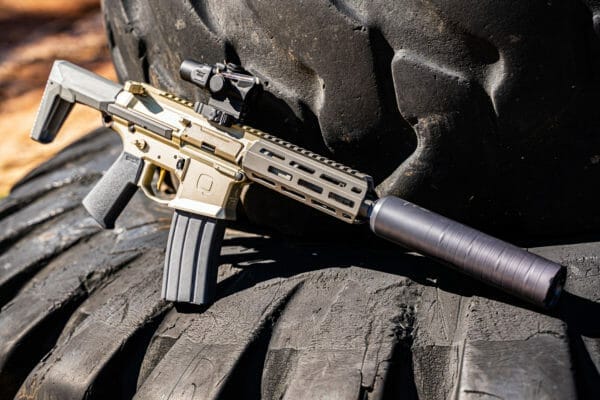
Q Honey Badger, Trijicon TA44, Q Thunder Chicken. IMG Tim Potter
ATF’s October 9 guidance extends non-enforcement of specified NFA registration and approval requirements nationwide. Remaining federal requirements and state laws still apply. IMG Tim Potter

The Bureau of Alcohol, Tobacco, Firearms and Explosives (ATF) unveiled new guidance after a Texas district court blocked National Firearms Act (NFA) restrictions on short-barreled rifles (SBRs), short-barreled shotguns (SBSs), suppressors, and any other weapons (AOWs).

The case, Silencer Shop Foundation v. Bureau of Alcohol, Tobacco, Firearms and Explosives (ATF), challenged the constitutionality of NFA restrictions on SBRs, SBSs, suppressors, and AOWs after Congress passed the One Big Beautiful Bill (OBBB) Act. The OBBB Act lowered the tax-stamp fee for those items from $200 to $0. By eliminating the tax-stamp fee, the plaintiffs argued, the restrictions became unconstitutional. Under the taxing power, a tax must generate revenue, and the Supreme Court upheld the NFA as a tax statute in 1937. A $0 tax lacks a revenue-generating purpose and is therefore unconstitutional.

Multiple gun-rights organizations sued. Gun Owners of America (GOA), Gun Owners Foundation (GOF), the Firearms Regulatory Accountability Coalition (FRAC), B&T USA, Silencer Shop Foundation, SilencerCo, and Palmetto State Armory (PSA) sued in Silencer Shop Foundation v. ATF. Another case, Jensen v. ATF, was consolidated with it. That case was brought by the Firearms Policy Coalition Action Foundation, the Citizens Committee for the Right to Keep and Bear Arms (CCRKBA), and the Texas State Rifle Association (TSRA).

Judge James Wesley Hendrix ruled for the plaintiffs and rejected the defense’s argument that the special occupational tax (SOT) satisfies the tax-revenue requirement. The defendants also argued that the NFA falls under the Commerce Clause. The judge rejected that argument. He found the restrictions unconstitutional and issued an injunction against enforcing the law against current and future members of the suing organizations, leading to suppressors being transferred on a Form 4473 for the covered parties. The judge would have issued a nationwide injunction, but could not because of the Supreme Court’s ruling in Trump v. CASA.

The Department of Justice has decided not to appeal. In a September 24, 2026 letter to Senate Judiciary Chairman Chuck Grassley, Solicitor General D. John Sauer wrote that the department “has determined not to file an appeal” in Silencer Shop Foundation v. ATF. DOJ filed that letter with the court on October 1, and the 60-day window to notice an appeal closed on October 5 with no appeal and no stay request.

The August 5 judgment is now final as to these parties. The decision does not widen the injunction. It still runs to the named plaintiffs, members of the organizational plaintiffs, and, for the commercial plaintiffs, their customers. It does not repeal the NFA, and it does not cover machine guns, destructive devices, or the special occupational tax. Judge Hendrix gave DOJ until October 12 to answer a motion from plaintiff states on whether the injunction reaches those states more broadly.

On October 9, ATF tried to close the gap left by the injunction. In an open letter to all federal firearms licensees and the public, and in a companion FAQ, the Bureau said it will stop enforcing the NFA making, transfer, and registration rules for SBRs, SBSs, silencers, and AOWs against everyone, not just the plaintiffs.

The policy took effect the same day. ATF said the party-limited order created “inequity and disuniformity,” and that it would use enforcement discretion to apply the same treatment nationwide.

Under that policy, ATF will no longer require prior approval to make or transfer those four categories of items. First, it will no longer require registration in the National Firearms Registration and Transfer Record. It will not enforce the bans on making, receiving, transferring, or possessing them unregistered. Finally, it will not enforce the NFA marking rule for them, and it will not enforce 26 U.S.C. § 5861(j), the ban on transporting an unregistered NFA firearm in interstate commerce. That last point matters for dealer-to-dealer shipments, repairs, out-of-state range trips, and moves.

The non-enforcement is narrow. Machine guns and destructive devices remain taxable and fully regulated. Illegally imported NFA firearms and firearms with obliterated serial numbers remain illegal under §§ 5861(k) and 5861(h). People engaged in the business of manufacturing, importing, or dealing in these items must still pay the special occupational tax. A dealer who is not an SOT cannot treat the new policy as a license to deal in them.

These items also remain firearms under the Gun Control Act. A licensee transferring a silencer or an AOW to an unlicensed buyer must still complete a Form 4473, run a NICS check unless an exemption applies, and keep the record. The buyer still has to be a resident of the state where the licensee does business, with the usual limited exceptions. No one may transfer any of these items to a person he knows, or has reasonable cause to believe, is prohibited from possessing a firearm. Unlicensed individuals may make or transfer them without a Form 1, but they still may not engage in the business, transfer them across state lines, or transfer them to a prohibited person.

SBRs and SBSs are the exception inside the exception. The Gun Control Act, at 18 U.S.C. § 922(b)(4), still bars a licensee from selling or delivering a short-barreled rifle or short-barreled shotgun unless the Attorney General specifically authorizes it. For decades, an approved Form 4 was that authorization. Judge Hendrix did not enjoin the GCA provision, and ATF says no non-NFA approval process exists yet. The Bureau says it is writing forms and regulations to create one. Until those rules are in place, ATF will not enforce § 922(b)(4). Transfers to state and local governments for official use remain lawful anyway, under the government exception in 18 U.S.C. § 925(a).

Interstate travel is split the same way. ATF will not enforce the NFA’s interstate-transport ban on an unregistered silencer or AOW. An SBR or SBS is different. Even if it is unregistered, the owner must still file a Form 20 before taking it across state lines, because 18 U.S.C. § 922(a)(4) is a GCA requirement and ATF is still enforcing it.

Registration is now voluntary. ATF will keep the registry and will still approve Forms 1, 2, 3, and 4 for anyone who wants an item in it.

A pending application can be withdrawn, and a registered item can be removed, by writing the NFA Division at NFAFAX@atf.gov. The same address is how a dealer clears an item off NFA inventory after transferring it on a Form 4473. ATF warns that once an item is removed, it cannot be put back on the registry unless the Attorney General declares an amnesty.

Manufacturers do not get a full pass. A company making these items still needs the proper GCA manufacturer’s license and must serialize them. A silencer manufacturer in business before November 20, 2026, must also register with the State Department under the International Traffic in Arms Regulations. Dealer-to-dealer interstate transfers of silencers and AOWs no longer require a Form 3. One may still be filed voluntarily. A manufacturer who receives an unregistered silencer for repair may ship it back across state lines. ATF says it will not treat that shipment as a § 5861(j) violation.

State law is the remaining hazard, and ATF is explicit that it will not resolve it.

Most states require NFA items to be lawful under federal law or registered under the NFA. The Bureau will not say whether an item held under the injunction, or under this enforcement policy, counts as lawfully held or registered for those state statutes. Some states impose no extra controls, particularly on silencers. A minority ban most or all NFA items outright, and neither the injunction nor ATF’s discretion touches those bans. The GCA still prohibits a licensee from transferring a firearm in violation of state or local law. A willful violation can bring federal criminal penalties and license revocation. ATF’s advice to a dealer who is unsure is to get legal advice and check with the relevant state and local authorities.

The FAQ also flags the risk that the policy is reversible. Congress could put a tax back on these items. A court could dissolve or overturn the injunction. The Department could rescind the guidelines. Federal law does not automatically grandfather an unregistered NFA firearm, and it does not generally allow one to be registered after the fact. The Attorney General can declare an amnesty of up to 90 days, or grant certain forbearances, but is not required to do either. That decision, ATF says, would be made if and when the injunction is dissolved.

ATF NFA GUIDANCE FAQ


About John Crump

Mr. Crump is an NRA instructor and constitutional activist with more than 26 years of experience in networking and cybersecurity for major Fortune 100 companies. John has written about firearms, the Constitution, and cybersecurity, and has interviewed people from all walks of life. John lives in Northern Virginia with his wife and sons. Follow him on X at @right2bear, or at www.crumpy.com.Investigative journalist John Crump


from https://ift.tt/LI3Ormn
via IFTTT

Virginia Students Sue Over Under-21 Gun Purchase Ban and Private-Sale Restrictions

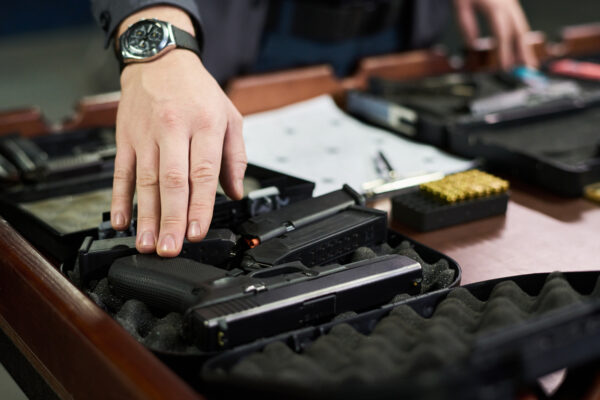
Defensive handguns and purchase paperwork on a Virginia gun-shop counter
Two Liberty University students are challenging Virginia’s under-21 firearm purchase prohibition and private-sale background-check requirement. iStock-2217396059

Two law-abiding Virginia college students want to buy handguns for their own protection. They have identified the firearms, agreed on prices, and found a willing private seller. Virginia law stands between them and those purchases.

Now they are taking the Commonwealth back to court, arguing that adults do not have to wait until their 21st birthday to become part of “the people” whose right to keep and bear arms is constitutionally protected.

In Boyer v. Katz, filed October 6 in the Circuit Court for the City of Lynchburg, Melody Boyer and Natasha Rousseau challenge Virginia’s under-21 prohibition on purchasing handguns and firearms the state labels “assault firearms.” They also challenge the mandatory background-check requirement for private firearm sales.

Gun Owners of America, Gun Owners Foundation, Virginia Citizens Defense League, and Virginia Citizens Defense Foundation join them as plaintiffs. The defendant is Virginia State Police Superintendent Jeffrey Katz, sued in his official capacity.

Two Adults, Two Blocked Handgun Purchases

Boyer, 19, is a Liberty University student who wants to buy a Glock 19 from Lynchburg resident Ryan Thomas for $650. Rousseau, 18, also attends Liberty and wants to purchase a Smith & Wesson Shield from Thomas for $300.

Both also want to purchase AR-15-style rifles from him for $900 each. According to their declarations, Thomas has agreed to the transactions, and they would complete the purchases immediately if legally able.

The women describe themselves as law-abiding adults with no criminal records or other general firearm disqualifications. They want the firearms for personal protection and other lawful purposes.

Their situation puts a human face on an age restriction: Virginia recognizes their adulthood while denying them the ability to purchase ordinary firearms for their own defense.

Virginia Doubled Down After Earlier Court Rulings

The complaint places the new lawsuit within an existing fight over Virginia’s private-sale background-check law, § 18.2-308.2:5.

According to the filing, earlier Lynchburg decisions recognized the right of adults ages 18–20 to purchase handguns. The background-check requirement nevertheless blocked those private purchases because routing them through federally licensed dealers brought the federal under-21 handgun-sales restriction into play.

The complaint recounts a December 2024 ruling permanently enjoining the background-check law as applied to adults ages 18–20, followed by a 2025 decision striking the statute in its entirety through a severability analysis.

Then came HB1525, which Gov. Abigail Spanberger signed April 22, 2026.

The legislation, included as an exhibit, directed State Police to enforce the private-sale background-check statute. It also added § 18.2-308.7(C), expressly prohibiting anyone younger than 21 from knowingly and intentionally purchasing a handgun or “assault firearm” anywhere in Virginia.

The plaintiffs argue lawmakers revived a restriction the court had already rejected and compounded the constitutional injury with an explicit purchase ban. Violations of the challenged statutes are Class 1 misdemeanors.

Adults Ages 18–20 Are Part of “The People”

The students’ position has substantial judicial support. AmmoLand has extensively covered courts rejecting attempts to exclude lawful young adults from the Second Amendment.

In Reese v. ATF, the Fifth Circuit held in January 2025 that the federal restriction on licensed-dealer handgun sales to adults ages 18–20 violates the Second Amendment. The court recognized both their inclusion among “the people” and the right to purchase arms necessary to exercise the right to keep and bear them.

In Worth v. Jacobson, the Eighth Circuit struck Minnesota’s carry-permit age restriction for otherwise qualified adults ages 18–20. Minnesota failed to establish a historical tradition justifying that exclusion. AmmoLand reported when the Supreme Court declined to review that victory in April 2025.

The Third Circuit likewise reaffirmed in Lara v. Commissioner Pennsylvania State Police that adults ages 18–20 are among “the people,” rejecting Pennsylvania’s effective prohibition on their public carry during emergencies. AmmoLand covered the subsequent denial of rehearing.

Florida’s Fourth District Court of Appeal reached a similar conclusion in Eubanks v. State, rejecting the concealed-carry age restriction for lawful adults ages 18–20. AmmoLand reported that the Florida attorney general would not appeal.

These decisions concern different laws, but their central principle is directly relevant: the government cannot simply write lawful young adults out of the constitutional text. Founding-era militia obligations expected young Americans to acquire and possess arms. That history supports their rights; it does not supply a tradition of categorical disarmament.

A Virginia Constitutional Challenge With Broader Stakes

Boyer proceeds exclusively under Article I, Section 13 of Virginia’s Constitution. The plaintiffs invoke federal Second Amendment decisions to inform that state constitutional claim, rather than bringing a separate federal claim.

They argue the right to keep and bear arms necessarily protects acquiring firearms, and that neither the age-based purchase prohibition nor mandatory checks for private, noncommercial, intrastate sales has the required historical support.

The private-sale challenge reaches beyond young adults. The plaintiffs seek to invalidate that requirement for adult Virginians generally, protecting private transactions without compulsory dealer involvement and government background checks.

The complaint expressly distinguishes this case from litigation over Virginia’s general “assault firearm” bans. Here, the age-related question is whether adults ages 18–20 receive the same constitutional protection as older adults.

The plaintiffs seek declarations that both challenged statutes are unconstitutional and temporary and permanent injunctions against enforcement. GOF’s case page lists an October 6 motion for a temporary restraining order and preliminary injunction. The provided materials contain no order granting that relief in Boyer.

Virginia’s constitutional guarantee is a restraint on lawmakers, not a privilege they may postpone until a citizen turns 21. Boyer and Rousseau are adults seeking the means to defend themselves. Multiple courts have already rejected age restrictions that deny lawful adults their gun rights. Virginia must now answer for imposing another—and for again forcing gun owners into court to defend private firearm purchases.

Related: DOJ Fights Broader NFA Relief After Letting Suppressor Ruling Stand


About Duncan Johnson:

Duncan Johnson is a lifelong firearms enthusiast and unwavering defender of the Second Amendment—where “shall not be infringed” means exactly what it says. A graduate of George Mason University, he enjoys competing in local USPSA and multi-gun competitions whenever he’s not covering the latest in gun rights and firearm policy. Duncan is a regular contributor and editor-in-chief for AmmoLand News and is responsible for AmmoLand’s daily gun-rights reporting and industry coverage.Duncan Johnson


from https://ift.tt/ArN0Q8m
via IFTTT

Thursday, October 8, 2026

Maryland Judge Finds Glocks Are Protected Arms, Yet Lets Sales Ban Proceed

Glock G45 Gen 6 with Trijicon RMR and Surefire X300. IMG Duncan Johnson
Maryland’s SB 334 restricts future transactions in covered Glock and Glock-pattern pistols beginning January 1, 2027. A federal judge denied preliminary relief against the law. IMG Duncan Johnson

Maryland’s Glock sales ban remains on track for January 1, 2027, after a federal judge recognized that the targeted handguns fall within the Second Amendment’s plain text but refused to block the law.

In an October 5 memorandum opinion, U.S. District Judge Richard D. Bennett explained his denial of preliminary injunctions in Bathras v. Moore, consolidated with Duffy v. Moore. Bennett had announced the denial from the bench on September 25.

The result leaves law-abiding Marylanders facing a ban on acquiring covered, factory-built semiautomatic pistols because criminals might illegally convert them into machineguns.

Five days before Bennett issued his written opinion, a Connecticut federal judge blocked a similar restriction. The two courts reached opposing preliminary outcomes on a question that should matter to every gun owner: Can the government prohibit a lawful handgun based on an illegal modification someone else might make?

What Maryland’s Glock Ban Does

SB 334 prohibits manufacturing, selling, offering for sale, purchasing, receiving or transferring a covered “machine gun convertible pistol” beginning January 1, 2027, subject to exceptions.

Its definition targets semiautomatic pistols with a cruciform trigger bar that can be readily converted using a separate pistol converter installed in place of the slide’s backplate. That reaches Glock and Glock-pattern handguns meeting the statutory definition.

Current owners generally may retain their pistols, and the law permits certain immediate-family transfers. But allowing existing owners to keep a gun does nothing for the Maryland resident who wants to buy that same protected handgun after the prohibition begins.

As AmmoLand explained in its coverage of the injunction request, a factory Glock fires one round per trigger pull. A conversion device is a separate component, already subject to federal and Maryland prohibitions, with narrow legal exceptions. The challenged ban reaches the lawful pistol before any conversion occurs.

Protected Handguns, Sweeping Historical Analogies

Bennett recognized that the law targets common handguns before criminal modification and concluded that the challenged conduct falls within the Second Amendment’s plain text. He nevertheless accepted Maryland’s historical defense, relying heavily on the Fourth Circuit’s Bianchi v. Brown decision upholding Maryland’s rifle ban.

The opinion draws connections between SB 334 and restrictions on armed groups, gunpowder storage, Bowie knives, slungshots, blackjacks, short-barreled firearms and machineguns. Bennett treated those laws as evidence of a broader tradition of regulating weapons associated with criminal abuse or extraordinary casualties.

That is an expansive route from regulating dangerous conduct and particular weapons to prohibiting commerce in an ordinary defensive handgun. A gunpowder-storage rule does not, by itself, establish that the government may stop peaceable citizens from buying Glocks.

AmmoLand’s earlier reporting on Maryland’s defense identified the central problem: The state’s theory judges the handgun according to a criminal configuration that does not exist when the lawful buyer purchases it.

Connecticut Judge Refused to Blame Lawful Handguns for Criminal Conversions

In Glock, Inc. v. Griffin and NSSF v. Griffin, U.S. District Judge Kari A. Dooley granted preliminary injunctions on September 30 against Connecticut’s convertible-pistol restriction. Her reasoning exposed the fundamental problem with these bans: A lawful semiautomatic handgun does not lose its constitutional protection because a criminal might later modify it.

Connecticut tried to justify its prohibition by combining Founding-era firearm inspection requirements with restrictions on machineguns. But Dooley identified the gap in that argument. Historical inspection laws ensured that firearms were safely manufactured and operable when sold. They did not establish a tradition of banning safe, functional firearms because someone might subsequently misuse or illegally alter them.

That distinction matters. An unmodified Glock is a semiautomatic handgun. Installing a separate conversion device changes the firearm—and the legal question. Connecticut sought to use restrictions on the resulting machinegun to justify prohibiting the ordinary handgun before any criminal conversion occurred.

The judge emphasized that the targeted, unconverted handguns are safe, extremely popular for self-defense and protected by the Second Amendment. On the record before her, Connecticut had failed to demonstrate a historical tradition sufficient to overcome the presumption that its ban was unconstitutional.

For gun owners, that is the critical difference between the two decisions. Dooley required Connecticut to justify restricting the lawful handgun itself. Bennett accepted Maryland’s broader historical theory that susceptibility to criminal conversion could justify blocking future transactions in that same category of protected arms.

Connecticut’s decision preserves a principle Maryland’s ban undermines: Peaceable Americans should not lose access to constitutionally protected handguns because criminals break laws that already prohibit illegal conversion.

Criminal Misuse Does Not Cancel the Second Amendment

A factory Glock is a semiautomatic handgun. It does not become a machinegun because Maryland politicians give it a new label, and its owner’s rights do not disappear because a criminal might install an illegal device.

Maryland’s approach makes peaceable gun owners pay for crimes they have not committed. Allowing current owners to keep their pistols does not cure that infringement. The right to keep and bear arms cannot survive if the government can prohibit the next buyer from acquiring them.

Bennett recognized that these handguns fall within the Second Amendment’s plain text, then accepted a collection of historical restrictions as justification for cutting off access to them. Gunpowder-storage rules and restrictions on Bowie knives should not become permission slips for banning ordinary defensive handguns.

The stakes extend well beyond Glock. Accept potential criminal modification as grounds for a ban, and anti-gun lawmakers will have another argument to deploy against the next firearm on their list.

“Shall not be infringed” is a command to government. Maryland does not get to turn a criminal’s illegal conduct into a law-abiding American’s lost constitutional right.

Related: Federal Judge Blocks Connecticut’s Glock Ban Before It Takes Effect


About Duncan Johnson:

Duncan Johnson is a lifelong firearms enthusiast and unwavering defender of the Second Amendment—where “shall not be infringed” means exactly what it says. A graduate of George Mason University, he enjoys competing in local USPSA and multi-gun competitions whenever he’s not covering the latest in gun rights and firearm policy. Duncan is a regular contributor and editor-in-chief for AmmoLand News and is responsible for AmmoLand’s daily gun-rights reporting and industry coverage.Duncan Johnson


from https://ift.tt/qkUpEhY
via IFTTT

DOJ Fights Broader NFA Relief After Letting Suppressor Ruling Stand

Radian Model 1 Photo: [Tim Potter].
DOJ is opposing statewide and nationwide NFA relief in the Missouri litigation while gun owners await ATF guidance. Photo: [Tim Potter].
The Justice Department let a major ruling against National Firearms Act registration requirements stand without an appeal. Now it is asking a Missouri federal court to reject relief protecting every resident of the plaintiff states—and gun owners nationwide.

For Americans who own suppressors and short-barreled rifles, the unfinished fight is about who receives enforceable protection from the federal government’s registration scheme.

The October 7 filing comes in the consolidated Brown v. ATF and Missouri ex rel. Hanaway v. ATF litigation before Chief U.S. District Judge Stephen R. Clark.

The NFA’s Taxing-Power Foundation Has Already Failed in Texas

As AmmoLand previously reported, DOJ formally confirmed that it would not appeal the Silencer Shop Foundation ruling.

Judge James Wesley Hendrix held on August 5 that the challenged NFA provisions exceeded Congress’s enumerated powers after Congress reduced the making and transfer taxes on suppressors, short-barreled rifles, short-barreled shotguns, and “any other weapons” to zero.

Washington could no longer justify that regulatory machinery as an exercise of the taxing power. Hendrix also rejected the effort to preserve it under a different congressional power that Congress had not invoked when enacting those provisions.

The Texas opinion did not decide the Second Amendment claims because the enumerated-powers ruling supplied the relief.

Its injunction protects the plaintiffs and, where applicable, their agencies, political subdivisions, members, and customers, including current and future members and customers. It does not automatically protect every American. The Jensen plaintiffs’ relief also excludes AOWs.

DOJ Opposes Relief Covering All State Residents

In its supplemental brief, the DOJ invokes Trump v. CASA to challenge universal relief and argues that states cannot sue the federal government on behalf of their residents under parens patriae standing.

DOJ separately seeks dismissal of Georgia, Kansas, Oklahoma, South Dakota, and Utah on claim-preclusion grounds: they already litigated the same claims to final judgment in Texas.

It also argues that the ten added states supplied no evidence supporting direct governmental injury. Missouri alone attempted to substantiate that theory, DOJ says. The department nevertheless acknowledges that Missouri’s amendment appears procedurally compliant.

These are DOJ’s arguments. Clark has not resolved them in the orders discussed here.

Missouri Challenges Registration and Federal Permission

The amended complaint names Missouri, ten additional states, and individual plaintiff Dave Marshak. It challenges the regulation of untaxed NFA firearms under Congress’s enumerated powers and separately argues that the restrictions on suppressors and short-barreled rifles violate the Second Amendment.

The complaint describes registration, fingerprints, personal information, advance approval, and the threat of criminal prosecution as burdens on lawful ownership. Marshak alleges that he values his privacy and would acquire covered firearms but for the registration requirements.

That is the human consequence behind this procedural fight. Peaceable ownership becomes subject to a federal permission system, with private information surrendered as the price of exercising a right.

The Second Amendment protects the people. Lawful gun owners should not have to enter a federal registry to possess protected arms.

October 22 Conference Will Address What Comes Next

In his October 6 order, Clark noted that the October 5 deadline to appeal the Texas injunction passed without an appeal.

He scheduled a Zoom status conference for October 22 at 10 a.m. CDT, or 11 a.m. Eastern. Counsel must address the Texas judgment’s effect, the five states’ standing, and the validity of Missouri’s amended complaint.

The Texas victory remains consequential. But gun owners outside its protection still need enforceable relief. Constitutional rights belong to every American, and dismantling the NFA’s registration and permission requirements remains unfinished work.

ATF Guidance Could Reshape the Fight Within Days

The next major development could arrive before the October 22 conference. AmmoLand expects ATF’s long-awaited NFA guidance within the next day or two, and its contents could dramatically change the practical impact of this fight for gun owners and dealers.

If ATF adopts an approach extending beyond the people expressly protected by the Texas injunction, that could substantially reduce the immediate uncertainty over how untaxed suppressors and short-barreled firearms are handled. If the agency limits its instructions to covered plaintiffs, members, and customers, the battle for broader court protection becomes even more consequential.

Agency guidance cannot expand a court’s injunction, and it does not carry the same protection as a binding court order. Its release could nevertheless reshape the implementation questions facing both courts and the firearms industry.

The Texas victory is a major step toward dismantling the NFA. ATF’s next move will help determine how far that victory reaches in practice. Gun owners deserve the restoration of their rights, clear instructions, and lasting protection from the federal government’s registration scheme.

Related: DOJ Confirms It Won’t Appeal NFA Ruling on Suppressors and Short-Barreled Guns


About Duncan Johnson:

Duncan Johnson is a lifelong firearms enthusiast and unwavering defender of the Second Amendment—where “shall not be infringed” means exactly what it says. A graduate of George Mason University, he enjoys competing in local USPSA and multi-gun competitions whenever he’s not covering the latest in gun rights and firearm policy. Duncan is a regular contributor and editor-in-chief for AmmoLand News and is responsible for AmmoLand’s daily gun-rights reporting and industry coverage.Duncan Johnson


from https://ift.tt/S6PQVX1
via IFTTT

Everytown’s $10 Million Push Targets Eight House Races and Gun Rights

money iStock-915304094
Michael Bloomberg’s Everytown group isreportedly pumping at least $10 million to help elect eight former Moms Demand Action activists to Congress in November. iStock-915304094

With the midterm elections less than a month away, Everytown for Gun Safety—the billionaire-backed gun prohibition lobbying group founded years ago by former New York Mayor Michael Bloomberg—is reportedly pumping at least $10 million into eight key congressional races in five states in an effort to shift House control to anti-gunners.

Axios and Yahoo News are carrying the report, which identifies the eight candidates so far getting support from Everytown. They are all reported to be “former volunteers for Moms Demand Action,” a subsidiary of Everytown. Reportedly getting Everytown cash are JoAnna Mendoza, running in the 6th District of Arizona; Pia Dandiya, running in Florida’s 22nd District; Christina Bohannan (1st District), Sarah Trone Garriott (3rd District) and Lindsay James (2nd District) all of Iowa; Christina Hines (10th District) and Rep. Kristen McDonald Rivet (8th District), both of Michigan, and Paige Cognetti (8th District) of Pennsylvania.

Everytown has also endorsed Democrat Dr. Annie Andrews in her U.S. Senate race in South Carolina against Sen. Darlene Graham, sister to the late Senate powerhouse Lindsey Graham, who died unexpectedly earlier this year. Andrews is a former volunteer at Moms Demand Action and since 2023 has served as a senior advisor for Everytown. Andrews’ position on guns can be found here.

There is no small irony in this, considering how The Trace, another Bloomberg-backed entity which supports gun control efforts under the guise of news, once lamented about all the money the National Rifle Association spent to support pro-rights candidates.

Not reported, except perhaps by TheGunMag.com and Ammoland News, were the contributions Bloomberg and other wealthy anti-gunners have made over the years to support gun control, including restrictive anti-Second Amendment initiatives in Washington state. Presumably pouring millions of dollars into the campaign war chests of gun grabbing Democrats is okay, while supporting candidates who defend the Second Amendment is not.

A story at Axios quotes John Feinblatt, president of Everytown, stating, “For nearly two years, a MAGA House has rubber-stamped the Trump administration as it tore up federal gun safety laws, and flipping these eight seats is how we put a stop to it…There’s a Moms Demand Action volunteer on the ballot in every one of these districts, and we’re partnering with House Majority PAC to turn them into majority makers.”

Feinblatt overlooks multiple U.S. Supreme Court rulings which have overturned key elements of the gun control agenda, and appear poised to do it again by accepting for review a pair of cases challenging bans on so-called “assault weapons,” Viramontes v. Cook County (Illinois) and Grant v. Higgins (Connecticut), both involving the Second Amendment Foundation (SAF). Oral arguments are scheduled for Wednesday, Dec. 2, and an opinion is expected sometime in June 2027.

In 2008, the gun ban in Washington, D.C. was overturned and two years later, the decades-old handgun ban in Chicago was nullified as the high court incorporated the Second Amendment to the states via the 14th Amendment in the SAF-led case of McDonald v. City of Chicago. That opened the floodgates, allowing challenges of state and local gun control laws and regulations on Second Amendment grounds. The 2022 Bruen ruling struck down New York’s arbitrary and restrictive gun permit law, which unconstitutionally prevented untold millions of Empire State citizens from exercising their right to keep and bear arms for an entire century.

In response to the big money support for the eight (so far) female Democrats running for Congress, National Republican Congressional Committee spokesman Mike Marinella told Axios, “House Democrats have fully embraced the radical socialist agenda of abolishing prisons, releasing criminals back on the streets, and defunding the police.”

Democrats and their gun control allies have been furious lately over moves by the Bureau of Alcohol, Tobacco, Firearms and Explosives to change their enforcement approach dramatically under Director Robert Cekada, who made history by appearing recently at the Gun Rights Policy Conference in Dallas, Texas. He assured the conference audience of Second Amendment activists that ATF is backing away from Biden-era policies which were aimed at putting many federal firearms license holders out of business.

As the Nov. 3 elections draw closer, many races are tightening, and there are efforts around the country, especially on social media, to turn out the conservative/gun owner voters, who all-too-often in the past have demonstrated lethargy, if not downright apathy, toward voting in midterm elections.

Related: Denver Carry Ban Becomes Latest Fight for Nationwide Gun Rights


About Dave Workman

Dave Workman is a senior editor at TheGunMag.com and Liberty Park Press, author of multiple books on the Right to Keep & Bear Arms, and formerly an NRA-certified firearms instructor.Dave Workman


from https://ift.tt/NKxdqbH
via IFTTT

Gun Trace Data Turns Lawful Dealers Into Gun-Control Targets

Firearm transaction records cannot, by themselves, establish wrongdoing by an FFL. AI-generated editorial illustration for AmmoLand.

Selling firearms to Americans exercising their Second Amendment rights is not evidence of wrongdoing. Neither is discovering, years later, that police recovered a gun a retailer once handled.

That distinction is at the center of “The Limits of Crime-Gun Trace Data,” a rebuttal published by the University of Wyoming’s Firearms Research Center (FRC). Attorneys Jason A. Davis, C.D. Michel, and Anna M. Barvir challenge The Trace’s effort to use California firearm-recovery statistics to cast suspicion on Turner’s Outdoorsman.

The authors explain how narrow statistics, expansive definitions, and inconsistent comparisons produce a much more accusatory story than the evidence supports. For gun owners, the stakes extend beyond one retailer: records of lawful commerce are being used to put the businesses serving them under suspicion.

A Sweeping Accusation Built on a Restricted Sample

The Trace’s May coverage claims Turner’s accounts for roughly a fifth of California’s firearm sales and a quarter of its “crime guns.”

The methodology describes something considerably narrower. That quarter concerns firearms both sold and recovered during 2022–2024 within the available dealer dataset. Dealers with no associated crime-gun recovery were excluded from the sales figures.

It does not mean Turners supplied a quarter of all crime guns recovered across California.

The reporting also cites 7,922 firearms associated with Turner’s during that recovery window. That raw count includes guns sold before 2022. It measures something different from the restricted sales-and-recovery comparison.

Using those figures together invites readers to attach a sweeping accusation to a limited calculation. Neither number establishes that a dealer knowingly participated in an unlawful transaction.

California’s Own Records Undercut the Narrative

California DOJ’s July 2026 report warns that a firearm’s later recovery as a crime gun: “does not necessarily indicate negligence or wrongdoing by the dealer.”

“Additionally, the fact that a dealer sold or transferred a firearm later recovered as a “crime gun” does not necessarily indicate negligence or wrongdoing by the dealer. For example, if a rigorously compliant firearm dealer sold or facilitated the delivery of a firearm to an eligible person who later modified it into an illegal weapon; or a firearm was seized by law enforcement from an eligible person who became legally prohibited from keeping it; or a firearm was associated with suicide or attempted suicides; or a firearm is found or recovered by a law enforcement agency without the agency specifically knowing whether the firearm was used in a crime, that firearm may be traced as a crime gun to that dealer.”

Source: Crime Guns, Inspections, and Handguns in California, California Department of Justice

DOJ describes circumstances involving fully compliant dealers: an eligible purchaser later becomes prohibited, a firearm is subsequently modified into an illegal configuration, or police recover a found firearm without knowing whether it was used in a crime. Suicide-related recoveries can also enter the dataset.

That is a much broader category than guns used to rob, assault, or murder someone.

During 2023–2025, DOJ could associate only 38,592 of 140,883 unique serialized crime guns, 27.4%, with specific California dealers. Missing matches can reflect older lawful transactions, incomplete records, or inconsistent entries.

The matched “source” can also be a dealer-facilitated private transfer, pawn redemption, or return of a temporarily stored firearm. Appearing in the records does not automatically mean the dealer originally supplied the gun from its inventory.

A government classification cannot make a lawful sale culpable after the fact.

A Large Retailer Is an Easy Statistical Target

The FRC rebuttal challenges comparisons that combine Turner’s many locations without consistently combining competing chains. It also identifies sales volume, geography, product mix, prices, and clientele as factors requiring consideration.

A chain serving densely populated communities and selling affordable handguns will have a different recovery profile from a small shop specializing in expensive hunting firearms.

A meaningful analysis must account for those differences. Ranking businesses by recovery totals and attaching suspicion to the largest sellers skips that work.

Affordable firearms matter to Americans who cannot spend thousands of dollars on a defensive handgun. Their right to keep and bear arms is no less protected than anyone else’s. Serving them should not become a liability.

Recovery Records Cannot Tell a Dealer’s Future

The rebuttal distinguishes what a retailer can know during a sale from what investigators learn afterward. Later recovery does not establish that the seller ignored an apparent straw purchase or knew the purchaser was prohibited.

The May coverage itself contains descriptions of careful Turner’s practices, including employee accounts of tight sales procedures, an ATF inspection’s description of meticulous recordkeeping, and the company’s refusal to complete transactions with undetermined background-check results. www.thetrace.org

Those practices are relevant to accusations about how the company operates. So is the absence of evidence connecting particular recovery counts to particular unlawful sales.

The August coverage reports a possible straw-purchase violation identified during a 2025 inspection of the San Bernardino store, alongside 781 associated firearm recoveries during 2023–2025. A possible violation does not establish that hundreds of other transactions were unlawful or that the store engaged in systemic trafficking.

Gun Owners Have Heard the Tracing Sales Pitch Before

ATF’s disclaimer warns that traced firearms are not a representative sample of all firearms used by criminals. Their recorded retail sources do not necessarily establish how criminals acquired them.

AmmoLand has repeatedly examined tracing’s failures. In “Old Dominion Terror Attack Exposes the Myth of Gun Tracing,” Dean Weingarten reported that investigators identified the alleged supplier through telephone records, rather than through tracing the stolen firearm.

AmmoLand has also challenged the accumulation of firearm transaction records under the tracing justification.

The FRC article exposes another use for those records: guilt by association against lawful dealers.

The Second Amendment recognizes a preexisting right. It does not make gun ownership conditional on a retailer predicting every purchaser’s future, nor does it authorize punishing lawful commerce because someone later misuses a firearm.

Responsibility belongs to the person who commits the crime. Selling Americans the means to defend themselves is not a crime—and statistical insinuation cannot make it one.

Related: ATF’s Hidden Gun Registry: How a ‘Tracing System’ Became a Billion-Record Database


About Duncan Johnson:

Duncan Johnson is a lifelong firearms enthusiast and unwavering defender of the Second Amendment—where “shall not be infringed” means exactly what it says. A graduate of George Mason University, he enjoys competing in local USPSA and multi-gun competitions whenever he’s not covering the latest in gun rights and firearm policy. Duncan is a regular contributor and editor-in-chief for AmmoLand News and is responsible for AmmoLand’s daily gun-rights reporting and industry coverage.Duncan Johnson


from https://ift.tt/xnrNAfa
via IFTTT