Thursday, November 20, 2025

Virginia’s 2025 Second Amendment Sanctuary Movement! Time to Recommit!

Opinion

In late 2019 and early 2020, a powerful movement swept through the Commonwealth of Virginia.

Local government meetings across the state were flooded with hundreds, and sometimes thousands, of gun owners demanding that the locality stand up for its citizens and become a Second Amendment Sanctuary! The ideal Second Amendment Sanctuary would not enforce any unconstitutional gun laws, especially gun bans or carry bans. (Some localities opted to be Constitutional Sanctuaries instead.)

Sheriffs would often stand side by side with citizens at those meetings.

The situation we find ourselves in is like what we faced back in 2019 – anti-gun Democrats won the election and controlled the House, the Senate, the Governorship, and the Lt. Governor’s office.

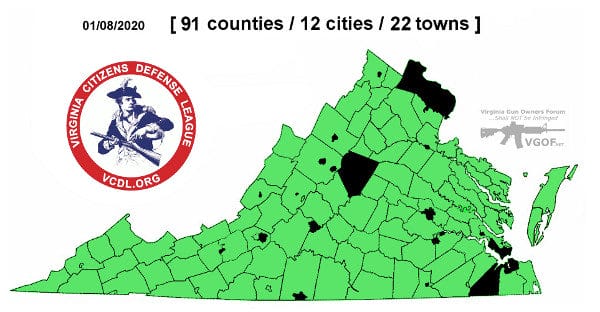
The result of the 2A Sanctuary movement was an impressive 95% of Virginia localities standing with gun owners by early 2020. The movement was so huge that it made both national and international news! In fact, it started similar movements in a few other states at the time.

ACTION ITEMS

We need to get the 2020 Second Amendment Sanctuary localities to recommit to that promise. (At the bottom of this alert is the list of existing sanctuaries.)

Virginia is a large state with almost 200 localities, so VCDL is counting on you and gun owners in your area to contact their local government representatives (members of the Board of Supervisors, town council, or city council) and urge them to pass a resolution reaffirming the locality’s Second Amendment Sanctuary status. If they want a model resolution, contact me and I can provide one.

Better yet, attend and speak at the next local government meeting, as time is short before the General Assembly starts around mid-January! Email me (president@vcdl.org) to let me know where and when the meeting is going to be held, and I will put out a VA-ALERT to get other local gun owners to that meeting. Let’s pack the room – that worked wonders in 2020! If your local government refuses to be a sanctuary, let me know that, too.

Contact your local sheriff and encourage them to speak in support of Second Amendment Sanctuaries at the local government meeting.

Contact your local Commonwealth Attorney and urge him or her not to enforce unconstitutional gun control.

If you are a member of a hunt club, a shooting club, a church or synagogue, frequent a shooting range, are an FFL, etc., spread the word, just like we did in 2020! We want legislators to know that gun control is a third rail, best left untouched.

Here is the list of Virginia Second Amendment Sanctuaries as of 2020:

  • Accomack
  • Alleghany
  • Altavista
  • Amelia
  • Amherst (county)
  • Amherst (town)
  • Appalachia
  • Appomattox
  • Augusta
  • Bath
  • Bedford (county)
  • Bedford (town)
  • Berryville
  • Big Stone Gap
  • Blackstone
  • Bland
  • Bluefield
  • Botetourt
  • Bowling Green
  • Bristol
  • Brunswick
  • Buchanan
  • Buckingham
  • Buena Vista
  • Burkeville
  • Campbell
  • Caroline
  • Carroll
  • Cedar Bluff
  • Charles City
  • Charlotte
  • Chase City
  • Chesapeake
  • Chesterfield
  • Chilhowie
  • Chincoteague
  • Claremont
  • Clarke
  • Clifton Forge
  • Colonial Heights
  • Covington
  • Craig
  • Crewe
  • Culpeper County
  • Culpeper Town
  • Cumberland
  • Dickenson
  • Dinwiddie
  • Elkton
  • Essex
  • Town of Exmore
  • Fauquier
  • Floyd
  • Fluvanna County
  • Franklin (City)
  • Franklin (County)
  • Frederick
  • Front Royal
  • Galax
  • Giles
  • Gloucester
  • Goochland
  • Goshen
  • Grayson
  • Greene
  • Greensville
  • Town of Grottoes
  • Halifax
  • Hanover
  • Henrico
  • Henry
  • Highland
  • Hopewell
  • Isle of Wight
  • James City
  • King and Queen
  • King George
  • King William
  • Lancaster
  • Lee
  • Louisa
  • Lovettsville
  • Lunenburg
  • Lynchburg
  • Madison
  • Martinsville
  • Mathews
  • Mecklenburg County
  • Middlesex
  • Mineral
  • Montgomery
  • Mount Jackson
  • Nelson
  • New Kent
  • New Market
  • Northampton
  • Northumberland
  • Norton
  • Nottoway
  • Orange
  • Page
  • Parksley
  • Patrick
  • Pittsylvania
  • Poquoson
  • Portsmouth
  • Powhatan
  • Prince Edward
  • Prince George
  • Prince William
  • Pulaski
  • Pulaski (town)
  • Rappahannock
  • Richmond County
  • Roanoke County
  • Rockbridge
  • Rockingham
  • Rocky Mount
  • Rural Retreat
  • Russell
  • Salem
  • Saltville
  • Scott
  • Scottsville
  • Shenandoah
  • Smyth
  • Southampton
  • Spotsylvania
  • Stafford
  • Stanley
  • Strasburg
  • Suffolk
  • Surry ***
  • Sussex
  • Tappahannock
  • Tazewell County
  • Vinton
  • Virginia Beach
  • Warren
  • Warsaw
  • Washington
  • Waynesboro
  • Westmoreland
  • White Stone
  • Wise County
  • Wise Town
  • Wythe
  • York

*** Surry County reneged on their sanctuary status a couple of years ago by enacting a carry ban in their government buildings.


About Virginia Citizens Defense League, Inc. (VCDL):

Virginia Citizens Defense League, Inc. (VCDL). VCDL is an all-volunteer, non-partisan grassroots organization dedicated to defending the human rights of all Virginians. The Right to Keep and Bear Arms is a fundamental human right.

For more information, visit: www.vcdl.org.
Virginia Citizens Defense League


We are in dangerous times! We are NOT meeting our funding goals! Will you help out?


from https://ift.tt/M0bhNCl
via IFTTT

Wednesday, November 19, 2025

Merits Brief Informs SCOTUS on Hawaii’s ‘Vampire Rule’

GOA Files New Case Against New York's CCIA, iStock-697763642
The state’s position is that you essentially can’t bear arms anywhere. (iStock-697763642)

“I thought you might have interest in reading our merits brief in Wolford v. Lopez which is before the Supreme Court. It was filed today and is attached to this email,” attorney Alan Beck wrote Monday.

The brief presents the question:

“Whether the Ninth Circuit erred in holding, in direct conflict with the Second Circuit, that Hawaii may presumptively prohibit the carry of handguns by licensed concealed carry permit holders on private property open to the public unless the property owner affirmatively gives express permission to the handgun carrier?”

That’s the “vampire rule,” so called because:

Just like a vampire can’t enter a home without being invited, gun owners in Hawaii can’t carry their firearms into stores, restaurants, or businesses unless the owner gives permission.

What that does is create a nearly-impossible to navigate maze of prohibited areas, clearly meant to discourage anyone outside of a state or federal enforcer from bearing arms anywhere.

Upholding Hawaii’s disarmament edict “fails every aspect of the analytical framework established by Bruen,” Beck and Petitioner Co-Counsel Mark W. Pennack argue.

“The Ninth Circuit sustained Hawaii’s default rule by relying solely on two outlier State laws separated by almost a century. One law was limited to private lands closed to the public and was a racist statute enacted by a former Confederate state prior to being readmitted to the Union and was designed to strip former slaves of their right to bear arms. The second law was a single Founding era law that the court thought was a ‘dead ringer’ but, in fact, was enacted as a hunting regulation to punish poaching on private land not held open to the public.”

That the case has gone this far (SCOTUS granted the Petition for Writ of Certiorari on Oct. 3) is testament to legal acumen, hard work, and tenaciousness of the attorneys entrusted by the plaintiffs to represent their interests and the interests of all gun owners who believe in the right to keep and bear arms. They’ve earned help because all that costs money.

“We need your continued support to pay for historians, documents, affidavits, and the mountain of legal costs to come,” the  “Hawaii Sensitive Places Defense Fund” GiveSendGo page pleads. “The fact the State of Hawaii hired these big shots is proof they are scared we can win.”

When they say, “big shots,” they’re not kidding. As Rob Romano, Litigation & Intelligence Coordinator for FPC Action Foundation notes, “Hawaii’s counsel of record in this case is Neal Katyal, who has a standard hourly rate of $3,250.”

Katyal is a former Acting Solicitor General for the Obama administration, the son of Indian immigrants who is now busily eroding rights and imposing the foreign infringements they fled on the country that took his family in.  Typical of Democrat cognitive dissonance between the principles they say they represent and the ones they practice, even left-of-center The New Republic condemns him and “the Depravity of Big Law, charging “The Democratic lawyer’s sickening defense of corporate immunity in a Supreme Court case reveals a growing moral rot in the legal community.”

Among its criticisms:

“It is that mutated creed that explains why Neal Katyal went to the Supreme Court … to argue that children enslaved to work on cocoa plantations should not be allowed to sue the corporations that abetted their enslavement… And last week he argued that because the corporation that supplied Zyklon B to the Nazis for use in their extermination camps was not indicted at Nuremberg, Nestle and Cargill should not be held liable for their use of child slave labor. In his argument before the court, Katyal espoused a view of corporate immunity so expansive that even the conservative judges seemed skeptical. If you took him at his word, he was effectively asking the Supreme Court to make it impossible for any foreigner to sue any company for any harm done to them, up to and including kidnapping and enslavement.”

That may help explain why Hawaii resorted to citing a former slave state disarmament law in its determination to strip freedom from all.

The state has a virtually unlimited war chest of tax plunder to draw upon. As much as the prohibitionists lie about the “gun lobby” being in the pocket of powerful blood-moneyed interests, it always seems to boil down to average gun owners (whose taxes fund their oppressors) chipping in what they can afford to ward off “legal” predation by the well-heeled.

As the Defense Fund asks, “Please donate what you can.”

Gun Control Organizations in Panic Over National Constitutional Concealed Carry

2A Foundation Fights Government’s Continuing Effort to Ban Guns At Your Post Office


About David Codrea:

David Codrea is the winner of multiple journalist awards for investigating/defending the RKBA and a long-time gun owner rights advocate who defiantly challenges the folly of citizen disarmament. He blogs at “The War on Guns: Notes from the Resistance,” is a regularly featured contributor to Firearms News, and posts on Twitter: @dcodrea and Facebook.

David Codrea


from https://ift.tt/4q5927K
via IFTTT

Misconduct in the James Comey Case Stemmed From a Reckless Rush to Indict Him

Opinion

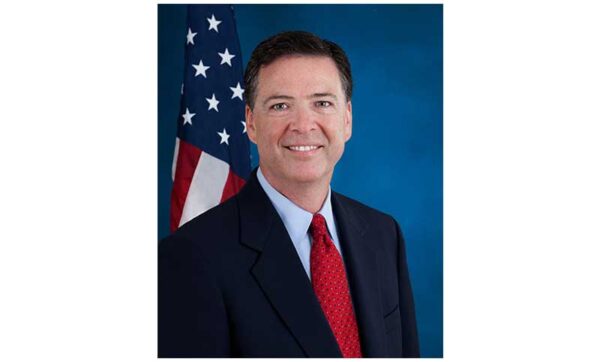
Official portrait of FBI Director James B. Comey

When U.S. Magistrate Judge William E. Fitzpatrick blasted the Justice Department’s handling of the James Comey case on Monday, he did not address the merits of the perjury and obstruction charges against the former FBI director. But the government misconduct that Fitzpatrick described was largely a product of the reckless rush to deliver the grudge-driven indictment that President Donald Trump demanded.

“We can’t delay any longer,” Trump told Attorney General Pam Bondi on Sept. 20. “JUSTICE MUST BE SERVED, NOW!!!”

Why the hurry? Since the charges against Comey stem from his congressional testimony on Sept. 30, 2020, they would have been barred by the five-year statute of limitations within 10 days of Trump’s message to Bondi.

The Justice Department nearly missed that deadline because Erik Siebert, the U.S. attorney for the Eastern District of Virginia until Sept. 19, did not think the case was worth pursuing. Nor did the career prosecutors in his office.

Trump himself had nominated Siebert as U.S. attorney. But Siebert’s reluctance [and later resignation] to prosecute Comey and another Trump nemesis, New York Attorney General Letitia James, drove the president to replace him with Lindsey Halligan, a former Trump defense attorney with no prosecutorial experience.

Halligan’s main qualification for the job was her willingness to overlook the legal and empirical difficulties that had deterred her predecessor. She took office two days after Trump demanded action against Comey and obtained the indictment three days later.

Halligan alone signed the indictment, which reflected internal skepticism about the case. The two-page document was so vague and skimpy that the details of the charges remained unclear for more than a month.

Halligan claims Comey tried to conceal his P.R. collaboration with Columbia law professor Daniel Richman, a longtime friend, in rebutting criticism of his decisions regarding the FBI investigation of Hillary Clinton’s email practices as secretary of state. Richman repeatedly defended Comey’s handling of the Clinton investigation, both on and off the record, in conversations with journalists — to the point that a sympathetic 2017 article in The New Yorker described him as “a close friend of Comey who has served as his unofficial media surrogate.”

Halligan alleges that Comey lied to the Senate Judiciary Committee when he reaffirmed his earlier testimony that he had never “authorized someone else at the FBI to be an anonymous source in news reports” about “the Clinton investigation.” Halligan says Richman qualified as “someone else at the FBI” because, in addition to his full-time, paying gig at Columbia, he served the bureau as an unpaid “special government employee” during Comey’s tenure there.

To convict Comey, prosecutors would have to prove beyond a reasonable doubt that he understood “someone else at the FBI” to include Richman. They also would have to prove that Comey deliberately tried to mislead the senators about his well-known relationship with Richman, at least to the extent that it included “background” discussions with reporters.

In their haste to shore up that shaky case before it was too late, Fitzpatrick found, FBI agents took shortcuts that cast doubt on the indictment’s validity, delving into communications that the FBI had obtained during a prior investigation of Richman that was closed without criminal charges. Although that investigation involved a different target and different allegations, the FBI did not obtain a new warrant specific to the case against Comey, which would have excluded irrelevant evidence, or properly filter out potentially privileged material.

Fitzpatrick also noted the procedural uncertainty created by Halligan’s presentation of two contradictory indictments. And he found that she misled the grand jurors on two important points of law, implying that they could assume probable cause based on evidence she had not presented and that Comey would have the burden of proving his innocence. [Judge Temporarily Halts Order Requiring Grand Jury Disclosures in Comey Case]

These missteps, which Fitzpatrick said might prove serious enough to require dismissal of the indictment, did not happen in a vacuum. They were the consequences of Trump’s determination to get Comey, regardless of the facts or the law.


About Jacob Sullum

Jacob Sullum is a senior editor at Reason magazine. Follow him on Twitter: @JacobSullum. During two decades in journalism, he has relentlessly skewered authoritarians of the left and the right, making the case for shrinking the realm of politics and expanding the realm of individual choice. Jacobs’ work appears here at AmmoLand News through a license with Creators Syndicate.

Jacob Sullum
Jacob Sullum


from https://ift.tt/P8AxWQC
via IFTTT

Tuesday, November 18, 2025

Gun Control Organizations in Panic Over National Constitutional Concealed Carry

The Constitutional Concealed Carry Reciprocity Act has ignited a fierce battle in Congress, drawing sharp opposition from gun control organizations who warn that the legislation threatens public safety, while supporters argue it protects the rights of lawful gun owners.

The legislation would require all states to recognize concealed carry permits issued by other states, allowing permit holders to carry concealed weapons across state lines regardless of local regulations. Rep. Richard Hudson (R-NC), the bill’s sponsor, champions the measure as necessary protection for gun owners. Hudson argues “This is just simple, common sense legislation that says if you’re a law abiding citizen we’re not going to turn you into a criminal just for crossing an invisible state line.”

The bill has attracted substantial Republican support, with 189 House co-sponsors as of November 2025. The House Judiciary Committee advanced the measure along party lines in March, voting 18 to 9, bringing it closer to a potential floor vote.

Gun rights organizations have rallied behind the proposal with enthusiasm. Gun Owners of America has strongly backed the legislation, noting that President Trump has publicly called on Congress to pass it. The group characterizes the bill as a common sense solution that respects the rights of lawful gun owners while promoting public safety.

The National Shooting Sports Foundation, the firearms industry trade association, has welcomed the legislation. Senior Vice President Lawrence Keane stated “This legislation eliminates the confusing patchwork of laws surrounding concealed carry permits that vary from state to state, particularly with regard to states where laws make unwitting criminals out of legal permit holders for a simple mistake of a wrong traffic turn.”

However, the proposal faces fierce resistance from gun control advocates and law enforcement leaders. Giffords, the prominent gun violence prevention organization, has emerged as one of the most vocal opponents, characterizing the bill as a threat to communities nationwide.

The organization warned “Extremists in Congress are pushing for a concealed carry mandate, which would allow people to carry hidden guns nationwide regardless of state laws. Now that the government has reopened, they can vote on this dangerous bill any day. They must vote NO.”

Giffords has emphasized that law enforcement leaders share their concerns, stating, “Law enforcement leaders across the nation agree. A national concealed carry mandate is dangerous. We should not be forced to accept reciprocity with places where any buffoon who has a pulse gets to carry a gun.”

According to Giffords analysis, the legislation would allow dangerous, unqualified individuals to carry hidden, loaded guns across state lines without meeting basic safety standards. The organization contends the bill would override carefully crafted state laws designed to protect communities, forcing states with rigorous permitting requirements to accept permits from states with minimal or nonexistent standards.

Former Congresswoman Gabrielle Giffords, the organization’s namesake and a survivor of gun violence, stated in the aftermath of the Las Vegas mass shooting “In the shadow of the deadliest mass shooting in modern American history, our leaders in Congress should be focused on taking action to prevent future acts of gun violence, not working to move forward bills that weaken gun safety laws and make it more difficult for law enforcement officers to keep our communities safe.”

The law enforcement community has previously opposed the legislation. In April 2018, the International Association of Chiefs of Police released a letter signed by 473 agencies from 39 states opposing the measure. IACP leader Louis M. Dekmar stated, “I strongly oppose the Concealed Carry Reciprocity Act because it endangers the public and law enforcement. This legislation would override state laws that determine who is qualified to carry a concealed firearm.” Law enforcement opposition to such measures has continued in the present.

On November 17, 2025, the Fraternal Order of Police (FOP) and the IACP jointly released a formal “call to action” urging Congress to reject HR 38. The FOP and IACP pointed to these provisions as the basis for their objections to HR 38: “The bill’s creation of personal liability for officers, combined with its erosion of state and local authorities to regulate firearms and conduct reasonable investigations of armed suspects, threatens officer safety and exposes agencies and officers to costly litigation.”

The battle over HR 38 will test whether Congress stands with millions of law-abiding gun owners seeking to exercise their Second Amendment rights nationwide or defers to critics who want to maintain the gun control status quo. 

Democrats’ Unhealthy Obsession with Assault Weapons Bans

Tips For Democrats: To Attract Male Voters, Stop Eroding Their Human Rights


About José Niño

José Niño is a freelance writer based in Charlotte, North Carolina. You can contact him via Facebook and X/Twitter. Subscribe to his Substack newsletter by visiting “Jose Nino Unfiltered” on Substack.com.

José Niño


from https://ift.tt/2jNRLM6
via IFTTT

Expert Firearm Witness Criticizes ATF’s Treatment of Patrick “Tate” Adamiak

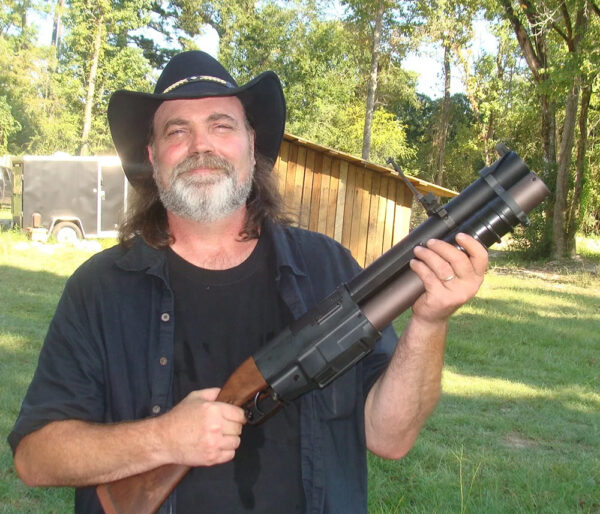
Georgia gunsmith and expert witness Len Savage with a 40mm “pumper-thumper” grenade launcher. (Photo courtesy Len Savage).

Georgia gunsmith and technical specialist Len Savage is an expert witness who has been involved in 29 federal court cases over a 20-year span.

He has been hired by defense attorneys, federal public defenders and sometimes the U.S. Department of Justice, which last asked him to verify government testing at $175 per hour.

Savage’s firm, Historic Arms, LLC, is a leading source for semi-auto Bren light machineguns and other unique items, and he also repairs full-auto weapons.

“I haven’t had to testify in many, many years,” he said. “The last time I was summoned to examine the government’s evidence they dismissed the case.”

Savage has closely followed the ATF’s treatment of Patrick “Tate” Adamiak.

“I am familiar with Tate’s case, and I have even spoken to him,” Savage said Monday. “Was this a legit charge? Nope. The was part of Joe Biden’s anti-gun agenda. They were going after everything during that time period. They went after pistol braces—they went after everything you can imagine.”

Adamiak is just starting the third year of his 20-year federal prison sentence. A series of more than 30 stories revealed that none of the charges he faced were based on any actual violations. All were made up by the ATF.

Savage believes the ATF went after Adamiak because he did not have a Federal Firearm License, or FFL.

“Tate was legal, but they didn’t like it,” he said. “If he would have had an FFL, they would have visited him every 365 days. The ATF wanted to send a message out to people saying, “Don’t play in this area or we’ll mess you up.’”

He believes President Donald Trump should fix ATF’s screwup as soon as possible.

“He needs to be pardoned. The president should take a look at him and ATF’s alleged testing procedures,” Savage said. “Keep in mind ATF didn’t even have testing until a couple years ago. This case should proceed to court without delay.”

The only thing the ATF proved during Adamiak’s trial, Savage said, is that the agency is capable of gunsmithing.

“The only thing they’ve established is that ATF’s technical division knows how to make a firearm, and you can make a firearm out of anything,” he said. “The only thing the ATF established in his case was that their people had a gunsmith’s level of skill.”

During Adamiak’s case, Savage said, all the ATF did was employ a bunch of “parlor tricks.”

“These poor juries get tricked. You get someone coming out in a nice suit, saying ‘look at my accomplishments.’ It’s all literally a parlor trick, and not even a good one,” he said. “This was all stuff they had stopped doing, because they really got their asses handed to them in the past. The tricks they used on Adamiak were not new, but they were new to the people they recently hired.”

One of ATF’s previous senior technicians, Savage said, was caught lying under oath during a criminal trial.

“But then the new crew comes in and don’t know that it’s all been done before,” he said.

If an ATF agent decides to tell the truth and testify factually about what happened, their career can be at risk.

“If they speak out, they’ll be sent to work nights, or to Guam, or to Nome, Alaska,” he said.

This story is presented by the Second Amendment Foundation’s Investigative Journalism Project and wouldn’t be possible without you. Please click here to make a tax-deductible donation to support more pro-gun stories like this.

Democrats’ Unhealthy Obsession with Assault Weapons Bans

GrabAGun Defies Industry Slump With Sales Surge


About Lee Williams

Lee Williams, who is also known as “The Gun Writer,” is the chief editor of the Second Amendment Foundation’s Investigative Journalism Project. Until recently, he was also an editor for a daily newspaper in Florida. Before becoming an editor, Lee was an investigative reporter at newspapers in three states and a U.S. Territory. Before becoming a journalist, he worked as a police officer. Before becoming a cop, Lee served in the Army. He’s earned more than a dozen national journalism awards as a reporter, and three medals of valor as a cop. Lee is an avid tactical shooter.

Lee Williams


from https://ift.tt/SBiwakj
via IFTTT

Monday, November 17, 2025

President Trump Protects Veterans’ Second Amendment Rights with New Law

Opinion

White House Press Room iStock-1021174468
iStock-1021174468

President Donald Trump signed into law a legislative proposal to reopen the federal government.

Included in the legislation is a provision that prohibits the Department of Veterans Affairs (VA) from stripping the constitutional right of veterans to possess a firearm simply because they have been appointed a fiduciary to manage their benefits.

While the NRA applauds President Trump and Congress for extending these protections for another year, the time has come for Congress to pass the Veterans 2nd Amendment Protection Act (H.R. 1041/S.478), which will permanently prohibit the VA from submitting the names of veterans to NICS without due process.

On May 6th, the House Committee on Veterans’ Affairs held a markup which improved the Veterans 2nd Amendment Protection Act by including language which will retroactively remove the unconstitutional inclusion of veterans to the NICS database. The legislation was favorably reported by the committee and now awaits consideration by the full House of Representatives. The Senate Committee on Veterans’ Affairs has yet to markup the bill but NRA-ILA continues to push for the Senate to move quickly to protect our veterans constitutional rights.

NRA-ILA will continue to work closely with lawmakers to ensure the Veterans 2nd Amendment Protection Act is brought to the House and Senate floors and sent to President Trump’s desk to protect the constitutional rights of our nation’s veterans.

Legislation Introduced to Protect Veterans’ Second Amendment Rights

The Chairmen of the House and Senate Committees on Veterans’ Affairs, U.S. Representative Mike Bost (R-IL-12) and Senator Jerry Moran (R-KS), as well as Senator John Kennedy (R-LA), have reintroduced the Veterans 2nd Amendment Protection Act (H.R. 1041/S. 478).

This legislation would reverse a controversial and longstanding policy by which veterans are stripped of their constitutional right to possess a firearm without due process, simply because they have been assigned a fiduciary to help manage the Department of Veterans Affairs (VA) benefits they’ve earned through suffering a service-connected disability.

“It should go without saying that veterans should not be treated like second-class citizens simply because they need help managing their books – but under current law they are,” said Representative Bost. “Without a permanent fix in place, VA bureaucrats can continue to strip veterans with fiduciaries of their Second Amendment right with no court ruling in place that they are a danger to themselves or others. It’s as simple as that. I have heard from too many veterans that VA’s current NICS reporting measures prevent them from seeking mental health care at VA – we must change that. I want to thank Chairman Moran, Senator Kennedy, and my House colleagues for working with me last Congress to pass a temporary solution, but veterans need a permanent fix. House and Senate Republicans will fulfill the American people’s mandate to get this bill to President Trump’s desk to protect veterans’ due process and constitutional rights for good.”

“Veterans should never be forced to choose between receiving assistance from VA to manage their benefits and their fundamental Second Amendment rights,” said Senator Moran. “Our nation should be encouraging veterans to utilize VA services, not discouraging them by denying them due process. The Veterans Second Amendment Protection Act makes certain that the rights of those who have served are protected, and that veterans are not penalized for receiving support that they have earned and deserve. I thank Sen. Kennedy for his partnership in this effort.”

“Our veterans should not receive less due process rights than other Americans just because they served our country and asked the federal government for a helping hand,” said Senator Kennedy. “Under the VA’s interpretation of the law, however, unelected bureaucrats punish Louisiana and America’s veterans by forcing them to choose between their Second Amendment rights and getting the help they need as they manage their financial affairs. I’m proud to introduce the Veterans 2nd Amendment Protection Act to stand up for veterans’ constitutional rights by ending this unfair practice.”

In the administration of these benefits, VA officials, most without any special mental health training or judicial authority, may make a determination of “incompetence” for the purposes of evaluating a veteran’s “capacity to contract or to manage his or her own affairs, including disbursement of funds.” This alone is an understandable measure to ensure that if veterans need help managing finances, the VA benefits would go to someone who can provide that help, usually someone within the beneficiary’s own family or household chosen by the veterans themselves.  Notably, this determination does not require any finding that a beneficiary is dangerous to self or others, mentally ill, suicidal, etc.

Nevertheless, since 1998, VA has been using this process to report hundreds of thousands of veterans who have been assigned these fiduciaries to the National Instant Criminal Background Check System (NICS) as “mental defectives,” thereby ending their legal right to possess a firearm.

Last year, NRA-ILA secured a provision in the FY2024 appropriations process that defunded VA’s ability to submit the names of veterans with fiduciaries to NICS without a determination by a judicial authority deeming that a veteran is a danger to him or herself, or others.

Shamefully, the VA has rebuffed this effort, claiming that it “could not” and “would not” comply with the legislation. It is apparent, therefore, that VA’s anti-gun policies are so entrenched that a permanent legislative solution is the only path forward.

The NRA is proud to support the Veterans 2nd Amendment Protection Act, which simply prohibits the VA from submitting the names of veterans to NICS without first establishing that the veterans are a danger to themselves or others and offers veterans the opportunity to dispute those claims. “All Americans are guaranteed the right to due process under the Constitution,” said John Commerford, Executive Director of NRA-ILA. “Regrettably, veterans who have VA benefits administered through a fiduciary have been held to a different standard when it comes to their Second Amendment rights. The NRA thanks Chairman Bost, Chairman Moran and Senator Kennedy for their commitment to reversing this blatantly unconstitutional policy.”

Update 2/25/2025: 

On Tuesday, February 25th, the House Committee on Veterans’ Affairs, led by Chairman Mike Bost, held a legislative hearing to discuss H.R. 1041, the Veterans’ 2nd Amendment Protection Act, as well as a companion draft bill to retroactively restore the Constitutional rights of veterans who had been caught up in the VA’s gun grab scheme since 1993.  At the direction of newly confirmed Secretary Doug Collins, President Trump’s pick to lead the VA, VA officials testified that the Department now supports both H.R. 1041 and the related discussion draft. This testimony represents a profound transition away from the anti-gun policies of the past and highlights President Trump’s commitment to ensuring his executive agencies respect the Second Amendment in all aspects of administrative policy.

Update 5/5/2025: 

On Tuesday, May 6th, the House Committee of Veterans’ Affairs, led by Chairman Mike Bost will hold a markup of H.R. 1041, the Veterans’ 2nd Amendment Protection Act. A markup is an important legislative step which allows a full committee to favorably report legislation for consideration by the full U.S. House of Representatives. The markup will be held at 10:15 a.m. and can be viewed on the Committee’s website.

NRA-ILA will monitor this markup and will keep you informed as this legislation continues to move through Congress.


About NRA-ILA:

Established in 1975, the Institute for Legislative Action (ILA) is the “lobbying” arm of the National Rifle Association of America. ILA is responsible for preserving the right of all law-abiding individuals in the legislative, political, and legal arenas, to purchase, possess, and use firearms for legitimate purposes as guaranteed by the Second Amendment to the U.S. Constitution. Visit: www.nra.org

National Rifle Association Institute For Legislative Action (NRA-ILA)


from https://ift.tt/bsF0ORo
via IFTTT

How One of the Country’s Loudest Anti-gun Doctors Gets Data for his Anti-Gun Stories

Gun Doctor iStock-942826332
Virginia Governor candidate Terry McAuliffe is pushing gun control under the guide of public health. IMG iStock-942826332

Michael L. Nance, MD, is a very busy man.

He is chief of the Division of Pediatric General, Thoracic, and Fetal Surgery, and director of the Pediatric Trauma Program at the Children’s Hospital of Philadelphia, which is known as “CHOP.”

Nance has also been called both an associate and an investigator for CHOP’s Center for Violence Prevention, which is almost violently anti-gun.

The Center for Violence Prevention publicly supports wild anti-gun policies such as mandatory child-access laws, universal background checks, strict limits on “assault-style weaponry,” court-ordered firearm storage laws and, of course, more funding for firearm-related research, which of course would be paid directly to the Center for Violence Prevention.

Nance has written scores of articles on what he believes are the perils of guns and gun ownership, including 2020’s “Most Mass Shootings Occur Within a Mile of a School or a Place Where Children Live, Learn and Play.”

“Firearms are the second leading cause of trauma-related death in children in our Trauma Centers,” Nance said in the news release announcing his work. “Our findings highlight the sheer extent of the problem and show how closely mass shootings are tied to our communities, and especially to the places where children learn and play.”

The story, for which Nance was the main author, raises the question of how his group defines a mass shooting. After all, the FBI defines a mass shooting as an event where four or more people are murdered.

But Nance’s press release states his team uses a different definition, which they got from a cringe-worthy anti-gun group.

“The researchers defined mass shootings as events involving four or more people injured or killed by a firearm in a single setting, using data from the 2019 Gun Violence Archive,” Nance’s story states.

The Gun Violence Archive?

Their data is bunk—it’s made up. Anything that’s based on the Gun Violence Archive is nothing but complete fiction. Literally, no one who matters uses their data anymore, not since we outed them in 2021. Even the Trace quit citing GVA numbers and created their own database, which isn’t much better.

Why would Nance quote the GVA?

The GVA

The Gun Violence Archive, or GVA, was founded in 2013 by Michael Klein, a left-leaning philanthropist and open-government advocate, and Mark Bryant, a retired computer analyst and GVA’s current executive director.

According to Bryant’s all-inclusive definition, there were 417 mass shootings in 2019. The FBI says there were 30, because it uses a much more realistic definition. Bryant’s mass-shooting definition—four people were shot—is the same one Nance is using.

Still, the overly broad definition didn’t stop the anti-gunners.

The Biden administration cited Bryant’s data constantly, as did a bevy of other elected officials and political candidates, at the local, state and federal level.

The New York Times, National Public Radio, USA Today and a host of other media outlets also used GVA’s broad definition when reporting about mass shootings.

During a 2021 interview with the Second Amendment Foundation, Bryant said his GVA researchers consult “a mass of about 7,500 sources. They are law enforcement Twitter, law enforcement Facebook, law enforcement police blotters and then we have media sources. The easiest is to grab media sources. Law enforcement is clinical. The media looks more subjectively at an incident.”

Bryant acknowledged that there have been reliability issues with media stories, especially after a mass shooting. A shooting in Cincinnati, he said, produced several different versions of events. “When we looked at five media sources, they were all over the map, even about when it occurred. We know that some media reports are erroneous.”

However, for his audience, none of these accuracy problems were ever important, as long as the numbers remained high.

Nance and the GVA

Nance’s story about alleged trauma deaths was not the only time he has relied upon GVA data to make a “point.” He has added their false and misleading data to multiple stories.

In March 2020, his team claimed, “Most Mass Shootings Occur Closest to Hospitals without Verification to Treat Trauma.”

“The researchers used the Gun Violence Archive to analyze all 2019 mass shootings, defined as five or more injuries or deaths by firearm, and found a total of 187 mass shooting events,” Nance wrote.

In September 2020, Nance and his team published “Locations of Mass Shootings Relative to Schools and Places Frequented by Children.”

“Mass shootings were defined as events involving 4 or more people injured or killed by a firearm in a single setting. The events were documented in the Gun Violence Archive for calendar year 2019. Using Google Maps, we calculated the walking distance (miles) from the geocoded address of the event to the nearest school (K-12) and places of interest (POIs), ie, places where children congregate,” Nance’s team wrote.

Another story Nance and his team published in 2020, “Pediatric firearm injuries: Anatomy of an epidemic,” which was also based of bad data from the GVA, was cited as gospel in five additional stories ranging from an examination of firearm injuries among young people to pediatric suicide, to a story about forensic evaluations of firearm injuries.

Takeaways

Nance and his team didn’t always rely on bad data from the Gun Violence Archive. In 2009, four years before the GVA was founded, they attacked gun dealers in a story titled, “Homicide and geographic access to gun dealers in the United States.”

The numbers Nance’s team allegedly found were summed up in their conclusion: “Modification of FFLs through federal, state, and local regulation may be a feasible intervention to reduce gun homicide in major cities.”

While to anyone who has ever known a gun dealer, Nance’s conclusion is laughable, we were not his audience. He targets the medical community and public officials with his anti-gun propaganda, not gun owners, and given all the abbreviations after his name, it’s effective.

Nance did not return phone calls left with his secretary or personal emails sent to him at the CHOP, which is too bad.

As an author, Nance is responsible for the content of his stories, regardless of when they were written—especially their accuracy.

Authors know that, unfortunately, most propagandists don’t.

This story is presented by the Second Amendment Foundation’s Investigative Journalism Project and wouldn’t be possible without you. Please click here to make a tax-deductible donation to support more pro-gun stories like this.

AI Gun Detection System Mistakes Bag of Doritos for a Pistol

Senate CR Keeps ATF Funding Intact, Extends VA Gun Ban Defunding


About Lee Williams

Lee Williams, who is also known as “The Gun Writer,” is the chief editor of the Second Amendment Foundation’s Investigative Journalism Project. Until recently, he was also an editor for a daily newspaper in Florida. Before becoming an editor, Lee was an investigative reporter at newspapers in three states and a U.S. Territory. Before becoming a journalist, he worked as a police officer. Before becoming a cop, Lee served in the Army. He’s earned more than a dozen national journalism awards as a reporter, and three medals of valor as a cop. Lee is an avid tactical shooter.

Lee Williams


from https://ift.tt/a8StpoB
via IFTTT