Fort Devens Rifle & Pistol Club members engaging popup targets. (Photo courtesy of the Fort Devens Rifle & Pistol Club).
A small civilian gun club located just 50 miles northwest of Boston has won a “landmark” lawsuit against nearby Fort Devens for violating their rights and federal law by denying them access to military rifle ranges at reasonable rates.
The Ft. Devens Rifle & Pistol Club, Inc., filed suit in 2022, claiming that Fort officials were charging range fees in violation of federal law, according to club treasurer Jim Gettens, a retired attorney who assisted with the legal fight.
Gettens said Monday that his club’s victory was a major “David vs. Goliath” event.
“They were running an illegal profiteering racket,” he said. “That’s the best way to describe it. This was a landmark case.”
Gettens and other club members noticed that their problems with the range began only three days after Joe Biden took office in 2022, which they said would never have happened under President Donald Trump’s Administration.
At issue was a little-known section of U.S. code that requires the Army to make rifle and pistol ranges available for civilian use as long as it does not interfere with military training, and it prohibits officials from charging exorbitant fees for range access.
For decades prior to the 2020 election, club members had been using a wide array of rifle and pistol ranges at Fort Devens free of charge. Club members supplied their own targets, ammunition, Range Safety Officers and other supplies. They even policed their own brass. Most of the club members are veterans, so they are intimately familiar with range safety protocols and other best practices. To be clear, in terms of taxpayer dollars, the club cost the Fort very little, which is why club member were so surprised when the Fort began charging them.
Just days after the 2020 election, the club was notified in writing that they would have to start paying a minimum of $250 per range, and that the fees would increase based upon the total number of shooters.
The bottom line was that Fort Devens tried to charge personnel costs for Range Safety Officers and technicians who were never there. In addition, a range staff member admitted in a memorandum that the range was unable to prove maintenance, supply and repair costs because the Fort never kept any such records.
“The odds were certainly stacked against us,” Getten said Monday. “As it turned out, the U.S. Army Garrison at Fort Devens croaked themselves with their own administrative records. A range officer filed a memo for the record admitting they kept no maintenance, supply or repair records – one of the most egregious abuses. We detailed all of this stuff in a memorandum in support for summary judgement. We just destroyed them.”
While the gun club won and can stop paying fraudulent fees, hundreds of civilian police officers are still charged for their time at the range, which Getten said is a legal problem for their agencies.
“Non-DoD law enforcement officers, state police and municipal police departments are still paying out the wazoo for all of those costs,” Getten said. “Non-DoD law enforcement agencies should not be getting hosed the way they are. Also, ICE, FBI, U.S. Customs and other federal law enforcement agencies pay out the wazoo for their range time and pass the costs onto taxpayers.”
Assistant U.S. Attorney Julian N. Canzoneri, who defended the government against the gun club’s lawsuit, did not return phone calls or emails seeking his comments for this story.
This story is presented by the Second Amendment Foundation’s Investigative Journalism Project and wouldn’t be possible without you. Please click here to make a tax-deductible donation to support more pro-gun stories like this.
About Lee Williams
Lee Williams, who is also known as “The Gun Writer,” is the chief editor of the Second Amendment Foundation’s Investigative Journalism Project. Until recently, he was also an editor for a daily newspaper in Florida. Before becoming an editor, Lee was an investigative reporter at newspapers in three states and a U.S. Territory. Before becoming a journalist, he worked as a police officer. Before becoming a cop, Lee served in the Army. He’s earned more than a dozen national journalism awards as a reporter, and three medals of valor as a cop. Lee is an avid tactical shooter.
The National Rifle Association and California Rifle & Pistol Association filed an amicus brief in a challenge to Illinois’s law prohibiting concealed carry licensees from carrying firearms on public transportation unless those firearms are unloaded and secured—essentially rendering them useless for self-defense.
NRA’s brief explains that the conduct at issue—carrying firearms in public for self-defense—is clearly covered by the plain text of the Second Amendment. Therefore, Illinois must provide a historical basis for its restriction, and there isn’t one.
Schoenthal v. Raoul case Background:
Schoenthal v. Raoul is a federal civil rights lawsuit filed on October 20, 2023, in the U.S. District Court for the Southern District of Illinois. The lead plaintiff, Joshua Schoenthal, is a law-abiding resident of Texas and a holder of a valid Texas License to Carry. He is challenging Illinois’ discriminatory firearm laws that prohibit most non-residents from carrying a concealed firearm for self-defense while in the state. Under current Illinois law, only residents of a handful of states—those with licensing standards “substantially similar” to Illinois—can legally carry concealed firearms within its borders. The plaintiffs argue that this restriction violates their rights under the Second Amendment and the Equal Protection and Privileges or Immunities Clauses of the Fourteenth Amendment.
The case, brought with the support of the Second Amendment Foundation and the Firearms Policy Coalition, seeks to strike down Illinois’ non-resident carry ban and affirm that constitutional rights do not stop at state lines.
Second, public transportation, even if owned and operated by the government, is not a “sensitive place” like a courthouse or legislature. It does not provide a core function of government deliberation, which was the historic basis for banning firearms at certain government locations. Moreover, the government does not provide for passenger security on public transit, as evidenced by the myriad headline-making incidents of violence in recent years on subways and at train stations.
Illinois’s regulation is, therefore, unconstitutional and cannot stand.
The case is Schoenthal v. Raoul. It is currently before the Seventh Circuit Court of Appeals.
About NRA-ILA:
Established in 1975, the Institute for Legislative Action (ILA) is the “lobbying” arm of the National Rifle Association of America. ILA is responsible for preserving the right of all law-abiding individuals in the legislative, political, and legal arenas, to purchase, possess, and use firearms for legitimate purposes as guaranteed by the Second Amendment to the U.S. Constitution. Visit: www.nra.org
NEW YORK CITY – This week, Firearms Policy Coalition (FPC), [working under the direction of the Second Amendment Foundation,] announced the filing of its opening brief with the federal Court of Appeals for the Second Circuit in Christian v. James, an FPC Law case that challenges some of the State of New York’s post-Bruen bans on public carry. The opening brief, filed Friday, addressed the plaintiffs’ claims regarding carry in public parks and can be viewed at firearmspolicy.org/boron. The Second Circuit plans to hear arguments in June.
Supreme Court has unequivocally stated that the ‘plain text’ of the Second Amendment extends to cover carrying firearms in public.
“Given that the Supreme Court has unequivocally stated that the ‘plain text’ of the [Second] Amendment extends to cover carrying firearms in public, and the Parks Ban prevents carrying firearms in public parks, this case unquestionably passes Bruen’s threshold inquiry, and the Parks Ban is presumptively unconstitutional,” argues the brief. “The question then is one for history, and the history of firearms regulation demonstrates that the Parks Ban is neither facially constitutional nor, in the alternative, constitutional when applied to parks outside of urban areas.”
“New York’s ban on carry in parks is unconstitutional and it’s not a close call. The Second Circuit should put a stop to this restriction that the State enacted in defiance of the Supreme Court’s clear decision in Bruen,” said FPC President Brandon Combs.
The Christian case is part of FPC’s high-impact strategic litigation program, FPC Law, aimed at eliminating immoral laws and creating a world of maximal liberty. FPC is joined in the litigation by an individual FPC member and the Second Amendment Foundation. FPC thanks FPC Action Foundation for its strategic support of this FPC Law case.
Firearms Policy Coalition (firearmspolicy.org), a 501(c)4 nonprofit membership organization, exists to create a world of maximal human liberty, defend constitutional rights, advance individual liberty, and restore freedom. We work to achieve our strategic objectives through litigation, research, scholarly publications, amicus briefing, legislative and regulatory action, grassroots activism, education, outreach, and other programs. Our FPC Law program (FPCLaw.org) is the nation’s preeminent legal action initiative focused on restoring the right to keep and bear arms throughout the United States. Individuals who want to support FPC’s work to eliminate unconstitutional laws can join the FPC Grassroots Army at JoinFPC.org or make a donation at firearmspolicy.org/donate. For more on FPC’s lawsuits and other pro-Second Amendment initiatives, visit FPCLegal.org and follow FPC on Instagram, X (Twitter), Facebook, and YouTube.
BELLEVUE, WA – The arrest of a man on drug and gun-related charges whose prison sentence was commuted by former President Joe Biden days before he left office underscores the massive failure of the Democrats’ soft-on-crime strategy, the Citizens Committee for the Right to Keep and Bear Arms declared.
Fox News is reporting the arrest of Willie Frank Peterson, 52, is back behind bars two months after Biden commuted his prison sentence on Jan. 17. Peterson was doing time for conspiracy to distribute cocaine, having been imprisoned in September 2023. However, he was arrested earlier this week in Alabama, charged with two counts of unlawful possession of a controlled substance, one count of marijuana possession, possession of “drug paraphernalia,” and “three firearms-related offenses, the report said.
“Joe Biden had no problem weaponizing government agencies against law-abiding gun owners and small retailers, or pushing for gun bans and other restrictions,” CCRKBA Chairman Alan Gottlieb recalled. “Peterson’s arrest simply amplifies the implosion of such a policy, which treats convicted criminals better than honest citizens whose only ‘crime’ is their exercise of Second Amendment rights.
“High-ranking Democrats seem to make a habit of it,” he continued, “as illustrated in Washington state by the recent arrest of Percy Levy, a convicted felon who was granted clemency in 2019 by former Governor Jay Inslee, also on drug and weapons charges. Inslee, like Biden, never met a gun control law he didn’t embrace, and both men treated law-abiding gun owners like the enemy, while showing misplaced sympathy for people who flagrantly ignored the law, and quickly went right back to the wrong side.
“Biden’s pardon of his own son on a federal gun law conviction was the ex-president’s greatest insult to the tens of millions of American citizens who obey the law,” Gottlieb observed. “These high-profile arrests are putting the bankruptcy of Democrat policies on full display. They treat good people like criminals, while treating bad people like model citizens. Their moral compass is broken, and unfortunately, Democrats do not appear interested in helping get the country back on course.”
Citizens Committee for the Right to Keep and Bear Arms
With more than 650,000 members and supporters nationwide, the Citizens Committee for the Right to Keep and Bear Arms (www.ccrkba.org) is one of the nation’s premier gun rights organizations. As a non-profit organization, the Citizens Committee is dedicated to preserving firearms freedoms through active lobbying of elected officials and facilitating grass-roots organization of gun rights activists in local communities throughout the United States.
The House Judiciary Committee, led by Chairman Jim Jordan (R-OH-04), is planning to hold a legislative markup today, March 25, 2025 at 10 am EST. The Committee will be considering several bills during this markup, two of which are of crucial importance to law-abiding gun owners. A committee markup is often a critical step in advancing legislation to the floor of the U.S. House for passage.
The first piece of legislation up for consideration, and the NRA’s top priority, is H.R. 38, the “Constitutional Concealed Carry Reciprocity Act” introduced by Representative Richard Hudson (R-NC-09). This bipartisan legislation would provide nationwide reciprocity for concealed carry license holders and for residents of Constitutional Carry states. This legislation currently has 177 cosponsors in the U.S. House.
“The U.S. Supreme Court has repeatedly affirmed an individual’s fundamental right to keep and bear arms,” said John Commerford, Executive Director of NRA-ILA. “Congress should now ensure that the right to self-defense does not end at a state line. NRA applauds and thanks Representative Hudson for his longstanding and unwavering leadership in the fight for right-to-carry reciprocity.”
Another bill being considered by the Committee is H.R. 2184, the “Firearm Due Process Protection Act” introduced by Representative Tom Emmer (R-MN-06). This legislation provides legal recourse for law-abiding Americans who were improperly denied the ability to legally purchase a firearm due to administrative errors during a background check and increases congressional oversight of the Federal Bureau of Investigation (FBI). It is cosponsored by 14 of Emmer’s Republican colleagues in the House of Representatives.
“Year after year, thousands of Americans are erroneously denied their constitutional rights due to clerical errors in the National Instant Criminal Background Check System (NICS),” said John Commerford, Executive Director of the NRA-ILA. “On behalf of our millions of members and gun owners across America, we applaud Representative Tom Emmer for the introduction of this commonsense legislation which will provide law-abiding Americans a course of action to correct these errors in a timely manner while at the same time holding the FBI and its NICS system accountable to Congress.”
NRA-ILA would like to thank Chairman Jordan, alongside his pro-Second Amendment House Judiciary colleagues, for calling this legislative markup on these two critical Second Amendment bills.
NRA members can watch the House Judiciary Committee’s legislative markup by clicking the following link. www.youtube.com/@USHouseJudiciaryGOP/featured. And NRA-ILA will continue to update you as these bills make their way through the legislative process.
About NRA-ILA:
Established in 1975, the Institute for Legislative Action (ILA) is the “lobbying” arm of the National Rifle Association of America. ILA is responsible for preserving the right of all law-abiding individuals in the legislative, political, and legal arenas, to purchase, possess, and use firearms for legitimate purposes as guaranteed by the Second Amendment to the U.S. Constitution. Visit: www.nra.org
Australia implemented a firearm ban and mandatory confiscation in 1996 pursuant to the National Firearms Agreement, in which nearly 700,000 privately-owned firearms were turned in to the government and destroyed. In 2017, NRA-ILA described how the country’s anti-gun officials and activists were nonetheless continuing to demand even stricter gun controls: “For those interested in restricting freedom, there’s always one more step that must be taken.”
True to predictions, the State of Western Australia (WA) has since adopted what the state government calls “Australia’s toughest firearms laws,” the Firearms Act Reforms 2024 and regulations, which take effect at the end of March.
In the meantime, the government has been running a gun “buyback” scheme since February 2024 for gun owners who will have to give up their guns under the new law, with a budget of A $64.3 million. As of January 2025, the government reported that approximately 52,000 firearms had been surrendered to police and removed, the “biggest reduction of firearms anywhere in the nation since 1997 when then Prime Minister John Howard introduced the National Firearms Agreement and buyback scheme.”
At the time the laws were proposed, WA’s government called the changes historic firearm reforms that would enhance community safety but, more to the point, laws that would “reduce unnecessary firearm ownership.” “Unnecessary,” obviously, is a subjective concept.
The latest laws include new license categories, prohibitions and disqualifications, restrictions on the number of guns an individual may own, mandatory health evaluations, mandatory training, and strict new storage requirements.
For individuals, licenses will be required for competitive shooters (“participating in shooting competitions held by a licensed firearm club at a licensed firearm range”); these licensees are limited to a maximum of ten firearms. A hunting license is required for anyone engaging in the lawful hunting of animals on land which the license holder has authority to hunt on, and the land must be registered with the government by the landowner. The maximum number of firearms that can be licensed under a hunting license is five, and is restricted to firearms listed as a “category A or B” firearm. The introduction of these firearm ownership limits was expected “to remove up to 13,000 guns from the WA community.”
Paintball Licenses
A paintball license “authorizes the licensee to use a prescribed paintball gun for the purposes of participating in games of paintball conducted under the authority of a Paintball Business License,” with very specific requirements for the location of use and the paintball gun itself (e.g., the paintball gun must have “a calibre of at least 0.4 inches and not more than 0.68 inches”). Collectors of firearms, to qualify for a license, “must prove they are a student of arms and are a member of an approved society of collectors,” and “each firearm, major firearm part or ammunition already held or applied for must fall within the scope of the applicant’s applied interest.” In addition, the collection must meet defined “collectable firearm requirements.”
Persons with specified criminal convictions or subject to various restraining or protective orders stand to lose their licenses and have their guns seized. A license holder served with an interim restraining order or charged with a disqualifying offence becomes “an interim disqualified person during the court process” until the matter is resolved, and, during this period, their firearm license is suspended and firearms seized. Disqualification periods for such court orders are the length of the order plus five years: if an order lasted two years, “on the day it expires the 5-year period commences which then totals a disqualification period of 7 years” – a cumulative period more than three times the duration of the prohibiting order. For individuals with a disqualifying conviction, they remain disqualified for the period that represents the maximum imprisonment time possible for their offence plus any actual term of imprisonment, or, if the person was not imprisoned, the maximum imprisonment penalty. “Disqualifying offences and orders will be considered retrospectively,” meaning individuals with convictions and orders that predate the effective date of the laws may still be prohibited.
WA becomes the first Australian jurisdiction to require specific, recurring mental health checks as part of the licensing of gun owners. These include a self-assessment form that the applicant or licensee completes and takes to their medical provider. The doctor is to review the self-assessment form and conduct a medical assessment of the applicant/licensee, with the results reported to police (meets or does not meet the firearm authority health standards, or meets with conditions). New license applicants must undergo the examination as part of the application process; existing licensees will be subject to health examinations incrementally over a five-year transitional period. Licensees aged 80 or over will be required to undergo annual exams.
The new security and storage requirements depend on the type of firearm involved (including paintball guns, air rifles, muzzle-loading long guns, cannons, “kiln guns,” tranquilizer guns, and handguns). To make it easier for gun owners to understand this part of the law, the WA Police have published a color-coded matrix chart that breaks down the mandatory storage requirements based on the number and type of guns, and whether the storage location is occupied or unoccupied. This contains additional instructions for shared compliant storage (“a family could store all their firearms in one large cabinet so long as they are made temporarily inoperable so other family members with access to the firearms cabinet cannot use the firearm”) and on the necessary surveillance and alarm system standards. Separate security requirements apply to firearms when being transported.
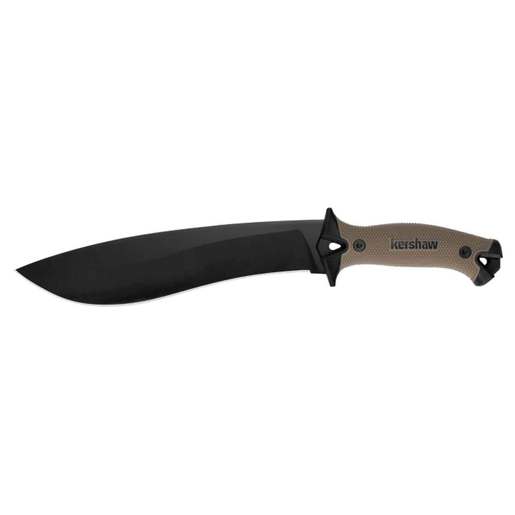
Elsewhere in Australia, the State of Victoria is ramping up their machete law from a restriction to the country’s first-ever machete ban. Last year, the government proposed the Firearms and Control of Weapons (Machetes) Amendment Bill 2024 to restrict the use of machetes as weapons by specifically listing “machetes” as a type of “controlled weapon” that could not be possessed, carried, or used without a “lawful excuse,” or sold to anyone under the age of 18. The penalty for carrying a controlled weapon without a lawful excuse is a fine of more than A$23,000 or a jail term of one year. (According to the state police, “[s]elf-defence is not a lawful excuse for carrying [a] controlled weapon or dangerous articles.”)
Machete Bans
Earlier this month, Victoria Premier Jacinta Allan announced harsher measures to reclassify machetes as “prohibited weapons,” making their sale, possession, and use illegal except for persons with government exemptions. The measure would take effect on September 1, although an amnesty between September 1 and November 30 would allow people to dispose of such weapons “using secure bins in safe locations.” Otherwise, those caught possessing a machete will face penalties that include up to two years in jail or a fine exceeding A$47,000.
Machetes would join the already lengthy list of “prohibited weapons” in the state that includes flick knives, non-metal/ceramic knives (“excluding plastic cutlery”), swords, laser pointers, slingshots and catapults, tasers/stun guns, crossbows, laser-tag imitation firearms, gel blaster guns, extendable batons, “acoustic anti-personnel devices,” and mace sprays and similar “noxious discharge articles” (club-type maces are also prohibited, “other than a ceremonial mace made for and used solely as a symbol of authority on ceremonial occasions”).
The state government has not yet finalized the key definition of “machete” or the exemptions framework, although it has indicated that machetes “can be broadly described as a cutting edge knife with a blade of more than 20 centimetres [about 8 inches]. Government will consult with industry on this definition before the ban starts, with kitchen knives not intended to be included.”
“That’s not a knife,” Crocodile Dundee famously taunted a mugger in the hit 1986 film. “That’s a knife!” he continued, flashing his own hunting blade. Only now, Dundee’s iconic knife is apparently a banned machete, and his (non-injurious) use of it for defensive purposes would be banned as well.
Apart from these major issues, there are other obvious problems. Turning in machetes under the amnesty would be entirely voluntary, with no compensation offered, and the government “has not outlined any proactive enforcement strategy to track remaining weapons after the amnesty period ends.” Machetes may still be legally imported into Australia because the federal government has not implemented a nationwide ban or other restrictions. And although Premier Allan has called on retailers to stop placing stock orders for machetes, residents will be able to circumvent the ban by buying machetes in other states.
Criminals, true to form, will continue to ignore the law, as they have always done, and acquire (and use) machetes and other “prohibited weapons” and guns illegally.
That, of course, is the heart of the matter. Human nature being what it is, the evil-minded and the mindlessly violent will always be with us. A former WA police commissioner observes that going after law-abiding sports shooters, and farmers and others who require access to legitimate firearms “is nonsensical because it’s not going to make a difference to the problem” of illegal guns and violent crime. Premier Allen, speaking of the Victoria’s new ban, seemingly ignored the role that the criminal element plays in wreaking havoc on her state’s residents and focused on scapegoating the tool: “Machetes are destroying lives so we will destroy machetes.”
As American Founding Father Thomas Jefferson recognized long ago, laws forbidding the carrying of arms “disarm only those who are neither inclined nor determined to commit crimes” while making “things worse for the assaulted and better for the assailants.” As honest Australians fret over whether possessing a kitchen knife is liable to turn them into felons, criminals are apt to rejoice that curtailing “unnecessary firearm ownership” and other weapon clampdowns simply disarm their would-be victims.
Making citizens more vulnerable increases crime which, in turn, justifies the “one more step” required to enhance public safety. Rinse and repeat.
Established in 1975, the Institute for Legislative Action (ILA) is the “lobbying” arm of the National Rifle Association of America. ILA is responsible for preserving the right of all law-abiding individuals in the legislative, political, and legal arenas, to purchase, possess, and use firearms for legitimate purposes as guaranteed by the Second Amendment to the U.S. Constitution. Visit: www.nra.org
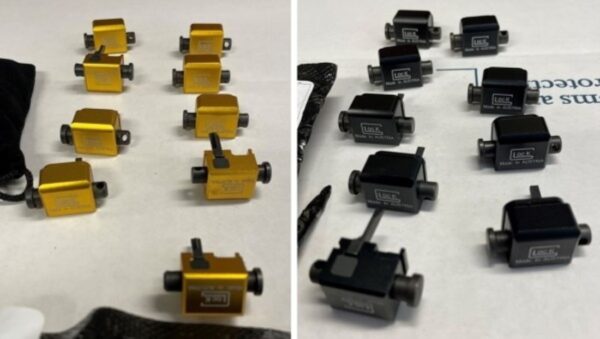
Glock switches convert semi-auto handguns to full-auto. (Photo courtesy U.S. Department of Justice).
Alabama banned so-called “Glock switches” Wednesday, which are already prohibited by federal law, when Gov. Kay Ivey signed a bill that makes possession of a full-auto switch a felony in Alabama punishable by up to 10 years in prison, according to a press release from the governor’s office.
“While there is a federal ban on these gun conversion devices, we needed a way to empower our own law enforcement here in Alabama to get these illegal and extremely dangerous Glock switches off our streets,” Ivey’s press release states.
Alabama Senator Will Barfoot, R-Montgomery, who authored the bill, told the local media that “guns and conversion devices are not the real problem. The real problem are the people who use those.”
The Glock-switch ban may not be the last gun-related law that Alabama’s governor supports.
“Governor Ivey began the legislative session by stating bolstering public safety is her number one priority, and she looks forward to the other bills working their way through the legislative process and reaching her desk,” according to her press release.
Those who strongly oppose Second Amendment rights were quick to claim credit for the new law.
“The devices are banned under federal law and in 23 states, according to Everytown for Gun Safety. Supporters said a state ban will allow local law enforcement to prosecute people for the possession of the devices,” the AP story states.
Everytown for Gun Safety lauded the Governor’s decision, dedicating a full-page press release to the news, which contains quotes from the anti-gun group’s president, executive director, a local volunteer in Alabama and a “gun violence survivor.”
Takeaways
Gov. Ivey said she believes that creating a new law banning Glock switches will “empower” her state law enforcement to go after the problem directly and make arrests, but this may not work as she expected.
Traditionally, state and local law enforcement have always been slow to enforce new laws, especially those that copy federal statutes. Besides, state and local law enforcement agencies may not have the expertise to test and/or testify about the Glock switches that may soon be headed their way.
Despite its long list of internal problems, the ATF has successfully prosecuted many Glock-switch cases. ATF’s own files are full of successful prosecutions for the devices, which were accompanied by lab support and technical expertise. Many of the federal cases were the result of investigations started by local law enforcement.
Gun-rights proponents may not see much negative impact from Alabama’s new Glock-switch law. Serious shooters have never even seen one and would certainly never own one. However, Alabama’s new state law is a clear victory for the anti-gunners, who are already using it to raise money, which they will use to propose more anti-gun laws, including those that will harm our gun rights.
This story is presented by the Second Amendment Foundation’s Investigative Journalism Project and wouldn’t be possible without you. Please click here to make a tax-deductible donation to support more pro-gun stories like this.
About Lee Williams
Lee Williams, who is also known as “The Gun Writer,” is the chief editor of the Second Amendment Foundation’s Investigative Journalism Project. Until recently, he was also an editor for a daily newspaper in Florida. Before becoming an editor, Lee was an investigative reporter at newspapers in three states and a U.S. Territory. Before becoming a journalist, he worked as a police officer. Before becoming a cop, Lee served in the Army. He’s earned more than a dozen national journalism awards as a reporter, and three medals of valor as a cop. Lee is an avid tactical shooter.