Knife Rights URGENT ACTION ALERT! Washington Switchblade Ban Repeal Bill in Danger
You Helped Get It Moving! Let’s do it again! Knife Rights’ bill that would repeal Washington’s ban on “spring blade” (automatic) knives, SB 5860, was voted out of the Senate Committee on Law & Justice. Thanks to all of you who signed in to support the bill in committee. The bill now moves towards the full Senate with a stop at the Rules Committee.
PLEASE FORWARD or SHARE this alert to your friends and associates who live in Washington and would support this bill.
After the Senate hearing, Knife Rights’ Director of Legislative Affairs, Todd Rathner, stayed over in Olympia to meet with sponsor Representative Kelly Chambers on her bi-partisan House version of this bill, HB 2366. This bill is co-sponsored by Reps. Mike Chapman, Tom Dent and Cyndy Jacobsen.
Finally, a shout out to our good friends at the Congressional Sportsmen’s Foundation for testifying in support of SB 5680 and for Washington manufacturer Mike Vellekamp of V Nives for his support.
Background:
In 2012, with a strong bipartisan effort, Knife Rights worked to get the state’s law changed to allow civilian possession and carry of assisted-opening knives and the manufacture and distribution of automatic knives and expanded possession and carry to first responders and military members. For the past decade, we have worked to eliminate the remaining ban on “spring blade” knives with bipartisan support, getting very close on occasion, but it has not yet been done. SB 5860 and HB 2366 continue our fight to repeal this irrational, antiquated, and clearly unconstitutional ban.
Knife Rights
Knife Rights had led the effort to repeal switchblade bans or restrictions in 19 states, starting with New Hampshire in 2010. Repeals have since been enacted in Alaska, Colorado, Illinois, Indiana, Kansas, Louisiana, Maine, Michigan, Missouri, Montana, Nevada, Ohio, Oklahoma, Pennsylvania, Tennessee, Texas, Virginia and Wisconsin.
Knife Rights is America’s grassroots knife owners’ organization, leading the fight to Rewrite Knife Law in America and forging a Sharper Future for all Americans. Knife Rights efforts have resulted in 44 bills passed repealing knife bans in 28 states and over 175 cities and towns since 2010.
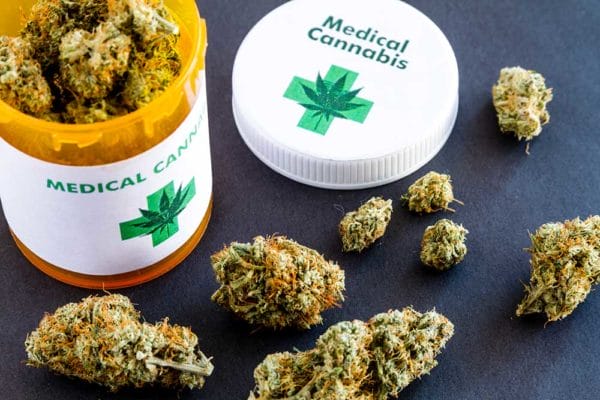
The Second Amendment Foundation has filed a federal lawsuit challenging US laws prohibiting gun ownership by medical marijuana users. (iStock-tvirbickis 483300738)
The Second Amendment Foundation has sued the US Government, Attorney General Merrick Garland and two other top federal officials in a challenge of longstanding federal laws and regulations prohibiting gun possession or ownership by medical marijuana users.
SAF is joined by Warren County, Pa. District Attorney Robert Greene, who has served in that office since 2013 and currently possesses a medical marijuana ID card under Pennsylvania law. They are represented by attorneys Adam Kraut, who serves as SAF executive director, and Joshua Prince of Bechtelsville, Pa.
In addition to Garland and the federal government, the lawsuit also names FBI Director Christopher Wray and Steven Dettelbach, director of the Bureau of Alcohol, Tobacco, Firearms and Explosives, as defendants.
The 28-page complaint was filed in US District Court for the Western District of Pennsylvania. The lawsuit challenges restrictions contained in 18 USC §§ 922(g)(3), (d)(3), which prohibit firearms purchases and possession by persons who use marijuana or other controlled substances. The case is known as Greene v. Garland.
In a prepared statement announcing the lawsuit, SAF’s Kraut explained, “Medicinal marijuana has been adopted by 38 states despite federal inaction on the issue. With the increasing acceptance of medical cannabis, millions of Americans are forced to choose between the exercise of their Second Amendment rights or treating their symptoms with a substance that disenfranchises them from their constitutionally guaranteed right to keep and bear arms. Such a choice is incompatible with the constitution and finds no basis in this country’s history and tradition. We look forward to vindicating the rights of medical marijuana users.”
In a report published last Nov. 29, the New York Times noted, “But even as a growing number of states have legalized marijuana, either for recreational or medical use, participating in a state’s medical marijuana system remains a barrier to gun ownership.”
The newspaper added, “The issue is shaping up to be one of the next legal frontiers in the national debate over gun policy, as courts around the country are asked to determine whether the longstanding federal restriction on marijuana users conflicts with Second Amendment gun rights.”
It is a case with far-reaching implications, not the least of which may become a moral and political dilemma for the Far Left, which has traditionally supported legalizing marijuana while supporting restrictions on gun ownership, which the Second Amendment and most state constitutions protect.
“The use of medical marijuana should not translate to an automatic surrender of one’s Second Amendment rights,” added SAF founder and Executive Vice President Alan Gottlieb. “The current restrictions unquestionably and arbitrarily infringe on the right to keep and bear arms, and the restriction lacks any director or analogous historical support, as required by the Supreme Court’s 2022 Bruen ruling.”
The Bruen ruling, which established new guidelines for judging Second Amendment laws and cases on whether current laws are analogous to laws and regulations existing at the time of the Founding and ratification of the Constitution, might play an essential role in the outcome of this case.
According to the complaint, there is historical documentation that George Washington grew hemp, as did Thomas Jefferson and Benjamin Franklin.
“Washington’s diaries indicated he grew hemp at Mount Vernon for about 30 years and that he may have had a particular interest in the medicinal use of Cannabis,” the lawsuit states in a section headlined “A Brief History of Cannabis in the United States.”
“Prior to the start of the Revolutionary War,” the complaint notes, “medical uses for cannabis appeared in The New England Dispensatory, published in 1764…Washington’s diaries indicated he grew hemp at Mount Vernon for about 30 years and that he may have had a particular interest in the medicinal use of Cannabis.” Sources for both assertions are contained in the complaint.
Also, historically, according to the lawsuit, in 1850, cannabis was added to The US Pharmacopoeia, where it remained until 1941…Ten years later, in 1860, the Ohio State Medical Society met and summarized medical uses of cannabis, which included treatments for pain, inflammation, and cough.
“The 1868 version of US Dispensatory included pages of medical uses for tinctures of cannabis, including improved appetite, sexual interest, mental disorders, gout, cholera, hydrophobia, and insomnia,” the lawsuit adds, and by the turn of the 20th century, “marijuana infused medical products were more widely available.”
Every assertion is documented.
SAF and Greene ask the court to “Declare that 18 USC §§ 922(g)(3), (d)(3), and all related laws, regulations, policies, and procedures, including, but not limited to, 27 CFR §§ 478.32(a)(3), (d)(3), violate Plaintiff Greene’s and SAF’s similarly situated members’ right to keep and bear arms as guaranteed by the Second Amendment to the United States Constitution.”
Further, they ask the court to “Preliminarily, and thereafter permanently, enjoin Defendants, their officers, agents, servants, employees, and all persons in active concert or participation with them from enforcing against Plaintiff Greene and SAF’s similarly situated members 18 USC §§ 922(g)(3), (d)(3), and all related laws, regulations, policies, and procedures, including, but not limited to, 27 CFR §§ 478.32(a)(3), (d)(3), that would impede or criminalize Plaintiff Greene’s and SAF’s similarly situated members’ exercise of their right to keep and bear arms.”
About Dave Workman
Dave Workman is a senior editor at TheGunMag.com and Liberty Park Press, author of multiple books on the Right to Keep & Bear Arms, and formerly an NRA-certified firearms instructor.
Gun Control Laws Regulation Bans iStock-RGBAlpha 504903970
In what may be a sign of growing desperation, a new anti-gun nonprofit has funded and filed two lawsuits against American firearm manufacturers by the Mexican government, a lawsuit against Smith & Wesson in a Canadian court, and a civil rights complaint with the Inter-American Commission on Human Rights – a foreign group with no legal authority in the United States.
Global Action on Gun Violence hopes “international pressure” from their foreign lawsuits will somehow give rise to increased gun control in the United States, according to a recent story in the Trace, which is the propaganda arm of former New York City mayor Michael Bloomberg’s anti-gun empire. Global Action on Gun Violence, or GAGV, has not filed its financial information or been rated by the country’s largest nonprofit watchdogs.
While the GAGV has only been around for a few years, its president and founder, Jonathan Lowy, spent decades in the gun-control industry. Lowy worked 25 years as chief counsel and vice-president for legal affairs at the Brady gun control group. In addition to Lowy, GAGV’s chief development officer, chief financial officer and communications manager worked for Brady too. Lowy is a member of the American Bar Association’s gun violence committee and has written several gun-control stories for major newspapers, including an opinion column for The Washington Post, which was titled “The Mexican cartels can be stopped if we stop supplying them with arms.”
Lowy’s column does not hold the ATF accountable for “Operation Fast and Furious,” which put hundreds of American firearms into the hands of the Mexican drug cartels, who used them to murder Border Patrol Agent Brian Terry in 2010, as well as hundreds of Mexican nationals.
In his interview with the Trace, Lowy acknowledged he created the GAGV out of frustration.
“Ultimately, I was frustrated by the lack of progress and the limits of boldness and imagination in U.S. gun violence prevention efforts. The violence in the U.S. was getting worse. The Protection of Lawful Commerce and Arms Act was enacted, which made it much more difficult to sue the gun industry, which was one way that we made progress when Congress wasn’t taking action. And the Supreme Court was making Second Amendment law much more restrictive,” he told the Trace. “And then I began working with the government of Mexico, which decided to bring a lawsuit against major gun manufacturers. It’s the first country in the world to bring a lawsuit against the gun industry. It was an example of the sort of bold action that you can get working outside of the U.S.”
Lowy also admitted he complied with the Foreign Agents Registration Act – federal law that requires agents of a “foreign principal” to publicly disclose their obligations to the foreign government.
“We’ve registered as a foreign agent for Mexico to enable us to more broadly represent them. That’s not been done by any other group,” Lowy told the Trace.
The GAGV’s legal argument, in both the Mexican and Canadian cases, is that the Protection of Lawful Commerce and Arms Act does not apply “to cases such as this, where the harm was caused abroad.” The PLCAA, which became federal law in 2005, protects American firearms manufacturers from liability when their products are used during the commission of a crime. It does not shield gunmakers from lawsuits arising from defective products.
Lowy did not explain how a Canadian court would enforce an order or judgement in the United States, nor did he say how the lawsuits on behalf of a foreign government would lead to increased gun-control legislation, other than by applying “international pressure.”
Still, the lawsuit will not go away. On Monday, a three-judge panel of the 1st U.S. Circuit Court of Appeals overturned a ruling from a lower court, which dismissed Mexico’s lawsuit after finding it violated the PLCAA.
U.S. Circuit Judge William Kayatta, who was nominated to the appeals court in 2012 by President Barack Obama, wrote that Mexico’s lawsuit “plausibly alleges a type of claim that is statutorily exempt from the PLCAA’s general prohibition,” according to Reuters.
Judge Kayatta said the PLCAA “was only designed to protect lawful firearms-related commerce, yet Mexico had accused the companies of aiding and abetting illegal gun sales by facilitating the trafficking of firearms into the country,” according to the Reuter’s report.
‘Frivolous lawsuit’
Pennsylvania attorney Joshua Prince is one of the country’s preeminent Second Amendment specialists. He has represented thousands of individuals, hundreds of gun dealers and dozens of gun clubs and shooting ranges in state and federal cases. He is chief counsel for the Firearms Industry Consulting Group, and frequently posts advice for gun owners, gun dealers and gun clubs and ranges on FICG’s YouTube channels: FICG Federal and FICG Pennsylvania.
“It sounds to me like all they’re trying to do is stir the pot and try to get some attention for the frivolous lawsuits that they’re filing,” Prince said. “This is similar to what we’re seeing here. It’s not much different than Brady suing for atrocities that are not traceable back to the manufacturer. Not one of these entities would go after car manufacturers for deaths associated with DUIs.”
‘Open your imagination’
Most will scoff or even laugh at GAGV’s foreign lawsuits and the infinitesimally small chance they’ll ever result in increased gun control as the plaintiffs’ hope. Even Lowy acknowledges this, but quicky serves up another benefit – perhaps the only benefit – of his group’s litigation: The suits could raise morale among the tired, demoralized gun-banners.
“One of the greatest, perhaps the most dangerous, foes that we face in the gun violence prevention movement is hopelessness. If you open your imagination to look at what the rest of the world does, you realize it’s not hopeless at all,” Lowy told the Trace.
Given the increasing number of unconstitutional post-Bruen “tantrum laws” that are introduced in blue states only to be overturned by the courts, and the consistent wins against ATF’s unconstitutional rules and regulations the courts are handing down, it’s not difficult to understand why the gun-ban industry is feeling a sense of hopelessness.
This story is presented by the Second Amendment Foundation’s Investigative Journalism Project and wouldn’t be possible without you. Please click here to make a tax-deductible donation to support more pro-gun stories like this.
About Lee Williams
Lee Williams, who is also known as “The Gun Writer,” is the chief editor of the Second Amendment Foundation’s Investigative Journalism Project. Until recently, he was also an editor for a daily newspaper in Florida. Before becoming an editor, Lee was an investigative reporter at newspapers in three states and a U.S. Territory. Before becoming a journalist, he worked as a police officer. Before becoming a cop, Lee served in the Army. He’s earned more than a dozen national journalism awards as a reporter, and three medals of valor as a cop. Lee is an avid tactical shooter.
New York City Mayor Eric Adams Don’t Let It Happen Google Books Screen Grab 1-23-2024
Oh, the perils of putting pen to paper.
Hunter Biden possibly has a regret or two over his 2021 memoir, Beautiful Things, now that its lurid revelations and “countless incriminating statements about his years-long drug usage” are being eyeballed by the federal prosecutors handling his gun case.
Fifteen years ago, then-State Senator and now New York City Mayor Eric Adams, writing as a “retired NYPD Captain,” allegedly authored a reference book for parents called Don’t Let It Happen.
The book’s Introduction explains the “reason I wrote this book” – “to assist parents in detecting when their children are involved in an activity that can be harmful to themselves or other family members.” Various chapters are dedicated to the evils occasioned by truancy, drugs, alcohol, gangs, crime victimization, police abuse, and more. The Introduction stresses that “[a]ll of the incidents in this book are true. I intentionally changed the names of those involved in order to protect their right to privacy.”
Earlier this month, a Byline writer who “unearthed” the book reviewed it, calling it “a classically ridiculous PSA: Don’t Let It Happen — written by none other than Eric Adams, former NYPD Captain, current Mayor of New York City.”
The review highlighted, among others, Chapter 8 on “Guns” and its anecdote about a youthful misadventure:
When I was a child, a friend of mine brought a gun to school…to show off to the rest of the students. This was my first time seeing a real gun. After years of playing “Cowboys and Indians” with toy guns, I did not believe the gun he was showing us was real. I laughed at his stupid trick and grabbed the gun from him. “If this gun is real,” I said, “then it should go off.” I pointed what I thought was a toy gun at my group of friends and pulled the trigger. A round discharged, and only by the grace of God and my poor aim did the bullet miss my friends. The incident scared me so much that I dropped the gun and ran.
Days after the Byline piece was published, it seems a reporter from the Associated Press quizzed Mayor Adams about the book’s school shooting passage. Mayor Adams, according to an NBC news report, flatly denied it ever happened: “I never fired a gun in school.”
The same news report quotes Adams as saying, “I think the person who, the co-author of the book, may have misunderstood the exact—someone. There was an incident in school where someone pointed what they thought was a toy gun and they may have misunderstood—that book never got into print because we never went through the proofreading aspect of it.” However, the book has been in print since 2009, and neither the book cover nor its copyright page lists any author besides Adams (although the cover refers to a “foreword by Tracey Collins” – along with a photo of a revolver in a lunchbox).
The Byline writer used another anecdote from the book to explore the book’s all-of-the-incidents-are-true assertion, in which a mom allegedly told Adams that her son used to sprinkle a “sugar substitute” on his cereal, which substance was later sent to the police for analysis and found to be PCP. “This illustrates the beauty of Adam’s disclaimer at the front of the book. ‘The incidents in this book are true’ could mean either: A: The PCP-cornflakes incident happened exactly as described. B: Adams’ recollection of a woman talking about PCP-cornflakes is, itself, true.” Unlike the cereal episode, though, the school shooting isn’t presented as a secondhand story but is recounted from Adams’ own perspective.
It’s too bad.
Rather than Don’t Let It Happen morphing into It Never Happened, the mayor could have used this as a positive, “teachable moment” to explain (as the book itself does) that “many children recklessly handle real guns because there is no formal training to counter what they have learned from television,” and that “gun safety should be taught to children.” The NRA’s Eddie Eagle program, for example, begins by instructing children to “Stop! Don’t touch. Run away. Tell an adult,” – four “simple, easy-to-remember steps so they know what to do if they ever come across a gun.”
Instead, it looks as if the mayor opted to lean hard into his gun control credentials and repudiate an event that could portray him, to some, as other than the staunch anti-gun advocate that he is today. This is, after all, the guy who showed up at the Metropolitan Museum of Art’s gala in 2022 wearing a tuxedo jacket with a prominent “no guns” logo, and who is currently a “co-chair” of Michael Bloomberg’s “Mayors Against Illegal Guns,” a group that has its own bumpy history (here, here, and here, for instance).
Unfortunately, the mayor’s denial discredits not only the book, but himself. (Reviews of the book left on the Amazon website include, “Eric Adams claims not to have written this book and parts are fake, but will not state which parts.”) A subsequent news report cites a City Hall spokesperson as explaining that “the mayor had never reviewed the final version of the book and only just learned it was publicly available” and that Adams has contacted the book publisher to get the book out of circulation.
About NRA-ILA:
Established in 1975, the Institute for Legislative Action (ILA) is the “lobbying” arm of the National Rifle Association of America. ILA is responsible for preserving the right of all law-abiding individuals in the legislative, political, and legal arenas, to purchase, possess, and use firearms for legitimate purposes as guaranteed by the Second Amendment to the U.S. Constitution. Visit: www.nra.org
Why would an agency that presumes the power to infringe worry about denial appeals unless forced to? (ATF/Facebook)
Why wouldn’t a citizen have a statutory right to appeal a National Firearms Act denial? A video released Friday by attorney Stephen Stamboulieh details the conflicting opinions he and co-attorney Alan Beck had to slog through when they demanded answers in Umbert v. United States, a case they litigated five years ago made moot last June when the government gave their plaintiffs the relief they’d requested.
It should be a straightforward enough process and you’d think the Bureau of Alcohol, Tobacco, Firearms and Explosives, the Federal Bureau of Investigation, and the Department of Justice would be on the same page, instead of pointing fingers, abdicating responsibilities, and just plain getting things wrong, especially considering how they increasingly hold Federal Firearms Licensees to “zero tolerance standards” over paperwork glitches. The adage “Do as we say, not as we do,” comes to mind.
With NFA items, you’d think there’d be special care in light of all the hoops applicants, and FFLs have to jump through in order to get firearms, suppressors, and other items “legally” taxed and registered, but as this column has documented in the past, that’s never been the case. In 2008’s U.S. v. Friesen, statistician Fritz Scheuren testified the National Firearms Registration and Transfer Record is so unreliable that it’s “insufficient for criminal proceedings.”
“ATF and FBI, at one point, and this was back in 2018, had stopped allowing people that were denied erroneously or non-erroneously to be able to appeal their background checks,” Stamboulieh recalled as the reason he sued. And there’s a significant difference in who processes them from non-NFA firearms transfers.
“Anyone wishing to possess an NFA firearm … must fully complete and submit an application to the ATF,” Stamboulieh explains. “Before the application may be approved the background check must be conducted. As part of that background check ATF [does it] as opposed to the FFL, because normally, when you’re doing a firearm transfer, you go to an FFL and the FFL is the one that actually does the background check through FBI. But in this case, it’s ATF. It says it’s required by regulation to contact NICS [National Instant Background Check System]…”
“I have had so many people contact me about [being] erroneously denied a firearm,” Stamboulieh continues. “The NICS process is a complete disaster.” To illustrate, he recalls a white Oklahoma doctor who was denied because of a protection order. Except he didn’t have one issued against him; it was against a different doctor from New Jersey!
And then there was the question of who was supposed to do what.
“[T]he ATF and the FBI got into a little bit of a lover spat,” he recalls. “ATF wanted the FBI to continue to process NICS background checks and the FBI wanted the ATF to start processing NICS background checks.”
The bottom line is that neither the FBI nor ATF wanted to process the numerous erroneous denials, leaving no appeal remedy, and they had some “choice words to go back and forth with each other, Stamboulieh notes. “It’s pretty funny.”
In a way. It’s also pretty intolerable, and it’s good that Stamboulieh can laugh about it, considering he and attorney Beck are about $150,000 out of pocket in unrecoverable legal costs.
The result, through his and Beck’s persistence, which included much communication with the agencies, and flying to Washington DC and meeting with congressional staffers, along with ATF/FBI fear of being “spanked” in federal court, is an appeals process “that mimics what the FBI already does for regular Title 1 firearms like a handgun…” An “agreement to formalize the process was signed by ATF and FBI in October 2023 and goes into effect January 2024.”
The agreement between ATF and the FBI allows individuals to use administrative appeals processes of FBI’s National Instant Criminal Background Check System (NICS) to attempt to resolve record-related issues that are revealed during a NICS background check initiated as part of that individual’s NFA application. In addition, the agreement recognizes an NFA applicant may use the Voluntary Appeal File (VAF) when NICS responds with a “delayed” recommendation to the NFA applicant’s background check. The “delayed” or “denied” NFA applicant will receive a letter from ATF’s NFA Division advising how to take advantage of each respective process and the associated NICS Transaction Number (NTN) for “denied” NFA applications.
Stamboulieh’s video follows. Any reader who experiences an NFA denial and believes it should be contested can contact him at Stamboulieh Law, PLCC.
About David Codrea:
David Codrea is the winner of multiple journalist awards for investigating/defending the RKBA and a long-time gun owner rights advocate who defiantly challenges the folly of citizen disarmament. He blogs at “The War on Guns: Notes from the Resistance,” is a regularly featured contributor to Firearms News, and posts on Twitter: @dcodrea and Facebook.
USPS Reacts to Court Restoring Second Amendment Rights on Postal Property
In January of 2023, a Florida federal district Court restored the right to keep and bear arms on United States Postal Service (USPS) property. The court ruled a statute banning the possession of guns on USPS property, dating from 1972, was unconstitutional under the Second Amendment. Currently, the ruling only applies to the individual case in Florida. The USPS has issued a statement aimed at employees, stating the USPS policy has not changed. From the USPS:
A recent Florida district court decision is being misreported or may be misinterpreted as holding that the Postal Service’s ban on carrying firearms — either openly or concealed, or storing them on USPS property — is unconstitutional.
In fact, the case dealt with a different federal statute and does not involve the Postal Service’s regulation. Therefore, it does not change the organization’s policy.
Employees are reminded that carrying or storing firearms, other dangerous or deadly weapons, or explosives — either openly or concealed — on USPS property is prohibited and can result in discipline up to and including removal from the Postal Service, as well as potential prosecution.
“The Postal Service regulates its facilities for the safety, economy, and convenience of customers and employees engaged in postal business nationwide. One Postal Service regulation in this regard prohibits the possession or storage of firearms on real property under the charge and control of the Postal Service, and that regulation was upheld by a federal court of appeals in 2015,” McKean said. “We are evaluating the interplay between our regulation and the recent interpretation of the broader federal criminal statute and determining the appropriate next steps.”
The case that spokesperson McKean referred to is Bonidy v. USPS. The case was decided in the Tenth Circuit during the period when several circuits were actively working to gut the Second Amendment. Their preferred method was to limit the Heller and McDonald decisions as applying only in the home and as being subject to “intermediate scrutiny.” From the Tenth Circuit case, Bonidy v. USPS at Courtlistener
We have jurisdiction under 28 U.S.C. § 1291 and conclude that the regulation is constitutional as to all USPS property at issue in this case, including the Avon Post Office parking lot, because the Second Amendment right to bear arms has not been extended to “government buildings.” Government buildings, in this context, includes the government owned parking lot connected to the U.S. Post Office. Alternatively, even if we were to conclude that the parking lot did not qualify as a “government building,” we would uphold this regulation as constitutional as applied to the parking lot under independent intermediate scrutiny.
The Supreme Court refused to grant a writ of certiorari in the case. This correspondent wrote of it at the time. From Gun Watch March 22, 2016:
It is easy to under stand why Second Amendment supporters on the Court would not want to hear this case at this time. Antonin Scalia is dead. There are now only 3 justices on the Court who can reasonably be counted on to uphold the Second Amendment. They do not want to hear a Second Amendment case that could be used to gut the Amendment.
We do not know who voted to hear the case or not. But I am not surprised that the Court decided not to hear this case.
With only eight justices on the Supreme Court, it was reasonable not to hear the post office case.
Consider the incredible events that have occurred since March of 2016. Donald Trump was elected President. He nominated and appointed three new justices to the Supreme Court to replace Scalia, Kennedy, and Ginsburg. The logjam of dedicated Progressive judges on the Supreme Court was broken. For the first time in seventy years, there exists an arguably originalist and textualist majority on the Supreme Court, judges who claim to interpret the Constitution as it was written, not as they wish to use it to advance Progressive policy.
The Bruen decision on the Second Amendment, published on June 22, 2022, told the Circuit courts their attempts to gut the Second Amendment were in error. Justice Clarence Thomas wrote a clear, easy-to-understand decision explaining what the Second Amendment means what it meant when it was adopted. It is not the business of the Supreme Court to change the meaning, but to enforce the meaning as adopted. To this end, restrictions on the rights protected by the Second Amendment are only legitimate if they were common and accepted at the time the Second Amendment was ratified. Fourteenth Amendment considerations do not come into play for federal laws and regulations.
There were no federal restrictions on carrying weapons in post offices until 1972. Federal restrictions on carrying guns in post offices are obviously unconstitutional, as Judge Mizelle found.
Restrictions on federal employees are different. They may be controlled by labor law and union contracts.
About Dean Weingarten:
Dean Weingarten has been a peace officer, a military officer, was on the University of Wisconsin Pistol Team for four years, and was first certified to teach firearms safety in 1973. He taught the Arizona concealed carry course for fifteen years until the goal of Constitutional Carry was attained. He has degrees in meteorology and mining engineering, and retired from the Department of Defense after a 30 year career in Army Research, Development, Testing, and Evaluation.
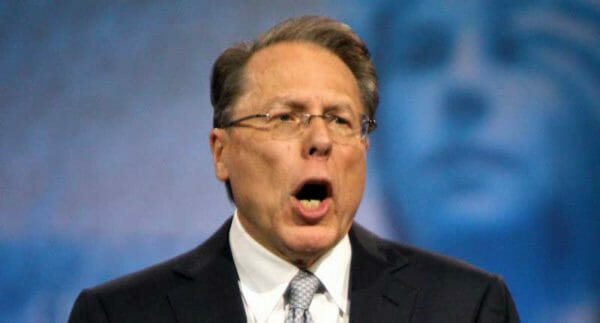
The second week of testimony in the New York trial of NRA, CEO Wayne LaPierre, Secretary and General Counsel John Frazer, and former Treasurer Woody Phillips wrapped up on Friday, January 19, 2024, and things are not looking good for the defendants. A fourth former executive, LaPierre’s former deputy Josh Powell, pled guilty days before the trial began.
Also, just days before the trial, LaPierre announced his resignation, effective at the end of January 2024, at an NRA Board of Directors meeting. Many spectators and even some participants have missed the delayed effect. He’s still technically in charge and, presumably, still having his legal bills covered by NRA members’ money.
In his resignation announcement, LaPierre said he was stepping down for health reasons. He is reported to be suffering from the debilitating effects of chronic Lyme Disease, a tick-borne bacterial infection that can cause a variety of serious health problems. Having struggled with Lyme Disease myself and had people close to me affected by the chronic form of the infection, I won’t join in the chorus that has suggested the whole thing is some ruse on LaPierre’s part.
Lapierre’s Brain Is Shrinking!?
LaPierre has been in the courtroom every day during the two weeks of the trial. Still, his attorney has now submitted doctors’ notes asking the court for special accommodations for LaPierre during his upcoming testimony. The lawyer, supported by the doctors’ notes, says that, along with headaches, vision problems, and fatigue, LaPierre is also suffering from cognitive issues related to the loss of cerebral mass. In other words, he’s saying LaPierre’s brain is shrinking, impacting his ability to think clearly and remember things. Because of this, the attorney is asking that the judge allow LaPierre and his lawyers to call timeouts during his upcoming testimony, possibly breaking it up over several days rather than trying to grind through one or two days of uninterrupted time on the stand.
The judge seems willing to accommodate LaPierre’s physical limitations and allow other witnesses to be called when and if LaPierre is incapacitated. This raises another important question about who’s running the NRA and why LaPierre remains officially in charge.
According to the letters from his doctors, LaPierre’s health has been in decline for several years.
His current condition was reported to NRA President Charles Cotton on January 3, 2024, two days before LaPierre announced his pending resignation. So why is LaPierre still holding the Executive Vice Presidency of the NRA?
If LaPierre is unable to testify for several hours consecutively due to his illness, and considering he is attending the trial in New York instead of being at his office at NRA headquarters, why didn’t he resign immediately on January 5? This was when the NRA Board was meeting, and they could have appointed a temporary replacement then rather than waiting for a month.
The NRA Bylaws say that in the case of a vacancy in the office of Executive Vice President, the Executive Director of General Operations is to fill the position until the Board meets to name a suitable replacement. LaPierre unceremoniously fired Joe DeBergalis, the ED of General Operations, shortly before Christmas, replacing him with Andrew Arulanandam. Arulanandam has been LaPierre’s top PR flack and spokesperson for several years. While his face is familiar to some members and the media, it would be a stretch to suggest he is qualified to run General Operations, and he’s certainly not qualified to be the CEO of the NRA.
During his testimony on Thursday and Friday, former Executive Director of NRA-ILA Chris Cox voiced a similar sentiment. Cox suggested that LaPierre demonstrated poor judgment in hiring, pointing to Josh Powell and Andrew Arulanandam as examples. Powell was LaPierre’s deputy who oversaw the collapse of the NRA’s controversial CarryGuard program and has already pled guilty in the New York trial. Arulanandam, who first worked under Cox in ILA before being moved over to NRA HQ by LaPierre, did not impress Cox while he was at ILA. Cox warned LaPierre that Arulanandam had “terrible” political judgment and was “lazy in core competencies.”
LaPierre ignored Cox’s warnings and kept Arulanandam on, promoting him to higher positions, eventually setting him up to take over as EVP and CEO upon LaPierre’s resignation.
This has laid the table for a bit of a battle within the NRA Board of Directors. It has been reported that Tom King, who has been one of LaPierre’s chief supporters on the Board and a close ally of NRA President Charles Cotton, has been calling fellow Directors to urge them to support a move to put Cotton in the EVP position.
Along with his duties as President, Cotton serves as the Chairman of the NRA’s Audit Committee, as I explained in a recent article, “Charles Cotton Must Never Be Allowed to Head the NRA!”. The Audit Committee is supposed to be the Association’s watchdog tasked with ensuring that the staff and vendors always operate within applicable laws and policies and conduct business in a manner that is above reproach. Cotton served as vice chair of the committee for several years and then switched places with then-chairman David Coy. Between the two of them, they have been Chair and Vice Chair for the past 20-plus years, and they continue in those positions now, even though they’ve been President and Vice President of the Board for the past three years. Cotton and Coy were supposed to keep the NRA on track and away from even a whisper of corruption.
They failed spectacularly in that assignment and were rewarded for their failure by being elected to the offices of President and Vice President.
The best way for the NRA Board to demonstrate that they’ve learned nothing at all from the scandals and corruption that have plagued the NRA for the past 20 years and been publicly known for the past five years would be to hand the EVP position to Charles Cotton.
The trial continues on Monday with video testimony from former NRA President Carolyn Meadows. Ms. Meadows has been excused from testifying in person – or even via live video link – due to her own health issues, so her video deposition is being played. It’s worth noting that Ms. Meadows’ health has been a limiting factor since she was first elected in 2019. She barely attended any Board meetings as President after she was elected, meaning that First Vice President Charles Cotton filled in for her for almost all of her two terms. He then served two terms as President himself, then orchestrated a Bylaws change to allow him to serve a third (effectively fifth) term as President.
In spite of her age and poor health concerns, Ms. Meadows has been nominated for reelection to the Board in the coming election…. She and another woman from Georgia were both added to the list of nominees after Phil Journey, Rocky Marshall, Dennis Fusaro, and I (Jeff Knox) were qualified by petition as nominees. Some speculate she and her friend were added to pad the field and make it even harder for any of the four reform candidates to be elected.
Ballots should be in the March issue of NRA magazines, which will hit mailboxes around mid-February, so please be sure to vote and encourage your NRA friends to vote. “Bullet voting,” i.e. voting for just the four Outsider Candidates for NRA Board, myself included, and no one else, gives us the best chance of winning seats, so please spread the word on that, too.
Jeff Knox is a second-generation political activist and director of The Firearms Coalition. His father Neal Knox led many of the early gun rights battles for your right to keep and bear arms. Read Neal Knox – The Gun Rights War.
The Firearms Coalition is a loose-knit coalition of individual Second Amendment activists, clubs and civil rights organizations. Founded by Neal Knox in 1984, the organization provides support to grassroots activists in the form of education, analysis of current issues, and with a historical perspective of the gun rights movement. The Firearms Coalition has offices in Buckeye, Arizona, and Manassas, VA. Visit: www.FirearmsCoalition.org.


 . Knife Rights efforts have resulted in 44 bills passed repealing knife bans in 28 states and over 175 cities and towns since 2010.