Monday, January 29, 2024

Second Amendment Law Center & Allies File Amicus Brief in SCOTUS’ Garland v. Cargill

By C.D. “Chuck” Michel, President & Senior Legal Counsel, Second Amendment Law Center

Second Amendment Law Center & Allies File Amicus Brief in SCOTUS' Garland v. Cargill
Second Amendment Law Center & Allies File Amicus Brief in SCOTUS’ Garland v. Cargill

The Second Amendment Law Center joined several other pro-2A organizations in filing an “amicus” legal brief in Garland v. Cargill, a case is set for argument before the Supreme Court in late February.

At issue in the Cargill case is a proposed re-classification of a bump stock device to fall under the definition of “machinegun” as spelled out in 26 U.S.C. § 5845(b).  As argued by the government, a bump stock is designed and intended for use in converting a rifle into a machinegun i.e., into a weapon that fires “automatically more than one shot … by a single function of the trigger.”

While the case focuses on the regulatory authority of the Bureau of Alcohol, Tobacco & Firearms (ATF) and does not directly involve any Second Amendment claims, our amicus brief advises the Court about the significant risk to Second Amendment rights if it rules in ATF’s favor.

Unfortunately, this is not the first or only example of ATF attempting to redefine firearm parts to fit the narrative of the Biden Administration.  The agency previously sought the same treatment for incomplete lower receivers and pistol braces. As detailed in our brief, if a bump stock qualifies as a “machine gun,” it could render most or all semiautomatic rifles as illegal simply because they could be converted to fully automatic.

While that may sound like a tough leap to make, a recent Seventh Circuit ruling upholding Illinois’s “assault weapon” ban concluded that the semi-automatic AR-15 and the fully automatic M-16 were virtually indistinguishable and, as such, that semi-automatic rifles can be banned.

In keeping with the standard set in Bruen, our amicus brief explains the history of ownership of so-called “military” small arms, and argues that expanding the ATF’s authority could create millions of “accidental” criminals.

Joining 2ALC on this brief are the California Rifle & Pistol Association, Second Amendment Defense and Education Coalition, Federal Firearms Licensees of Illinois, and Guns Save Life. Other briefs in this case are expected as well.

The brief urges the Supreme Court to affirm the 5th Circuit’s ruling in favor of Mr. Cargill, and to reaffirm that commonly possessed semiautomatic rifles cannot be banned.  You can read the brief HERE.

Support Our Efforts!


About Second Amendment Law Center

Our mission at the Second Amendment Law Center is to protect and enforce the Second Amendment’s solemn command that our government never unduly restrict law-abiding individuals from responsibly possessing and carrying firearms and other arms for sport, hunting, self-defense, and other lawful purposes.


from https://ift.tt/PEvHgTN
via IFTTT

The Face of Gun Control In Florida – Kathleen

The Face of Gun Control In Florida - Kathleen
The Face of Gun Control In Florida – Kathleen

Once again, Florida Senate President Kathleen Passidomo has made it crystal clear that only she gets to decide which civil rights are allowed in Florida, and the Second Amendment isn’t one of them.

The Naples Republican is singlehandedly blocking legislation that would restore our right to Open Carry — a key component of the right to keep and bear arms, which is codified in the Second Amendment of the United States Constitution and Art.1 Sec. 8 of the Constitution of the State of Florida.

Open Carry refers to the act of carrying a firearm in plain sight. In Florida, you can only carry a loaded firearm openly while fishing, hunting or camping.

Passidomo claims she reached her nanny-like decision after talking to Florida sheriffs.

“The sheriffs who I deeply respect, who are in the business, who understand the issues, do not support open carry in the state of Florida, they support permitless carry,” Passidomo said last year.

While Republicans enjoy supermajorities in both the House and Senate, Floridians have little protection from anti-gun leaders like Passidomo when they infringe upon our civil rights.

Last year, Gov. Ron DeSantis promised he would sign a Constitutional Carry bill. Sadly, DeSantis broke his promise. CS/HB 543, which the governor signed last year, allows only the unlicensed carry of concealed firearms. There was no provision for Open Carry. To be clear, this is not the same Constitutional Carry enjoyed in 26 other states.

We call on Gov. DeSantis to keep his word and demand that the legislature immediately send him an Open Carry bill.

We also call on Senate President Passidomo to better educate herself on the U.S. Constitution — especially the Second Amendment. Perhaps she should talk to more Floridians, not just those with badges in their billfolds.

Our Second Amendment rights, which we’ve had since 1791, are not subject to the approval of local law enforcement. The Senate President should know that.

We do not intend to sit idly by while our members’ rights are violated yet again.

Consider this our warning.


About Florida Carry, Inc.:

Florida Carry is a Florida nonprofit, non-partisan, grassroots organization founded in 2010. Florida Carry is dedicated to advancing the fundamental civil right of all Floridians to keep and bear arms for self-defense as guaranteed by the Second Amendment to the United States Constitution and the Constitution of Florida. In 2016 Florida Carry was named the Grassroots Organization of the Year by the Citizens Committee for the Right to Keep and Bear Arms.

Florida Carry, Inc.


from https://ift.tt/SiBj3l6
via IFTTT

Friday, January 26, 2024

Baldwin Indictment is Karma for Gun Prohibitionist Who Made a Point of Being Obnoxious About It

If Alec Baldwin had spent more time listening to gun owners than attacking them, he wouldn’t be in this mess. (Santa Fe County Sheriff’s office)

“A grand jury has indicted Alec Baldwin on an involuntary manslaughter charge in the deadly shooting of cinematographer Halyna Hutchins on the New Mexico set of ‘Rust,’” ABC News reported Friday. “The indictment charges Baldwin, 65, with involuntary manslaughter (negligent use of a firearm) or, in the alternative, involuntary manslaughter (without due caution or circumspection), both fourth-degree felonies.”

X reactions were unsurprisingly celebratory, with an assortment of sentiments expressed from “Karma,” to “It couldn’t happen to a nicer guy,” to what’s become something of a meme:

“I stand behind Alec Baldwin because I wouldn’t want to stand in front of him.”

While irreverence and dark humor is not unexpected for anyone charged with negligently taking a life, there’s a heightened sense of schadenfreude when the target of scorn is a Hollywood celebrity in general and Alec Baldwin in particular, especially among gun owners. And that’s no doubt because of the prevalent entitlement and hypocrisy of an industry that makes billions glorifying phony “action heroes” saving the damsel, the day or the world with guns that then turns around and uses its massive privilege and platform to propagandize for citizen disarmament and promote gun-grabbing Democrat politicians.

Baldwin, through word and deed, has made himself the poster boy for “the enginer Hoist with his own petard,” which as fittingly noted in the quote, “‘tis sport.” He’s earned the ridicule and contempt being sent his way through years of acting like an obnoxious hothead and being a doctrinaire Democrat stooge. Some examples, in no particular order, include:

He compared Joe Biden to “the Democratic Ronald Reagan” (which, in fairness, wasn’t totally off base).

“One storm after another,” he declared, joining other Hollywood elites to demand citizen disarmament in the post-Newtown celebrity blood dance. “#GunControlNow.”

He joined “A coalition of celebrities, activists and policy experts,” including  surprisingly famous unfunny comedienne Amy Schumer “to launch NoRA, an initiative hoping to curb the NRA’s influence.”

Noting his hostility to the means of self-defense, he threatened to assault a reporter (understandable enough) using “homophobic” slurs that would get a “conservative” actor canceled for life:

“[I’d] put my foot up your f—ing ass, George Stark, but I’m sure you’d dig it too much,” the actor tweeted shortly after the Daily Mail’s article was published. “I’m gonna find you George Stark, you toxic little queen, and I’m gonna f–k you … up.”

If a prominent Second Amendment advocate had tweeted that, he’d have been booted off the platform and reported to law enforcement.  As an aside, it’s interesting how people who seemingly can’t – or won’t – control themselves are so insistent on controlling everyone else.

He campaigned for anti-gun Democrats in Virginia.

He shared a post calling for UK-style gun bans.

“The Second Amendment is not a moral credit card that buys you all the guns you want,” he tweeted in 2018. “That law needs to be rethought.”

With a history of personal nastiness combined with repeated demands to lay claim to the rights of his countrymen, it’s natural that the targets of Baldwin’s obsession would see the humor in his becoming victim of his own hubris. The only ones who don’t appreciate the irony are his fellow gun-grabbers. That was best illustrated by the perennially subversive Los Angeles Times in a 2021 hissy fit by resident snark dispenser Robin Abcarian, who advised anyone witless enough to turn to her for opinions, “Don’t expect the gun-drunk conservatives mocking Alec Baldwin to feel shame. They have none.”

That’s “progressive” entitlement. They can call names and fixate on gun owner endowments, but the minute people they want to disarm (who know better than to point a gun at someone and pull the trigger) beat them at their own ridicule game, they howl with affected indignation and call it “slimy and predictable.”

People who don’t trust others with their rights always did project.


About David Codrea:

David Codrea is the winner of multiple journalist awards for investigating/defending the RKBA and a long-time gun owner rights advocate who defiantly challenges the folly of citizen disarmament. He blogs at “The War on Guns: Notes from the Resistance,” is a regularly featured contributor to Firearms News, and posts on Twitter: @dcodrea and Facebook.

David Codrea


from https://ift.tt/mbZiWXS
via IFTTT

Utah Lawmaker Introduces Bill for Gun Lockboxes in Classrooms

Constitutional Carry Coming to Utah? The Outlook is Positive
Utah State Rep. Tim Jimenez has introduced a bill to encourage teachers to keep a gun in the classroom.

While many state legislatures are looking at more restrictions on guns, one Utah lawmaker has introduced a bill to actually provide public school teachers an incentive to bring their guns to campus by offering a $500 reimbursement for purchasing a biometric gun safe for the classroom., according to the Salt Lake Tribune.

In a telephone interview with Ammoland News, State Rep. Tim Jimenez, a Republican from Tooele, explained his idea. He is sponsoring House Bill 119, which creates an “Educator-Protector Program.” He described the proposal as a way to make schools even safer by telegraphing a message to would-be mass shooters that they would not be entering a so-called “gun-free zone.”

Jimenez, a 2008 transplant from Washington State, where such an idea would be ridiculed and rejected by lawmakers in the state capital of Olympia, said guns are already allowed on school grounds.

“There are very few gun-free zones in Utah,” he said.

Biometric safes are designed to read fingerprints electronically in order for the locking mechanism to disengage, allowing quick access to a firearm inside. Jimenez said the legislation was still going through some last-minute tweaking but that teachers participating in the program would be required to take annual training to include “classroom response” and firearm safety.

As noted by KSL News, the training would cover these points:

  • Hands-on training regarding the safe loading, unloading, storage and carrying of firearms in a school setting.
  • Participation in a live-action practice plan in responding to active threats at the school with an emphasis on the classroom that the teacher is assigned.
  • Familiarity with the building or buildings of the school, including where emergency supplies and security infrastructure are located.

Jimenez’s legislation would provide protections for teachers and schools from “civil damages or penalties” if they act in “good faith” and were not “grossly negligent,” according to the Tribune. Schools would also post signs notifying anyone entering that they are not “gun-free zones.”

The state legislator said he and his wife got carry permits when they moved to the Beehive State 15 years ago. He noted that gun laws are much more accommodating than they are now in Washington, where he grew up.

“I moved away from Washington,” he quipped, “and I didn’t bring Washington with me.”

Evergreen State gun owners have suffered because too many people from other states have moved there and, in theory, brought their liberal politics along. Lots of transplants from California and eastern states such as New York and New Jersey—which are notorious for their restrictive gun laws—have migrated to Washington because of a booming tech industry. Many native Washingtonians have moved out as a result, to places such as Utah, Arizona, Texas, Idaho and Montana, or even Florida; all states with far more reasonable gun laws, the way Washington used to be.

(As noted by this correspondent during testimony before the Washington House Civil Rights and Judiciary Committee, on House Bill 2054, which would limit firearm purchases to one per month, I told lawmakers that the bill is “one more example of an attempt to push gun control rather than crime control.”

“Since 2014, when Washington State started passing restrictive gun regulations, the number of homicides in Washington State has doubled. The number of homicides in Seattle has tripled. How long is it going to take to figure out that we are on the wrong track with this kind of legislation?”)

Utah, Jimenez noted, prohibits firearms in federal buildings and other “secure” locations such as jails, but overall, legally armed citizens have wide latitude where they may carry.

Jimenez also advocates for firearm safety training in the schools, a subject not included in his current legislation.

“I would like to have a program teaching kids firearm safety,” he said. “I tried last year for a bill to provide training, but it didn’t go through.”

That doesn’t mean he won’t try again. He believes “there should be” such programs in the school curriculum. It’s an idea shared by many gun rights activists, especially in the West, where firearms in the home are far more commonplace. Montana (65.0%) and neighboring Wyoming (60.7%) are the Top 2 states for per capita gun ownership, according to 24/7 WallStreet. Utah comes in at 39.7%, and is in  26th place. Still, the state gets an “F” grade from the Giffords Law Center, a gun control group.

According to a recent report at U.S. News, school shootings in Utah are so rare as to be virtually non-existent, and Jimenez wants to keep it that way. Last September, a report at KUTV revealed Salt Lake City police have trained for rapid response to a school shooting.

In Jimenez’ opinion, the more people know they will meet armed resistance, the less likely they are to try creating mass mayhem.

Utah Lawmaker Introduces Bill for Gun Lockboxes in Classrooms by AmmoLand Shooting Sports News on Scribd


About Dave Workman

Dave Workman is a senior editor at TheGunMag.com and Liberty Park Press, author of multiple books on the Right to Keep & Bear Arms, and formerly an NRA-certified firearms instructor.

Dave Workman


from https://ift.tt/hpYTJDg
via IFTTT

Thursday, January 25, 2024

Court Rules That Banning Those Under 21 From Carrying A Firearm Is Unconstitutional

GOA Files New Case Against New York's CCIA, iStock-697763642
Court Rules That Banning Those Under 21 From Carrying A Firearm Is Unconstitutional, iStock-697763642

A panel of three judges from the United States Third Circuit Court of Appeals has ruled it is unconstitutional for the Commonwealth of Pennsylvania to ban young adults from openly carrying firearms.

Pennsylvania Governor Josh Shapiro (D) issued an emergency order along with two other statutes banning the open carrying of firearms by residents between the ages of 18 and 20. The order led to the Firearms Policy Coalition (FPC) and the Second Amendment Foundation (SAF) suing the state over the order in Madison v. Commissioner Pennsylvania State Police. The Plaintiffs lost in District Court before appealing to the Third Circuit.

The Commonwealth tried to argue that people under 21 are not part of “the people” and, therefore, do not have Second Amendment protections. According to the defendants, Americans are not adults until age 21 and do not enjoy constitutional protections until that age. The court resoundingly rejected that argument. It highlighted that anywhere in the United States Constitution where the founding fathers wanted an age limit, they explicitly stated an age. For example, the founding document states an age for the President and to serve in Congress but doesn’t state one for the Second Amendment. The court highlighted other rights applying to all Americans, not just those 21 or older.

The court relied heavily on the Supreme Court’s Bruen decision in its reasoning. First, the court looked at the text of the Second Amendment and determined that the original text did not ban the carrying of firearms by those under 21. From there, the burden shifts to the state to provide historical analogues from the founding era that show similar laws. The state could not provide those. They tried to use laws from the Reconstruction period after the ratification of the Fourteenth Amendment in 1868. The court rejected this often-used date because the Fourteenth Amendment did not change the meaning of the Second Amendment. It just confirmed that the restrictions placed on the federal government also apply to the states.

“Notwithstanding the legal status of 18-to-21-year-olds during that period, however, the Commissioner’s position is untenable for three reasons,” the order reads. “First, it supposes that the first step of a Bruen analysis requires excluding individuals from ‘the people’ if they were so excluded at the founding. That argument conflates Bruen’s two distinct analytical steps. Although the government is tasked with identifying a historical analogue at the second step of the Bruen analysis, we are not limited to looking through that same retrospective lens at the first step. If, at step one, we were rigidly limited by eighteenth century conceptual boundaries, ‘the people’ would consist of white, landed men, and that is obviously not the state of the law.10 Cf., Bruen, 142 S. Ct. at 2132 (noting that the Second Amendment’s “reference to ‘arms’ does not apply ‘only [to] those arms in existence in the 18th century’”); Range, 69 F.4th at 104-05 (observing that founding-era gun restrictions based on ‘race and religion’ such as those on ‘Loyalists, Native Americans, Quakers, Catholics, and Blacks’ would now be ‘unconstitutional under the First and Fourteenth Amendments’).”

The Commissioner of Pennsylvania State Police, Colonel Christopher Paris, also tried the novel approach of arguing that the plaintiffs were suing the wrong person. The defense claimed that since the state police do not issue concealed carry permits, the state police shouldn’t be the target of the lawsuit. The plaintiffs argued that the lawsuit is about open carry, which does not require a permit, and the State Police are in charge of enforcement of the ban, so they are the proper party to sue. The court agreed with the plaintiffs.

One Judge dissented from the majority opinion. She argued that “the people” are those 21 and over. The other two judges rejected her argument.

The court remanded the case back to the District Court to issue the proper relief for the plaintiffs. Pennsylvania is expected to ask for an en banc hearing, meaning the entire bench will hear the case if granted.


About John Crump

John is a NRA instructor and a constitutional activist. John has written about firearms, interviewed people of all walks of life, and on the Constitution. John lives in Northern Virginia with his wife and sons and can be followed on Twitter at @crumpyss, or at www.crumpy.com.

John Crump


from https://ift.tt/ICqfSPw
via IFTTT

Civil Liberties Group Asks Supreme Court to Rule Against ATF’s Unilateral Bump-Stock Ban

The New Civil Liberties Alliance has filed a brief for the Respondent in Garland v. Cargill, calling on the U.S. Supreme Court to determine that the Bureau of Alcohol, Tobacco, Firearms and Explosives’ unilateral bump-stock ban conflicts with the federal statute defining “machineguns.”

ATF’s regulatory ban, which the U.S. Court of Appeals for the Fifth Circuit shot down early last year, reversed the agency’s own long-standing recognition that bump-stock-equipped firearms are not illegal machine guns. NCLA eagerly anticipates presenting oral argument to the Justices in Garland v. Cargill on February 28, definitively vindicating our client Michael Cargill and hundreds of thousands of other Americans. Former Texas Solicitor-General Jonathan Mitchell led the brief’s drafting and will present argument on Mr. Cargill’s behalf next month.

ATF issued a Final Rule in 2018 defining semi-automatic firearms equipped with bump stocks as “machineguns,” which federal law prohibits. The rule required Mr. Cargill, a Texas gun shop owner and Army veteran—and every other bump-stock owner nationwide—to either destroy or turn in their legally purchased devices. In January 2023, the en banc Fifth Circuit ruled in Cargill v. Garland that banning bump stocks requires an act of Congress, a major victory for NCLA. The ruling that bump stocks are not machine guns agrees with a subsequent decision by the U.S. Court of Appeals for the Sixth Circuit and an earlier one from the Navy-Marine Corps Court of Criminal Appeals, but it conflicts with Tenth Circuit and D.C. Circuit decisions rejecting challenges to ATF’s Final Rule.

The Constitution provides that only Congress may enact new criminal laws. Congress adopted a statute banning machineguns in 1986 that did not cover bump stocks. ATF is not authorized to draft regulations expanding the reach of criminal laws beyond the scope of what Congress prohibited, so NCLA urges the Supreme Court to resolve this issue and safeguard Americans’ rights against administrative agency power grabs. After it hears oral argument next month, NCLA is confident the Court will interpret the statute correctly and set aside ATF’s rule.

NCLA is a premier defender of Americans’ civil liberties against violations by the Administrative State. Just last week, oral arguments were presented to the Supreme Court in NCLA’s Relentless Inc. v. Dept. of Commerce case challenging the Chevron doctrine and an unconstitutional rule requiring fishermen to pay for at-sea government monitors on their fishing boats. This spring, the Court will hear oral arguments over the Fifth Circuit’s affirmance of a preliminary injunction in NCLA’s Murthy v. Missouri case that would bar federal agency officials from coercing or significantly encouraging social media platforms to censor constitutionally protected speech.

“This case is not about guns rights; it’s about the rule of law. Whether citizens should be permitted to own bump stocks is a decision for Congress, not an administrative agency” stated Richard Samp, Senior Litigation Counsel, NCLA.

“The government’s effort to convert legal bump stocks and their law-abiding owners into unlawful machine guns owned by felons is frightening. The Supreme Court should set aside this rule that misconstrues the 1986 law banning machine guns and reverses ATF’s 15-plus year position allowing non-mechanical bump stocks. If federal agencies can create new criminal liability by reinterpreting old statutes, then ordinary citizens are at grave risk” Mark Chenoweth, President and Chief Legal Officer, NCLA.

For more information, visit the case page here.


About New Civil Liberties Alliance

NCLA is a nonpartisan, nonprofit civil rights group founded by prominent legal scholar Philip Hamburger to protect constitutional freedoms from violations by the Administrative State. NCLA’s public-interest litigation and other pro bono advocacy strive to tame the unlawful power of state and federal agencies and to foster a new civil liberties movement that will help restore Americans’ fundamental rights. www.nclalegal.org

New Civil Liberties Alliance


from https://ift.tt/X8ubdm6
via IFTTT

Wednesday, January 24, 2024

Louisiana Judge Finds Silencers are NOT Protected by Second Amendment

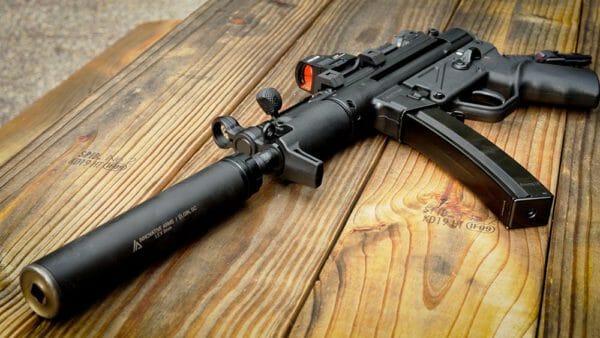
AP5 P Core Suppressed
The AP5 P is an excellent suppressor host. IMG Jim Grant

On September 7, 2023, Brennan Comeaux was arrested for possessing unregistered silencers without serial numbers. He was appointed a federal defender in Louisiana in the United States District Court for the Western District of Louisiana. Louisiana is in the Fifth Circuit Court of Appeals.

On December 20, 2023, a motion to dismiss was filed by Comeaux’s attorney. From the Motion to Dismiss:

By indictment, the government accuses Brennan Comeaux of possessing unregistered firearms in violation of 26 U.S.C. § 5861(d) (Count One) and receiving and possessing firearms unidentified by serial number in violation of 26 U.S.C. § 5861(i). ECF 1. Specifically, the government alleges that Mr. Comeaux built his own firearm suppressors, five in total, and did not register them or identify them by serial number as required by federal law. Mr. Comeaux is not a prohibited person prevented from possessing firearms under federal or state law.

Mr. Comeaux alleges that these statutes violate the Second Amendment on their face and as applied to him as that right has been interpreted by the United States Supreme Court in New York State Rifle & Pistol Association, Inc. v. Bruen, 142 S. Ct. 2111 (June 23, 2022).

The argument put forward is simple: the requirement to register arms and the requirement for arms to have serial numbers is a latecomer to American jurisprudence, only occurring after 1911, far too late to be considered as a longstanding and accepted law within the right to keep and bear arms.

The Biden administration countered with three arguments.

  1. Silencers are accessories, not “arms,” protected by the Second Amendment.
  2. There is a history of regulating “dangerous and unusual” weapons. Silencers are “dangerously unusual.”
  3. There is a historical tradition of regulation of commerce in firearms.  Therefore, silencers can be regulated with serial numbers and registration.

From the government brief:

In short, under Heller, even assuming that silencers are “arms,” within the meaning of the Second Amendment, they remain unusually dangerous and thus fall permissibly within this nation’s historical tradition of regulation.

On January 10, 2024, US District Judge David C. Joseph filed a memorandum that found for the Biden administration:

The government urges the Court to deny the Motion for two reasons. First, it argues that firearm silencers are not an “arms” within the meaning of the Second Amendment and therefore are not protected by it. [Doc. 27]. Second, the government argues that even if protected by the Second Amendment, the regulation of firearm silencers is “well in line with two historical traditions in this country: first, the historical tradition of regulating dangerous and unusual weapons and, second, the historical tradition of regulating commerce in firearms.” Id. at p. 4. Determining that firearm silencers qualify as “dangerous and unusual weapons” based on their historical use and function, the Court need not address the government’s other arguments.

Judge Joseph ignores Bruen when making his decision. He cites no evidence of a historical requirement for serial numbers or firearms registration before 1911. This is far too late to be applicable under Bruen. He cites various governmental entities and individuals as claiming machine guns, short-barreled shotguns, and silencers as being “not typically used for lawful purposes,” claiming the lack of serial numbers and registration is what makes them not typical. He ignores the lack of any historical statute requiring registration and serial numbers.

All weapons are “dangerous”. The government purposely seeks to confuse the issue by using three separate phrases interchangeably: “dangerous and unusual” (as used in Heller); “dangerous or unusual,” not used in the Supreme Court decisions; and “dangerously unusual,” not used in any Supreme Court decisions.

Neither the Biden administration nor the Judge attempted to explain a standard for what is in common use. The judge hides behind the requirement for registration and serialization without finding any historical evidence in the law to show these practices were commonly accepted at any time before 1911, long after the Second Amendment was ratified. The Fourteenth Amendment does not apply because this is a federal law, not a state law. To claim that there are over three million silencers in lawful use does not count because the federal government requires registration and serial numbers begs the question.

Stun guns, with perhaps a couple of hundred thousand in use in the United States, were found to be “in common use” in the Supreme Court decision in Caetano. This correspondent did not see the Caetano decision cited in this case.

If weapons can be regulated because the government says they are “dangerous and unusual,” there is no stopping point to prevent the government from regulating them out of existence.

Grounds for an appeal exist. It is unknown what type of plea deal may be offered to Mr. Comeaux.


About Dean Weingarten:

Dean Weingarten has been a peace officer, a military officer, was on the University of Wisconsin Pistol Team for four years, and was first certified to teach firearms safety in 1973. He taught the Arizona concealed carry course for fifteen years until the goal of Constitutional Carry was attained. He has degrees in meteorology and mining engineering, and retired from the Department of Defense after a 30 year career in Army Research, Development, Testing, and Evaluation.

Dean Weingarten


from https://ift.tt/qDWoElP
via IFTTT