On Wednesday, the Senate Banking and Financial Institutions Committee will hear Assembly Bill 1587, to require credit card issuers use specified Merchant Category Codes to designate firearm and ammunition retailers. Please contact committee members and ask them to OPPOSE AB 1587.
Since the federal government is prohibited by law from creating and maintaining a registry of gun owners, anti-gun radicals have been attempting to outsource this effort to the private financial sector. Thanks to pushback by law-abiding gun owners, and Idaho, Mississippi, and Texas banning such tracking, the major credit card issuers have paused implementation. Embarrassed by this setback, the anti-gun radicals are trying to salvage their effort by once again trying to foist a new gun control scheme onto California, which already has its own registry and background checks, on top of any federal requirements.
Again, please contact committee members and ask them to OPPOSE AB 1587.
About NRA-ILA:
Established in 1975, the Institute for Legislative Action (ILA) is the “lobbying” arm of the National Rifle Association of America. ILA is responsible for preserving the right of all law-abiding individuals in the legislative, political, and legal arenas, to purchase, possess, and use firearms for legitimate purposes as guaranteed by the Second Amendment to the U.S. Constitution. Visit: www.nra.org
In April of 2023, federal Public Safety Minister Marco Mendicino announced “the first phase” of the federal government’s gun confiscation (“buyback”) program, part of the May 2020 ban on “assault weapons.” The Canadian press reports this initial step is a contract with the Canadian Sporting Arms and Ammunition Association (CSAAA), a group representing Canada’s hunting and sport shooting industry, to work with Public Safety Canada and firearm businesses and retailers. This phase, according to the news report, will cover approximately 11,000 now-“prohibited” firearms and related parts held as inventory, which the law now bans licensed retailers from transferring, selling or returning to the manufacturers.
The contract – which is actually a budget – is worth over C$700,000 and is expected to extend into 2024. The CSAAA has not been given the money, but is conducting a study to determine the actual number and value of the guns to be collected and will be reimbursed for the expenses incurred up to a maximum of C$707,000.
Wes Winkel, CSAAA president, indicated that the object is to ensure that affected businesses receive full compensation for the guns, as it is clear that they have no other options respecting the banned inventory. “As much as we may not like it, and I assure you we don’t like it, the law of the land is that currently these firearms are listed as prohibited… We’re unable to sell them, we’re unable to move them, and right now our businesses have to pay to store these firearms and pay to insure these firearms, and the businesses would like nothing better than to get compensated for this and to get the firearms off their books.”
Many small “mom and pop” businesses have over C$250K invested in now-unsellable stock. Even if the gun confiscation fails to proceed, these and other licensed dealers will be stuck with years-old inventory that will likely have to be disposed of at a loss.
A statement at the CSAAA website explains the limited role the group would play, by only “collecting data on inventory levels and values of that inventory from dealers/distributors that wish to provide this information. If a dealer/distributor is not sure how to determine the value of their inventory, we will assist with that as well. We are not collecting firearms from dealers, deactivating them or assisting in any other way.” The statement emphasizes, also, that the CSAAA will only be working with licensed businesses and “will not be participating in any way with individually owned firearms.”
The statement adds that “[w]e are not aware of where the number of 11,000 firearms came from as no data has been collected or provided to anyone at this time,” and concludes by expressing its overall skepticism over the viability of the “industry buyback program” because of “positive changes in provincial legislation, the absence of Federal budgetary allocation, and [the lack of] a concrete process of implementation.”
All significant expenditures must be approved by Parliament in a finance bill. Thus far, with the most recent budget last month, only C$29 million has been approved for the development of IT related to the planned confiscation. (To place this amount in context, it recently cost the Canadian government C$54 million to develop a cellphone app.)
In an interview, CSAAA president Winkel offered a grimmer and less restrained assessment about his association “partnering” with the federal government. “Using the term ‘partner’ is kind of like saying that the person that’s hanging from the gallows is a partner of the person that’s operating the gallows.”
There’s no mention of when this “initial phase” will begin, although Winkel was quoted as saying “it could take years before a buyback program for retailers is up and running.”
News outlets (here, here and here) had previously reported on federal government plans, starting in late 2022, to use Canada’s smallest province, Prince Edward Island (PEI), as the “pilot province” for the gun confiscation program, given its low number of licensed gun owners (an estimated 6,464 compared to 624,448 in Ontario). A federal memo cited in the reports gave a start date for the program throughout Canada: “Phase two, the national rollout, is planned for spring 2023…” However, this “first point of collection” pilot has now been scrapped, with “currently no public timeline for when the buyback program will begin.”
Eighteen months ago, we examined the timing of Trudeau’s gun grab: “[A] scant six months away from the amnesty deadline of April 30, 2022 – a blink of an eye given the speed of government operations – gun owners and firearm businesses are left to speculate about the operation of the confiscation and grandfathering options, compensation, and pretty much anything else related to the implementation of this gun ban.” The only significant change since then is the amnesty end date, which the Liberal government had no choice but to extend to October 30, 2023.
Now, six months out from the new date, all indications are that this amnesty extension will fail as well. In the meantime, to maintain the impression of its own effectiveness and that it is taking public safety seriously, the Trudeau government is going ahead with new gun control measures. How else to explain Minister Mendicino’s new amendments to Bill C-21, announced last week?
Bill C-21, as originally proposed, was intended to deal with handguns: to restrict the number of individually-owned handguns by freezing the importation, sale, or transfer of handguns in Canada. Last November, the reach of the bill expanded dramatically when a Liberal Member of Parliament introduced amendments that would add 1,500 or so long guns to the list of firearms classified as “prohibited” (banned). Faced with opposition from First Nations communities, farmers, ranchers, hunters and other responsible gun owners, two of the amendments were withdrawn, including amendment G-4. This would have classified as “prohibited” any semiautomatic long gun designed to accept a detachable magazine holding over five rounds and using centerfire ammunition. At the time, Mendicino spoke of “resetting the narrative;” that “Bill C-21 isn’t about targeting hunters. It’s about certain guns that are too dangerous in other contexts.”
This latest package of amendments, though, comes back to the same language. The government’s press release states the amendments will redefine a “prohibited firearm” to include “semi-automatic, centre-fire firearms that are not handguns that were originally designed with a detachable magazine with a capacity of six cartridges or more,” although this definition would apply to guns designed and manufactured on or after the date the law takes effect. The announcement on the recent Bill C-21 amendments advises that the government will be “moving forward in the future with additional measures through regulations,” including regulations “to require the permanent alteration of long-gun magazines so they can never hold more than five rounds and to ban the sale of transfer of magazines capable of holding more than the legal number of bullets.”
The new narrative, like the one before it, is to treat almost all long guns as “assault-style firearms,” evidenced by Mendicino’s tweet claiming the amendments will “get assault style firearms out of our communities.” The Conservative Party’s public safety critic, Raquel Dancho, responded with the observation that “the ‘new’ Liberal definition is the same as the old one.”
“There’s a lot of toxicity when it comes to debating good, smart gun policy,” says Mendicino. It’s hard to understand how it is good or smart to punish responsible federally-licensed businesses, as well as law-abiding members of the gun community, as the ostensible causes of violent crime, and to deprive them of the use of their lawfully acquired property for years without compensation.
It’s been over ten years since the Liberal’s prior infamous experiment in gun control, the long-gun registry, was repealed, but that staggeringly ineffective, wildly expensive and unwise legislation apparently still casts a very long shadow.
About NRA-ILA:
Established in 1975, the Institute for Legislative Action (ILA) is the “lobbying” arm of the National Rifle Association of America. ILA is responsible for preserving the right of all law-abiding individuals in the legislative, political, and legal arenas, to purchase, possess, and use firearms for legitimate purposes as guaranteed by the Second Amendment to the U.S. Constitution. Visit: www.nra.org
June 30, 2023. The New Jersey Attorney General has issued new guidelines clarifying that the severe unintended consequences of New Jersey’s “ghost gun” law do not apply to millions of commonly-owned firearms, including bb guns, air guns, antique guns, pre-1968 firearms, and certain imported firearms.
The guidelines were issued after extensive discussion between the Association of New Jersey Rifle and Pistol Clubs and representatives of the Attorney General’s office. Attorney Dan Schmutter led the discussions with input from attorney Evan Nappen.
Continue below to see a copy of the new guidelines.
Guidelines Regarding Prohibited Conduct Relating to Firearms Not Imprinted with a Serial Number
This development represents an extremely significant moment for New Jersey gun owners. The Attorney General has explicitly taken steps to limit the harsh unintended consequences of anti-gun lawmakers’ absurdly-crafted and ill-conceived legislation from last year.
Even limited by these guidelines, the “ghost gun” law is still an unacceptable infringement on the right to keep and bear arms.
Nevertheless, gun owners no longer need to fear the unintended impacts of the law, and the Association of New Jersey Rifle and Pistol Clubs is pleased to have achieved this result without resorting to litigation.
About the Association of New Jersey Rifle & Pistol Clubs:
The Association of New Jersey Rifle and Pistol Clubs, Inc. is the official NRA State Association in New Jersey. Our mission is to implement all of the programs and activities at the state level that the NRA does at the national level. This mission includes the following: To support and defend the constitutional rights of the people to keep and bear arms. To take immediate action against any legislation at the local, state and federal level that would infringe upon these rights. Visit: www.anjrpc.org
Bank of America Turns Over Information on Gun Owners to the FBI, iStock-471503379
WASHINGTON, D.C. —FBI whistleblowers have come forward with damning allegations against Bank of America (BoA). According to Representative Thomas Massie (R-KY) and Rep. Jim Jordan (R-OH), the banking giant has been revealing information to the FBI about its customer’s gun purchases without a warrant. Now the pair has sent letters to other banks to see if they also violated the privacy rights of their customers.
After the protest at the U.S. Capitol on January 6, 2021, Bank of America provided the FBI with a list of customers who made transactions in or around Washington, D.C., purchased a flight to the Nation’s Capital, or booked a hotel room in the Washington D.C. metropolitan area. Most of Bank of America’s customers that attended the large rally never entered the Capitol Building, and the FBI did not have probable cause to allow the law enforcement agency to get a court order for the bank to surrender the documents.
When the FBI approached BoA about turning over the records, the bank complied without requesting a court order.
The megabank would put anyone in or around D.C. and purchase a gun on the top of the list. By simply being in or around D.C. on January 6 and purchasing a firearm using a BoA product, the FBI would mark you for investigation. The FBI investigated many BoA customers without a court order and with the full cooperation of Bank of America.
“In a transcribed interview, retired FBI Supervisory Intelligence Analyst George Hill testified that BoA, ‘with no directive from the FBI, data-mined its customer base’ and compiled a list of BoA customers who used a BoA product during a specified date range. Mr. Hill further noted that ‘on top of that list, they put anyone who had purchased a firearm during any date.’ Mr. Hill also testified that the list that BoA provided targeted transactions in Washington D.C., and the surrounding area,” the letter reads.
The letter was sent to JPMorgan Chase & Co, Citigroup, Truist Financial Corporation, Wells Fargo, U.S. Bancorp, and PNC Financial Services. The Congressmen are asking the banks to provide any documents or communications about the release of customer data from the January 6, 2021, timeframe to the FBI or any other federal law enforcement agencies.
This request is to see if the other major banks of similar size leaked the same customer information to the federal authorities that Bank of America released.
“Congress has an important interest in ensuring that Americans’ private information is protected from collection by federal law enforcement agencies without proper due process. The Committee and Select Subcommittee must understand if, how, and to what extent financial institutions, including PNC Financial Services, worked with the FBI to collect Americans’ private data,” the letter reads.
Many are concerned that the FBI is becoming overtly political and weaponized against anyone the Biden regime considers enemies. We have seen the weaponization of the Internal Revenue Service (IRS) against conservative non-profits. The FBI has also used documents like the discredited “Steele Dossier” to get FISA warrants to surveil political opponents. Some of those concerned about the weaponization of government agencies are serving in Congress.
It should concern all Americans (not only gun owners) that big business is working hand and hand with big government. Instead of protecting its customers’ data, it turns it over to the surveillance state without a fight. Gun owners now know that Bank of America is not protecting their data from an ever-encroaching government. The only question now is how far the rot goes.
About John Crump
John is a NRA instructor and a constitutional activist. John has written about firearms, interviewed people of all walks of life, and on the Constitution. John lives in Northern Virginia with his wife and sons and can be followed on Twitter at @crumpyss, or at www.crumpy.com.
U.S.A. — At least one judge in the Third Circuit believes the Commerce Clause overrides the Bill of Rights.
In a recent decision of The United States Court of Appeals for the Third Circuit, in the case Range v Lombardo, on June 6, 2023, the en banc court ruled some felony convictions are not sufficient to restrict Second Amendment rights, based on the historical record. Eleven of 15 judges concurred with the majority opinion.
Four judges dissented…
One of those dissenting was Judge Janet Richards Roth, appointed to the Third Circuit by George H. W. Bush in 1991. She was born in 1935 and started her governmental career working as a typist and administrative assistant in the Foreign Service of the U.S. Department of State in 1956. She graduated from Harvard Law School in 1965. Judge Roth assumed senior status on May 31, 2006. She is a few days short of her 88th birthday (June 16).
Judge Roth makes a strong case, based on Progressive philosophy, the Commerce Clause overrides the Bill of Rights. She gives the usual litany of Progressive “arguments”: Things have changed since the ratification of the Bill of Rights. The federal government has to have more power than the Bill of Rights allows. That was then. This is now. Here is part of the dissent from Judge Roth of the Third Circuit P. 96 of 107 :
In Bruen, the Supreme Court considered whether a regulation issued by astate government was a facially constitutional exercise of itstraditional police power. Range presents a distinguishable question:Whether a federal statute, which the Supreme Court has upheld as a validexercise of Congress’s authority under the Commerce Clause,2 isconstitutional as applied to him. The parties and the Majority conflatethese spheres of authority and fail to address binding precedentsaffirming Congress’s power to regulate the possession of firearms ininterstate commerce. Because Range lacks standing under the applicableCommerce Clause jurisprudence, I respectfully dissent.
Judge Roth explicitly states the modern expansion of the commerce clause, to include virtually all activity that has any effect on commerce, overrides the Bill of Rights because the scope of modern commerce is far greater than commerce at the founding.
This case involves the Second Amendment. Roth’s logic could just as easily be applied to the First Amendment and others. Virtually all First Amendment usage involves items that have a connection to interstate commerce – printing presses, telephones, computers, satellites, fiber optic cables, etc. Church pews are made of wood shipped across state lines, paid for by credit cards recognized by interstate banks. Nearly all homes affect interstate commerce. Under the expansive interpretation, the federal government could regulate all use and sale of homes and inspect them at any time, in spite of the Fourth Amendment. Under the expansive, Progressive interpretation, the Ninth and Tenth Amendments are swallowed up. Virtually all of life is encompassed by the absurd extension of the Commerce Clause created by Progressive judges.
Most of what Judge Roth writes about modern times applied to commerce at the time of the ratification of the Bill of Rights.
In U.S. v. Lopez, 1995, the Supreme Court temporarily stepped away from the Commerce Clause abyss into which we have been tumbling. Justice Thomas complained about the Supreme Court failing to follow up on the Lopez decision, instead doubling down on Commerce Clause supremacy over all in the Gonzales v. Raich idiocy. All six judges who voted for Raich (1996) have left the Supreme Court. Only Justice Thomas, who dissented on the case, remains of the justices who were on the court for Raich. From Justice Thomas’ dissent:
Respondents Diane Monson and Angel Raich use marijuana that has never been bought or sold, that has never crossed state lines, and that has had no demonstrable effect on the national market for marijuana. If Congress can regulate this under the Commerce Clause, then it can regulate virtually anything–and the Federal Government is no longer one of limited and enumerated powers
Justice Thomas gives a powerful, originalist, and textualist explanation of the Commerce Clause:
As I explained at length in United States v. Lopez, 514 U.S. 549 (1995), the Commerce Clause empowers Congress to regulate the buying and selling of goods and services trafficked across state lines. Id., at 586—589 (concurring opinion). The Clause’s text, structure, and history all indicate that, at the time of the founding, the term “ ‘commerce’ consisted of selling, buying, and bartering, as well as transporting for these purposes.” Id., at 585 (Thomas, J., concurring). Commerce, or trade, stood in contrast to productive activities like manufacturing and agriculture. Id., at 586—587 (Thomas, J., concurring). Throughout founding-era dictionaries, Madison’s notes from the Constitutional Convention, The Federalist Papers, and the ratification debates, the term “commerce” is consistently used to mean trade or exchange–not all economic or gainful activity that has some attenuated connection to trade or exchange. Ibid. (Thomas, J., concurring); Barnett, The Original Meaning of the Commerce Clause, 68 U. Chi. L. Rev. 101, 112—125 (2001). The term “commerce” commonly meant trade or exchange (and shipping for these purposes) not simply to those involved in the drafting and ratification processes, but also to the general public. Barnett, New Evidence of the Original Meaning of the Commerce Clause, 55 Ark. L. Rev. 847, 857—862 (2003).
Most of the judges on the Third Circuit disagreed with Judge Roth. From the majority opinion concurrence by Judge Porter of the Third Circuit P. 28-29 of 107:
A conception of the Second Amendment right that retcons modern commerce power into early American state law is anachronistic and flunks Bruen’s history-and-tradition test. Setting the federal floor through a combination of antebellum state police power and Congress’s post-New Deal commerce authority, as the dissents propose, would underprotect the constitutional right to keep and bear arms.
The modern Supreme Court is stepping back from the Progressive position of all power to the administrative state. The Supreme Court may finally reinstate limits on what the Commerce Clause covers. Justice Thomas has explicitly shown what those limits should be.
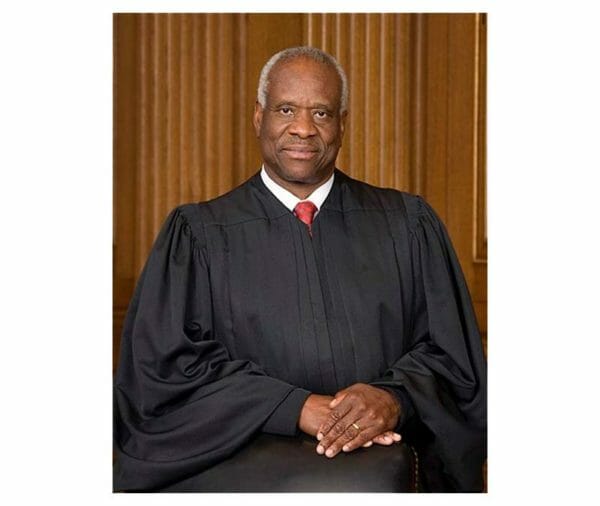
One judge argues the Commerce Clause overrides the Bill of Rights, and it is NOT … Supreme Court Judge Clarence Thomas.
About Dean Weingarten:
Dean Weingarten has been a peace officer, a military officer, was on the University of Wisconsin Pistol Team for four years, and was first certified to teach firearms safety in 1973. He taught the Arizona concealed carry course for fifteen years until the goal of Constitutional Carry was attained. He has degrees in meteorology and mining engineering, and retired from the Department of Defense after a 30 year career in Army Research, Development, Testing, and Evaluation.
Judge Rules Second Amendment Rights May Not be Removed for All Violent Felonies, iStock-602335156
U.S.A. — On June 28, 2023, Judge Carlton W. Reeves, District Judge in the Southern District of Mississippi and Chair of the United States Sentencing Commission, issued an order dismissing the case against Jessie Bullock for possessing a firearm as a convicted felon. Mr. Bullock was convicted of aggravated assault and manslaughter in 1992. He served about 15 years in prison. In 2015 Mr. Bullock was convicted of fleeing law enforcement and attempted aggravated assault of a police officer. He served five years of probation. Bullock was charged with knowingly possessing a firearm in May of 2018, although for various reasons, the charge was not arraigned until October 2019. In June of 2022, the Supreme Court issued the Bruen decision, upholding its rulings in Heller, McDonald, and Caetano. Mr. Bullock argued the Bruen decision rendered the ban on felons in possession invalid in his case.
Judge Reeves spends pages showing how and why he disagrees with the Supreme Court. He presents several straw man arguments. Many courts have upheld the federal ban on the possession of firearms by felons in the last 85 years. The Supreme Court used historical records to determine what the Second Amendment means, not the desire of legislatures or of judges. Judge Reeves does not like this approach, but he recognized it as required by the Supreme Court. Judge Reeves suggested he appoint a historian to research the historical record.
Both parties in the case refused the suggestion. In Bruen, the burden is clear. Because of the text and history of the Second Amendment, it is the burden of the government to show a particular restriction on the rights protected by the Second Amendment was accepted and widely practiced at the time the Second Amendment was ratified.
Judge Reeves gives brief summaries of the opinions in the Miller case (1939), Heller, McDonald, and Bruen. He does some serious reasoning in determining felons are part of the people of the United States, as mentioned in the Bill of Rights. From order by Judge Reeves:
This case asks the same question. If America’s historical tradition permitted a felon to repurchase firearms after completing their sentence, why can’t Mr. Bullock today?
Judge Reeves waxes on about problems with the use of history to determine what is or is not a felony at the time of the ratification of the Bill of Rights. He takes considerable space to claim it is very difficult to determine anything with clarity from the historical record. Then he delves into the specifics of Mr. Bullock’s case.
He categorically states the action of Mr. Bullock (possessing a firearm in his home) is covered by the Second Amendment. Then he considers the problems of prohibiting felons from exercising rights protected by the Second Amendment. From the order:
Second, as Range explained, the phrase “law-abiding, responsible citizens” is “hopelessly vague. 69 F.4th at 102. It cannot “mean that every American who gets a traffic ticket” loses her Second Amendment rights.”31 Id. But limiting it to quote “real crimes” like felonies also misses the mark, because some modern felonies “seem minor” and “some misdemeanors seem serious.” Id. The modifier “responsible,” meanwhile, is impossible to apply. “In our Republic of over 330 million people, Americans have widely divergent ideas about what is required for one to be considered a ‘responsible’ citizen. Id.
Judge Reeves finds the government does not meet its burden of showing a well-established tradition of laws near the ratification of the Bill of Rights.
Judge Reeves finds, in this particular case, the government has not met its burden and dismisses the case of felon in possession as applied to Mr. Bullock.
Judge Reeves goes on to throw doubt on the usefulness of originalism as a way to interpret the Constitution. He waxes eloquent in various versions of the “that was then, this is now argument.” His arguments essentially claim things have changed, so judges should be able to alter the Constitution to what they desire now. Times have changed. Morals have changed. People have changed. From the next to last paragraph in the order:
Change is unstoppable. And to the extent Bruen and decisions like it try to stop that change, they will not last long. The only question is how long the People will let them remain.
This is pure Progressive ideology. Woodrow Wilson might have written it. Judge Reeves refuses to admit words have consistent meanings. He refuses to admit to such a thing as human nature. Most of the examples he cites as different interpretations of the Constitution over time were not thrust on the government by the people. They were thrust on the people by courts who wished to impose their own policy decisions without being elected.
Judge Reeves correctly applies the guidance put forward in the Bruen decision. The difficulty he appears to have in doing so is he does not like the Supreme Court decision and thinks he could do much better. He never considers the work of Judges to decide what the balance of interests are in a particular case is easily as difficult as the interpretations of historical attitudes about the Constitution. Moreover, to place such power in the hands of the judicial branch is far more than the Constitution allows.
Judge Reeves notes there are other rights protected in the Bill of Rights which have not been protected, as well as Second Amendment rights are with the Bruen decision. He mentions the right to a speedy trial and the right to Habeas Corpus. He includes the right to vote, although such is not in the Bill of Rights. All of the cases he mentions are relatively recent, which is to say, they are from courts dominated by Progressive ideology.
The case is one of several in the lower courts. The constitutionality of felon-in-possession laws will eventually be clarified at the Supreme Court level. Judge Reeve’s hostility to the Bruen decision lends credence to the theory he may be following the decision as far as he can, in an attempt to discredit it. This writer hopes such is not the case.
About Dean Weingarten:
Dean Weingarten has been a peace officer, a military officer, was on the University of Wisconsin Pistol Team for four years, and was first certified to teach firearms safety in 1973. He taught the Arizona concealed carry course for fifteen years until the goal of Constitutional Carry was attained. He has degrees in meteorology and mining engineering, and retired from the Department of Defense after a 30 year career in Army Research, Development, Testing, and Evaluation.
Maine Dodges Bullet, Senate Votes Down Ban on Private Sales, iStock-884203988
U.S.A. — On January 13, 2023, LD 168 was introduced into the Maine Legislature by Speaker Talbot Ross of Portland, cosponsored by Representative Salisbury of Westbrook.
LD 168 was designed to eliminate most private sales of modern firearms by requiring the sale to be conducted through a federally licensed dealer and recorded in the dealer’s records. The bill specifically targeted gun shows, online distributors, or printed publications advertising firearms for sale. Law enforcement was exempted. The fine for the first offense was set at $1000. From LD 168:
2. Requirement. If neither the seller nor buyer of a firearm is a federally licensed firearms dealer, the transaction must be facilitated by such a dealer. The dealer shall perform a criminal background check using the Federal Bureau of Investigation, National Instant Criminal Background Check System of the buyer in the same manner as if the dealer were the seller of the firearm that is the subject of the transaction. If the criminal background check reveals that the buyer is prohibited from purchasing a firearm, the dealer shall notify the seller of that fact. The dealer may charge a reasonable fee for serving as the facilitator.
On June 26, the bill passed the Maine House of Representatives with a vote of 70 to 65, with 16 absent. Six Democrats voted against the bill, along with 59 Republicans. LD 168 was sent to the Maine Senate. On June 27, 2023, in the Maine State Senate, the bill was defeated 21 to 13, with one senator absent. Nine Democrats and twelve Republican senators voted to defeat the bill.
The purpose of moving legitimate sales of firearms into a system where the sales are approved by a government agency and recorded is an attempt to move to a universal system of firearms registration.
Such a system was gradually put into place in England and Wales and is in place in most of the world. Sales are not private sales if they must be approved by government agents and recorded in digital or paper records available to the government.
Universal registration systems have not been successful in reducing crime, either overall or with firearms, as first noted by Constable Colin Greenwood in his work at Cambridge University. The number of illegally owned firearms often increases after the requirement for registration is passed. While those pushing for restrictions on the ownership of firearms use the generic “guns are bad” argument, the underlying push, as found by Greenwood, Academic Joyce Lee Malcomb, and others, appears to be reducing the power of the population to oppose those holding the reins of power.
The requirement for universal registration of handguns, in place for over 60 years in Canada, did not solve one violent crime. The resources wasted in these efforts were immense. There is no question that if the resources (all resources are limited) were used for more police, far more crimes could have been solved or possibly prevented.
The claim of this sort of legislation is it will keep people who should not have guns from obtaining guns. The reality is the legislation does not do what is claimed. The seldom mentioned part is the cost of the legislation is real and harmful.
With the number of guns and gun owners in the United States of America rising steeply, the cost to politicians of such flagrantly failed schemes is also likely to rise.
About Dean Weingarten:
Dean Weingarten has been a peace officer, a military officer, was on the University of Wisconsin Pistol Team for four years, and was first certified to teach firearms safety in 1973. He taught the Arizona concealed carry course for fifteen years until the goal of Constitutional Carry was attained. He has degrees in meteorology and mining engineering, and retired from the Department of Defense after a 30 year career in Army Research, Development, Testing, and Evaluation.