Friday, September 2, 2022

Leaked NYPD Documents ~ Assume All Concealed Carriers Are Criminals 1st

Handcuffs Arrest Resistance
iStock

NEW YORK, NEW YORK -(Ammoland.com)- Documents leaked by Project Veritas (embedded below) show that New York concealed firearms carriers will be considered criminals to the New York Police Department (NYPD) until proven innocent.

The leaked documents originated from Deputy Commissioner for Legal Matters Ernest F. Hart’s office. The documents show how the NYPD will handle encounters with the gun-carrying public now that the Concealed Carry Improvement Act (CCIA) has gone into effect. Only a day after a federal judge said the law was unconstitutional but declined to block it, the Big Apple seems to be out to prove the judge’s point.

The New York Legislature passed the Concealed Carry Improvement Act after the Supreme Court decision in NYSPRA v. Bruen was handed down. The decision written by Justice Clarence Thomas stated that New York’s “proper cause” clause was unconstitutional. New York passed a law making most of the state a gun-free zone for law-abiding citizens and replaced “proper cause” with “good moral character.”

The Legal Bureau Bulletin highlights Constitutionally problematic areas of the CCIA to many in the gun community.

The memo asks NYPD officers to assume all concealed carry holders are guilty first & conduct searches of residents on the city streets.

Instead of the presumption of innocence, NYPD officers are instructed to assume that everyone carrying a gun is carrying it unlawfully. Additionally, officers are expected to think that anyone carrying a gun is armed and dangerous, endangering the lives of lawful CCW holders. Concealed firearms carriers are the most law-abiding citizens of any class of Americans. Yet, the police leadership is instructed to treat New York City gun owners as common criminals.

Not only are the cops in New York City instructed to assume everyone carrying a gun is breaking the law, but the officers are instructed to use someone carrying a firearm as probable cause to search anyone they suspect MIGHT be carrying a gun. This searching of citizens is a return to the racist practice of Stop & Frisk. Officers are also instructed to arrest anyone that they have probable cause to believe is carrying a firearm unlawfully. The problem is that the officers are now required to assume any concealed gun carrier is carrying unlawfully.

The document defines the restricted locations in the state, which is most private property. It also lists the sensitive areas in the city, which is most of the island of Manhattan.

Sensitive areas include:

  • Government buildings or property used for government administration (i.e., courts, City Hall, city agencies)
  • Hospitals, doctor’s offices, health clinics, urgent care facilities, substance abuse or mental health screening and treatment centers, or other behavior health services
  • Places of worship
  • Public libraries, parks, playgrounds, and zoos
  • Facilities where child care daycare, after-school programs or foster care are Administered
  • All public and private schools, including college and university buildings and campuses, as well as preschools, nursery schools, and summer camps
  • All shelters for homeless, youth, or domestic violence victims, or areas where domestic violence services are provided
  • Adult care, nursing homes or assisted living facilities, veteran homes or school-based health centers
  • On public transportation and in public transportation facilities, including buses, bus terminals, subways, subway stations, trains, train stations, ferries, ferry terminals, airports, etc.
  • Any establishment where on-premises consumption of alcohol or cannabis is authorized, such as a bar, restaurant, or cannabis lounge
  • In or on the ground of performing arts centers, theaters, stadiums, arenas, racetracks, museums, art galleries, amusement parks, banquet and catering halls, and casinos
  • Any location being used as a polling location
  • Any public sidewalk or public area that is restricted from general public access by a government entity for a limited time or for an authorized event such as a parade or outdoor concert (signs must be posted alerting the public that the area is temporarily a sensitive location)
  • Protest demonstrations, marches, or any assembly where individuals are gathered to collectively express their constitutional right of free speech
  • Time Square, as the area will be designated by signage

The bulletin also carves out exemptions for “Only Ones.”

Off-duty and on-duty police officers, as well as retired police officers, are exempt. It just isn’t the cops that get special permission to violate the law. Judges also are not bound by the same law as the rank-and-file inhabitants of New York City.

If there are any questions about whether the law is unconstitutional, this should remove all doubt. The law violates the First, Second, Fifth, and Fourteenth Amendments.


About John Crump

John is a NRA instructor and a constitutional activist. John has written about firearms, interviewed people of all walks of life, and on the Constitution. John lives in Northern Virginia with his wife and sons and can be followed on Twitter at @crumpyss, or at www.crumpy.com.
John Crump


from https://ift.tt/WzsVnG6
via IFTTT

Thursday, September 1, 2022

2A Victory in California ~ Anti-Gun Bills SB918 & AB1227 Go Down In Flames

Moms Demand gave tickets away for “free” to its event and still drew only “around 40” attendees.
istock

California – -(AmmoLand.com)- Thank you to all of you who took the time to contact your legislators about SB 918 and AB 1227. WE DID IT!

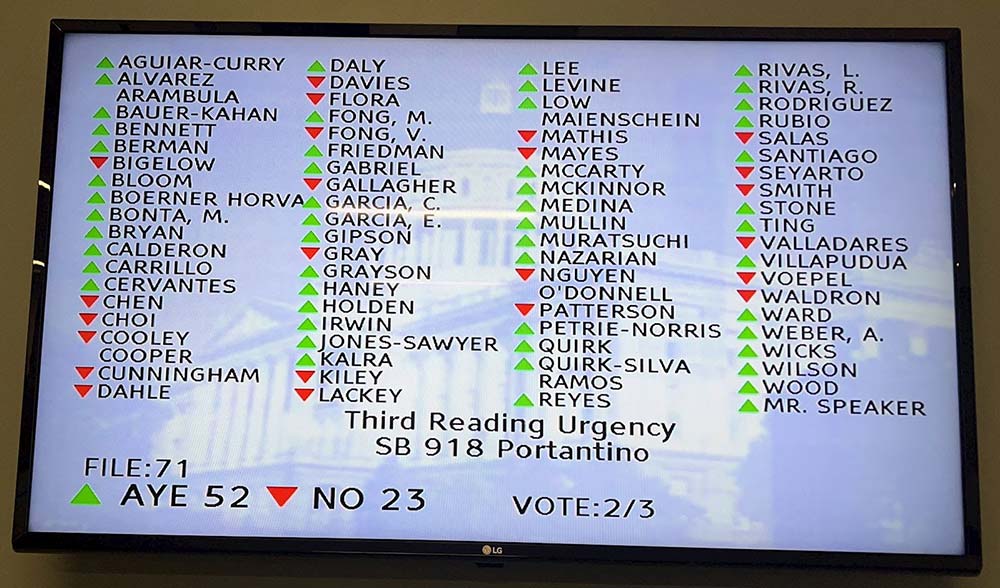
Both bills died a spectacular death in the middle of the night, setting up hoots of victory from Gun Owners of California and other 2A folks across the state. With California’s Attorney General Rob Bonta physically on the Floor of the Assembly twisting arms for a vote to make the entire state a CCW prohibited area, SB 918 still failed to secure the votes necessary for passage. THIS IS INCREDIBLE NEWS.

Both bills died a spectacular death in the middle of the night!

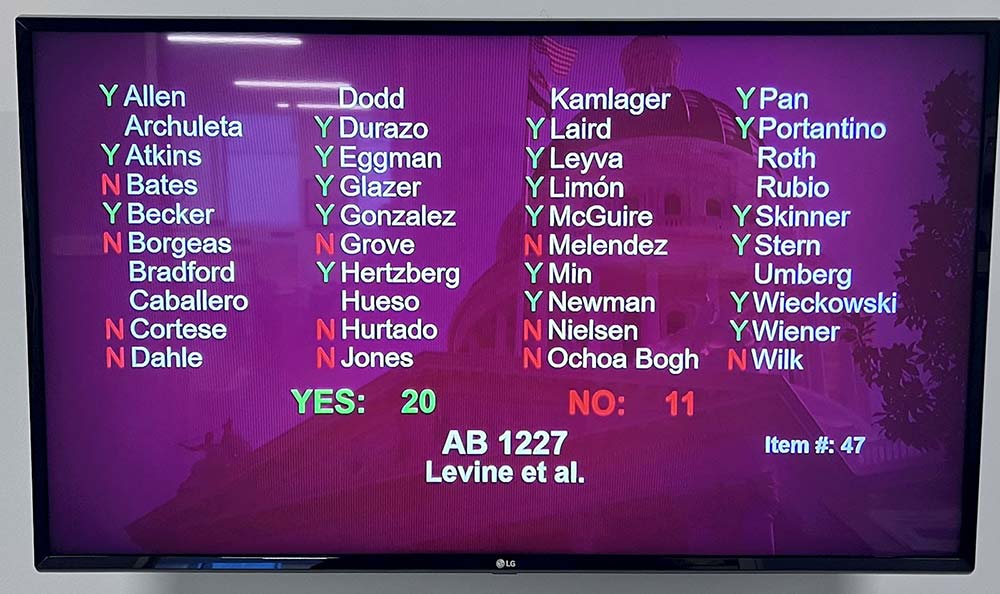
In the Senate, AB 1227 (Levine/D), the bill to slap a vindictive tax on the sale of every gun and box of ammo, also went down to a flaming defeat. Check out the vote in the screenshots below.

California SB 918 and AB 1227 Final Votes 2022

Gun Owners of California’s Sam Paredes had been at the Capitol for days lobbying hard against both bills and was there until the gavel went down in the early morning hours, which officially announced the 2021-22 Legislative Session was OVER. Finally.

When common sense prevails at the State Capitol, it’s time to celebrate.

Of course, we are fully aware that the Legislature passed some bad bills this year and legal challenges are in the works. We must focus on the big Supreme Court win handed to us with the NYSRPA v. Bruen decision and walk confidently through the door that was opened for us to fight even harder in the courts. We are ready for this!

Make no mistake: we are under no illusions that this is the end of the anti-gun war – especially here in California. We know full well that the Left will come back at us in January, angrier than ever before, AND WE WILL BE READY. In the aftermath of Bruen, courts across the country are strengthening our position legislatively and giving us hope for future cases to litigate. We are not resting on our laurels by any means. It’s never time to sit down and do nothing, but it’s OK to savor a major victory when it happens.

We believe in saying thank you to those who supported our efforts in killing these bills. If your representative voted no, consider sending an email of thanks from our Legislative Action Center HERE.

Please Support The Work We Do – We Are Stronger Together!


About Gun Owners of California:

Gun Owners of California is the toughest fighting pro-gun organization in California. We spend 100% of our time fighting for the Second Amendment at the Capitol and electing pro-gun members to the legislature. We do not compromise when it comes to promoting your gun rights! www.gunownersca.com

Gun Owners of California


from https://ift.tt/1kaHiTp
via IFTTT

NY Anti-Gunners’ Strategy: Expand ‘Sensitive Areas,’ Demand Social Media Access

New York Gun Flag iStock-884181314
Newly-expanded “sensitive zones” in New York City will turn legally-licensed people into criminals. IMG iStock-884181314

U.S.A. –-(AmmoLand.com)- In its effort to prevent law-abiding citizens from exercising their newly restored right to carry without having to give authorities a good reason, the City of New York is now posting as many public areas as possible as “gun-free zones” under the guise of a “sensitive area” designation, most prominently Times Square.

Simultaneously, a new state law now requires carry permit applicants to provide access to their social media accounts as part of the review process. According to WNYW News, the local Fox affiliate, the New York Sheriffs’ Association “has called the rules ‘burdensome’ on local government officials.”

In the Big Apple, the expanded restriction has created a brand new problem for people who may have a “carry business license,” limited carry or special carry licenses for locations now inside these newly-designated “sensitive areas.”

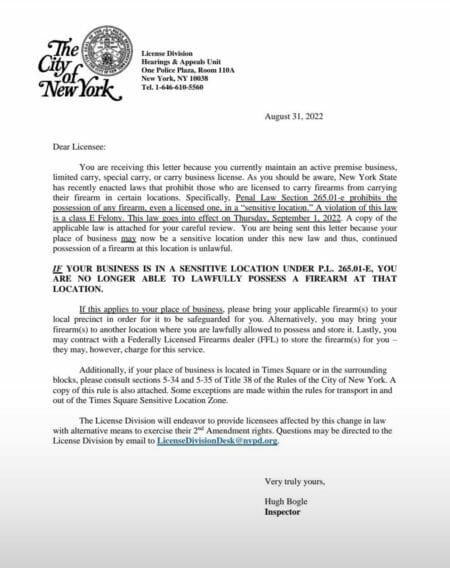
Ammoland has obtained a copy of a letter dated Aug. 31 that was sent to licensees by Hugh Bogle, an inspector with the City of New York License Division stating, “As you should be aware, New York State has recently enacted laws that prohibit those who are licensed to carry firearms from carrying their firearms in certain locations. Specifically, Penal Law Section 265.01-e prohibits the possession of any firearm, even a licensed one, in a “sensitive location.” A violation of this law is a class E Felony. This law goes into effect on Thursday, September 1, 2022. A copy of the applicable law is attached for your careful review. You are being sent this letter because you place of business may now be a sensitive location under this new law and this, continued possession of a firearm at this location is unlawful.”

The letter was dated Aug. 31, which gave recipients one day—or actually less than a day—to comply.

Recipients of the letter are advised to “bring your applicable firearm(s) to your local precinct in order for it to be safeguarded for you. Alternatively, you may bring your firearm(s) to another location where you are lawfully allowed to possess and store it. Lastly, you may contract with a Federally Licensed Firearms dealer (FFL) to store the firearm(s) for you—they may, however, charge for this service.”

These new requirements are in response to the U.S. Supreme Court 6-3 ruling in New York State Rifle & Pistol Association v. Bruen, handed down June 23. The decision, authored by Justice Clarence Thomas, declared the “proper cause” requirement unconstitutional.

News reports have been showing police placing signs around the famous intersection declaring it a “gun-free zone.” Historically, armed criminals ignore such designations.

Brooklyn attorney Jonathan Corbett, who has applied for a carry permit, perhaps best explained the situation in a quote to the Associated Press.

“They (the new laws) seem to be designed less towards addressing gun violence and more towards simply preventing people from getting guns — even if those people are law-abiding, upstanding citizens, who according to the Supreme Court have the rights to have them,” Corbett said.

As noted by WNYW, Robert Barrows, identified as the executive director of NYPD Legal Operations and Projects, said the new “sensitive areas” rule “essentially expands the number of gun-free areas in New York City.” He said there have already been more than 3,000 “gun arrests” so far this year.

According to the Associated Press report, critics of the new city carry restrictions say the list of prohibited places is “so extensive it will make it difficult for people with permits to move about in public. People carrying a gun could go into private business only with permission, such as a sign posted on the window.”

Published reports said lawmakers changed the permit review process to require access to three years of social media posts in order to prove the applicant is of “good moral character.” The social media provision was added, according to WNYW, “because lawmakers said that previous mass shooters have sometimes dropped hints of violence online before they acted.”

However, this requirement seems as arbitrary as the “good cause” mandate it replaces, and could result in more litigation. That much was confirmed by the Associated Press report, which noted, “The quickly adopted law, however, has led to confusion and court challenges from gun owners who say it improperly limits their constitutional rights.”

As reported by WABC, Democrat Gov. Kathy Hochul and New York City Mayor Eric Adams are portraying these new mandates as addressing “public safety concerns.” This includes providing a list of social media accounts to the authorities at the time of applying for a carry license, and completing a “state-regulated firearms training course.”

While Second Amendment advocates hardly expected anti-gun politicians and bureaucrats to quietly accept the Supreme Court’s ruling, the situation in New York demonstrates the lengths to which they will go to get around that ruling, while affirming they are simply bad losers.


About Dave Workman

Dave Workman is a senior editor at TheGunMag.com and Liberty Park Press, author of multiple books on the Right to Keep & Bear Arms, and formerly an NRA-certified firearms instructor.

Dave Workman


from https://ift.tt/g7aJTui
via IFTTT

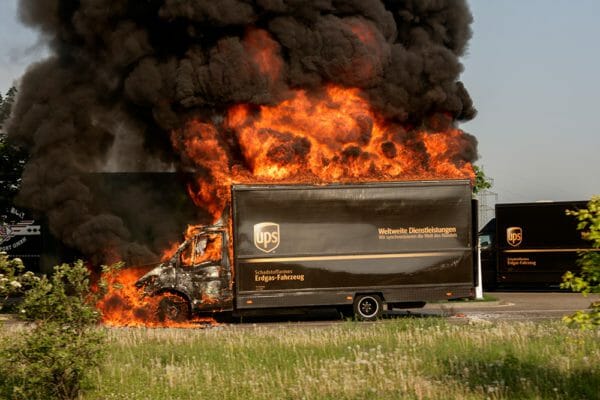
UPS Releases New ‘Woke’ Rules for Shipping Firearms

UPS Cancelling Gun Dealers’ Accounts, Destroying Packages in Transit
UPS Releases New ‘Woke’ Rules for Shipping Firearms iStock-506447800

U.S.A. –-(AmmoLand.com)- UPS has released strict new rules for shipping firearms just months after canceling some gun dealers’ accounts and destroying packages in transit.

The new rules came in response to a letter sent by five anti-gun senators, which blamed UPS and 27 other carriers for escalating violent crime rates.

The rules are contained in three documents: A shipping agreement between UPS and a licensed firearm dealer, the new 2022 UPS Tariff/Terms & Conditions of Service, and UPS’ How to Ship Firearms” webpage.

Terms of Service

According to the 2022 UPS Tariff/Terms & Conditions of Service, which went into effect Monday, only licensed dealers, importers, manufacturers and collectors may ship firearms or firearm products or parts via UPS.

3.7.1 Firearms

Packages containing firearms (as defined by Title 18, Chapter 44, and Title 26, Chapter 53 of the United States Code) and firearm parts that do not constitute firearms as defined by federal law (together, “Firearm Products”) are accepted for transportation only as a contractual service and only from Shippers who are licensed importers, licensed manufacturers, licensed dealers, or licensed collectors (as defined in Title 18, Chapter 44 of the United States Code). To transport Packages containing Firearm Products, the Shipper must enter into an approved UPS agreement for the transportation of Firearm Products.

The Shipper shall comply with and shall ensure that each Shipment containing Firearm Products complies with all federal, state, and local laws applicable to the Shipper, recipient, and Package, including, without limitation, age restrictions.

  • The Shipper must use Adult Signature Required and Direct Delivery Only services for each Package containing a firearm (including handguns) and affix a label requesting an adult signature upon delivery.
  • The labeling and outer box markings on all Firearm Products shipments must not identify the contents as containing Firearm Products.
  • Additional terms and restrictions on the shipment of Firearm Products are contained in the UPS agreement for the
    shipment of Firearm Products and at ups.com/firearms, which is incorporated here by reference.

How to Ship Firearms

According to UPS’ “How to Ship Firearms” webpage, nearly everything must have a serial number.

Any item that meets the definition of a firearm (including firearm mufflers or silencers) or a “frame” or “receiver” under federal law (including any partially complete, disassembled, or nonfunctional frame or receiver as defined by 27 CFR § 478.12) must be identified and bear a serial number in satisfaction of the requirements for identifying such items under federal law, including 27 CFR § 478.92 and/or 27 CFR § 479.102, regardless of whether any such items are otherwise exempt from or not subject to identification requirements under applicable law.  This prohibition applies even before the effective date of 27 CFR § 478.12.

In addition, the carrier is making homemade gun parts more difficult to ship as well as requiring serial numbers on the parts.

UPS does not accept Firearm Products for shipment domestically unless (1) such shipments are in full compliance with all federal, state, and local laws, including, without limitation, age restrictions; (2) such firearms, including any partially complete, disassembled, or nonfunctional frame or receiver (as defined by 27 CFR § 478.12), have been identified and bear a serial number in a manner that complies with federal law; and (3) such firearm parts within a package cannot be assembled to form a firearm.

Shipping agreement

By far, the strictest document is the shipping agreement between UPS and a licensed firearm dealer.

Before making any Firearm Products Shipment under this Agreement, Shipper must submit to UPS, by email to customercompliance@ups.com complete, current and accurate licensing documentation of Shipper’s federal firearms license, as well as satisfactory completion of, and compliance with, any other applicable licensing requirements, including any applicable state requirements. Shipper may not tender Firearm Products Shipments to UPS unless and until UPS has confirmed receipt in writing of Shipper’s licensing documentation.

The agreement holds the dealer responsible for complying with all applicable laws, as well as developing their own “shipper compliance program.”

The compliance program must “include: (1) training for sales and marketing employees regarding lawful recipients, possessors, and purchasers of Firearm Products; (2) due diligence regarding customer licensure or authorization to receive, possess, and purchase Firearm Products under applicable federal, state, or local law; and (3) self-assessments of the Shipper Compliance Program to guarantee its effectiveness.”

Click here to see a blank copy of the shipping agreement.

This story is presented by the Second Amendment Foundation’s Investigative Journalism Project and wouldn’t be possible without you. Please click here to make a tax-deductible donation to support more pro-gun stories like this.


About Lee Williams

Lee Williams, who is also known as “The Gun Writer,” is the chief editor of the Second Amendment Foundation’s Investigative Journalism Project. Until recently, he was also an editor for a daily newspaper in Florida. Before becoming an editor, Lee was an investigative reporter at newspapers in three states and a U.S. Territory. Before becoming a journalist, he worked as a police officer. Before becoming a cop, Lee served in the Army. He’s earned more than a dozen national journalism awards as a reporter, and three medals of valor as a cop. Lee is an avid tactical shooter.

Lee Williams


from https://ift.tt/hO2vf5M
via IFTTT

Ownership of Arms Protected by Takings Clause, 2nd and 14th Amendments

Why I Am Suing The Governor of Virginia, iStock-1055138108
Ownership of Arms Protected by Takings Clause, 2nd and 14th Amendments. iStock-1055138108

U.S.A. –-(AmmoLand.com)-– On August 30, 2022, a three-judge panel in the Third Circuit Court of Appeals unanimously ruled the Pennsylvania government violated the Takings clause, the Second Amendment, and the Fourteenth Amendment when they refused to return a gun collection of the parents of a man who was convicted of murder.

The parents never committed a crime. The state never used the parents’ gun collection as evidence.  From a list of properties, I estimate 47 guns, accessories, computers, and other items valued at $40,000 or more were taken.

The State refused to return the parents’ property under the rule of force: we have them, and we won’t give them back.

After their son had lost his appeal, the parents asked for their property back. It had not been used as evidence in the case.  The state refused. The parents sued in federal district court under U.S. 42:1983, civil rights act. The case was filed on June 10, 2020.

The District Court ruled against the parents. The parents appealed to the Third Circuit Court of Appeals.

The appeals court ruling, written by Judge Bibas, appears to be unanimous (no dissent was seen) and very strongly written. The Bruen decision was important in this case. From the order of the three-judge panel:

BIBAS, Circuit Judge. Although police may seize potential evidence using a warrant, they may not keep it forever. Yet they did that here. After a man assassinated a Pennsylvania State Trooper and injured another, troopers seized his parents’ guns. The government never used the guns as evidence. And eight years after the crime, once the son lost his last direct appeal, the officers still refused to return them—even though the officers do not claim that the parents or the guns were involved in the crime.

Because the parents were never compensated, they have a takings claim. And because they lawfully owned the guns, they have a Second Amendment claim too. But since they had a real chance to challenge the government’s keeping the guns, they got procedural due process. So we will affirm in part, reverse in part, vacate in part, and remand.

The court made strong statements affirming the Second Amendment protects arms from being arbitrarily confiscated, even if compensation is made:

II.BY HOLDING ON TO THE PARENTS’ GUNS AFTER THE CRIMINAL CASE ENDED, THE OFFICIALS INFRINGED THEIR RIGHT TO KEEP ARMS

The Second Amendment guarantees “the right of the people to keep and bear Arms.” According to the parents, the officials validly seized their guns under a warrant, but violated that right by refusing to return them. To decide that claim, we ask whether the constitutional text and “this Nation’s historical tradition” permit holding on to the guns. N.Y. State Rifle & Pistol Ass’n, Inc.v. Bruen, 142 S. Ct. 2111, 2126 (2022) (abrogating United States v. Marzzarella, 614 F.3d 85, 89 (3d Cir. 2010), which set forth our previous framework for evaluating Second Amendment challenges). They do not. We hold that unless an exception applies, the Second Amendment protects a person’s right to keep his lawfully owned guns…

The government notes that the Takings and Due Process Clauses more clearly protect private property. Walters, 660 F.3d at 317; Schwab & Sprankling at 167–68. So, it suggests, the Second Amendment provides “not a property-like right to a specific firearm,” but just a general right to buy guns. Houston, 675 F.3d at 445.

We disagree. We would never say the police may seize and keep printing presses so long as newspapers may replace them, or that they may seize and keep synagogues so long as worshippers may pray elsewhere. Just as those seizures and retentions can violate the First Amendment, seizing and holding onto guns can violate the Second. The Second Amendment may let the government outlaw specific types of weapons—perhaps “dangerous and unusual weapons.” Heller, 554 U.S. at 627 (dicta); accord Bruen, 142 S. Ct. at 2143; Eugene Volokh, Implementing the Right to Keep and Bear Arms for Self-Defense: An Analytical Framework and a Research Agenda, 56 UCLA L. Rev. 1443, 1548 (2009). But as we have explained, it does forbid unjustifiable burdens on the right to “keep” one’s own arms.

 And that protection is not redundant of more property-focused protections. For instance, the Takings Clause allows seizures so long as the government pays “just compensation.” But the Second Amendment appears to forbid “disarm[ing] private citizens” even if the government compensates those citizens for their property. Cf. Heller, 554 U.S. at 591–92. The other guarantees do not prevent this one from applying too.

This is a strong ruling restoring Second Amendment rights. As a Circuit Court ruling, it is a precedential ruling which applies to the entire Third Circuit. The Third Circuit includes Pennsylvania, New Jersey, Delaware and the District of the Virgin Islands.

For New Jersey, Delaware, and the District of the Virgin Islands, this is a tsunami in firearms law, potentially washing away decades of Second Amendment infringements.

The long-awaited Bruen decision is restoring Second Amendment rights by affirming the “text and history” requirement for interpreting the plain language of the Constitution set forth in the Heller decision.


About Dean Weingarten:

Dean Weingarten has been a peace officer, a military officer, was on the University of Wisconsin Pistol Team for four years, and was first certified to teach firearms safety in 1973. He taught the Arizona concealed carry course for fifteen years until the goal of Constitutional Carry was attained. He has degrees in meteorology and mining engineering, and retired from the Department of Defense after a 30 year career in Army Research, Development, Testing, and Evaluation.

Dean Weingarten


from https://ift.tt/X3tsJde
via IFTTT

Taking California And New York On Is Essential

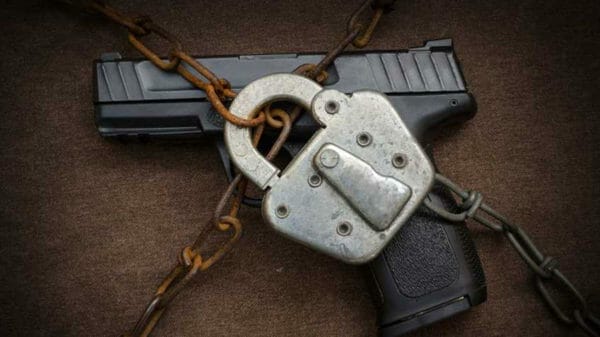
Gun Lock Control AdobeStock_95690334
Taking California And New York On Is Essential IMG AdobeStock_95690334

New York/California – -(AmmoLand.com)- While Second Amendment supporters have scored huge victories in federal courts and are advancing in many states, there are two states they need to deal with: California and New York.

In some ways, this was to be expected after NYSRPA v. Bruen. New York and California’s defiance will, in the next few years, make Clarence Thomas’s day with their actions. However, having the legal right is one thing. Being able to exercise that right can be very different.

California and New York aren’t just defying the Supreme Court, they are looking for any way they can harass firearms manufacturers, pro-Second Amendment organizations, and even average Americans who wish to exercise their Second Amendment rights. These states can overwhelm just about any major firearms manufacturer – to say nothing of a local FFL who is the victim of someone using a fake ID or straw purchaser.

California, in particular, has been aggressive about attacking states who pass laws that the regime in that state through travel bans. It may be time for some pro-Second Amendment states to impose similar measures in response, especially if California continues to defy the Supreme Court.

New York is a much different threat. In this case, Letitia James has presided over multiple attacks on the Second Amendment community: She’s sued companies that sold kits or even 80% receivers, she’s targeted the NRA, and her office leaked tax data on Nikki Haley’s advocacy group.

Maybe Nikki Haley isn’t the top candidate for loyal Ammoland readers, but she did not have a bad record on Second Amendment issues, either. Unlike Liz Cheney, she hasn’t turned her back on us. Therefore, we need to have her back in this fight, regardless of any minor disagreements (and given the way Joe Biden is talking about us, there is a lot of stuff that now has to fall under minor disagreements). It is well past time to demand investigations into Letitia James by Congress.

The fact is, anti-Second Amendment extremists in state AG offices can launch attacks and drown the firearms industry in legal fees. That was the plan behind the suits by big cities (and some states) 25 years ago, before the Protection of Lawful Commerce in Arms Act in 2005. James is trying to replicate that now, to enact controls that have been and likely will be rejected by state legislatures and Congress.

One thing that is essential is for Second Amendment supporters to urge their state lawmakers to protect the FFLs and manufacturers in their states, and requiring that these states intervene in suits like the one James filed against companies that sell 80% receivers. One nuclear option could involve having states like Texas, Florida, or West Virginia sue New York directly, using the language of Article III that states suits by states against other states are cases where the Supreme Court has original jurisdiction. A similar approach could be used against California.

The fact is, Second Amendment supporters can make major gains by defeating anti-Second Amendment extremists via the ballot box at the federal, state, and local levels. But they also need to ask their elected officials to stand up against what California and New York are doing, or else our legal wins could be a dead letter.


About Harold Hutchison

Writer Harold Hutchison has more than a dozen years of experience covering military affairs, international events, U.S. politics and Second Amendment issues. Harold was consulting senior editor at Soldier of Fortune magazine and is the author of the novel Strike Group Reagan. He has also written for the Daily Caller, National Review, Patriot Post, Strategypage.com, and other national websites.Harold Hutchison


from https://ift.tt/QaUdelv
via IFTTT

2nd Amendment Foundation & Defense Distributed Team Up To Sue California

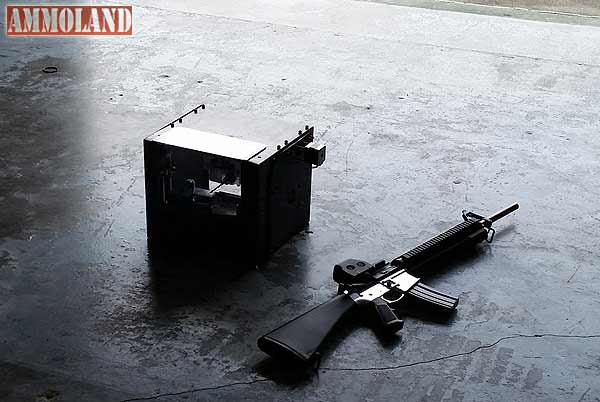
Ghost Gunner Miniature CNC Machine
Ghost Gunner CNC Machine

LOS ANGELES, CA -(Ammoland.com)- The Second Amendment Foundation (SAF) and Defense Distributed have teamed up to sue the State of California over its ban on CNC machines used for producing unserialized firearms and a law letting the State recover attorney fees from plaintiffs and their lawyers.

California passed a law banning the sale of CNC machines made exclusively to finish frames and receivers. Most feel the ban was directly targeting the Defense Distributed Ghost Gunner. The Ghost Gunner is a desktop CNC machine. It makes it simple to complete AR-15s, AK47s, Polymer80s, and 1911s. The system cost between $2500 and $3000 to purchase. Defense Distributed includes the codes to finish AR15s with the packaging.

Defense Distributed used to sell unfinished frames and receivers until the Bureau of Alcohol, Tobacco, Firearms, and Explosives (ATF) new rule surrounding the definition of a firearm went into effect on August 24th, 2022. After the rule was enacted, the Texas-based Non-profit stopped selling all unserialized frames.

Ahead of that new regulation, Defense Distributed had already stopped selling frames and receivers to California residents.

In their official capacities, the defendants in the case are California Attorney General Rob Bonta and Luis Lopez, director of the California Bureau of Firearms. The case is known as Defense Distributed v. Bonta.

“What we’re talking about is a milling process,” said SAF founder and Executive Vice President Alan M. Gottlieb, “which is common in modern manufacturing of a wide range of products, including firearm frames and receivers. Despite the long standing tradition of personal firearms manufacture by private citizens, California has now criminalized the process.

“What’s worse,” Gottlieb continued, “is that the state has enacted legislation that could financially penalize anyone, including an attorney or an entire law firm, if they seek declaratory or injunctive relief from any firearms-related California state statute or local ordinance, or even a rule or regulation by making them liable to pay attorney’s fees and costs of the prevailing party. Simply put, anybody seeking to enjoin a California gun restriction faces the prospect of liability for the state’s attorneys’ fees if the plaintiff does not win in all respects of the case, even if their case prevails on the merits, settles a claim without a waiver or voluntarily dismisses any portion of the case for any reason.”

“Under the law,” Gottlieb added, “the government is considered the ‘prevailing party’ if a court either dismisses any part of a claim or cause of action brought by a plaintiff seeking declaratory or injunctive relief, regardless the reason for dismissal, or if the court enters a judgment in favor of the party opposing the declaratory or injunctive relief on any claim or cause of action.”

Furthermore, the lawsuit claims that the California law violates the Second Amendment under the landmark Bruen Supreme Court case.

Bruen says that the law must be consistent with the text and historical context of the Second Amendment. The attorneys for the plaintiffs laid out the long history of Americans making their own firearms. Until recently, there was never a law in the country that prevented citizens from making their own guns. The California law goes farther than any law in the nation. It doesn’t just ban the parts but also forbids a machine that gun builders might use to complete their firearms.

The lawsuit also claims that California violated the plaintiffs’ First Amendment because of SB 1327. SB 1327 is a controversial law awarding legal fees to the State if a plaintiff loses any part of a case involving guns. The suit highlights even if the plaintiffs win on all counts besides one, the State can reclaim legal fees. The jurisdiction has up to three years to seek costs. The plaintiffs point out that even the California Senate Judiciary Committee’s analysis even commented that it might be unconstitutional.

The analysis reads that bill “is modeled after a controversial Texas abortion law, and includes a number of the same problematic procedural mechanisms.”

The plaintiffs claim this violates their right to petition the government. California based its anti-gun law on the controversial Texas abortion law. The lawyers for the plaintiffs claim that California is in a proxy war with Texas over the Lone Star State’s Heart Beat Act. California Governor Gavin Newsom even cited the Texas abortion law when he signed the bill.

The next claim that the plaintiffs make is that the law violates the Equal Protection clause of the Fourteenth Amendment. The law only allows the State to collect legal fees from those challenging gun laws. Even California’s Senate Floor analysis agrees with the plaintiffs!?

The Floor analysis reads: “Texas included a number of provisions in SB 8 to discourage lawsuits challenging the law itself . . . The mechanism for doing so was to make the party who was not the ‘prevailing party’ in such a lawsuit responsible for attorney’s fees, imposed liability for the fees on both the plaintiff and their attorney, and create lopsided and unfair rules about who was the ‘prevailing party.’ This bill replicates those provisions.”

Finally, the suit claims that the law violates the Supremacy Clause in Article VI of the US Constitution. In federal law, 42 U.S.C. § 1988(b) says the courts can award reasonable attorney fees. The plaintiffs believe the law “impedes the vindication of federal rights.”

The Second Amendment Foundation & Defense Distributed request the court issue declaratory, preliminary, and permanent injunctive relief.

Defense Distributed v. Bonta.


About John Crump

John is a NRA instructor and a constitutional activist. John has written about firearms, interviewed people of all walks of life, and on the Constitution. John lives in Northern Virginia with his wife and sons and can be followed on Twitter at @crumpyss, or at www.crumpy.com.

John Crump


from https://ift.tt/oc1gPqw
via IFTTT