Monday, October 4, 2021

Judge in Rittenhouse Case Denies Prosecution and Defense Motions

U.S.A. –-(AmmoLand.com)- On August 25, 2020, Kyle Rittenhouse was at the scene of the Kenosha riots. In the next few hours, he scrubbed graffiti, offered first aid, was threatened, was attacked, and shot three people in claimed self-defense. The situation has been covered in depth at AmmoLand. A good summation of the actions that night are here. Kyle was charged by local prosecutors in spite of voluminous video evidence of his self-defense claims. Eventually, supporters raised two million dollars for bond in Wisconsin.

On Friday, September 17, 2021, there was an evidentiary hearing in Kenosha, about what will be allowed as evidence in the trial of Kyle Rittenhouse. Jury selection is scheduled to start on November 1, 2021. The hearing may be seen on YouTube. The video is two hours and 36 minutes long.

The hearing was held by the Honorable Judge Bruce E. Schroeder. The view seen is from the bench. Seated at the table on the left of the screen are the prosecutors.  DA Thomas Binger is in a blue suit, wearing glasses. On the right of the screen is the defense table. Defense attorney Mark Richards is on the aisle side of the table in the black or very dark blue suit; defense attorney Corey Chiriafsi is in the grey suit in the center of the table; defendant Kyle Rittenhouse is on the far side from Richards in a blue suit.

Judge Schroeder is considering several motions for evidence to be admissible at trial by prosecutors and defense. Both sides have presented their arguments to the Judge, in writing, before this hearing.

In the video, both sides give a preview of what their case will look like at trial. Several facts are mentioned which this correspondent has not seen in previous coverage.

DA Binger attempts to show Kyle Rittenhouse as a “teenage vigilante” with a pre-disposition to shoot people. Binger claims Rittenhouse is from outside the community and came looking for trouble. Binger claims Rittenhouse was “armed with an illegal weapon.”

Defense attorney Mark Richards counters with statements Kyle had a job in Kenosha as a lifeguard, and Kyle’s father lives in Kenosha. Richards says he has not found any evidence, after an intense search, that Rittenhouse had any interest in or knowledge of militias or any racist organizations.  Richards:

“All three of these people shot were chasing Kyle Rittenhouse. All of them. That is not debatable.”

The prosecution wants to include a fight between Kyle’s sister and another girl, which happened 2 months before the Kenosha riots, where Kyle stepped in on the side of his sister. The defense says:

“The probative value of this is substantially outweighed by its prejudicial value.”

Judge Schroeder:

“No connection to these two events at all.” 

Judge Schroeder denies the prosecution the use of the event in court.

The next motion is about evidence of an event after Kyle is released on bond. Rittenhouse goes to a bar to celebrate. At the bar are members of the Proud Boys in Wisconsin. This is four months after the events of August 25. The prosecution attempts to claim this association has some bearing on the state of mind of Kyle Rittenhouse, four months earlier.  The prosecution claims the Proud Boys is a far-right, racist, violent organization, based on a newspaper article.  Judge Schroeder makes extensive comments about the situation. Here are some:

“I don’t think it is for the court, except in most appropriate circumstances, to be making determinations, and certainly not on the basis of an article in a newspaper in Seattle, about what an organization is.” 

“It is an unfortunate fact that this case has become a surrogate for a lot of emotional reaction that has nothing to do or little to do or nothing to do with the issues of the case, but if then the accused is ensconced, which can send him to prison for life, and he encounters some people who embrace him and start to, can we take pictures with you and somehow make him feel better about himself; and he reacts by smiling with them and taking some pictures; for me to let that in as evidence, of a motive that existed, four months earlier? Can’t see it. Absolutely not. I would expect to be reversed if I did that.”

“I am not interested in these accusations about group responsibility, unless it is directly connected that the defendant is active in the criminal enterprises of the organization.”

“Pope Benedict was a member of the NAZI youth, because he had to be. This type of evidence is very dangerous. You make some points that might be legitimate. I certainly will keep the door open, if you can show that there was any connection between the defendant on the day in question and this organization.”

Judge Schroeder’s use of  “on the day in question” refers to the events of August 25, 2020.

The defense wishes to enter evidence the first man shot by Kyle, Joseph Rosenbaum, was a convicted felon. Mark Richards claims Rosenbaum had a motive to steal the rifle Kyle Rittenhouse was carrying because he could not obtain one legally. The defense mentions Rosenbaum was heard saying (in evidence revealed by discovery from the prosecution) “I just got out of jail, and I am not afraid to go back.”

Judge Schroeder found this of interest. DA Binger denied the statement is decipherable.

Judge Schroeder refused to allow the evidence of Rosenbaum being a convicted felon to be entered at the trial.

The prosecution did not endear itself to Judge Schroeder over the issue of a list of witnesses, which the defense is entitled to, as a matter of law.

The prosecution provided a potential witness list of 175 witnesses to the defense.  The defense complained it was too many witnesses, citing precedent. The Judge agreed. The prosecution narrowed the list to 27 possible witnesses. The prosecution did not provide the addresses of the witnesses. The prosecution does not want to make a public filing in court, to avoid witness intimidation.

Judge Schroeder asks defense attorney Mark Richards if he was satisfied. Richards says he could deal with 27 witnesses, but he says, the prosecution had not provided the addresses. Then defense attorney Richards states:

I was told by Mr. Binger, they are in discovery, find them.

Judge Schroeder to DA Binger: Is that true? 

DA Binger:

I emailed Mr. Richards yesterday. I gave him a narrowed down list, I said the addresses that we would be providing to him would require us to go through the same 400 plus pages of police report…

Judge Schroeder: (interrupting) What does the statute say?

DA Binger:

The statute does requires us to provide addresses in a written filing with the court. 

Judge: (Interrupting)  Well, I can expect that will be done by Monday at five.

DA Binger: Would you like us to file with the court? 

Judge Schroeder:

 I understand your desire to keep this from being filed. If the defense objects, we can discuss about it. No, you can do what you did, but you need  to send to him the addresses.

By five o’clock, Monday.

The prosecution wants the defense to provide lists of people who had donated to Rittenhouse’s defense fund. Judge Schroeder says he does not have the authority to order a third party to provide a list to the defense to give to the prosecution. The motion was denied.

There was some discussion of expert witnesses, which was deferred to later.

The prosecution wished to have admitted, as evidence, a video of Kyle Rittenhouse, two weeks before the riots in Kenosha, commenting on watching people loot a CVS in Chicago. Defense Attorney Corey Chirafisi reiterates Rittenhouse took no action, it was merely words, and should not be admitted.

At about 1:47 on the hearing video, DA Binger makes a startling revelation. He says Rittenhouse does take an action at the CVS looting. Rittenhouse calls 911. From DA Binger:

“There is an actual action he takes at the CVS incident, and that is, he does call 911, using his personal cell phone.”

At about 1:50 in the hearing video, Judge Schroeder, after the prosecution finishes, says: “I think I heard now, for the first time, that he called 911.”

That neither the Judge or the defense team knew this before is amazing. All prosecution evidence should have been made available to the defense team long ago.

 Judge Schroeder says, in differentiating the two incidents, about Kenosha, “you could call 911 all you wanted, there was no law and order. ”

DA Binger continues his attempts to justify including the CVS incident as evidence at the trial. Then DA Binger makes revealing comments about the rifle Rittenhouse was carrying.

At about 1:59, Binger talks about the rifle. To this correspondent, Binger seems to be making the case for the defense.  It is difficult to see this as a prosecution argument.

DA Binger:

“He was running around with a assault rifle type weapon, a very threatening,  aggressive weapon. One that deters people, it is designed to deter people. It is designed to threaten others; to let them know, don’t mess with me, look what I’ve got.  Other people that night are carrying around semi-automatic pistols, Glocks, which you can conceal and hide. Other people can’t see it.  It is not designed to tell people to go away. It is not designed to tell people to leave me alone. You carry around an assault rifle like this you are sending that message to other people. That is what the defendant was doing.”

The defense picks up the revelation that Kyle called 911 at the CVS incident.

At about 2:02 Defense attorney Chirafisi:

“I was unaware that Mr. Rittenhouse had actually called the authorities on the August 10th date.”

Binger continues to try to convince Judge Schroeder the CVS video should be included as evidence.

At about 2:06 in the video, DA Binger states the FBI made an infrared video from an orbiting plane that shows Rittenhouse running after Mr. Rosenbaum.  Binger says the defense was made aware of the video on 3 May, but he does not believe defense attorney Richards has seen it.

Binger claims there was a confrontation between Rittenhouse and Rosenbaum, He claims Rittenhouse was chasing Rosenbaum. The defense has not seen this FBI infrared video.

Judge Schroeder says the events are too dissimilar for the CVS incident to be included as evidence, but he will not make a final decision at this time, pending seeing the video evidence, which he has not viewed.

The Prosecution then makes a claim about a defense motion to dismiss the charge of illegal possession of a firearm by a minor. The defense is probably calling the attention of the judge to the structure of Wisconsin statute 948.60, with regard to possession of rifles and shotguns by minors. To this correspondent, DA Binger appears to misstate the statutory law.

DA Binger appears to ignore Wisconsin statute 948.60 (3)(c), which excludes most firearms from the law.

Judge Schroeder agrees to send the brief by the prosecution, about the firearms possession issue from the Dominick Black case, to the Rittenhouse defense team, which has not seen it before.

Judge Schroeder says he will take the issue of legal possession of the firearm under advisement. He has not considered it in either the Rittenhouse or Black cases, as of September 17th, 2021.

Judge Schroeder has required DA Binger to read or refer to statutes at least twice at other points in this case.

Many have wondered if Dominick Black would be charged with the straw purchase of the rifle, under federal law.

Earlier, in this hearing, DA Binger noted Kyle Rittenhouse’s access to the rifle was limited. It was stored in Wisconsin. Rittenhouse had only shot the rifle one time prior to August 25, 2020.

This makes federal prosecution of Dominick Black for a straw purchase of the rifle unlikely, as the rifle was never permanently transferred to Kyle Rittenhouse. It is permissible to loan a rifle for a limited time and purpose, without transferring it through a federally licensed dealer.

Both the prosecution and defense agreed they would be ready for a November 1 start of the trial.

There is an issue with the use of questionnaires for jury selection.

The judge states he did not like to use questionnaires during jury selection. Judge Schroeder said no questions will be allowed about gun ownership, gun possession, or membership in a particular organization.

He said: “This is not a political trial, it is not going to be a political trial.”

Both the defense and prosecutors want to use questionnaires for jury selection.

Because both prosecution and defense attorneys want questionnaires, the Judge Schroeder said he will take the use of questionnaires under advisement.

Judge Schroeder makes comments on media coverage of the Rittenhouse case:

“There has been some grossly irresponsible misreporting on a few occasions about what happened in this case.”

 “The case should not be tried in the media.”

If you are following the case closely, it is worth taking the time to watch the entire two-hour and 36-minute hearing.

Coverage by other national media was extremely limited. There is much detail in the video. It would require tens of thousands of words to completely cover it in a written article.


About Dean Weingarten:

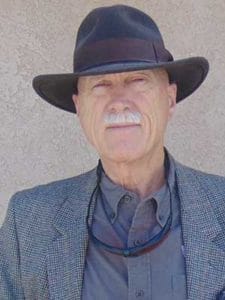
Dean Weingarten has been a peace officer, a military officer, was on the University of Wisconsin Pistol Team for four years, and was first certified to teach firearms safety in 1973. He taught the Arizona concealed carry course for fifteen years until the goal of Constitutional Carry was attained. He has degrees in meteorology and mining engineering, and retired from the Department of Defense after a 30 year career in Army Research, Development, Testing, and Evaluation.
Dean Weingarten

The post Judge in Rittenhouse Case Denies Prosecution and Defense Motions appeared first on AmmoLand.com.


from https://ift.tt/3a4vkIn
via IFTTT

FBI Crime Stats for 2020 Prove Do-Policing is as Disastrous as it Sounds

Evidence NRA-ILA
Anti-gun radicals have been blaming the increase in gun sales since well before there was blame to assign for the recent rise in violent crime. IMG NRA-ILA

U.S.A. -(AmmoLand.com)- The FBI released crime data for 2020 last week, using an amalgamation of data collected under two different systems. Nothing about 2020 was predictable and the nation experienced a 5.6% percent increase in violent crime, including a 29.4% increase in murders. Let’s explore this data and the theories behind the increase.

The overall murder rate in 2020 was 6.5 per 100,000 population. This is the highest since the late 1990s when crime in general and murder specifically began a downward trend. It is not, however, near the peaks that the nation suffered not that long ago. The 2020 murder rate of 6.5 per 100k is lower than it was at any point during the period 1968 through 1997. From 1971 through 1995, the murder rate twice dipped below 8.0 per 100k population – in 1984 through 1985, when it was more than 7.9 per 100k.

Several factors can and should be, considered relevant to the violent increase in 2020. Certainly, we as a society lived through unprecedented – and ever-changing – conditions, including economic stressors known to be related to violent crime. Changing law enforcement strategies throughout the country, whether referred to as “de-policing” or something else, should be considered relevant.

Unsurprisingly, anti-gun radicals have been blaming the increase in gun sales since well before there was blame to assign. This will undoubtedly persist, even though avowed anti-gun policy researcher Doctor Garen Wintemute of UC Davis found no association between so-called “excess purchases” of firearms and non-domestic violence. The association between the alleged “excess purchases” and domestic violence were quite subject to model specification. We covered this research in a July 2021 alert.  We noted, at that time, that Daniel Webster, the Bloomberg Chair at the Bloomberg School of Public Health and Director of the Center for Gun Violence Prevention and Policy, tried to put some positive gun control spin on the findings.

Webster is at least open to the possibility (read: reality) that law-abiding gun owners are not the problem. He told the Washington Post that, “it was too early to tie the jump in gun sales to new owners to the rise in shooting deaths.” He then mentioned pandemic-related personnel shortages at law enforcement agencies and new rules or strategies that limited pro-active policing.

That theory makes sense – much more sense than the concept of a sudden increase in criminals obtaining guns from federally licensed dealers and undergoing a background check (which is what transactions reported in NICS require). After all, we know where criminals get their guns and it’s on the black market.

Thomas Abt, a senior fellow at the Council on Criminal Justice, offered his thoughts on the increase in crime last year. Abt told Time Magazine that, “there is not a new form of violence out there that emerged during the pandemic. It’s an intensification of the violence among these small groups of people in places that it was already happening.”

Imagine that. Criminals escalating their behavior in the absence of a deterrent. This echoes the concerns that an increasingly diverse array of millions of Americans expressed during 2020 by making the choice to acquire a firearm to protect themselves and their loved ones.


About NRA-ILA:

Established in 1975, the Institute for Legislative Action (ILA) is the “lobbying” arm of the National Rifle Association of America. ILA is responsible for preserving the right of all law-abiding individuals in the legislative, political, and legal arenas, to purchase, possess, and use firearms for legitimate purposes as guaranteed by the Second Amendment to the U.S. Constitution. Visit: www.nra.org

National Rifle Association Institute For Legislative Action (NRA-ILA)

The post FBI Crime Stats for 2020 Prove Do-Policing is as Disastrous as it Sounds appeared first on AmmoLand.com.


from https://ift.tt/3Aa0Ejt
via IFTTT

Sunday, October 3, 2021

Armed at Home and in Public- Self Defense Gun Stories

Injunction Sought in Federal Lawsuit Over Riverside, California Sheriff Stan Sniff’s “Discriminatory and Unconstitutional” Handgun License Policies
More than 30 percent of American gun owners say they have used a gun in self-defense.

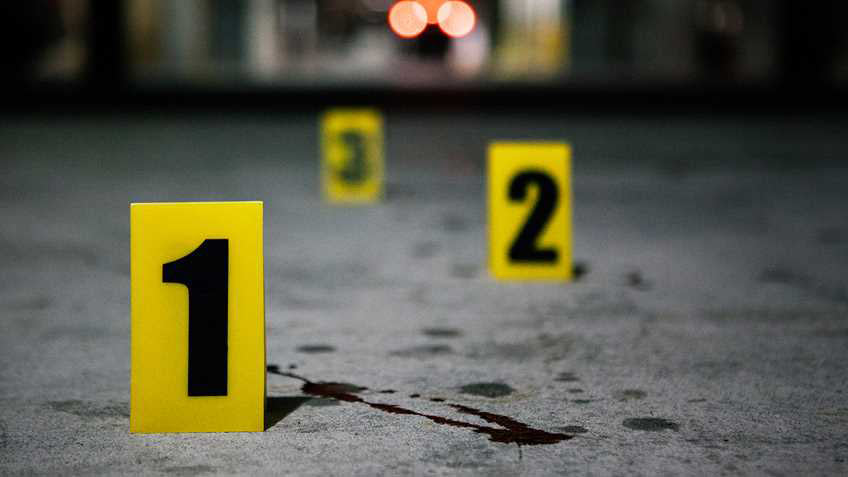
U.S.A. -(AmmoLand.com)- You probably didn’t see these stories covered by the mainstream news media, but again last week, responsible gun owners defended themselves and the people they love. Self-defense instructor Candy Petticord joins the Self Defense Gun Stories Podcast to look at four new examples. Were these gun owners lucky, or did they have a plan?
(23-minute audio)

First story- Are you armed at home?

You’re at home with your husband. It is late Sunday night. You both hear a crash from the front door. Your husband walks into the center of the house before you do. There is a strange woman in the house and he tells her to leave. She attacks him. He fights back. The fight continues so you reach for your gun. You shoot the attacker until she stops fighting. You and your husband back away. You call 911.

Emergency medical services take your attacker to the hospital where she dies. You don’t know who the woman is. She was only 21 years old. You are 69 and your husband is 73 years old. News reports don’t describe your husband’s injuries.

Second Story- Are you armed as you drive?

It is Tuesday evening and the sun set a few minutes ago. You’re cleaning your car at the carwash. You have the vacuum in your hand when two strange men walk up to you. You look up at them. The two strangers pull guns out of their pants. They tell you to hand everything over. One of them starts walking around your car.

You own a gun. You have your Michigan concealed pistol license. You are carrying concealed tonight. You present your firearm and shoot the attacker who is closest to you. You turn to shoot the other attacker but he is running away. You back away and call 911 and, after making sure there are no more attackers, you holster your gun before the police arrive. The police find your attacker’s gun next to him. EMS takes him to the hospital where he dies.

Your attacker was 16 years old.

Third story- Do you have a gun nearby at night?

You’re home alone on a Monday night. At least you thought you were alone until you heard someone else walking through your house. You grab your gun and shout, “Who is there?” A stranger comes around the corner and runs at you.

You’re armed. You shoot until the attacker stops. You also shoot yourself in the hand as you push your attacker away from you. You back up and call 911. You put your gun away before the police arrive. EMS finds your attacker in the front of the house. They take both of you to the hospital. You’ll recover, but your hand won’t be the same. You find out that your attacker died in the hospital.

You are not charged with a crime.

Fourth story- Are you armed at home?

It is before sunrise on a weekday. You have some yard work you want to finish before you leave for work. You look up when you hear a crash from inside your house. Your security system says there was movement outside your carport door. You go investigate.

You see a man standing in your kitchen. You shout for him to leave and you run to your bedroom. You grab your handgun and go back into the home. The man runs toward you from the carport door. This time he has a knife in his hands. You shoot him when he reaches the living room. Now he turns around. You go outside and call 911. You’re standing in your driveway when the police arrive.

Police find your attacker in your living room. They disarm him. Emergency medical services take him to the hospital. Your attacker said he was high on methamphetamine and didn’t remember attacking you. He is arrested for first degree burglary and aggravated assault along with his outstanding warrants including violating his parole.

A discussion of each story is at the Self Defense Gun Stories podcast webpage.


The post Armed at Home and in Public- Self Defense Gun Stories appeared first on AmmoLand.com.


from https://ift.tt/3D87E2q
via IFTTT

NRA Championing Civil Rights in NYSRPA v. Bruen ~ Key To 2A Liberation

Opinion

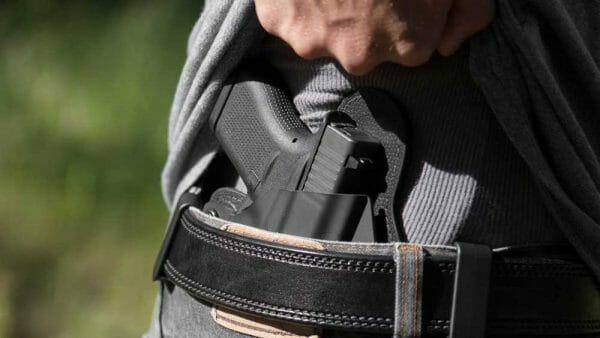
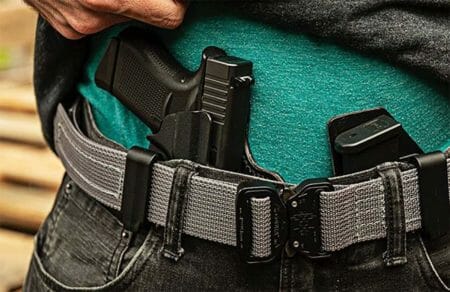
Comp-Tac eV2 Max Holster and eV2 Mag pouch Concealed Carry
NRA Championing Civil Rights, NYSRPA v. Bruen Key To 2A Liberation

New York – -(AmmoLand.com)-  The buzz surrounding the grant of certiorari at the Supreme Court of the United States in the matter of New York State Rifle & Pistol Association, Inc. v. Bruen needs to be revisited. On Apr 26, 2021, the court announced that the subject of firearms carry is something worthy of exploration and agreed to answer the following question:

Whether the State’s denial of petitioners’ applications for concealed-carry licenses for self-defense violated the Second Amendment.

The details of this case wind back to 2018, when the two individual plaintiffs applied for and were denied concealed carry permits in the state of New York. Under New York law, it’s necessary to first obtain a permit in order to own, possess, and ultimately carry a firearm.

The case, filed against then-Superintendent George P. Beach II of the New York State Police and Justice Richard J. McNally of the New York Supreme Court, was initially dismissed at the Northern District of New York in 2018. Beach was replaced by Keith M. Corlett in 2019 and subsequently was named as a defendant and respondent in the suit. The current defendant and respondent is Kevin Bruen.

The plaintiffs, in this case, are both law-abiding gun owners, licensed to own firearms in New York and both have extensive training in firearm use and safety as well as licenses that allow them to carry firearms outside of their home for target practice and hunting. Both, however, were declined a license to carry concealed for purposes of self-defense because they did not satisfy the state’s requirement that they demonstrate an atypical need for firearms carry beyond self-defense.

Petitioner Robert Nash requested a license to carry a handgun in public for self-defense. App.7. “In support of his request,” the district court explained, “Nash ‘cited a string of recent robberies in his neighborhood and the fact that he had recently completed an advanced firearm safety training course.’” App.7. The licensing officer, respondent McNally, denied the application on the ground that Nash “failed to show ‘proper cause’ to carry a firearm in public for the purpose of self-defense, because he did not demonstrate a special need for self-defense that distinguished him from the general public.” App.7.

Petitioner Brendan Koch likewise applied for a license that would “‘allow[] him to carry a firearm for self-defense.’ Koch cited ‘his extensive experience in the safe handling and operation of firearms and the many safety training courses he had completed’ in support of his request.” App.7 (citation omitted). McNally denied the request on the ground that Koch “failed to show ‘proper cause’ to carry a firearm in public for the purpose of self-defense, because he did not demonstrate a special need for self-defense that distinguished him from the general public.” App.8. As the district court thus summarized, “Nash and Koch do not satisfy the ‘proper cause’ requirement because they do not ‘face any special or unique danger to [their] life.’” App.6.

The core of the Second Amendment has been determined in Heller that:

…the “right of the people to keep and bear Arms” protects at its core “the individual right to possess and carry weapons in case of confrontation.”

Through NYSRPA v. Bruen and the support of the National Rifle Association, there is a solid shot that New York, and by extension many other draconian jurisdictions, will be forced to bring their policies and laws up to contemporary times in a post-Heller United States by having to accept this fact.

These law-abiding NRA members who were denied permits, in this case, prove how even the safest, most well-trained citizens cannot survive NY’s absurd permitting obstacle course. The process isn’t just difficult and unconstitutional, it’s corrupt because it serves only one purpose: deterring the ability of innocent people to arm themselves within the Empire State. As they say: the process is the punishment.

National Rifle Association

New York State Rifle and Pistol Association (NYSRPA)

The NRA and its New York affiliate, New York State Rifle and Pistol Association (NYSRPA), contend the Second Amendment protects the right to carry for self-defense outside of the home.

As one justice put it:

“It’s extremely improbably the Framers wrote the Second Amendment to protect your right to carry a firearm from your bedroom to your kitchen.”

Within the document under reasons seeking the granting of certiorari, there are some very compelling arguments that seem to have achieved their goal. From the filing we can draw:

In stark contrast to these decisions, the First, Second, Third, and Fourth Circuits have all either refused to recognize the Second Amendment’s applicability outside the home or refused to give it any meaningful force…In Gould, the First Circuit considered a Massachusetts law that requires a law-abiding citizen to “demonstrate a ‘proper purpose’ for carrying a firearm” to receive a license to carry. 907 F.3d at 663.In Kachalsky, the Second Circuit considered a similar New York law—the same law at issue here—which requires a showing of “proper cause” to obtain a license to carry a handgun. 701 F.3d at 86. In Drake, the Third Circuit considered a New Jersey law requiring a handgun permit applicant to show “a justifiable need to carry a handgun.” 724 F.3d at 428. And in Woollard, the Fourth Circuit confronted a Maryland law conditioning eligibility for a handgun permit on showing a “good and substantial reason” to carry. 712 F.3d at 868. While Moore, Wrenn, and Young embraced Heller, these decisions defied it, relying on an exceedingly begrudging reading of this Court’s opinion to uphold anachronistic regimes that pre-dated Heller’s reaffirmation of an individual right. The result: denial of fundamental, individual Second Amendment rights to typical law-abiding citizens.

Emphasis added to the “anachronistic” views some of the courts have taken concerning the Second Amendment as an individual right in a post-Heller America.

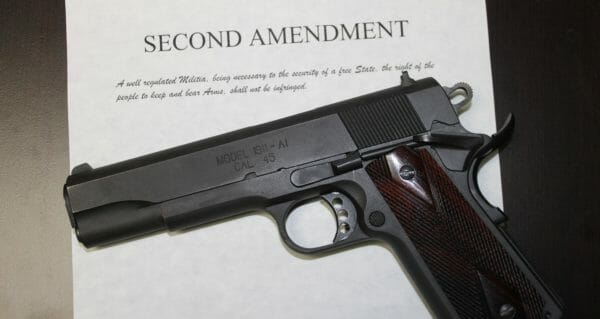
A further argument that was posed brings the whole of the text of the Second Amendment into full context:

Confining the right to “bear arms” to the home would be nonsensical, and would unjustifiably render the right duplicative of the separately protected right to “keep” arms. Such redundancy would contradict the basic principle that no “clause in the constitution is intended to be without effect.” Marbury v. Madison, 5 U.S. (1 Cranch) 137, 174 (1803). “The addition of a separate right to ‘bear’ arms, beyond keeping them, should therefore protect something more than mere carrying incidental to keeping arms.” Young, 896 F.3d at 1052-53 (citing Thomas M. Cooley, The General Principles of Constitutional Law in the United States of America 271 (1880) (“[T]o bear arms implies something more than the mere keeping.”)). And “[u]nderstanding ‘bear’ to protect at least some level of carrying in anticipation of conflict outside of the home provides the necessary gap between ‘keep’ and ‘bear’ to avoid rendering the latter guarantee as mere surplusage.” Young, 896 F.3d at 1053. In short, the most natural reading of the right to bear arms encompasses the right to carry the firearm outside the home.

The amendment’s structure reinforces the conclusion that the Second Amendment protects a right to carry a firearm outside the home.

Law-abiding gun owners who step outside their home with a firearm but without a NY Concealed Carry license is considered a felon. What right does the Second Amendment protect if not the fundamental right to defend yourself? What other rights do you need to provide sufficient justification to exercise? The right to free speech? The right of privacy? The right from search and seizure?

It’s nearly impossible for law-abiding citizens to get a concealed carry license for purposes of self-defense in the state of New York. Under the current system, citizens in good standing and who are legally allowed to own a firearm are declined a carry license unless they can prove to a local government official that they have a special need distinguishing them from the vast bulk of “the people.”

Hopefully, we are in for an exciting time to be watching the wheels of justice finally turn in a direction that seems to favor freedom. Thankfully the plaintiffs, New York State Rifle & Pistol Association, and the National Rifle Association stood up for this and are taking New York to task on their unconstitutional laws. With high hopes, this time next year, we’ll be looking at zero “may issue” jurisdictions, and move on to complete permit abolishment in our next moves as advocates. Here’s to looking at full restoration of the Second Amendment in the years to come.

Oral arguments are set for November 3, 2021. Leading the case is former Bush Administration Solicitor General Paul Clement who also argued Heller & McDonald in front of the Supreme Court. The case will be a 65-minute virtual session instead of inside the chambers of the Supreme Court.

New York State Rifle & Pistol Association Inc. v. Bruen can be followed on the SCOTUSblog website.


John Petrolino is a US Merchant Marine Officer, writer, author of Decoding Firearms: An Easy to Read Guide on General Gun Safety & Use and NRA certified pistol, rifle, and shotgun instructor living under and working to change New Jersey’s draconian and unconstitutional gun laws. You can find him on the web at www.johnpetrolino.com on twitter at @johnpetrolino and on instagram @jpetrolinoiii .

John Petrolino
John Petrolino

The post NRA Championing Civil Rights in NYSRPA v. Bruen ~ Key To 2A Liberation appeared first on AmmoLand.com.


from https://ift.tt/3mnTweu
via IFTTT

Two National Firearms Surveys in 2021 Cause Confusion

Survival of the Republic & Sovereign People: Armed Citizenry - Part Three
Two National Firearms Surveys in 2021 Cause Confusion

U.S.A. –-(AmmoLand.com)- Two different National Firearms Surveys were completed in 2021. One of them was done by Dr. William English of Georgetown University. He published a draft of his study in July of 2021. This correspondent wrote about the results in a previous article. A different 2021 National Firearms Survey was designed by Deborah Azrael and Matthew Miller, as reported in thehill.com, had preliminary results obtained by the Wall Street Journal.

Both surveys are the latest version of previous surveys. The English survey is much larger than the Azrael – Miller survey.

This correspondent received confirmation of the confusion from Dr. English:

As you surmised, there are two different surveys. The one I ran was separate from and much larger than the one by Azrael and Miller, and it looks like we focused on some different questions. I believe their team has done a version of their survey in a few earlier years as well. It appears that neither of us thought up a more creative name than “2021 National Firearms Survey” to publish our initial results for this year, which has understandably been a source of confusion.

Images of announcements of different 2021 National Firearms Surveys

Neither of the 2021 National Firearms Surveys (NFS) has been released, in their full form, with all data, to the public. From the limited information in the draft released by Dr. English and the coverage of the information obtained by The Wall Street Journal, and published in The Hill, it appears the surveys have somewhat different areas of focus.

The English 2021 NFS has much more information about defensive gun uses than does the Azrael and Miller 2021 NFS. Azrael and Miller have much more information about when people purchased firearms. The English survey starts with over 54,000 contacts. The Azrael survey appears to start with over 19,000.

One finding from the English NFS supports a reported finding from the Azrael & Miller NFS. The English NFS shows 42% of gun owners in the United States are female. The Azrael & Miller NFS shows 3.5 million of 7.5 million new gun owners are women, or 47%. It is a reasonably close agreement.

The 2015 survey done by Asrael, Hepburn, Hemenway, and Miller showed 27% of gun owners were women, and 73% were men.  The 2015 Survey estimated the percent of gun owners in the United States at 22 percent of adults, which is significantly lower than several other surveys. Both the 2015 survey by Azrael and the 2021 survey by English show an average of 5 firearms per firearm owner.

The much larger 2021 NSF by English shows the percentage of adults owning guns in the United States at 32%. Add in those who own firearms and do not respond to surveys about firearms; the number is almost certainly more than one third.

To determine how far apart the two 2021 National Firearms Surveys are on basic numbers, such as how many firearms are in the United States, we will have to wait for the release of the full surveys.

When released, their survey questions and methods used to conduct the surveys should be available to the public for comparison.

Under the Second Amendment of the Bill of Rights, national registration of firearms is illegal in the United States. Several states also make state registration illegal. Only Hawaii requires registration of all firearms, with a few states requiring registration of particular types of firearms. There is no official count of legally owned firearms in the United States.


About Dean Weingarten:

Dean Weingarten has been a peace officer, a military officer, was on the University of Wisconsin Pistol Team for four years, and was first certified to teach firearms safety in 1973. He taught the Arizona concealed carry course for fifteen years until the goal of Constitutional Carry was attained. He has degrees in meteorology and mining engineering, and retired from the Department of Defense after a 30 year career in Army Research, Development, Testing, and Evaluation.

Dean Weingarten

The post Two National Firearms Surveys in 2021 Cause Confusion appeared first on AmmoLand.com.


from https://ift.tt/3A3W4Dh
via IFTTT

Is Biden Weaponizing the IRS Against Gun Owners?

By Larry Keane

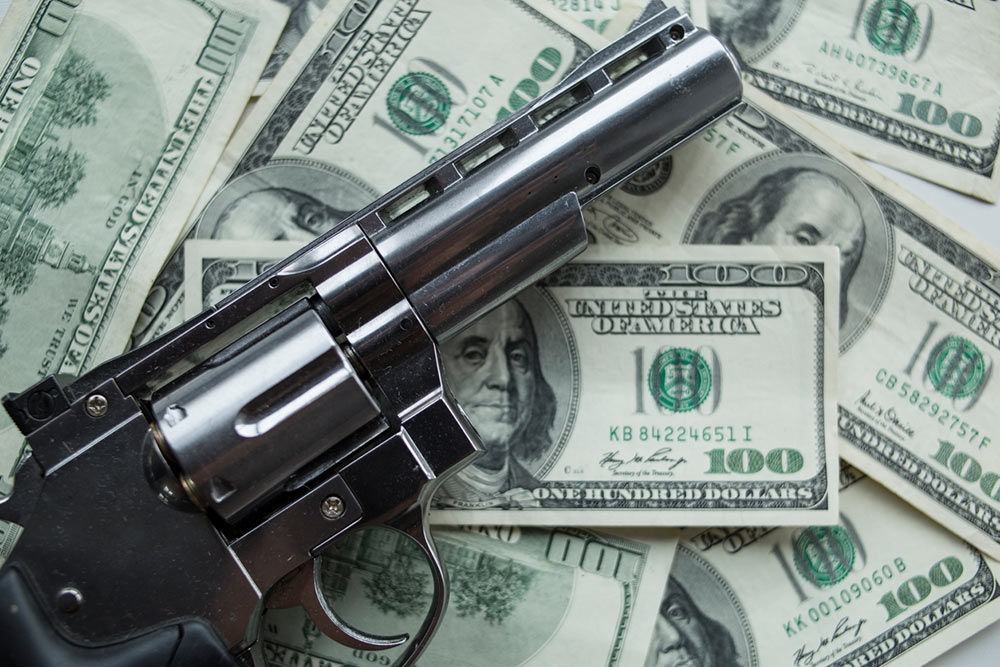
Revolver gun money iStock-1060256694
Biden’s new tax plan infringes on all American’s privacy. IMG iStock-1060256694

U.S.A. -(AmmoLand.com)- The Biden administration’s plan to fund a multitrillion-dollar spending plan includes having the IRS snoop into every American’s bank account to examine transactions that are $600 or greater. This alarming proposal has implications far beyond the government looking to extract tax money. It is also a potential way for the Biden administration to track who is purchasing firearms.

Treasury Sec. Janet Yellin was on Capitol Hill defending the Biden administration’s proposal.

“I think it’s important to recognize that we have a tax gap that’s estimated at $7 trillion over the next decade,” Sec. Yellen said, according to a Fox Business report. “That is taxes that are due and are not being paid to the government that deprive us of the resources that we need to do critical investments to make America more productive and competitive.”

Not Just Taxes, But Purchases

The Biden administration proposes that banks and credit unions report every transaction at the $600 threshold to counter tax cheats. That’s got privacy advocates howling. It is especially concerning for the firearm industry and its customers that the government would collect information that could potentially include firearm purchases. While many firearms sold might not meet that $600 reporting requirement, a significant number would. It threatens to become a back-door gun registry.

Sec. Yellen balked at the notion the government is intruding on financial privacy, explaining the IRS already has “a wealth of information about individuals,” citing examples such as the W-2 form filed for a person’s job, but said the IRS needs more information on “higher-income individuals who have opaque sources of income … not low-income people.”

U.S. Sen. Cynthia Lummis (R-Wyo.) grilled Sec. Yellin over the proposal in a Senate hearing.

“There are obvious privacy concerns for all Americans here and this represents a dramatic new regulatory burden for community banks and credit unions in Wyoming and elsewhere,” Sen. Lummis said. “Do you distrust the American people so much that you need to know when they bought a couch? Or a cow?”

Or a gun.

Trust the IRS?

The proposal is being met with fierce resistance, as it should. The IRS has already proven to be untrustworthy of personal information. The agency has been weaponized for political overreach before. The Department of Justice (DOJ) settled a lawsuit in 2017 brought by dozens of conservative groups after the IRS unfairly scrutinized the tax-exempt status of organizations based on political leanings under the Obama administration, while President Joe Biden was vice president. That was the 2013 scandal in which then-Acting Director of Exempt Organizations at IRS, Lois Lerner remained defiant when called before Congress.

It’s also ironic that the Biden administration is prying into Americans’ private expenditures when it just surfaced that President Biden avoided paying $500,000 from earnings on speaking tours and book sales prior to his White House election.

Congressional Opposition

The attempt to track Americans’ spending on items $600 or more, which would include firearm purchases, isn’t sitting well with banks or lawmakers. The American Bankers Association wrote to both the U.S. House of Representatives and Senate that the proposal, “…implicates customer privacy and data security on a massive scale…” The letter added that the IRS already collects massive amounts of data it is unable to manage.

Sen. John Boozman (R-Ark.), a member of the Senate Financial Services and General Government Appropriations Subcommittee, published a column in The Hill, ripping the proposed reporting requirements as reckless and ripe for abuse.

“Given the IRS’s track record on data security, including a 2015 data breach, tasking the agency to secure additional taxpayer information from nearly every American is a complicated and hazardous gamble, and one the federal government isn’t historically capable of winning.”

Sen. Mike Crapo (R-Idaho) and Rep. Kevin Brady (R-Texas) introduced the Tax Gap Reform and Internal Revenue Service (IRS) Enforcement Act in both chambers as S. 2721 and H.R. 5206. Rep. Brady said in addition to getting a true assessment of the IRS so-called tax gap, “This bill also protects taxpayers from IRS targeting based on their political or religious beliefs and closes loopholes that risk leaking private taxpayer returns.”

Sen. Crapo added, “This legislation places important guardrails around IRS funding to protect taxpayers’ rights and privacy.”

Sen. Tommy Tuberville (R-Ala.) introduced S. 2857, the Banking Secrecy Act, to prohibit any Federal agency from requiring financial institutions to report on the financial transactions of their customers. Sen. Tuberville told media he wants Americans to pay their fair share of taxes, “But I don’t want the federal government, ‘big brother,’ to be harassing private citizens.”

The prospect of a government agency monitoring every $600 expense is deeply concerning. When that prospect is also being brought by an administration bent on enacting gun control by any means and proposed for an agency with a poor track record of securing taxpayer privacy, it is a recipe for disaster. The IRS has no place delving into Americans’ wallets, especially when it is a means to access what is in their gun safe.


About The National Shooting Sports Foundation

NSSF is the trade association for the firearm industry. Its mission is to promote, protect and preserve hunting and shooting sports. Formed in 1961, NSSF has a membership of thousands of manufacturers, distributors, firearm retailers, shooting ranges, sportsmen’s organizations, and publishers nationwide. For more information, visit nssf.org

National Shooting Sports Foundation


The post Is Biden Weaponizing the IRS Against Gun Owners? appeared first on AmmoLand.com.


from https://ift.tt/3uBP7rZ
via IFTTT

Saturday, October 2, 2021

California Other Assault Weapons Registration Period Opens

NRA California Flag American Flag
At this point, it might be easier to list what isn’t a so-called, “Assault Weapon”. IMG NRA-ILA

U.S.A. -(AmmoLand.com)- In 2020, the California legislature passed Senate Bill 118 expanding the definition of “assault weapon” to include a category of “other assault weapons.”  Recently, the California Department of Justice announced the opening of a registration period to run from October 1, 2021, through December 31, 2021, for those individuals who wish to remain in lawful possession of those covered firearms without making any modifications to remove them from the covered category. For those who intend to comply with this registration requirement, please see the below information provided on the California Department of Justice Website https://oag.ca.gov/firearms:​

“Other” Assault Weapon Registration

Penal Code section 30900, as amended, requires any person who, prior to September 1, 2020, lawfully possessed an assault weapon as defined by Penal Code Section 30515 subdivision (a) paragraphs (9), (10), and (11), and is eligible to register an assault weapon as set forth in Penal Code Section 30900, subdivision (c), to submit an application to the DOJ to register the firearm before January 1, 2022. The regulations for Other Assault Weapon Registration that contain additional information regarding registration requirements are now available on the Firearms Regulations/Rulemaking Activities webpage.

Please Note: The “Other” assault weapons registration is NOT affiliated with or an extension to previous registrations, including the “SB 23” and “Bullet Button” assault weapons registrations. Therefore, registrations submitted for assault weapons that do not meet the definition under Penal Code section 30515, subdivision (a), of paragraphs (9), (10), or (11) will be rejected.

Beginning October 1, 2021 at 9:00 AM PST, registration applications may be submitted electronically at https://oawr.doj.ca.gov or by submitting the Other Assault Weapon Registration Form (BOF 1039), available for download from the Forms and Publications webpage. All registration applications, whether submitted electronically or through the mail, must be submitted during the registration period beginning October 1, 2021 at 9:00 AM PST through December 31, 2021 at 11:59 PM PST. The registration fee is $37.19 for one firearm and an additional $5 for each additional firearm registered in a single transaction.

Please Note: Registration applications received or postmarked after December 31, 2021, will not be accepted.

What is considered an “Other” assault weapon?

Pursuant to Penal Code section 30900, subdivision (c), paragraph (1), effective September 1, 2020, an “Other” assault weapon is defined in Penal Code section 30515, subdivision (a), paragraphs (9), (10), or (11), as:

9.       A semiautomatic centerfire firearm that is not a rifle, pistol, or shotgun, that does not have a fixed magazine, but that has any one of the following:

A.      A pistol grip that protrudes conspicuously beneath the action of the weapon.
B.      A thumbhole stock.
C.       A folding or telescoping stock.
D.      A grenade launcher or flare launcher.
E.       A flash suppressor.
F.       A forward pistol grip.
G.      A threaded barrel, capable of accepting a flash suppressor, forward handgrip, or silencer.
H.      A second handgrip.
I.         A shroud that is attached to, or partially or completely encircles, the barrel that allows the bearer to fire the weapon without burning the bearer’s hand, except a slide that encloses the barrel.
J.        The capacity to accept a detachable magazine at some location outside of the pistol grip.

10.   A semiautomatic centerfire firearm that is not a rifle, pistol, or shotgun, that has a fixed magazine with the capacity to accept more than 10 rounds.

11.   A semiautomatic centerfire firearm that is not a rifle, pistol, or shotgun, that has an overall length of less than 30 inches.

For purposes of this section, “fixed magazine” means an ammunition feeding device contained in, or permanently attached to, a firearm in such a manner that the device cannot be removed without disassembly of the firearm action.


About NRA-ILA:

Established in 1975, the Institute for Legislative Action (ILA) is the “lobbying” arm of the National Rifle Association of America. ILA is responsible for preserving the right of all law-abiding individuals in the legislative, political, and legal arenas, to purchase, possess, and use firearms for legitimate purposes as guaranteed by the Second Amendment to the U.S. Constitution. Visit: www.nra.org

National Rifle Association Institute For Legislative Action (NRA-ILA)

The post California Other Assault Weapons Registration Period Opens appeared first on AmmoLand.com.


from https://ift.tt/3mg5siA
via IFTTT