
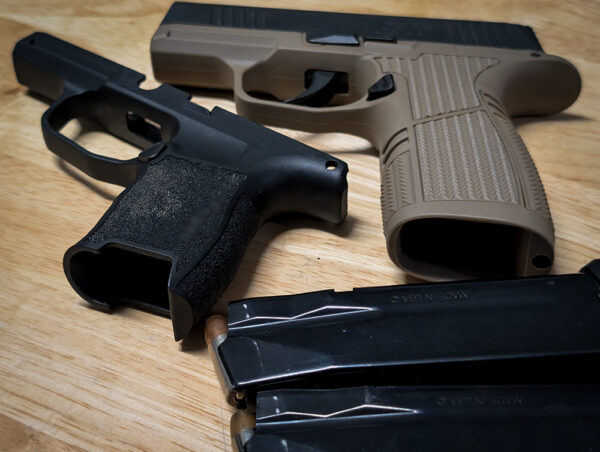
In a development that is sure to send ripples through the firearms industry, Second Amendment advocacy groups, and law enforcement circles, the Bureau of Alcohol, Tobacco, Firearms, and Explosives (ATF) has signaled it will keep the Biden administration’s 2022 “frames and receivers” rule intact. The agency had previously requested stays in two key federal lawsuits, VanDerStok v. Bondi and Defense Distributed v. Bondi, to draft a replacement regulation.
Lawyers for the plaintiffs have now been informed that no new rule will be forthcoming.
The decision marks a significant pivot for the Trump administration’s Department of Justice, which was formerly under Attorney General Pam Bondi and is now under Todd Blanche. Nearly a year after President Trump directed a comprehensive review of Biden-era ATF regulations on February 7, 2025, the agency appears to have concluded that revising the rule, already upheld in key respects by the U.S. Supreme Court, would be impractical or unnecessary.
The move leaves in place one of the most contentious gun-control measures of the past decade, which regulates so-called “ghost guns” by treating certain unfinished firearm components and parts kits as regulated firearms.
The rule, formally known as ATF Final Rule 2021R-05F and titled “Definition of ‘Frame or Receiver’ and Identification of Firearms,” was finalized on April 26, 2022. It dramatically expanded the regulatory reach of the Gun Control Act of 1968 (GCA). Under the original 1968 law, a “firearm” includes “any weapon…which will or is designed to or may readily be converted to expel a projectile by the action of an explosive” or “the frame or receiver of any such weapon.” Traditionally, the ATF interpreted “frame or receiver” to mean a completed, functional part capable of housing the firing mechanism.
The 2022 rule changed that. It redefined “frame or receiver” to encompass “partially complete, disassembled, or nonfunctional” frames and receivers that can be readily completed with common tools. It also classified certain “weapon parts kits” bundles of components that include an unfinished frame or receiver, along with other parts, as firearms themselves if they are “designed to or may readily be converted” into a working gun.
Sellers of these kits must now obtain federal firearms licenses (FFLs), serialize the items, conduct background checks on buyers, and maintain record-keeping requirements previously avoided by many manufacturers of 80% lowers, polymer kits, and build-your-own kits popular with hobbyists.
The ATF justified the change by pointing to an alleged surge in untraceable “ghost guns.” Law enforcement reports showed ghost gun recoveries in crimes skyrocketing from roughly 1,600 in 2017 to over 19,000 in 2021. Although this stat includes guns with obliterated serial numbers, homemade or kit-built firearms lack them; the ATF claims this makes them difficult to trace in investigations. Proponents, including anti-gun organizations like Everytown for Gun Safety, hailed the rule as a common-sense update to close a loophole exploited by criminals and prohibited persons.
Critics, however, argued it overreached. Groups like the Firearms Policy Coalition (FPC), Second Amendment Foundation (SAF), and manufacturers such as Polymer80 and Defense Distributed contended that the ATF was rewriting congressional intent. They pointed out that millions of Americans have legally built firearms at home since the founding era, a practice protected by the Second Amendment and never subjected to such broad serialization mandates for unfinished parts. The rule, they said, turned law-abiding hobbyists into potential felons overnight and burdened small businesses.
The rule faced immediate legal challenges. In VanDerStok v. Garland (later VanDerStok v. Bondi), plaintiffs, including Jennifer VanDerStok, Michael Andren, Tactical Machining, and others, filed suit in the Northern District of Texas. U.S. District Judge Reed O’Connor vacated the rule nationwide in 2022, ruling it exceeded the ATF’s authority under the GCA. The Fifth Circuit largely affirmed, holding that the statute’s plain text covered only complete weapons and finished frames or receivers, not kits or partially machined parts.
The Biden administration appealed to the Supreme Court. In a landmark 7-2 decision on March 26, 2025, the Court reversed the Fifth Circuit in Bondi v. VanDerStok.
Justice Neil Gorsuch, writing for the majority, held that the rule was not facially inconsistent with the GCA. The Court reasoned that terms like “weapon,” “frame,” and “receiver” are “artifact nouns” that can encompass unfinished items when their intended purpose is clear. For example, a Polymer80 “Buy Build Shoot” kit, assemblable in about 20 minutes with basic tools, qualifies as a “weapon…which…may readily be converted.” Similarly, some partially complete frames fall within the statutory definition. However, the ruling was narrow: it applied only to a facial challenge and left open as-applied challenges for more incomplete kits. Justices Clarence Thomas and Samuel Alito dissented.
The case was remanded to the district court for further proceedings. A parallel challenge by Defense Distributed, the company founded by Cody Wilson, known for 3D-printed firearms and the “G80” kit, remained active. Plaintiffs there shifted their focus to constitutional claims under the Second Amendment and the Due Process Clause, arguing that the rule burdens the right to possess arms for personal use, a tradition dating back centuries.
Following the Supreme Court’s ruling and Trump’s February 2025 executive order directing review of Biden-era ATF rules for Second Amendment consistency, the DOJ under Bondi sought time to reassess.
In early April 2026, in VanDerStok v. Bondi, the government requested a 90-day stay of proceedings, citing plans to promulgate a revised frames-and-receivers rule. A joint status report in the case explicitly referenced the upcoming new regulation, which the DOJ said might resolve or moot some of the plaintiffs’ remaining claims. Similar requests were made in the Defense Distributed litigation.
Gun rights advocates expressed cautious optimism. Many expected the new rule to narrow the definition, exempt more unfinished parts, or provide clearer guidance, potentially aligning with Trump’s pro-Second Amendment stance. Industry groups like 80 Percent Arms had already updated their websites to reflect the ongoing uncertainty.
Then came the breaking news. Lawyers for the plaintiffs were informed this week that the ATF has decided not to issue a new rule. The Biden-era regulation will remain in effect. The about-face stunned observers.
BREAKING
Trump’s Department of Justice has decided to ADOPT Biden’s anti-gun rule that heavily restricts homemade firearms.
This is in stark contrast to the White House, which just called this Biden rule an “attack” on gun owners that “undermine[s] the Second Amendment.” pic.twitter.com/7ev3B8sQof
— Gun Owners of America (@GunOwners) April 9, 2026
No official explanation has been released, but AmmoLand sources close to the litigation suggest internal reviews concluded that rewriting the rule would invite further legal and political complications, especially after the Supreme Court’s endorsement of its core framework. The agency may also prioritize other enforcement priorities amid its broader “new era of reform,” which has already included ending zero-tolerance policies for FFLs.
Anti-gun advocates welcomed the decision. Everytown and similar groups praised it as preserving a vital tool against untraceable firearms, noting that ghost guns continue to appear in mass shootings and street crime. They urged the ATF to enforce the rule vigorously.
On the other side, Second Amendment organizations reacted with frustration. The FPC and SAF, lead plaintiffs in the cases, called the retention “a betrayal of the review process” and vowed to press forward with constitutional challenges.
“The fight is far from over,” a Defense Distributed spokesperson said. “We will seek preliminary injunctions and argue that the rule violates the historical tradition of private arms-making.”
Manufacturers worry about compliance costs: serialization of 80% lowers could drive up prices and force many small businesses out of the market. Hobbyists fear that even basic jigs and unfinished parts could trigger federal scrutiny.
Law enforcement perspectives are mixed. While anti-gun groups argue the rule aids tracing in some investigations, critics within police ranks note that most ghost guns are still assembled by law-abiding citizens, not criminals. The rule’s vagueness, relying on subjective “readily convertible” tests, has already led to inconsistent enforcement.
The ATF’s decision does not end the litigation. The district court in Texas must now address the remanded claims, including whether the rule is lawful as applied to specific products and whether it survives Second Amendment scrutiny under the Bruen framework. Congress could also intervene, though prospects for legislation remain dim in a divided landscape.
For now, the 2022 rule stands as the law of the land. Americans selling certain unfinished frames, receivers, or parts kits must treat them as firearms or risk felony charges.
First Circuit Says Second Amendment Does Not Protect Buying Guns in Beckwith v. Frey
About John Crump
Mr. Crump is an NRA instructor and a constitutional activist. John has written about firearms, interviewed people from all walks of life, and on the Constitution. John lives in Northern Virginia with his wife and sons, follow him on X at @crumpyss, or at www.crumpy.com.

from https://ift.tt/RbTGjIi
via IFTTT

No comments:
Post a Comment