Sunday, December 7, 2025

‘Stand Your Ground’ Recalls Nightmare Ordeal After Lawful Self-Defense

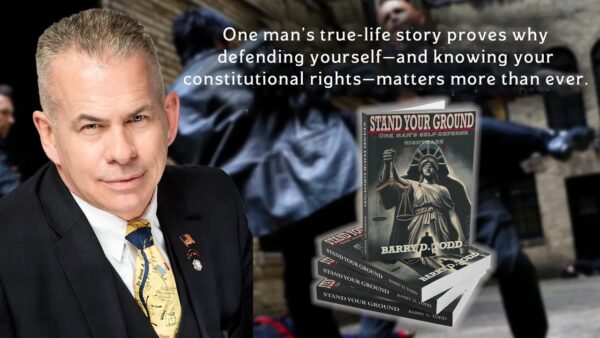
Todd’s story offers cautions and lessons for all gun owners who believe in the right of self-defense. (StandYourGroundBook.com/Used with permission)

“In 2014, Barry’s life was turned upside down when he found himself facing charges of attempted murder, aggravated assault with a deadly weapon, and aggravated assault with intent to cause serious injury and bodily harm,” the synopsis for Stand Your Ground: One Man’s Self-Defense Nightmare explains. “It began when he was assaulted by a man outside a restaurant in Arizona, and he acted in self-defense by displaying his firearm. However, during the struggle, the weapon discharged when the attacker jumped on top of him, leading to a series of devastating accusations.”

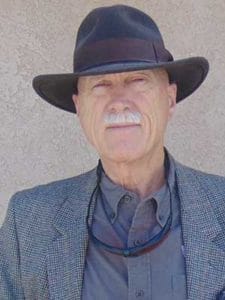
The man is Barry D. Todd, of Yuma, AZ, a family man who has not just been a good, law-abiding citizen all his life, but an exemplary one. He’s a retired Army Captain with over two decades served “in  B Company (Rangers), the 3rd Ranger Company, multiple Ranger Airborne assignments in the 82nd Airborne Division, the 101st Airborne Division, the 10th Mountain Division, the 2nd Infantry Division (Korea), the 24th Mechanized Division, and V Corps (Europe).” Following the military, Todd became a financial advisor, ultimately founding his own firm that became Invicta Financial Group, “serv[ing] a select group of clients (families/businesses) who desire to achieve a higher quality of life by making smart choices about their money.”

That background information is necessary to understand what kind of man Todd is, and to emphasize that if being prosecuted for self-defense can happen to an upstanding citizen like him, it can happen to any of us. Stand Your Ground leads the reader through the series of events and seemingly overwhelming and disheartening obstacles Todd had to overcome. Todd’s ordeal shows us what can happen when the state, with unlimited resources, decides to put you in its sights, and demonstrates how when that happens, one needs  not only the wherewithal to fight for his rights, but  also an indomitable will not give up in despair.

Determined to accept nothing short of vindication, Todd refused to surrender and would not break.

So, what happened?

He went out with his wife and a “close knit circle of friends” to a local bar and grill to celebrate the growth of his business and to have a good time. There, he was accosted and threatened by another patron, who at first appeared amiable, and then, for reasons that are still not clear, became hostile. Todd tried to defuse the situation and left to retrieve a can of snuff from his car, but when he tried to reenter was assaulted and told by his attacker he would not let him back in. Determined to retrieve his wife, his wallet, and his phone, Todd warned him that he had a gun in his car and went to get it. Displaying, but not aiming the gun, his attacker — and a bystander, who did not realize who the real aggressor was — jumped Todd, and the gun was discharged in the struggle for it, resulting in the attacker being shot and wounded.

What followed was an arrest and then years of legal proceedings and multiple grand jury hearings pursued by a seemingly vindictive prosecutor determined to brand Todd  a criminal and punish him. Todd presents it all in a way that proceeds from narrative to actual courtroom transcripts, giving the book a sort of “Perry Mason” feel, especially as witnesses the prosecution was relying on to seal its case suddenly change their testimony on the stand when confronted with video evidence of what actually happened.

And spoiler alert: He’s a free man today with his rights intact.

As gun owners, Barry Todd’s story especially resonates with us. We know that something similar to what was forced on him, where we suddenly find ourselves having to defend ourselves against a previously unknown threat, could happen when we least expect it. And we know that police and prosecutors will often be personally and politically incentivized to treat us like criminals, and to interpret events to support their interests rather than ours. And speaking for myself, I’ve always found stories of the underdog who prevails victorious because he wouldn’t give up against all odds to be inspiring, that is, conduct and fortitude to aspire to should the trap ever close around me.

So instead of “just” a book review, I figured AmmoLand readers would benefit not from my second-hand interpretation, but from the man himself, who agreed to answer some questions:


DC: I’m still not clear on what your assailant’s beef with you was.  Have you gotten a clearer feeling since on why he was mad enough at you to attack you, have you heard from him since, and do you foresee him still harboring resentment toward you and potentially posing a danger?

BT: No, I do not. I can share that in his statement he did not remember anything after playing darts, which according to the video was about 30 to 45 minutes prior to attacking. We believe he drank so much he had blacked out.

DC: If confronted with a similar situation today, would you do anything differently in terms of how you presented your gun?

BT: In Arizona – No, I followed the law to the letter.

DC: You initially made the decision not to talk to the police without the benefit of counsel. You then changed your mind and explained your side of things to the detective. What would you advise someone in a similar situation to do, and why?

BT: Don’t share anything with the police. In fact, I would recommend adhering to 3 lessons learned:

  1. Have appropriate self-defense insurance.
  2. Don’t’ talk to the police until you have your lawyer present.
  3. Remember, you are the CEO of your legal team you are writing the checks. Read everything and hold them accountable.

DC: You generally had high praise for your attorney throughout. That said, his not realizing that Arizona had changed the law from “affirmative defense” to “justification defense” struck me as something I’d have had a real problem with. Can you explain the difference between the two, and how you handled it when you had to point it out?

BT: Part 1:

  1. Affirmative defense means if you as a defendant claim self-defense you have to prove it was self-defense. In other words, affirmative defense has a presumption of guilt.
  2. Justification defense means if you as a defendant claim self-defense the onus passes the prosecution to prove it wasn’t self-defense. In other words, it provides a presumption of innocence. Most people today do not realize that this is one of the cornerstones that makes us a Constitutional Republic. For many decades, the Lawfare has taken over our police forces and court systems to the pretense of protection & security for our citizens and all the while eroding our rights under the Constitution.

Part 2:  When my attorney called me after researching what I had shared on the changes in AZ law, he was extremely humble taking ownership for not researching the updated AZ laws and admitted I was correct. For that misstep he waived my next quarterly fee of $25k. We all need grace, and I learned from my years in the Rangers to be patient with those who commit errors of commission…. vs. errors of omission.

DC: How much time and money did this take from the time of your arrest until its conclusion, including making sure your business interests complied with all the state and federal requirements?

BT: Around $650,000 and nearly 8 years.

DC: You had the will and the wherewithal to fight this to the end. Most gun owners won’t have your financial resources to defend themselves with, and the temptation to take a plea and throw themselves at the mercy of the prosecution will be strong. You emerged from your ordeal determined to help others by setting up the Defense Resources Foundation.  Tell us about that, how it’s going, and what you look for in deciding who you’re in the best position to help?

BT: The Defense Resources Foundation was created to provide financial support to individuals who are being unfairly targeted or who are facing criminal charges after legitimately defending themselves. We’re still in the very early stages of building the foundation, and while initial book sales have been good, they haven’t yet reached the level we need to fully launch our mission. Every additional purchase goes directly toward helping us get off the ground so we can begin assisting people who desperately need support.

We focus our efforts on cases where there is strong evidence of lawful self-defense, clear signs of prosecutorial overreach, or situations where someone is being targeted because of their political beliefs. Those are the individuals we are in the best position to help—people who did the right thing but lack the financial means to protect themselves in court. Our goal is to ensure they aren’t left to face the system alone.


You can order a copy of for Stand Your Ground: One Man’s Self-Defense Nightmare from Amazon, Barnes & Noble, and Dorrance, all linked on the standyourgroundbook.com website. And you can find out more about Defense Resources Foundation’s services and how to get involved at  defenseresourcesfoundation.org.


About David Codrea:

David Codrea is the winner of multiple journalist awards for investigating/defending the RKBA and a long-time gun owner rights advocate who defiantly challenges the folly of citizen disarmament. He blogs at “The War on Guns: Notes from the Resistance,” is a regularly featured contributor to Firearms News, and posts on Twitter: @dcodrea and Facebook.
David Codrea


from https://ift.tt/3U0rfGH
via IFTTT

Saturday, December 6, 2025

This Is Why You Stay Armed: DOT Worker Killed in Brutal Mother-Daughter Attack ~ VIDEO

Opinion

Beware the shod foot!

On 17 Oct 25, an aging City of Baltimore DOT employee (unarmed) was out in the city. He approached (on foot) a parked car occupied by a woman and her teenage daughter in order to politely tell them that someone was waiting for the parking spot.

The teenage girl became instantly enraged, bolted from the vehicle, and immediately attacked the DOT employee with her fists. The girl’s mother also exited the vehicle and quickly joined-in, jumped on the DOT employee’s back, forcing him to the ground.

Both mother and daughter then kicked and stomped the DOT employee’s head severely enough to cause significant brain injury, which in fact proved ultimately fatal. The hospitalized DOT employee never recovered and died from his injuries the day before Thanksgiving.

The mother was subsequently arrested. She is a convicted felon, and was “out on parole” at the time of the incident. No signs the daughter has been arrested or charged.

Lessons:

1) This City employee was doing the job he is paid to do. The rest of us need to be acutely aware of the fact that our world is full of unstable people, and many among the “unstable” are precipitously homicidal in certain circumstances, as we see!

Accordingly, confronting unstable people, in any circumstance, is extremely dangerous. We are thus well-advised to be very good at minding our own business and not voluntarily inject ourselves into other people’s affairs.

“Road-rage” is not confined to roads!

2) Many fail to appreciate the dynamics and extreme dangers associated with a “gang-beating.” It does not take much to get knocked off your feet, and once you go down, you’re within easy range of lethal stomps and kicks. Being thus simultaneously attacked while on the ground by multiple assailants is often mortal (as it was in this case). Your attackers will probably not be barefoot, and concrete does not provide much of a “cushion!”

3) Gunfire will disperse most mobs, even homicidal ones, instantly! Smoothly drawing your concealed pistol and shooting accurately while on the ground are critical skills, and ones that will prevent you from being stomped to death!

4) As our Secretary of Transportation recently pointed out, “civility” is currently at a historic low in our civilization. Aggravated verbiage, particularly with people you don’t know, needs to be averted, but quickly de-escalated when unavoidable.

A little courtesy goes a long way!

5) Everyone, but especially those of us who go armed, need to periodically review the places we go and the people with whom we associate.

“Don’t be there” continues to be the best way to handle any dangerous situation.

“Get out of there” continues to be the second-best!

“The ‘moral high-ground’ gets real windy at night” ~ Tommy Norris (played by Billy Bob Thornton) in the 2024 “Landman” TV series.

/John


About John Farnam & Defense Training International, Inc

As a defensive weapons and tactics instructor, John Farnam will urge you, based on your beliefs, to make up your mind about what you would do when faced with an imminent lethal threat. You should, of course, also decide what preparations you should make in advance if any. Defense Training International wants to ensure that its students fully understand the physical, legal, psychological, and societal consequences of their actions or in-actions.

It is our duty to make you aware of certain unpleasant physical realities intrinsic to Planet Earth. Mr. Farnam is happy to be your counselor and advisor. Visit: www.defense-training.com

John Farnam
John Farnam

We are in dangerous times! We are SO CLOSE to our final funding goals! With your help we can make it!

The Pentagon Loves Warrior Talk — So Why Are Our Troops Still Disarmed Targets? ~ VIDEO

Teenager Stabbed 18+ Times at Miami International Airport, Stay Frosty ~ VIDEO


from https://ift.tt/3bZidt4
via IFTTT

‘Devil Made Me Do It’ Lawsuits Creep Back Into Courts

Opinion
By Larry Keane

FBI Document Leak: Gun Owners Are Violent ExtremistsiStock-1422002264
iStock-1422002264

What’s old is new, again. That’s the case when it comes to public nuisance lawsuits. Those are those pesky lawsuits brought by municipalities that bring claims against entities alleging that their lawfully-made and lawfully-sold products or services are harmful to communities.

In reality, they’re a trial lawyer’s dream. They attempt to place the blame on remote third parties for the failings — and even the criminal actions — of those who are ultimately responsible for their own behavior. Lawsuits like these are an attempt to absolve an individual of responsibility for their own actions and instead, like a petulant child, claim that “the devil made me do it.”

That devil, of course, is the nearest target of that blame deflection. With public lawsuits, they also happen to be companies. Those companies represent deep pockets. Those trial lawyers see a payout. The activists working hand-in-glove with those trial lawyers see the reward in the devious notion that they can bleed those companies dry with legal costs and court fees, settlements, or even damage awards if they get lucky.

This is nothing new to those in the firearm industry. As Yogi Berra once said, “It’s déjà vu all over again.”

What’s Old is New

Think back to the late 1990s and early 2000s. That’s when public nuisance lawsuits against the firearm industry lawsuits were piling up. Over 40 big city mayors conspired through the U.S. Conference of Mayors with gun control activist lawyers from the Brady Center and greedy trial lawyers. Their plan was to haul firearm manufacturers and sellers into court to make the industry pay for the criminal misuse of legal, non-defective firearms lawfully sold after a background check to law-abiding Americans exercising their Second Amendment rights. These lawsuits amounted to suing Ford or General Motors for the harm caused by drunk drivers.

This legal nightmare for the industry began when New Orleans filed suit on Halloween Day in 1998 followed the next day by Chicago’s Democratic Mayor Richard Daley. The last of the municipal lawsuits was filed by then-New York Attorney General Eliot Spitzer in June of 2000. All the cities were run by Democrat mayors, except for then-New York City Republican Mayor Rudy Giuliani whose case was taken over by Michael Bloomberg when he was elected mayor of the Big Apple. Even New York’s former Gov. Andrew Cuomo, who was serving as President Bill Clinton’s Secretary of Housing and Urban Development, got involved when he organized dozens of local housing authorities to bring their own lawsuits against gunmakers and threatened the industry with “death by a thousand cuts.”

The majority of the states — 33 — saw the misuse of the legal system and passed their own state laws barring these lawsuits from clogging court dockets and bankrupting companies through legal fees. Congress finally acted. The bill that would become the Protection of Lawful Commerce in Arms Act (PLCAA) passed out of the U.S. House of Representatives with a lopsided approval of 283–144. The same happened in the U.S. Senate, which passed the measure 65–31. President George W. Bush signed it in 2005. The PLCAA does nothing more than codify black letter tort law.

No other industry in America had been so targeted by such baseless, politically motivated lawsuits.

New Challenges

That hasn’t stopped today’s antigun politicians, lawyers and activists from dusting off the worn-out playbook to start it all over again. So far, 10 states — California, Colorado, Connecticut, Delaware, Hawaii, Illinois, Maryland, New Jersey, New York and Washington — enacted laws in an attempt to circumvent the PLCAA and allow these sorts of frivolous lawsuits. They use public resources (read taxpayer dollars and taxpayer-funded attorneys general) to bring about these frivolous lawsuits, often in coordination with Everytown for Gun Safety, that attempt to shift the blame for the criminal actions of an individual to companies that lawfully produce and lawfully sell firearms.

NSSF is challenging those laws. There are five challenges against those state laws pending in courts today. The problem these laws face is that they still run into the fact that PLCAA is federal law. The PLCAA simply says that these agenda-driven lawsuits can’t be brought against a manufacturer that had nothing to do with the criminal or wrongful misuse of their product. And these laws aren’t unique to the firearm industry, despite the rhetoric by antigun politicians and activists. Vaccine makers have similar protections. The 2005 Public Readiness and Emergency Preparedness Act gives the Health and Human Services Secretary authority to provide legal protection to companies making or distributing the vaccines.

Manufacturers of medical devices, the airline industries and even online service and content providers are protected from frivolous lawsuits when defamatory information posted is by others.

Personal Responsibility

Sadly, that doesn’t matter much to trial lawyers and some politicians. They look for a convenient target and their bank account. It is legalized judicial extortion — it is a shakedown. The City of San Francisco just filed a lawsuit against 10 major food companies alleging they made, marketed and sold products that city officials claim the companies knew were harmful to the health of their customers, in this case, San Francisco residents. San Francisco’s lawyers claim this contributes to a “public health crisis,” language that is eerily similar to the claims they use against the firearm industry.

Just like the public nuisance lawsuits against the firearm industry in the late 1990s and early, 2000s, fast food giants faced similar claims against them during the same time period. In 2002, Joseph Connor — a 420-pound man — sued McDonald’s claiming his obesity was that fast food company’s fault. He claimed his obesity, which cost him a job, was due to their food products. That case was ultimately settled. In 2002, Caeser Barber of New York sued Wendy’s, Burger King, Kentucky Fried Chicken and McDonald’s, alleging the fast food giants failed to warn of the ill health effects. He ate at those restaurants four times a week and alleged his obesity, diabetes and multiple heart attacks were the fault of the restaurants. His case was dismissed with prejudice. In 2002, Gregory Himes, a 400-pound 15-year-old, along with nine other teens sued McDonald’s over their health-related concerns after eating at there every day since he was six. The class-action lawsuit was dismissed in 2010.

These all have a similar undercurrent. The lawsuits attempt to absolve individuals of responsibility of their decisions. In the case of fast-food restaurants, the individuals chose to eat at establishments. In the case of the firearm industry, lawyers representing the cities are attempting to absolve criminals that wrongfully misuse a lawfully-made and lawfully-sold product.

President Ronald Reagan offered sage advice that still holds true today. He said, “We must reject the idea that every time a law’s broken, society is guilty rather than the lawbreaker. It is time to restore the American precept that each individual is accountable for his actions.”

That time is now.


About The National Shooting Sports Foundation

NSSF is the trade association for the firearm industry. Its mission is to promote, protect and preserve hunting and shooting sports. Formed in 1961, NSSF has a membership of thousands of manufacturers, distributors, firearm retailers, shooting ranges, sportsmen’s organizations, and publishers nationwide. For more information, visit nssf.org

National Shooting Sports Foundation


We are in dangerous times! We are SO CLOSE to our final funding goals! With your help we can make it!


from https://ift.tt/1bHqvyY
via IFTTT

Friday, December 5, 2025

Stemming the Criminal Tide in Chicago—Feds Step Up Enforcement ~ VIDEO

Opinion

In August, the Trump White House released an article titled, Yes, Chicago Has a Crime Problem — Just Ask its Residents, which pointedly noted that for “13 consecutive years, Chicago has had the most murders of any U.S. city,” yet “Democrat politicians seem far more upset about the offer of [federal] assistance than the crime epidemic in their own backyards.”

In a horrifying example of an apparently random and unprovoked violent crime, last week a 26-year-old female passenger was set on fire on the Chicago subway. Information now available alleges that the man suspected of the attack purchased gasoline approximately 20 minutes before he approached the victim from behind, poured the liquid over her head and body, and “stood watching … as her body was engulfed in flames.” None of the other passengers, it is claimed, “stepped in to help after the woman was set on fire.”

According to local news source CWB Chicago, the suspect allegedly “has had 53 criminal cases filed against him in Cook County since 1993, including nine felonies;” all of the felonies “ended with guilty pleas, but only two resulted in jail sentences.” Lately, he was reportedly released on electronic monitoring (despite his extensive criminal history and the prosecutors’ request to keep him in custody) pending trial for aggravated battery causing great bodily harm after he allegedly beat a female social worker unconscious in August. CWB Chicago notes he “is the 19th person accused of killing or trying to kill someone in Chicago this year while on felony pretrial release.”

This is far from an isolated incident.

The White House article lists many of the city’s carjackings, “smash and grab” burglaries, shootings and other crimes, and CWB Chicago runs a separate section dedicated to offenses committed in and around Chicago Transit Authority (CTA) property. Over the last several weeks these have included “three men who robbed a 15-year-old boy at gunpoint aboard a Green Line train,” two men “wearing ankle monitors for pending cases” who “teamed up to mug a passenger aboard a Red Line train, a pregnant woman who was “violently attacked and robbed” in a CTA pedestrian tunnel, and a man “shot and critically injured during a robbery aboard a Red Line train.”

The state concealed carry law forbids licensees from carrying firearms on public transit unless the firearm is unloaded and stored so it is not immediately accessible, and the CTA code of conduct prohibits “[p]ossessing or carrying any weapon including, but not limited to, guns, clubs, knives, stun guns, tasers and explosive devices.” In September, the U.S. Court of Appeals for the Seventh Circuit upheld the prohibition on licensees carrying within CTA facilities as constitutional under the precedent set in Bruen, despite there being no historical tradition of banning firearms on public transit. A petition seeking review by the U.S. Supreme Court has since been filed.

There is one hopeful sign for Chicago’s beleaguered residents. U.S. Attorney Andrew S. Boutros, the top federal law enforcement official for the Northern District of Illinois, has stepped up prosecutions against violent criminals and firearm offenders under the “Project Safe Neighborhoods” (PSN) program. The program “is a federally funded, nationwide initiative that brings together federal, state, and local law enforcement and other stakeholders to identify the most pressing violent crime problems and develop comprehensive solutions to address them.”

Under Boutros, who was appointed to the position in April, there’s been an emphasis on increased enforcement and prosecutions: “Overall, federal criminal indictments in all program areas in the Northern District of Illinois in 2025 are up 45% (366 versus 252) compared to last year,” and the “number of defendants charged in all program areas in 2025 is up 52% (494 versus 325) compared to last year.” Boutros is clear that addressing illegal gun offenses and violent crimes “is a national priority for this Department of Justice, and it is a top priority of mine as U.S. Attorney for the Northern District of Illinois.”

As part of the federal Department of Justice’s crime reduction strategy, Boutros had earlier declared the entire rail system operated by the Chicago Transit Authority (CTA), “including all train lines operating in every neighborhood from every part of the city,” to be part of a newly established PSN zone. The announcement marked the first time “anywhere in the country that the program will be deployed on mass transit.” The press release on the expansion warned that enforcement efforts in the zone would focus on illegal firearm possession, drug trafficking, robberies, carjackings, and other violent crimes. “For violent offenders arrested downtown or aboard CTA trains, criminal prosecutors will bring appropriate charges to achieve maximum deterrence and will seek pretrial detention and substantial prison sentences for defendants who pose a danger to the community.”

These were not just empty political promises, as on November 19, the U.S. Attorney’s Office in Chicago charged Lawrence Reed, the man suspected of setting the CTA passenger on fire, with the federal offense of committing a terrorist attack against a mass transportation system. The crime, a violation of 18 U.S.C. 1992, is punishable by a maximum sentence of life in federal prison.

While a complaint is not evidence of guilt and the defendant is presumed innocent and entitled to a fair trial at which the government has the burden of proving guilt, the prosecution is a welcome indication that regardless of state and civic officials’ hitherto soft-on-crime, “defund the police” and anti-victim policies, the future for residents might not be one of perpetual lawlessness.

Prosecutions, though, are after-the-fact responses to criminal acts that have, in most cases, already occurred. A proactive crime prevention strategy would recognize that the need for self-defense is particularly acute on public transportation and allow responsible citizens to possess firearms in such public places where they are more vulnerable to attack. The state carry law and the CTA weapon ban only expose the folly of assuming that a gun-free zone means a crime-free zone, and ensure that when the need arises, law-abiding passengers remain easy pickings for Chicago’s crooks and thugs.


About NRA-ILA:

Established in 1975, the Institute for Legislative Action (ILA) is the “lobbying” arm of the National Rifle Association of America. ILA is responsible for preserving the right of all law-abiding individuals in the legislative, political, and legal arenas, to purchase, possess, and use firearms for legitimate purposes as guaranteed by the Second Amendment to the U.S. Constitution. Visit: www.nra.org

National Rifle Association Institute For Legislative Action (NRA-ILA)


We are in dangerous times! We are SO CLOSE to our final funding goals! With your help we can make it!


from https://ift.tt/CM026fZ
via IFTTT

Thursday, December 4, 2025

Where’s My EMP Rifle? Why Tomorrow’s Anti-Robot Weapons Are Already Protected by the 2nd Amendment

Opinion

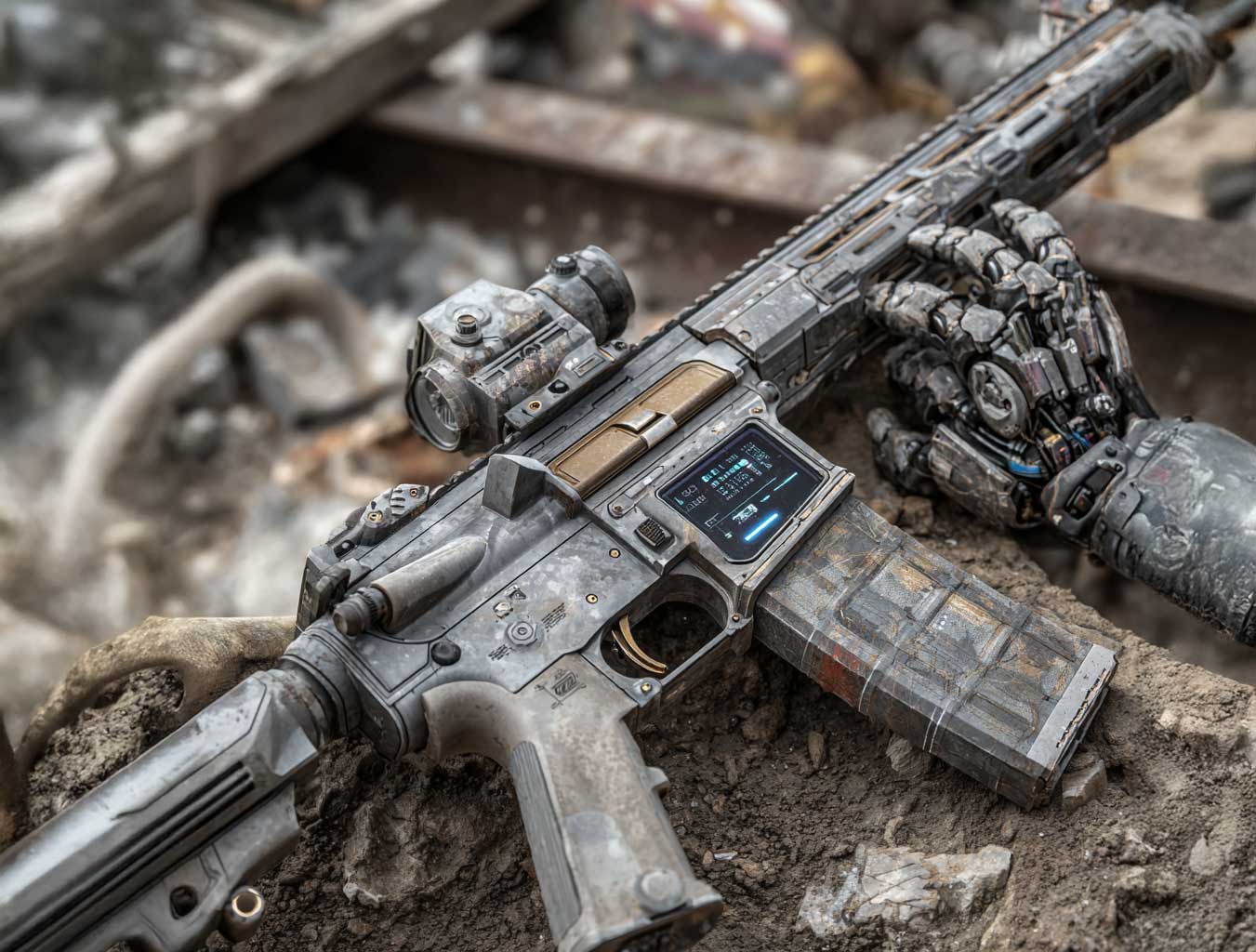
EMP rifle Type 1 Midjourney 1242025
EMP rifle Type 1

If Elon Musk gets his way, Tesla’s Optimus robots and full-self-driving cars aren’t just sci-fi—they’re the next multi-trillion-dollar industry.

Musk is openly talking about humanoid robots doing factory work, replacing human labor, and rolling out in the thousands in the next few years. (The Times of India)

Put that together with weaponized drones, autonomous systems, and AI everywhere, and you can see where this goes: at some point, the threat to you and your family may not be a human attacker at all, but a machine—whether it’s criminal misuse of robots, hostile code, or a rogue state’s toys.

So here’s the obvious question almost nobody in the gun-control world wants to touch:

If the Supreme Court says the Second Amendment covers “all instruments that constitute bearable arms, even those that were not in existence at the time of the founding,” why wouldn’t a future EMP rifle or anti-robot weapon be protected? (Justia Law)

If the right to keep and bear arms is tech-neutral, then the logic of Heller, McDonald, Caetano, and Bruen doesn’t stop with muskets, Glocks, and AR-15s. It runs straight into the age of Tesla robots and directed-energy weapons.

Lets makes that case—and swat down the usual anti-gun talking points on the way.

The Supreme Court Already Answered The “But It Didn’t Exist In 1791!” Argument

The anti-gun side’s favorite dodge is simple: “If it didn’t exist when the Founders wrote the Second Amendment, it’s not protected.”

The Supreme Court has already burned that argument to the ground—twice.

In District of Columbia v. Heller (2008), the Court went back to founding-era dictionaries to define “arms” and found they meant “weapons of offence, or armour of defence” and “any thing that a man wears for his defence, or takes into his hands, or useth in wrath to cast at or strike another.” (Teaching American History)

That definition isn’t about flintlocks or bayonets. It’s about function: offensive or defensive weapons you can carry.

Then in Caetano v. Massachusetts (2016), the Court took the next step and hammered it home:

“The Court has held that ‘the Second Amendment extends, prima facie, to all instruments that constitute bearable arms, even those that were not in existence at the time of the founding.’” (Justia Law)

That’s not vague. That’s not soft. That’s a straight-up rule:

  • If it’s a bearable arm—a carried weapon for offense or defense—
  • It’s presumptively protected by the Second Amendment.

Stun guns weren’t around in 1791. The Court said: Doesn’t matter. They’re arms.

So, if tomorrow there’s a shoulder-fired EMP rifle or some compact anti-robot beam weapon you sling like a carbine, it fits the same box:

  • Bearable? Yes.
  • Weapon? Yes.
  • In existence in 1791? Irrelevant under Heller and Caetano.

On text alone, that future tech starts in the protected column.

“EMP rifle” As A Test Case: What Are We Actually Talking About?

To keep this clean and safe, let’s define “EMP rifle” in a narrow, defensive way:

  • A non-nuclear, directional device you shoulder and aim like a rifle;
  • Designed to disable electronics, terminate robots, not vaporize cities;
  • Tuned for short-range defense—stopping hostile drones, robots, or electronics threatening your home, your family, or your community.

Just like a firearm can be misused but is still protected as an “arm,” the mere possibility of criminal abuse doesn’t erase constitutional coverage.

Under the Supreme Court’s own language, if you can carry it and use it for defense, it lives in the same conceptual category as stun guns, tasers, handguns, and rifles.

The Court has already said that “modern instruments that facilitate armed self-defense” are within the Second Amendment’s plain text. (Harvard Law Journals)

A directed-energy device that lets you stop an attacker’s autonomous gadget before it reaches your front door is exactly that.


Bruen’s Rule: Once It’s An “Arm,” The Burden Is On The Government

After Bruen (2022), the test for gun laws is brutally simple—at least on paper.

  • Step 1: If the Second Amendment’s plain text covers the conduct (keeping/bearing an arm), the right is presumptively protected.
  • Step 2: The government must then justify its restriction by showing it fits our historical tradition of firearm regulation. (Supreme Court)

That means:

  1. If an EMP rifle is a bearable arm, it’s covered by the text.
  2. The burden shifts to the state, not the citizen, to prove there is some deep, well-rooted historical tradition of banning that kind of arm.

And here’s where the anti-gun side has a massive problem.

There is zero founding-era tradition of banning a class of personal defensive arms solely because they were technologically advanced. The Founders watched weapons tech evolve in real time—rifled barrels, repeating arms, early ordnance—and still chose language broad enough to cover “all instruments that constitute bearable arms.” (liberty.lawbooks.cali.org)

If history protects handguns, AR-15s, knives, clubs, and electronic weapons like tasers, it’s very hard to explain why a future anti-robot device would suddenly be off-limits.

“Dangerous & Unusual”? Nice Try but You Fail. Let’s Unpack That.

Gun-control lawyers always retreat to the “dangerous and unusual” phrase from Heller—pretending it’s a blank check. It isn’t.

Heller said the historical tradition allowed bans on “dangerous and unusual weapons”—but the Court also tied that to the opposite category: arms “in common use” by law-abiding citizens for lawful purposes, which cannot be banned. (Teaching American History)

Key points they don’t like to talk about:

  • “Dangerous” by itself is not enough. Every weapon is dangerous. A kitchen knife is dangerous.
  • The test is dangerous and unusual—and “unusual” means not commonly owned by citizens for lawful uses.

In Caetano, the Court blessed stun guns even though they were “thoroughly modern inventions,” because what matters is whether they’re arms and whether the lower court’s excuses contradicted Heller. (AmmoLand)

Now imagine a world where:

  • Autonomous drones and robots are everywhere.
  • Tesla-style humanoids work in everyday settings (The Times of India)
  • Millions of homeowners buy off-the-shelf anti-drone/anti-robot defensive devices.

At that point, a carried EMP rifle or similar device is by definition:

  • Common;
  • Owned for lawful self-defense;
  • A normal part of the defensive toolset.

Once it’s common, it can’t be dismissed as “unusual” any more than AR-15s could, which is exactly why anti-gun courts twist the “common use” standard instead of applying it honestly. (Harvard Law Journals)

“But it’s Not a Gun!” – And That’s the Whole Point

The fight over stun guns and tasers is already the dress rehearsal for this.

  • In Caetano, the Supreme Court slapped down Massachusetts for saying stun guns weren’t “the type of weapon” the Second Amendment protects. (Justia Law)
  • In New Jersey, NJ2AS forced the state to admit that the Second Amendment extends to “all bearable arms” and cracked open the state’s total ban on electronic self-defense devices. (That’s the entire theme of that NJ Taser victory.) ( AmmoLand)
  • In New York City, Judge Edgardo Ramos tried to dodge all that by saying plaintiffs failed to prove stun guns are “in common use,” effectively treating them as not even arms at all, a position FPC and SAF are now tearing apart on appeal in Calce v. NYC. (AmmoLand)

The anti-gun line is always the same: if it’s not a traditional “gun,” maybe we can carve it out.

But the Supreme Court has already answered that:

  • The Second Amendment protects “weapons,” not just firearms. (Harvard Law Journals)
  • Those weapons include modern instruments used for armed self-defense.

So when the day comes that you can walk into a shop and buy, say, a compact “anti-drone rifle” or “anti-robot defensive disrupter,” the Second Amendment analysis shouldn’t change:

  • It’s a bearable arm;
  • It’s used for self-defense;
  • It sits squarely inside the zone Heller, McDonald, and Caetano already mapped out.

Pre-Empting the Usual Objections

Let’s knock down the main talking points you can already hear from the Bloomberg crowd.

Objection 1: “An EMP rifle could knock planes out of the sky and take down the grid!”

The same way a .308 could be used for murder from a rooftop.

The Second Amendment has never protected criminal misuse. It protects possession and normal defensive use. The state can punish:

  • Shooting up a substation;
  • Aiming any weapon—gun or EM device—at aircraft;
  • Sabotage of medical devices or critical infrastructure.

That’s no different than punishing someone who fires a rifle into a crowd. You punish the crime, not the existence of the arm.

Reasonable regulations on where and how you discharge any powerful weapon (for example, within airport perimeters or critical facilities) can fit the historical-tradition pattern of “sensitive places,” already recognized even under Bruen. (Reuters)

But a blanket ban on ownership because something could be misused? That’s the exact kind of overreach the modern Court is supposed to stop.

Objection 2: “These are military-grade systems, not civilian arms.”

Massachusetts tried almost the same move in Caetano, arguing that stun guns weren’t “readily adaptable to use in the military.” The Supreme Court called that out too, citing Heller’s rejection of the idea that only weapons “useful in warfare” are protected. (Justia Law)

You can’t have it both ways:

  • When it’s convenient, they say, “It’s not a militia weapon, so no protection.”
  • When it is effective, they say, “It’s too military, so no protection.”

The text doesn’t care. It protects arms, period. Some will be used by the military, some by civilians, some by both. That was true of muskets, rifles, and revolvers—and it will be true of directed-energy arms.

Objection 3: “Courts are upholding bans on machine guns and ‘assault weapons’; they’ll just ban this too.”

Yes, some lower courts have been busy defying the spirit of Heller and Bruen, upholding bans on so-called “assault weapons” and using creative reasoning around “common use” and “dangerousness.” (Reuters)

But notice what’s happening in parallel:

  • Bruen has already forced courts onto a stricter text, history, and tradition standard. (Supreme Court)
  • FPC, SAF, and others are actively litigating arms bans, including NYC’s stun gun prohibition, to nail down that the right covers a broad category of arms, not just whatever the state feels like allowing this decade. (Firearms Policy Coalition)

In other words, the fight right now isn’t whether the Second Amendment is tech-neutral—it is. The fight is over whether lower courts and the rogue judges will obey that reality or keep trying to drag us back into a “we’ll let experts decide what you ‘need’” regime.

If the Supreme Court ever squarely confronts a ban on widely owned, non-lethal or less-lethal electronic defensive devices, the logic of Caetano and Bruen points in one direction: you can’t just outlaw a whole class of arms ordinary Americans rely on for self-defense.

That precedent is exactly what you’d lean on in the future for an EMP rifle or anti-robot weapon.

Why This Matters Now, Before The Robots Show Up

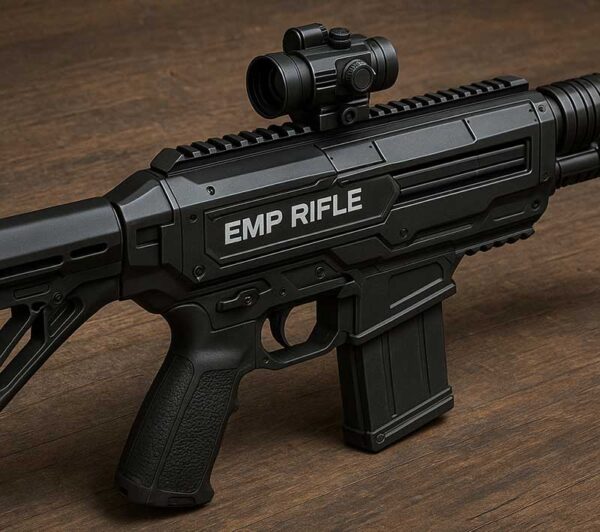
EMP rifle Type 1
EMP rifle Type 1

This isn’t just nerdy law talk. Look at where the tech is going:

  • Tesla is planning tens of thousands of Optimus robots for internal use and then mass deployment. (The Times of India)
  • Other companies are racing to build humanoid workers, autonomous vehicles, and cheap drones. (Reddit)
  • The same pattern we saw with the internet and smartphones will repeat: first toys and convenience, then deep dependency, then weaponization.

By the time some bureaucrat says, “You can’t have that anti-robot rifle, it’s too dangerous for civilians,” the threat landscape will already have changed.

If the Second Amendment truly exists to preserve the people’s last line of defense against threats—whether foreign, domestic, or now digital/mechanical—then it must cover the tools that actually work against those threats.

The Founders didn’t write a right to “keep and bear the technology of 1791.” They wrote a right to keep and bear arms so free people could remain free as technology marched on.

So… Where is Your EMP Rifle?

Honestly? It’s still on the drawing board. Portable, directional, safe-enough-for-civilians EM weapons aren’t a thing yet—and that’s fine. The article isn’t about buying one tomorrow.

It’s about locking down the principle now:

  • The Second Amendment covers all bearable arms, including those “not in existence at the time of the founding.” (Justia Law)
  • That includes future defensive tech—anti-drone, anti-robot, and yes, hypothetical EMP rifles.
  • The government doesn’t get a veto just because the weapon is new, electronic, or hurts their “monopoly on force” feelings.

When the robot revolution finally creeps out of the lab and into your neighborhood, the usual suspects will be lining up to tell you:

“Don’t worry, the government and the corporations will keep you safe. You don’t need your own tools to defend yourself from our machines.”

The right answer, grounded in the actual text and Supreme Court case law, is simple:

If I can carry it and use it to defend my life, my family, and my community, it’s a bearable arm—and it’s mine. Whether it’s made of wood, steel, polymer… or electromagnetics.

That’s the fight. That’s the headline. And that’s the future the Second Amendment was built for.


About Tred Law

Tred Law is your everyday patriot with a deep love for this country and a no-compromise approach to the Second Amendment. He does not write articles for Ammoland every week, but when he does write, it is usually about liberals Fing with his right to keep and bear arms.


We are in dangerous times! We are SO CLOSE to our final funding goals! With your help we can make it!


from https://ift.tt/8GM0UFN
via IFTTT

Elon Musk on the Bulwark of First & Second Amendments in America

Elon Musk has restated why the First and Second Amendments exist in the United States.  On November 29, 2025, from X.com:

 And this is why we have the first and second amendments in America. 

Elon was reacting to a story out of the United Kingdom. British police harassed a British subject who had dared to hold firearms while in Florida,  and then post images of him doing so on his LinkedIn account.

According to a Daily Mail article:

The 50-year-old said he offered to prove that the pictures had been taken in the US – where owning or shooting guns are perfectly legal. Officers told him it was not necessary. 

A week later on August 23, the officers returned and arrested him on suspicion of possessing a firearm with intent to cause fear of violence and another allegation of stalking related to a photograph of a house that appeared on his social media.

Mr Richelieu-Booth was held overnight in a cell before being interviewed. He was then released on bail until October.

He claims police visited his home three more times before the charges against him were dropped.

Mr. Richelieu-Booth reported that his computers and telephone were seized by police, which made it impossible for him to work. Mr. Richelieu-Booth is an IT consultant. The charges were eventually dropped. While he never faced trial, the process was a considerable punishment. Mr. Richelieu-Booth was arrested, jailed overnight, and rendered unable to work for weeks because he posted images of legal activity online. The police say they were responding to a complaint from a person who had seen the images online and felt threatened.

During the Biden regime, people lost jobs and had their careers ruined for statements made online in the USA. Not supporting the racist DEI agenda was enough for academics to have their activities severely restricted.

Elon Musk has been a strong supporter of the First and Second Amendments. Elon stated the Second Amendment is why we are able to keep the First Amendment. From an August 24, 2024 post on X.com:

The 2nd amendment is the only reason long-term that the 1st amendment will be upheld.  

President Donald Trump is a vocal supporter of the First and Second Amendments.  There has been a reversal of the censorship apparatus put in place by the Biden administration. President Trump issued an Executive Order supporting the Second Amendment. The Department of Justice has supported the Second Amendment in several court cases. The DOJ is opening up a new unit in the Civil Rights Division, dedicated to enforcing the rights protected by the Second Amendment.

The First and Second Amendments are enshrined in the American Constitution as part of the Bill of Rights. The British “rights of Englishmen” only exist as traditions in English law. The right of Englishmen to be armed was gradually eviscerated, starting after WWI, when the government feared revolution. Recently, the right to free speech has been rendered toothless in England by “hate speech” codes.

President Trump’s and Elon Musk’s strong support for the First and Second Amendments signals a cultural shift away from an all powerful government, back toward Constitutional limitations on government power.


About Dean Weingarten:

Dean Weingarten has been a peace officer, a military officer, was on the University of Wisconsin Pistol Team for four years, and was first certified to teach firearms safety in 1973. He taught the Arizona concealed carry course for fifteen years until the goal of Constitutional Carry was attained. He has degrees in meteorology and mining engineering, and retired from the Department of Defense after a 30 year career in Army Research, Development, Testing, and Evaluation.

Dean Weingarten


We are in dangerous times! We are SO CLOSE to our final funding goals! With your help we can make it!

Elon Musk and the Importance of the Second Amendment


from https://ift.tt/uRo08pl
via IFTTT

Wednesday, December 3, 2025

Matthew Hoover Free from Prison

Judge-Court-Law-Gun-Rights-iStock-2180021491

Matthew Hoover has been released from a federal prison in Wisconsin after serving nearly three years of a five-year sentence for trafficking machine guns. He is now headed to a halfway house to serve out the remainder of his conviction.

Mr. Hoover ran the popular YouTube channel CRS Firearms. The channel concentrated on guns and gun rights. During the run of his channel, he was approached by Kristopher Justin Ervin about advertising the AutoKeyCard. The AutoKeyCard was a metal card with a slight etching of a lightning link. The etching was not to scale. According to Ervin, the purpose of the card was to inspire conversations about the ineffectiveness of gun laws. Mr. Hoover agreed to take on the sponsor.

Mr. Hoover began advertising the card on his YouTube channel. At no time did he sell, manufacture, or own the company that produced the cards. While advertising the cards, a bank employee at the bank the company used would Google the AutoKeyCard. This employee would then contact the Bureau of Alcohol, Tobacco, Firearms and Explosives (ATF), believing the product to be illegal.

When the ATF got word of the card’s existence, they would arrest Irvin and charge him with multiple charges, including trafficking machine guns. Mr. Hoover would raise money for Ervin’s legal defense. This fundraising caught the attention of the ATF. The ATF believed that Hoover was raising money for Ervin to help him win the case, so they could keep making money. According to the ATF, this meant the two men were involved in a criminal conspiracy.

The ATF would arrest Hoover and charge him with conspiracy and trafficking machine guns in violation of the National Firearms Act (NFA) and the Hughes Amendment of the Gun Owners Protection Act (GOPA). This arrest sent shivers down the backs of anyone who took sponsorships, because a company’s actions could be used against content creators.

During the trial, the ATF admitted that they could not get the card to work as a lightning link by cutting along the lines. ATF Firearms Examiner Cody Toy admitted he had to cut outside the lines to get automatic fire. Even this was not entirely correct. The ATF did not get sustained fire. FE Toy only caused hammer follow, but to the ATF, that was enough to determine that the card functioned as a machine gun conversion device (MCD). The government couldn’t find a single person who had the card to work as an MCD, but it claimed that it didn’t matter because the men intended the card to work as an MCD.

The defendants were prevented from arguing that the Second Amendment protected them. The jury instructions were also problematic; they were basically told that the card should be considered a machine gun, which hurt the defense’s case. The jury returned a guilty verdict after a few hours of deliberation. Mr. Hoover was immediately taken into custody, ripping the father away from his wife and children.

During the sentencing, the pre-sentencing report (PSR) was favorable to Hoover, citing that he had a clean criminal record and was the sole breadwinner for his family. The government attorney, Laura Coffer Taylor, objected to the PSR demanding the maximum sentence for Hoover. She claimed that the marriage was a sham to prevent Hoover’s wife from testifying against him, even though they had multiple children together. When AmmoLand News reported on the PSR, Taylor filed for a gag order to try to prevent our reporting. Thanks to a legal team supplied by Gun Owners of America (GOA), the government was forced to withdraw its motion.

Mr. Hoover and Mr. Ervin would appeal their convictions to the United States Court of Appeals for the Eleventh Circuit. That appeal has been heard, but the Circuit Court has not issued a decision in the case. Mr. Hoover might be out of prison, but he has still lost his constitutionally protected rights. Whether he gets his rights back is in the hands of the Circuit Court.

Autokeycard.com Seized By ATF, Owner Arrested For Selling A Drawing

Auto Key-Card Case Ruling is a Travesty of Justice


About John Crump

Mr. Crump is an NRA instructor and a constitutional activist. John has written about firearms, interviewed people from all walks of life, and on the Constitution. John lives in Northern Virginia with his wife and sons, follow him on X at @crumpyss, or at www.crumpy.com.

John Crump


from https://ift.tt/4cyal2H
via IFTTT

Is the DOJ Pulling a “Windsor” with the NFA?

Springfield Echelon 9mm handgun equipped with a SilencerCo Spectre 9 Suppressor and a Shield RMSc red dot.

Could the Trump Department of Justice (DOJ) protection of the National Firearms Act (NFA) in Silencer Shop v BATF be a tactical move to bring the case to the Supreme Court?

The Supreme Court case United States v Windsor upended centuries of precedent and jurisprudence in the United States by finding a key part of the Defense of Marriage Act to be unconstitutional. The Obama administration played a key part in this policy shift by claiming the act was constitutional, thus protecting “standing” in the case. Later, the Obama DOJ switched sides and agreed with Windsor that the Defense of Marriage Act was not constitutional. The Supreme Court ruled in favor of Windsor in a 5-4 decision.

According to Mark Smith, prominent Second Amendment advocate and member of the Supreme Court Bar, and frequent writer at AmmoLand, the tactic of the federal government arguing for one side of a case until the case reaches the Supreme Court, then switching sides, has come to be known as “pulling a Windsor”. The DOJ defense of the NFA in the Fifth Circuit is very unpopular with Second Amendment supporters. From John Crump at AmmoLand:

Trump’s DOJ is hailed as the “most pro-gun DOJ ever,” but its response to the GOA lawsuit paints a different picture. The Justice Department took a more adversarial stance in the lawsuit, ignoring pleas from members of Congress such as Andrew Clyde. The DOJ is vigorously defending the NFA.

The DOJ claims that the NFA is still a tax, despite no revenue being collected. They say that, because it is still a tax in their view, the law is constitutional because the power is given to them through the Interstate Commerce Act. The DOJ also claims that the NFA is necessary because of the “concealability” of SBRs and SBSs. GOA argues that if all it took to regulate a firearm, then all handguns could be banned.

The support of the Obama DOJ for the constitutionality of the Defense of Marriage Act was excoriated by Gay Rights groups. In February of 2011, the Obama administration reversed its position.  On June 26, 2013, the Supreme Court ruled the critical part of the Defense of Marriage Act was unconstitutional. Gay Rights groups were very happy with the result.

Mark Smith argues the same sort of tactic may be at work in the Silencer Shop v BATF case. The Supreme Court will not hear cases unless there is an actual dispute where the parties have standing in the case. The Trump DOJ brief ensures there is an actual dispute, and the DOJ continues to have standing. The Trump DOJ has done more than any administration in history to restore rights protected by the Second Amendment.

It is a plausible explanation for the DOJ’s use of Silencer Shop v. BATF as a vehicle to rule on large portions of the NFA as unconstitutional. To do so, the case has to be accepted by the Supreme Court. The Supreme Court rarely declines to hear a case when the DOJ requests it.

This correspondent does not have any inside information about the Trump DOJ. The DOJ’s arguments in their brief appear to be an attempt to defend the NFA. They also appear less than overwhelming. Some would say the arguments are “weak”. This may be because there are no actual strong arguments.

Only time will determine if the Trump DOJ switches sides once the case is accepted by the Supreme Court. A Supreme Court decision would be better than a legislative solution. The Trump administration worked hard to reform the NFA as part of the ”Big Beautiful Bill”. They removed the taxes from silencers, short barreled firearms, and any other weapons.  This may be a tactic to remove those items from the NFA entirely.


About Dean Weingarten:

Dean Weingarten has been a peace officer, a military officer, was on the University of Wisconsin Pistol Team for four years, and was first certified to teach firearms safety in 1973. He taught the Arizona concealed carry course for fifteen years until the goal of Constitutional Carry was attained. He has degrees in meteorology and mining engineering, and retired from the Department of Defense after a 30 year career in Army Research, Development, Testing, and Evaluation.

Dean Weingarten


from https://ift.tt/B0ghSbX
via IFTTT

British Man Arrested in England for Posing with Shotgun While on Vacation in Florida

British Man Arrested in England for Posing with Shotgun While on Vacation in Florida

John Richelieu-Booth, a 50-year-old self-employed IT contractor from England, was arrested by British police after returning home from a vacation in Florida for posing awkwardly while holding a Remington 870 shotgun in the Sunshine State.

Richelieu-Booth told the British newspaper The Telegraph that he was completely shocked by the “Orwellian” decision made by his local constabulary, the West Yorkshire Police, who first warned him about the picture he posted on his social media but then arrested him several hours later.

Criminal charges against the man changed over time.

Richelieu-Booth was first charged with “possessing a firearm with intent to cause fear of violence” and even stalking after he posted the now infamous photo. However, these charges were later dropped.

Another charge of posting “any writing/sign/visible representation with intent to cause harassment/alarm or distress” was filed but also dropped. Apparently, Richelieu-Booth then faced what the British legal system calls a “public order offence.”

Thankfully, all charges now appear to have been dropped, and Richelieu-Booth is considering making a formal complaint against his local police department. His business was severely impacted after he spent a night alone in jail, and he is unable to work because British police seized his cell phone and computers.

“I will be filing a case against the police, I have been put through 13 weeks of hell, and I will be seeking quite a lot of damages,” Richelieu-Booth told the British media.

Takeaways

Americans should thank God and our country’s Founders that we have the protections offered by the Second Amendment and, quite frankly, a few other Amendments, so we don’t have to face the “13 weeks of hell” that this poor tourist was forced to endure.

Over the years, I have spent time at the range with dozens of tourists from all over the world, including some extended family members from Germany who had never even touched a real gun.

They all reacted the same.

They became immediately bedazzled by our freedom, especially the Second Amendment, and they realized how off-putting their own country’s strict laws and regulations actually were. Also, every single one of them wanted their own rifles, especially the AR.

A few countries such as Argentina and Finland are changing their gun laws for the better, but each has a long way to go to catch up.

America leads the entire world with its personal freedoms, at least for now. But we must constantly be on guard to stop those who want to strip us of our freedom solely because we may live in a state that supports their crazy deceptiveness.

This story is presented by the Second Amendment Foundation’s Investigative Journalism Project and wouldn’t be possible without you. Please click here to make a tax-deductible donation to support more pro-gun stories like this.


About Lee Williams

Lee Williams, who is also known as “The Gun Writer,” is the chief editor of the Second Amendment Foundation’s Investigative Journalism Project. Until recently, he was also an editor for a daily newspaper in Florida. Before becoming an editor, Lee was an investigative reporter at newspapers in three states and a U.S. Territory. Before becoming a journalist, he worked as a police officer. Before becoming a cop, Lee served in the Army. He’s earned more than a dozen national journalism awards as a reporter, and three medals of valor as a cop. Lee is an avid tactical shooter.

Lee Williams


from https://ift.tt/J8IrE2i
via IFTTT